Generative engine optimization for technical SaaS teams
Unregulated prompts create brand risk. Learn the architectural requirements for AI visibility tracking that correlates with revenue outcomes.
How content automation actually works in production — pipeline architecture, tooling choices, quality gates and measurement.
Unregulated prompts create brand risk. Learn the architectural requirements for AI visibility tracking that correlates with revenue outcomes.
B2B content strategy now demands generative engine optimization to survive in AI-driven search results.
Vellum data shows a 30% performance jump in one year. Learn why saturation-resistant benchmarks like Humanity's Last Exam now define true model capability.
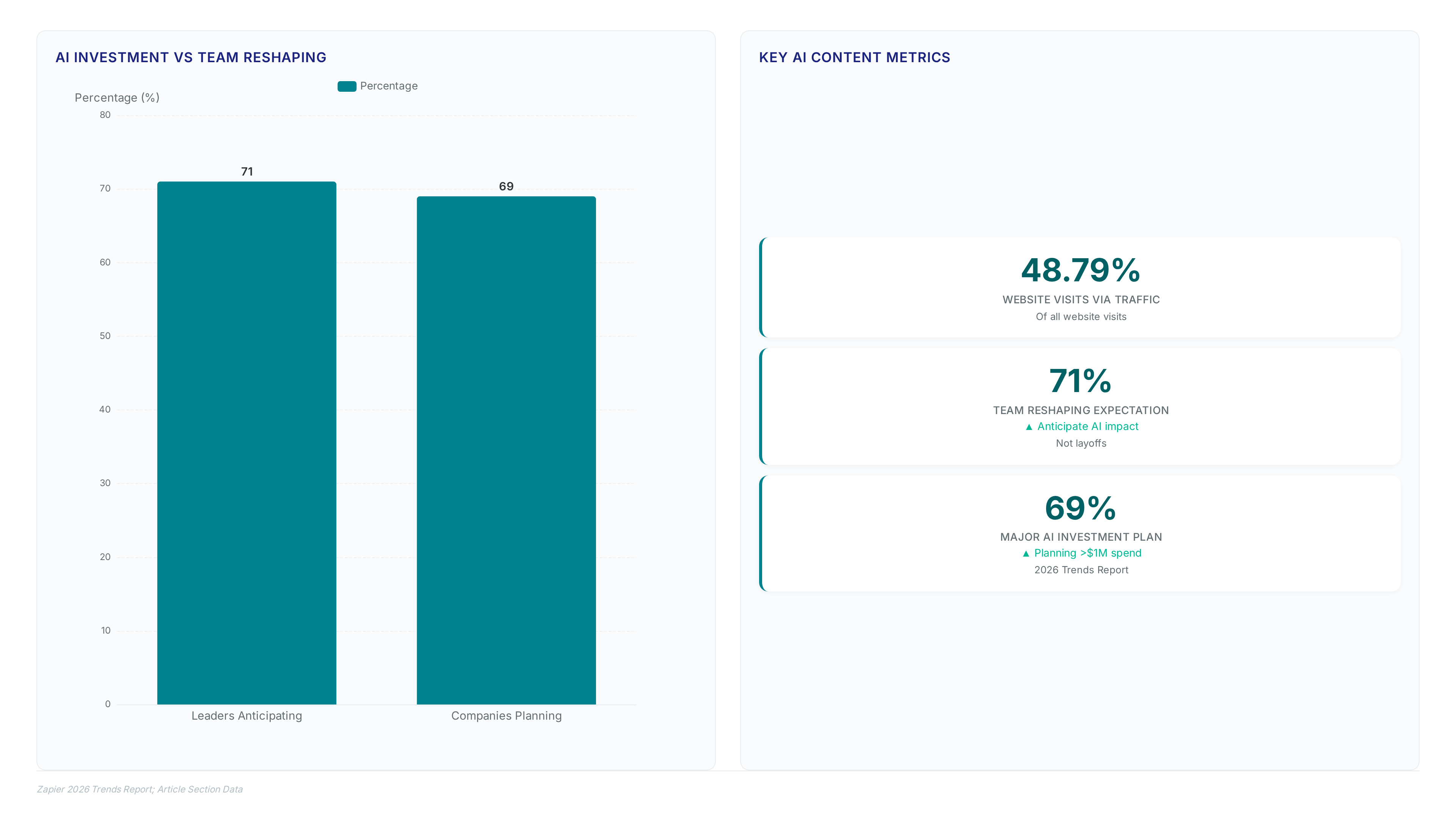
In 2026, a significant share of business web content involves AI assistance, a sharp rise from a smaller portion in 2024 according to research.
Startups face a $16 to $499.95 pricing gap. Enterium unifies generation and visibility tracking to resolve this paradox without scaling failure.
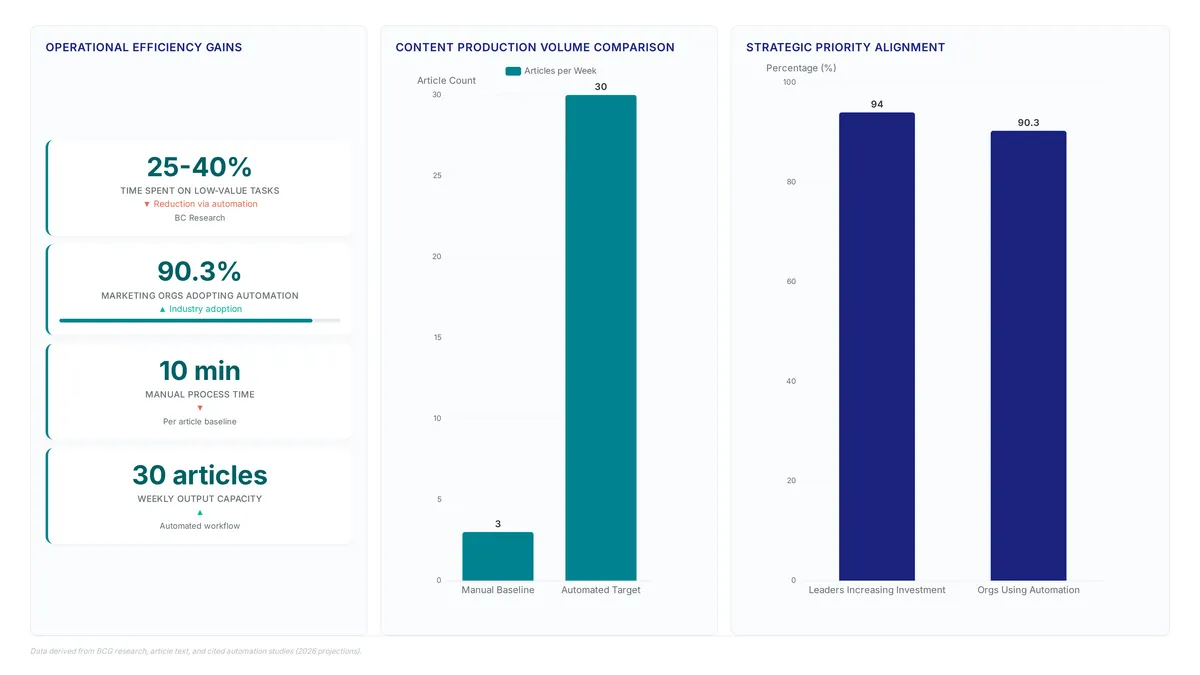
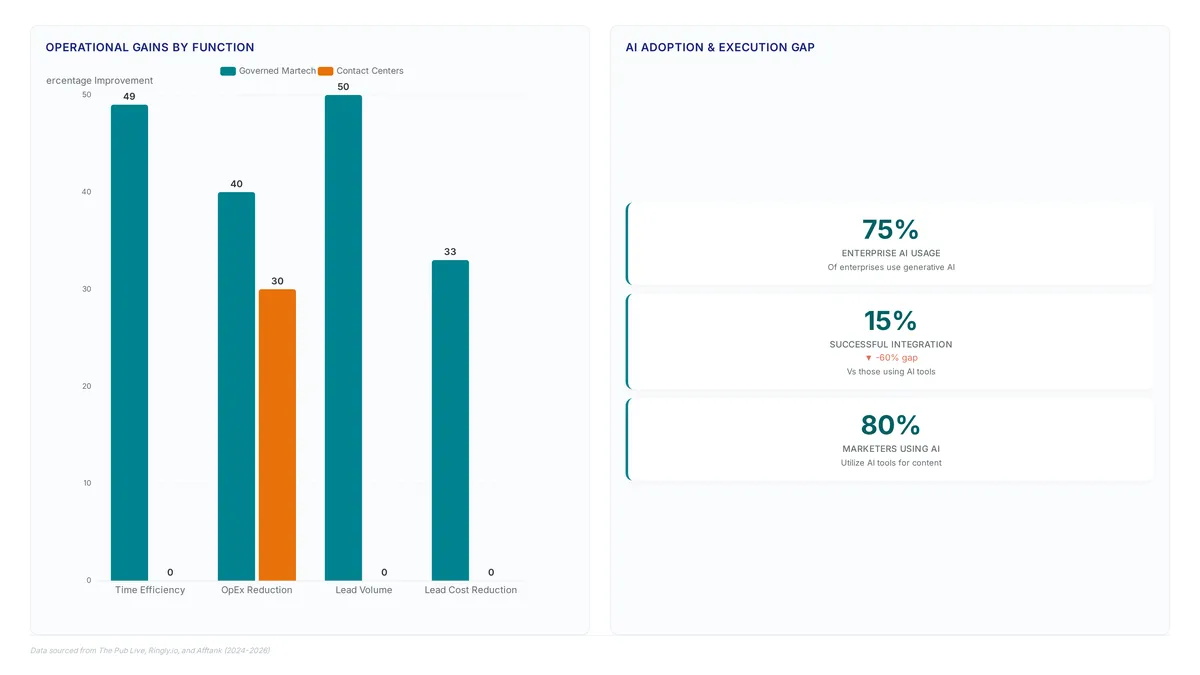
Teams using content automation see 24x speed gains versus manual processes. Learn the workflow architecture required to scale topical authority safely.
Connect 9,000+ apps to enforce editorial rules. This guide details how automated triggers replace manual handoffs with real-time QA gates.
Cut the 19% time lost hunting for data. Enterium builds content automation pipelines that remove manual handoffs and enforce brand rules.
With only 3.2 FTEs managing operations, lean teams need automated pipelines to handle volume without sacrificing editorial quality or governance.
Cut indexing lag to minutes by shifting from keyword density to entity recognition patterns required by modern LLM ingestion pipelines.
Learn the six-step framework for dual visibility that secures citations in generative engines when traditional metrics fail to track AI synthesis.
Fewer than 6% of firms fully embed AI. This guide details the infrastructure shifts required to move from manual exports to intelligent data activation.