Content automation for teams running on 3.2 FTEs
With only 3.2 full-time equivalents managing content operations for every $10 million in revenue, teams cannot rely on manual processes to survive. Content automation is the mandatory infrastructure that allows lean teams to orchestrate the full lifecycle without collapsing under volume. You will learn how modern systems handle AI content creation and distribution to eliminate repetitive publishing tasks while ensuring editorial accuracy. We examine how these pipelines manage omnichannel content distribution and keep calendars synchronized across channels without constant human intervention. The discussion also covers how automated review processes maintain quality control at a scale that small teams previously could not achieve.
Digital Applied reports that the median content operations team size is just 3.2 FTEs for companies generating $10 million in Annual Recurring Revenue. This stark data point from Digital Applied highlights why relying on manual effort is a strategic failure. By adopting automated content workflows, organizations can bridge the gap between limited staffing and the demand for consistent, high-volume output. The following analysis details how to implement these systems to secure measurable ROI and operational efficiency.
The Role of Content Automation in Modern Digital Operations
Defining Content Automation as a Scalable Digital Pipeline
Code replaces typing. Planning, creation, approvals, and distribution execute via script rather than finger fatigue. This shift transforms scattered editorial chores into a scalable digital pipeline that preserves governance without forcing headcount to rise in lockstep with output volume. Workflows connect CMS and CRM platforms to sync data streams, ensuring E-E-A-T signals remain uniform across every touchpoint.
Confusing generation with governance creates immediate danger. High-volume output magnifies brand drift if approval gates lack strict rule sets. Unlike simple batch jobs, modern pipelines demand flexible validation at every step to prevent poor drafts from entering publication queues. Builders must craft robust error-handling logic for API crashes or schema mismatches; architectural complexity is the price of speed. Without these guards, automation creates serious reputational risk. Teams should prioritize retry mechanisms and human-in-the-loop checkpoints over raw throughput numbers.
Treat content workflows as software deployments requiring version control.
Content Automation vs Content Marketing Automation Scope
Draw a hard line between asset generation and delivery orchestration. Content automation targets the former; content marketing automation handles the latter. One writes a blog post; the other schedules the resulting email nurture sequence. Production velocity must stay separate from distribution logic.
Groups often blur this distinction by deploying generative tools for creation while skipping the workflow engines needed for multi-channel dispatch. Data integrity competes with reach in this equation. Automation focused solely on production may spit out huge text volumes lacking the specific user context effective nurturing needs. Distribution engines amplify errors quickly without strict input governance. E-E-A-T signals rot when automated systems push unverified claims into thousands of inboxes. Isolating generation pipelines from delivery triggers enforces distinct quality gates, stopping a creation layer failure from cascading into the customer relationship layer. Operators must verify their stack supports this segregation before scaling volume.
Applying Generative AI to Optimize Operational Workflows
Generative AI cuts production spend through delegated operational workflows. This reduction happens when teams shift from manual drafting to automated SEO workflows handling keyword clustering and semantic optimization. Over the two years leading up to 2026, AI-assisted content teams have seen their cost-per-asset compress by a significant margin.
The mechanism relies on treating content as a build pipeline with versioned artifacts rather than static documents. Organizations maintain a consistent publishing cadence without increasing headcount by enforcing lint rules on density and heading structures before human review. High-speed generation increases brand drift if approval gates lack strict style embeddings; a specific tension arises between velocity and voice. Editors still decide what to publish. Strategists still set direction. These are hard limitations. Human operators remain necessary for validating the strategic direction of the output. Cost savings vanish due to rework without this oversight. Network operators and technical marketers should delegate repetitive formatting to machines but retain human sign-off on truth claims. This approach balances efficiency with the strict governance required for E-E-A-T compliance.
How Automated Systems Orchestrate the Full Content Lifecycle
Automated Content Lifecycle Stages from Ideation to Measurement
Integrated workflows link discrete operational stages so content moves without manual handoffs. Architecture starts with ideation signals pulled from engagement data, turning raw customer interactions into structured topic clusters. Generative models then draft initial variants while staying inside predefined E-E-A-T guardrails.
- Ingestion of engagement metrics to identify high-value knowledge gaps.
- Generation of drafts using role-specific prompt chains.
- Automated insertion of schema markup for search engine visibility.
- Distribution across channels via automated triggers.
- Continuous performance tracking against conversion baselines.
Content automation reduces friction across these transitions. Human oversight drops during the draft phase as a direct result. Strict validation gates become necessary before publication to stop hallucinated claims from entering the index. A typical organization sees its timeline from concept to publish compress notably. Teams shift focus toward strategy and storytelling while automation handles repetitive tasks.
Velocity often clashes with nuance in high-volume workflows. Specific contextual depth required for complex technical subjects frequently gets sacrificed. Operators should reserve full automation for informational content. Human authors remain necessary for high-stakes decision matrices. Industry guides recommend mapping these lifecycle stages explicitly before integrating generative tools to avoid compounding errors downstream. Programmatic closure of the feedback loop from measurement back to ideation makes the system function. Strategy informs creation while analytics loop back into planning.
Integrating CMS and CRM Data for Topic Cluster Recommendations
Linking content management systems to customer relationship platforms changes raw engagement logs into structured topic clusters aligned with audience intent. AI systems such as Breeze analyze existing content performance and CRM data to recommend topic clusters aligned with audience intent. Interaction frequency maps to specific content assets within this mechanism. Audience intent drives the editorial roadmap through this created feedback loop.
Automated workflows manage this flow from ideation to post-publication measurement without manual data stitching.
- Ingest engagement metrics to flag under-served user segments.
- Cross-reference these signals against current CMS inventory to find gaps.
- Generate topic recommendations that address specific customer lifecycle stages.
- Validate proposed clusters against E-E-A-T guardrails before drafting begins.
Data volume often conflicts with signal clarity in these configurations. Excessive noise dilutes topic relevance if filtering logic remains permissive. Operators must configure thresholds to ignore low-frequency interactions that do not represent genuine market demand. Static keyword research differs from this flexible approach. Content production addresses actual user behavior recorded in the database.
Teams implementing this architecture can increase content efficiency and reduce manual workload, allowing a focus on creative strategy. Legacy systems lacking open APIs present a constraint. Intermediate middleware becomes necessary to normalize data schemas before analysis can occur. Accurate correlation of customer pain points with content opportunities fails without this normalization. Garbage-in-garbage-out scenarios get prevented when teams validate data connectivity and hygiene before deploying generative recommendation engines.
| Data Source | Function | Output Value |
|---|---|---|
| Engagement Data | Tracks user interactions | Identifies knowledge gaps |
| CMS Platform | Hosts published assets | Provides performance baseline |
| AI Engine | Analyzes cross-system data | Recommends topic clusters |
Avoiding Contextual Misalignment in Multilingual Keyword Automation
Direct translation of high-performing keywords often fails to capture local search intent. Contextual misalignment appears in global pipelines as a result. Keywords performing well in one language may not perform the same way in another. Search intent reflection varies across languages too. A term driving conversions in English may lack commercial urgency or carry different connotations when mapped directly to French or Japanese queries. Marketing teams must vet automated suggestions to prevent brand damage from these semantic gaps.
Correct implementation of schema markup requires more than syntax validation. Semantic values must align with local market expectations.
| Risk Factor | Automated Behavior | Required Human Intervention |
|---|---|---|
| Semantic Intent | Maps literal translations | Validates cultural nuance |
| Search Volume | Prioritizes direct equivalents | Identifies local colloquialisms |
| Brand Safety | Ignores regional taboos | Enforce cultural guardrails |
Algorithmic scoring often misses regional idioms in this context. Effective governance models require native speakers to review keyword clusters before publication. Wasted crawl budget and reduced conversion rates measure the cost of skipping this step. Automation accelerates the drafting phase. Contextual awareness of a local operator cannot be replicated by machines. Machine-generated translations serve best as first-draft candidates requiring rigorous human validation. Scale balances with the precision needed for global audiences through this.
- Extract high-volume terms from the primary market.
- Generate literal translations via the automation pipeline.
- Route outputs to regional experts for intent validation.
- Publish only vetted terms with localized schema attributes.
Latency presents the primary limitation here. Human review slows the pipeline but prevents costly reputational errors.
Measurable ROI and Operational Efficiency from Automated Workflows
CRM-Native Automation Engines
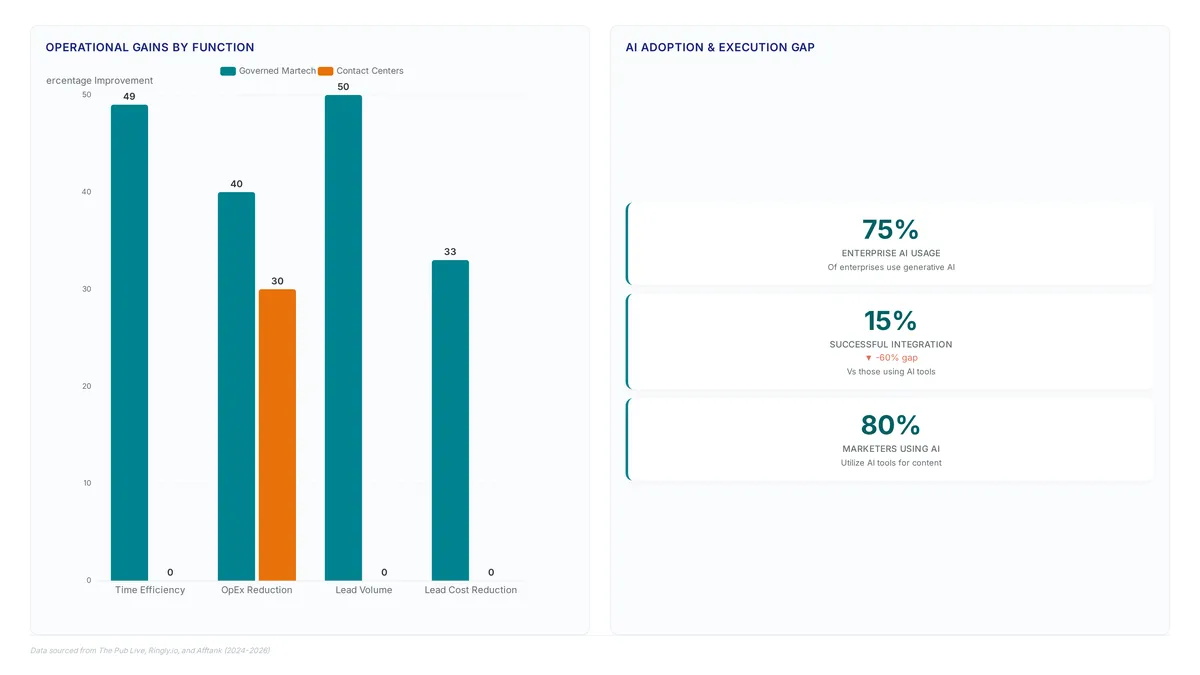
Modern content platforms function as unified systems that integrate content creation, management, and optimization within a single database. These architectures often include capabilities to atomize existing assets into multiple formats, reducing the manual effort required for omnichannel distribution. By embedding intelligent agents directly into the workflow, systems can draft copy while simultaneously tailoring messaging based on stored contact properties. Such tight coupling between the CMS and CRM ensures that generative AI outputs remain grounded in actual customer data rather than generic patterns. The platform includes Breeze Integration featuring a Content Agent and Customer Agent alongside AEO and SEO tools.
Scaling content operations for large enterprises requires shifting from manual creation to automated content workflows that decouple output volume from headcount. Large teams use these systems to manage complex distribution networks without proportional staffing increases. The mechanism relies on integrating generative AI directly into the content lifecycle, transforming fragmented tasks into a unified pipeline.
| Manual Workflow | Automated Pipeline |
|---|---|
| Siloed creation tools | Unified CMS and CRM integration |
| Linear asset production | Atomized omnichannel content distribution |
| Reactive optimization | Proactive AEO readiness |
However, the cost of this scale is the potential erosion of brand distinctiveness if governance gates are absent. Unlike simple batch processing, true automation demands strict E-E-A-T signals embedded within the generation logic to maintain trust. A failure to enforce these boundaries results in high-volume noise rather than strategic asset creation. For organizations aiming to replicate this efficiency, experts recommend auditing current workflow bottlenecks before selecting orchestration tools.
Avoiding the Set It and Forget It Automation Trap
The biggest mistake teams make is viewing automation as a set it and forget it solution. Treating automation this way creates the single largest point of failure in modern pipelines. Teams often deploy generative AI to handle volume but neglect the governance required to maintain brand integrity. The mechanism is straightforward: algorithms optimize for semantic density and keyword coverage, not narrative coherence or emotional resonance. While organizations prioritize speed, successful engines use technology for scale while humans handle the soul of the brand by maintaining necessary human-in-the-loop checkpoints to verify output quality.
| Failure Mode | Consequence | Required Intervention |
|---|---|---|
| Unsupervised drafting | Brand voice drift | Editorial review gates |
| Auto-publishing | E-E-A-T degradation | Human fact-checking |
| Static prompts | Contextual irrelevance | Prompt iteration cycles |
Critical Risks and Governance Boundaries for AI-Generated Content
Risks: Defining the Boundaries of High-Nuance Content Automation
Automation workflows link ideation, programmatic SEO, drafting, review, publishing, and distribution loops into a single chain. These systems simplify creation and optimization tasks notably. Teams achieve best results when treating content as a build pipeline containing versioned artifacts and strict acceptance tests. Generative models accelerate specific lifecycle stages like creation, repurposing, and distribution. Volume often overtakes value when human oversight disappears from the equation. Editors retain the final decision on publication rights. Strategists define the direction so outputs match brand voice and business strategy.
- Risk of prioritizing volume over value without strategic oversight
- Necessity of human sign-off to maintain quality standards
An AI content generator produces text but cannot replace editors or strategists guiding the workflow. Repetitive formatting or data aggregation differs sharply from tasks requiring genuine insight. Human judgment strengthens E-E-A-T signals that build trust and visibility in search results. Operators establish governance gates keeping human review inside the process. Content scales efficiently yet lacks strategic alignment when organizations ignore this boundary. Strategic implementation identifies where human guidance remains necessary before any deployment occurs. Auditing content types for specific requirements becomes a prerequisite for any automation roadmap. Brands avoid automating opinion-led thought leadership because AI lacks lived experience.
Hallucination Risks: Mitigating Factual Errors in Automated Workflows
Hallucinated facts represent a specific risk where automated systems generate unverified information regularly. Generative models predict token sequences rather than retrieve verified facts from a database. Plausible but false citations appear frequently if constraints do not exist. Skipping final fact-checking costs more time than saving during initial drafting phases. Deloitte produced an AI-assisted report for the Australian Department of Employment and Workplace Relations containing fabricated references. A retraction followed the discovery of these errors. Technical guides recommend requiring citation tags within the system. Implementing a dedicated fact-check task inside the workflow prevents similar failures.
Operators recognize that automation requires specific guardrails when dealing with factual claims directly. Template filling differs from scenarios demanding human oversight to catch invented data points before publication. Algorithmic generation without governance gates invites errors damaging reputation and trust permanently.
- Reputational harm from publishing false information
- Erosion of stakeholder confidence in brand accuracy
GrowthHackerDev notes that preventing such failures requires treating content as a build pipeline with versioned artifacts and acceptance tests. Teams enforce citation tags and mandatory fact-check tasks before any content reaches production environments. Truth becomes the default state through rigorous linting rules and human sign-off protocols. Enterprises cannot automate away the need for expert review when accuracy determines value.
Implementing a Human-in-the-Loop Workflow for Draft Completion
Subtle bias propagates quickly without editorial oversight monitoring the output continuously. Authentic voice disappears from brand storytelling if style monitoring stops working. Reserving human effort for final synthesis and fact-checking ensures high-quality output before publication occurs. A recommended Human-in-the-Loop workflow suggests using automation for the majority of a draft covering research and structure. A technical content pipeline requires versioned artifacts and acceptance tests to maintain E-E-A-T standards consistently. Operational tension exists between scaling volume through automation and preserving the unique perspective driving engagement. Skipping human review on complex topics invites factual errors damaging credibility immediately. Operators treat automation as a force multiplier for structure rather than a replacement for expert insight. Teams focus on strategy, storytelling, and strengthening E-E-A-T signals by automating research and on-page SEO tasks.
About
Hannah Brooks, Marketing Operations Lead at Enterium, specializes in the precise architecture of content automation pipelines. Her daily work involves rigorously evaluating AI content creation tools and orchestrating complex workflows that integrate CMS and CRM systems without compromising data integrity. This hands-on experience with martech stack design directly informs her analysis of scaling content operations, ensuring that automated content workflows remain governed by strict quality gates rather than chaotic generation. At Enterium, a brand dedicated to vendor-neutral methodologies for B2B teams, Hannah applies her RevOps background to dissect the trade-offs between various LLM providers and content management tools. She focuses on reproducible steps for SEO optimization and omnichannel content distribution, providing practitioners with clear metrics to measure content ROI. Her insights bridge the gap between theoretical generative AI content capabilities and the practical realities of shipping reliable, high-volume digital assets in production environments.
Conclusion
Scaling content automation reveals that integration complexity often outweighs the initial efficiency gains of isolated tools. While teams successfully compress costs by automating research and structure, the operational burden shifts to maintaining data consistency across disjointed systems. The logical next step is not adding more specialized generators but consolidating the entire pipeline into fewer platforms that handle creation, planning, and review simultaneously. This approach reduces the friction of moving assets between environments and ensures that governance gates remain intact without manual bridging.
Organizations should commit to a tool consolidation strategy within the next two quarters, specifically targeting workflows where human oversight currently patches broken API connections. Start by mapping every handoff in your current draft-to-publish process this week to identify where data silos force manual re-entry or duplicate fact-checking. By centralizing these touchpoints, you preserve the critical human role of verifying truth and maintaining brand voice while eliminating the fatigue of managing excessive software subscriptions. The goal is a simplified architecture where orchestrates creation and scheduling within a single, governed environment rather than scattering logic across fragile integrations.
Frequently Asked Questions
AI-assisted teams compress cost-per-asset by 41% over two years. This efficiency allows lean operations to maintain high output volumes without proportional increases in staffing or budgetary spend.
Companies generating millions in revenue often operate with critically scarce human bandwidth. Manual processes fail at this scale, making automated infrastructure mandatory for basic operational sanity and survival.
Human operators remain necessary for validating strategic direction and preventing brand drift. Cost savings vanish due to rework if machines handle repetitive formatting without human sign-off on truth.
High-volume output magnifies brand drift if approval gates miss strict rule sets. Operators must implement dynamic validation at every step to stop poor drafts from hitting publication queues.
The mechanism relies on treating content as a build pipeline with versioned artifacts. This approach enables consistent publishing cadences without increasing headcount by enforcing lint rules before review.
References