Content automation pipeline: fix the 19% time loss
Knowledge workers burn 19% of their time hunting for information. McKinsey traces this loss directly to fragmented manual handoffs. A reliable content automation pipeline cuts that waste by executing repeatable creative tasks without human intervention at every step. This architecture lets teams focus on the final 10% of refinement while software handles the heavy lifting.
Modern operations use this shift to slash production time against legacy baselines. We will address strategic tool selection for enterprise environments, separating tools that merely generate assets from those that enforce brand parameters. The discussion covers integrating Claude for strategy and ImagineArt Enterprise for visual execution to create a closed-loop system. Removing manual file transfers and approval bottlenecks improves output quality while maintaining strict creative direction.
The Role of Content Automation in Modern Creative Operations
Defining Content Automation Beyond Manual Handoffs
Content automation executes repeatable creative tasks without manual intervention at each step. The math is brutal: knowledge workers lose 19% of their time searching for information, a loss magnified when staff copy files between tools manually. Traditional workflows depend on human operators to resize images and route files, creating friction that scales linearly with volume. Automated pipelines remove these handoffs by enforcing a structured execution protocol. Systems pull data from disparate sources to publish polished copy directly instead of requiring manual drafting from spreadsheets. This architectural shift eliminates the labor cost associated with maintaining editorial calendars and managing channel-specific formatting requirements.
| Manual Workflow | Automated Pipeline |
|---|---|
| High ramp time for new hires | Standardized process templates |
| Inconsistent brand asset usage | Enforced brand parameters |
| Linear scaling with headcount | Exponential output capacity |
Dependency on structured input limits this approach; without a precise brief, the system increases errors rather than creative direction. Automation handles the bulk of production yet cannot replicate the detailed judgment required for initial strategic positioning. Enterium addresses these gaps by deploying orchestration layers that validate inputs before generation begins. These solutions maintain brand consistency even as production velocity increases. Teams using these structured workflows report production time reductions between 60% and 80% compared to manual baselines. The result is a system where human effort focuses exclusively on the final refinement of high-value assets.
Executing the 10-80-10 AI Creative Workflow
The 10-80-10 AI creative workflow tool allocates human effort to the initial brief and final refinement while delegating bulk execution to software. This structure isolates high-value strategic decisions from repetitive asset generation. Teams define parameters in Claude, which acts as the orchestration layer to trigger ImagineArt Enterprise for visual synthesis. The system produces hundreds of ad variants without manual file transfers or format conversions. Automated sequences reduce production timelines notably compared to manual assembly. Marketers test more creative hypotheses before selecting winners for Meta Ads deployment due to this velocity.
| Workflow Phase | Human Input | Automated Action |
|---|---|---|
| Strategy | Define brief | Structure data |
| Production | Approve style | Generate variants |
| Distribution | Set schedule | Publish assets |
Brand guidelines lacking specific constraints in the initial prompt create a critical limitation. The volume of generated assets can overwhelm review queues without rigid parameters, negating time savings. Embedding brand kits directly into the generation model solves this issue rather than relying on post-hoc filtering. Enterium implements this architecture by enforcing strict schema validation on all incoming briefs before any generation occurs. Low-quality outputs fail to consume downstream compute resources when this check exists. Teams adopting this disciplined approach observe productivity gains reaching up to 10 times their baseline output. Configuring MCP connectors to trigger generation based on brief parameters becomes the next logical step.
Quality Risks When Scaling AI Content Volume
Scaling AI-generated content volume without differentiation triggers algorithmic de-ranking, as Google updates have historically removed 45% of undifferentiated automated outputs. Search engines actively penalize pipelines prioritizing quantity over unique value signals according to this attrition rate. Pattern recognition systems flag repetitive semantic structures common in bulk synthetic text. Operators relying solely on high-throughput generation face sudden visibility collapse rather than gradual decline. The 10-80-10 AI creative workflow tool mitigates this risk by reserving human intelligence for the initial strategy and final refinement layers. Core creative direction and final polish retain human nuance that algorithms struggle to replicate within this structure. Brands risk producing homogeneous content that fails to engage audiences or satisfy search quality raters without these gated human touchpoints. Teams using this model focus human effort on strategic definition and final refinement to ensure content meets quality standards. Ignoring the need for differentiation and human oversight risks significant loss of content visibility during substantial search update cycles.
Inside the Four-Stage Architecture of an Automated Content Pipeline
The Four-Stage Pipeline and MCP Data Flow
Four stages define the movement of data through a functional automation pipeline. Each phase generates specific outputs that the subsequent stage consumes immediately, removing the need for manual file transfers between applications. Content Planning initiates the sequence by establishing campaign objectives and visual direction before any asset generation occurs. Moving between these phases demands precise orchestration to maintain data integrity throughout the process. The Model Context Protocol (MCP) acts as the connective tissue, enabling Claude to function as an orchestration layer that calls external platforms directly. Rigid trigger-action scripts cannot match this flexibility. The protocol allows the system to read a brief, trigger ImagineArt Enterprise for asset generation, and route approved creatives to publishing channels based on logical conditions rather than static paths.
- Planning: Structured briefs generated via Claude establish brand parameters.
- Creation: MCP triggers image and video generation within ImagineArt.
- Publishing: Approved assets route to channels like Meta Feed automatically.
- Analytics: Performance metrics flow back to refine the next planning cycle.
Balancing human oversight with autonomous execution creates a necessary tension in these systems. Claude manages stage transitions via MCP, yet human approval remains necessary at creative checkpoints to prevent brand drift. Enterprises deploying this closed-loop system ensure that performance data from Stage 4 directly informs the strategy of Stage 1. This feedback loop creates a compounding return on creative investment over time.
Executing Multi-Channel Ad Generation with ImagineArt Ad Studio
ImagineArt Enterprise generates the variant library required for testing without manual file handling. This stage eliminates the broken handoffs where teams historically wasted hours moving assets between storage and ad managers. Connecting analytics to content planning ensures that performance data directly informs the next-generation cycle rather than remaining siloed in dashboards.
The operational flow relies on Model Context Protocol (MCP) to bridge strategic intent with creative execution:
- Claude connects to the generation engine via MCP to build campaigns directly from approved assets.
- The system routes generated variants to correct channels, aspect ratios, and formats automatically.
- Human operators intervene only for final approval, removing the need for manual uploads.
This architecture consolidates at least four distinct operational phases into a single workflow, effectively orchestrating the creation and scheduling of material across channels. Technical advantages emerge from the elimination of intermediate export steps. Assets move from generation to campaign structure as data objects, not downloaded files.
| Feature | Manual Handoff | MCP Orchestration |
|---|---|---|
| File Transfer | Download/Upload cycles | Direct API injection |
| Formatting | Manual resizing per channel | Automated aspect ratio mapping |
| Campaign Build | Manual field entry | Structured data population |
Strict brief taxonomy represents a constraint practitioners must address. If the initial planning stage emits unstructured metadata, the downstream automation fails to map assets to the correct campaign objectives. Validating brief schemas before scaling variant generation helps prevent the propagation of errors. Production capacity scales without adding headcount when systems enforce brand parameters effectively.
Validating Structured Briefs and Branded References for Automation
Automated planning requires structured briefs containing specific branded references and style guides to prevent hallucinated outputs. Generative models lack the context to provide data-backed ideas on previous campaign performance without these constraints. Teams would otherwise start from a blank document rather than using historical intelligence. The orchestration layer connects planning inputs to execution engines, yet it cannot compensate for undefined brand parameters or missing competitor trend analysis.
Operators must validate four elements before triggering generation:
- Product specifications and campaign objectives
- Audience definitions and channel lists
- Visual direction with font and typography details
- Competitor trends and inspiration posts
| Input Quality | Model Output | Operational Consequence |
|---|---|---|
| Unstructured text | Generic variations | High manual revision load |
| Branded references | Context-aligned assets | Direct pipeline progression |
| Missing style guides | Policy violations | Rejection at review gate |
Speed of initiation often conflicts with precision of output. A thorough brief is necessary for smooth downstream execution. Claude handles the majority of strategy when fed correctly, but the initial data entry remains a human responsibility to ensure accuracy. Implementing strict validation gates at intake enforces completeness before any model invocation occurs. Subsequent creative stages then receive actionable, compliant directives rather than ambiguous suggestions.
Strategic Tool Selection for Enterprise Content Orchestration
Claude as an MCP Orchestration Layer vs Zapier Triggers
Claude functions as a thinking partner that reads briefs and makes decisions, acting as an orchestration layer. This architectural choice shifts automation from simple task chaining to adaptive decision-making based on the Model Context Protocol. Zapier connects data sources to Large Language Models for linear execution, yet Claude uses MCP to call external platforms like ImagineArt Enterprise directly. Non-linear workflow adjustments occur without human intervention between steps.
MCP requires structured skills.md files to align model behavior with brand goals, a constraint trigger-based systems avoid by demanding extensive upfront mapping of every possible variable. Users pay for both the orchestration layer and underlying AI separately in stacked cost models, whereas an integrated MCP approach consolidates these calls into a single session. Production capacity scales without adding headcount because automation pipelines eliminate these handoffs. Output quality improves when systems enforce brand parameters at the generation source. Teams reduce manual file transfers by adopting this architecture.
Executing Meta Campaigns with ImagineArt MCP and Human Approval Gates
Reading briefs, generating assets via ImagineArt Enterprise, and building ad sets through MCP connections allows the pipeline to execute Meta campaigns. This architecture positions the LLM as an active orchestration layer rather than a passive text generator. Trigger-based tools move files linearly, but Claude uses the Model Context Protocol to call ImagineArt Enterprise directly for asset creation. Hundreds of visual variants emerge from this direct integration without manual parameter copying or tool switching.
Visual content automation is becoming standard practice. Teams use image generators to create assets without human designers, effectively streamlining the visual content supply chain. Enforcing visual rules at the workflow level prevents off-brand outputs before they reach review when brand consistency is a primary challenge. The Ad Studio component automatically resizes these approved assets into correct formats for Meta Ads, ensuring text safe zones and dimension accuracy.
Human oversight remains critical at exactly two points: initial brief approval and final campaign sign-off. Claude operates autonomously between these gates, handling iteration and formatting. Structured briefs are a dependency; the pipeline starts with a brief specifying the product, campaign objective, audience, channel list, visual direction, and copy direction. Every tool downstream depends on this brief as its input. Enterprises deploying this via Enterium solutions gain access to pre-configured skills.md files that encode brand preferences, reducing the friction of initial setup. The media buyer's role shifts from campaign construction to strategic validation.
Operationalizing skills.md Files for Preference Alignment
Defining explicit preferences in skills.md files prevents model drift during high-volume creative generation. All creatives meet guidelines before reaching the review stage since the Brand Kit locks visual parameters. Teams scaling end-to-end AI content pipelines must codify constraints to maintain fidelity. The following checklist ensures ImagineArt Enterprise receives precise directives for asset synthesis.
- Document visual exclusion zones and mandatory logo placement rules.
- Specify tone boundaries for copy generation to avoid generic marketing language.
- Define approved audience segments for Meta Ads targeting logic.
| Dimension | Without skills.md | With skills.md |
|---|---|---|
| Brand Consistency | Variable output quality | Locked parameters |
| Review Cycles | Multiple manual iterations | Single approval gate |
| Context Loading | Repetitive prompting | Static reference file |
Upfront documentation time eliminates repetitive correction later. Enterium recommends treating these files as version-controlled infrastructure rather than temporary notes. Technical product teams connect ideation directly to distribution loops without constant human intermediation using this approach. Operators gain predictable outputs while retaining the flexibility to update global preferences instantly. Claude executes complex workflows with reduced supervision in such a pipeline.
Deploying Scalable AI Workflows for Flexible Creative Optimization
DCO Variant Thresholds for Meta Advantage+ and TikTok Smart Performance
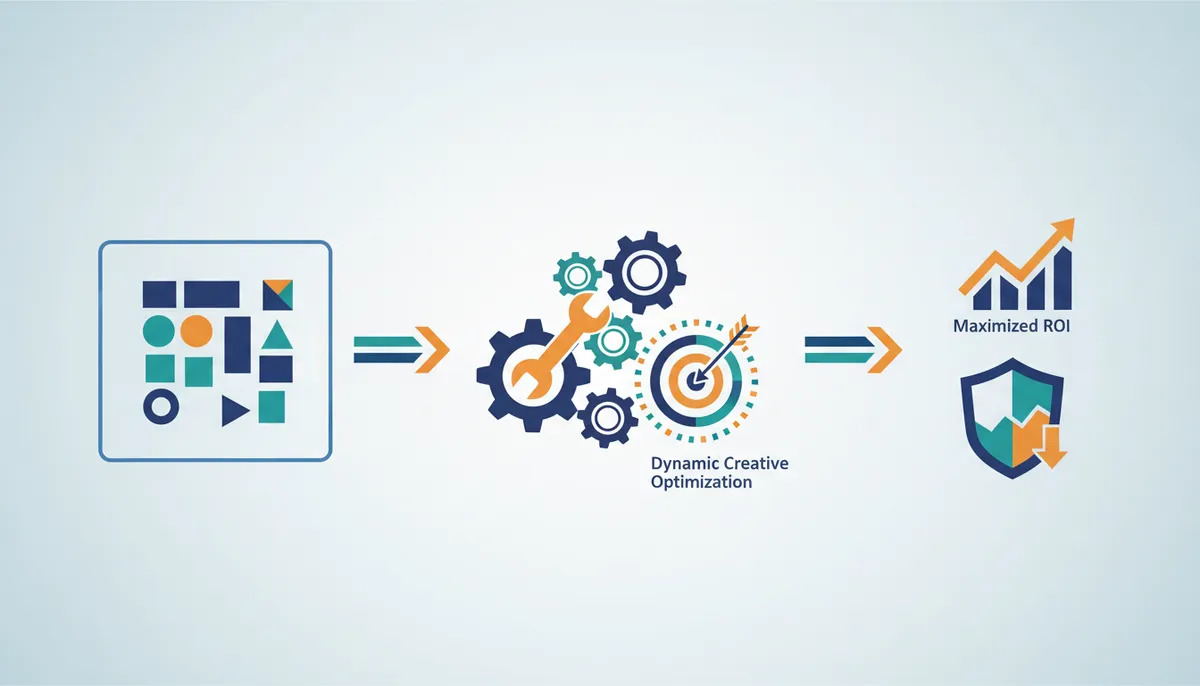
Flexible Creative Optimization (DCO) platforms like Meta Advantage+ and TikTok Smart Performance Campaigns require at least 5 variants per ad set to generate meaningful signals, yet most teams run only 1-2 due to manual production constraints. This deficit prevents the system from isolating high-performing creative elements, effectively stalling ROAS improvement before the auction begins. Automating the generation of these assets addresses the volume gap directly. The ability to automate A/B testing reduces the manual labor cost required to set up and monitor performance variants across multiple campaigns. Simply increasing volume introduces brand drift if governance is not encoded into the pipeline. Basic generators often fail to enforce strict visual parameters across hundreds of iterations. ImagineArt Enterprise resolves this by encoding brand parameters into the workflow, ensuring every generation remains compliant.
Three-Step MCP Pipeline Setup Connecting Claude to ImagineArt and Meta Ads
Establishing the Model Context Protocol connections requires activating the ImagineArt Enterprise server within the Claude environment first. This initial link enables the orchestrator to request image and video assets directly from the brand-compliant generation engine without manual file transfers. The second step involves enabling the Meta Ads MCP server, granting the LLM permission to construct campaign structures and upload approved creatives. The final configuration connects Claude to the brief ingestion tool, such as Notion, completing the loop from strategic intent to execution.
| Step | Action | Function |
|---|---|---|
| 1 | Activate ImagineArt MCP | Enables branded asset generation |
| 2 | Connect Meta Ads MCP | Permits campaign structuring |
| 3 | Link Brief Tool | Ingests strategic parameters |
The primary constraint in this setup is the shift from manual review gates to pre-flight parameter validation. Once the pipeline is active, the system executes the 10-80-10 AI creative workflow, where human effort concentrates on the initial brief and final approval while the middleware handles the bulk of production. Unlike static integrations, this MCP-based approach allows the LLM to make contextual decisions about asset selection based on real-time feedback loops. Enterprises relying on Enterium solutions use this exact topology to maintain governance while scaling output. The immediate next step is to audit current MCP server availability in your instance and map the specific permission sets required for the target Meta Ad accounts.
Achieving High Variant Coverage to Trigger DCO ROAS Improvement
Meeting high coverage thresholds across active campaigns is the specific trigger where Flexible Creative Optimization yields material ROAS improvement. Most creative teams currently operate with lower coverage because manual production cannot sustain the volume required for algorithmic learning. Platforms like Meta Advantage+ demand at least 5 variants per ad set to isolate high-performing signals, yet human bottlenecks often restrict output to just 1-2. This deficit prevents the system from optimizing effectively, leaving potential revenue unrealized. Automating the creative brief generation and asset expansion process resolves this capacity constraint. ImagineArt Ad Studio generates the full variant set from a single brief, eliminating the need for repetitive manual drafting. This approach shifts the workflow from sporadic, low-volume bursts to consistent, high-coverage delivery. The ability to automate A/B testing reduces the manual labor cost required to set up and monitor performance variants, freeing strategists to focus on high-level direction rather than file management. Enterium recommends encoding brand parameters directly into the generation engine to maintain consistency without sacrificing the volume necessary for success. Operators must prioritize reaching the coverage tipping point over perfecting individual variants in isolation.
About
Hannah Brooks, Marketing Operations Lead at Enterium, specializes in the architecture of reliable AI content systems. Her daily work involves auditing martech stacks, defining governance protocols, and engineering workflows where LLMs handle repetitive generation while humans manage strategic quality gates. This practical experience directly informs the guide's approach to building a content automation pipeline, moving beyond theoretical benefits to address the specific friction points of file handoffs and tool interoperability. At Enterium, a B2B publication dedicated to documenting how modern teams scale content operations, Hannah applies rigorous vendor-neutral analysis to evaluate tools like Claude and ImagineArt Enterprise. She focuses on the measurable outcomes of pipeline design: reduced latency, consistent output quality, and clear ROI. By translating complex orchestration challenges into reproducible steps, her work ensures that content leaders can implement reliable automation strategies that withstand production demands without relying on unproven hype or fragmented solutions.
Conclusion
Scaling content automation beyond pilot phases reveals a critical fracture: undifferentiated outputs fail to survive algorithmic filtering, regardless of production speed. While production time reductions between 60% and 80% offer immediate efficiency, the real operational cost emerges when platforms discard low-quality variants. Enterprises must shift focus from mere volume generation to agentic governance, where autonomous systems validate content against brand safety and performance thresholds before human review. Relying on static prompts without flexible audit layers invites the risk of having nearly half your output ignored by search and social algorithms.
Organizations should mandate a transition to agentic workflows within the next quarter, ensuring AI agents perform preliminary quality audits before assets reach human strategists. This approach secures the benefits of scale while mitigating the risk of undifferentiated automated outputs being penalized. Start this week by mapping your current permission sets to identify which stages of your pipeline lack autonomous quality checks. Implementing these guardrails ensures that your drive for high variant coverage actually triggers the intended ROAS improvements rather than diluting brand equity. Enterium's solutions provide the necessary topology to embed these checks directly into your generation engine, balancing speed with the rigorous standards required for sustainable growth.
Frequently Asked Questions
Workers lose 19% of their time searching for information during manual transfers. Automating these handoffs recovers that lost capacity, allowing teams to focus entirely on the final 10% of strategic refinement and creative direction.
Structured workflows reduce production time by 60% to 80% compared to manual processes. This dramatic efficiency gain allows organizations to scale output exponentially without increasing headcount or compromising on established brand consistency parameters.
Implementing these strategies can boost productivity by up to 10 times the baseline output. By delegating bulk execution to software, marketers can test significantly more creative hypotheses before selecting winners for deployment.
Google updates have historically removed 45% of undifferentiated automated outputs lacking quality. Teams must enforce strict brand parameters and human oversight to ensure their content survives algorithmic filtering and maintains visibility online.
Humans must define the initial 10% strategy to guide the entire pipeline effectively. Without this precise input, automated systems cannot replicate strategic judgment, leading to increased errors rather than the desired creative direction.
References