SEO writing tactics: Win synthesized answers
Over 50,000 businesses now rely on automated tools to generate content optimized for both traditional search and AI engines. SEO writing has mutated. It is no longer a keyword-matching exercise; it is a dual-purpose discipline satisfying algorithmic crawlers and large language model synthesis simultaneously. Drafting for humans alone is obsolete. Visibility now demands strict adherence to structures machines can parse and recite.
This shift isn't theoretical. Efficiency gains drive adoption, with studies indicating users save more than 10 hours weekly by integrating these technologies. But speed without precision in secondary keyword selection and content format matching is dangerous. Mastering these elements ensures your work survives the transition from a list of blue links to the concise summaries dominating 2026 search interfaces.
You will learn how strategic keyword research and search intent analysis form the bedrock of this approach, aligning primary topics with algorithmic priorities. We will also examine how to build SEO content structure that maximizes the likelihood of your data appearing in synthesized answers.
The Dual Role of SEO Writing in Search and AI Discovery
SEO Writing as an Investment Appreciating Over Time
SEO writing builds permanent indexable assets that compound in value. Paid advertising models stop traffic the moment budget runs out; this discipline enforces an engineering constraint where content must satisfy human search intent while maintaining structural clarity for machine parsing. Regular writing prioritizes narrative flow. SEO-optimized content demands strict adherence to keyword research protocols and logical hierarchy to function within retrieval systems.
Writing with SEO in mind increases discovery probability, driving consistent organic traffic month after month without recurring acquisition costs. Well-optimized content acts as an investment that appreciates over time, decoupling visibility from operational expenditure. Modern production environments accelerate this using tools that handle automated keyword clustering and real-time SEO scoring, reducing drafting cycles from hours to minutes.
Speed introduces variance. Relying solely on generation without human verification of content structure yields superficial answers that fail to secure citations. Treat each article as a long-term database entry, not a transient blog post. Every header and paragraph must serve a retrievable function.
Consider the data: a single guide on backlink acquisition now generates 4,500 monthly organic visits while appearing in 157 distinct AI platform responses. This dual output confirms search intent alignment drives human clicks, while structural clarity enables machine extraction. The mechanism satisfies the user's immediate query while formatting data for AI platform citation.
Operators often assume traffic and citations are mutually exclusive. They aren't. Architecture supporting one reinforces the other when executed with precision. A narrative style engaging to readers may obscure the extractability LLMs require to surface content as a definitive source. Conversely, overly rigid structures deter human engagement. Documentation must serve both parsers and people.
Teams should audit existing guides for semantic density and header hierarchy so they function as reliable data sources. Upfront engineering time increases, but the result is an asset that appreciates rather than decays. Prioritizing formatting that isolates key definitions and actionable steps improves citation probability.
Generative Engine Optimization vs Traditional Page Rankings
Generative Engine Optimization targets extraction for synthesized answers, not position in ranked lists. Traditional SEO writing optimizes for the "10 blue links" where visibility depends on page rank and click-through rates. The shift to AI content visibility means success is measured by whether a brand is cited within AI-generated responses by 2027. Operators must distinguish the primary keyword defining the core topic from secondary keywords providing necessary semantic context.
The mechanism relies on structured data to feed large language models directly, bypassing the need for a user to click a link. Semantic clarity allows algorithms to parse and reassemble facts without ambiguity. However, prioritizing machine extractability can strip narrative nuance required for complex human decision-making. Content might satisfy an algorithm but fail to engage a reader who eventually clicks through.
Enterprises treating this as necessary infrastructure will find their SEO content structure determines survival in an answer-first system. The next step is mapping high-value queries against current citation rates to identify gaps in your AI Visibility Toolkit.
Strategic Keyword Research and Intent Analysis Before Drafting
Defining Primary Keyword Criteria and PKD Metrics
Anchor every page with a single primary keyword tied directly to user intent. This term needs genuine relevance to the business domain and enough search volume to warrant creation. Operators check feasibility through Personal Keyword Difficulty (PKD) instead of generic difficulty scores because PKD factors in the specific authority of the publishing site. High-volume terms frequently present impossible competition for newer domains, making reachability a far more practical metric than raw traffic.
Selection follows a strict filtering process:
- Verify topical alignment with existing product or service offerings.
- Confirm baseline search demand exists within the target market.
- Calculate PKD to ensure the target is within competitive reach.
| Metric | Function | Selection Threshold |
|---|---|---|
| Relevance | Matches user intent | High |
| Volume | Justifies resource spend | Decent |
| PKD | Validates competition gap | Within Reach |
Focusing only on volume misses the structural reality that low-authority sites rarely rank for broad terms. Detailed mapping of question keyword targeting sharpens this selection by matching specific queries to synthesized answer formats.
Executing Keyword Discovery with Semrush Keyword Magic Tool
Type a seed term into the search bar to build an initial keyword universe based on semantic relevance. This action fills a database with related queries so operators can isolate high-value targets efficiently. Users refine this dataset by applying volume filters and sorting by competition metrics to spot viable entry points. A primary keyword must align strictly with business offerings while staying within the site's competitive reach.
| Filter Type | Function | Operational Goal |
|---|---|---|
| Search Volume | Excludes low-traffic terms | Ensure ROI on production effort |
| Keyword Difficulty | Ranks competition intensity | Identify winnable SERP positions |
| Intent Label | Categorizes query purpose | Match content format to user need |
Analyze competitor keywords by entering a rival domain into the AI-powered feature space inside the tool interface. This reverse-engineers their traffic sources to reveal gaps where your content can outperform existing results. Advanced users employ AI Visibility Toolkit integrations to track how these terms perform in synthesized answer engines. Access on Semrush Business plans reaches a premium monthly rate, a significant investment for smaller teams.
Tension exists between targeting high-volume terms and keeping ranking expectations realistic. Chasing broad traffic often drains resources when facing entrenched domains with superior authority. Securing initial traction happens without requiring massive backlink campaigns when teams choose terms they can actually win.
The Ranking Risks of Skipping Upfront Research Planning
Skipping research planning creates content that fails to rank in traditional search or secure citations in AI platforms. Search engines and AI systems cannot classify a document's subject matter against user queries without a set primary keyword. The core problem with ranking on AI platforms is the absence of clear semantic anchors that synthesized answers require for attribution.
Operators asking "should I target a high-volume keyword" often overlook that raw traffic potential does not guarantee visibility if the term exceeds domain authority. Content drafted without intent analysis frequently mismatches the expected format, causing retrieval systems to discard the page in favor of structured competitors. Unoptimized drafts consume production resources while yielding zero organic return. This discipline prevents the creation of orphaned assets that neither humans nor algorithms can apply effectively. Total invisibility awaits in a system driven by precise query matching rather than poor performance alone.
Structuring Blog Posts and Outlines for Maximum AI Visibility
Defining the SEO Outline H1, H2, and H3 Hierarchy
The H1 title anchors the primary topic, while H2 sections map distinct subtopics for machine parsing. Outlines organize ideas logically so content structure aligns with how search engines and AI platforms ingest information. An effective outline for SEO blog writing should include your main title (H1), primary sections (H2s), supporting subsections (H3s and H4s where necessary), and key talking points to guide the narrative flow.
- Select a primary keyword that reflects genuine buyer intent and semantic relevance.
- Draft H2 headers that address secondary themes and cluster related terms into meaningful groups.
- Develop H3 subsections to provide clear structures that enhance factual accuracy and thematic relevance.
Operators balance granular tagging with narrative flow so assistance systems interpret content correctly. Structural clarity directly influences whether an AI system cites a passage as authoritative or ignores it as noise. Validating header logic against competitor schemas before drafting body copy helps align content with how AI models interpret discrete facts.
Executing Quality Content Creation with Firsthand Experience
Accuracy, originality, and current information define quality content that provides distinct value. Authors must prioritize authoritative, well-structured content that AI models interpret easily, using trust signals like author bios and source transparency to align with generative search requirements. This depth builds the trust necessary for increased visibility across generative platforms.
- Identify the primary keyword to ensure the content matches specific search intent.
- Draft H2 headers that address secondary themes found in competitor analysis and semantic clusters.
- Develop H3 subsections to provide granular data points derived from original data and clear structures.
Broad coverage conflicts with deep specificity because AI systems prioritize discrete, credible facts over general summaries when assembling answers. Do not summarize other articles. Drawing on firsthand experience, citing credible sources, sharing original data or examples, and providing unique analysis establishes authority. This approach ensures the content serves as a primary source rather than a derivative echo, securing its place in the citation graph.
Checklist for Using Keywords and Expert Quotes
Validate search intent alignment before drafting any section header. Concentrate on thematic relevance and factual accuracy throughout the document. Place secondary keywords naturally within the body to support semantic completeness. Integrate unique data points and clear structures to supply value for synthesis. Reject generic summaries lacking original analysis or Information Gain. Cross-reference competitor headers for structural gaps.
| Content Element | Validation Target | Risk if Missing |
|---|---|---|
| Primary Keyword | Search Intent Match | Topic dilution |
| Unique Data Point | Factual Accuracy | Low citation probability |
| Original Example | Information Gain | Synthetic classification |
| Header Structure | Logical H2/H3 Flow | Poor machine parsing |
Generic articles aggregate existing public knowledge without adding new signal. This approach fixes low content visibility by prioritizing unique value over volume. Follow this guide to creating an SEO outline to structure for machines. Broad keyword coverage often sacrifices deep semantic clarity.
Long-Term Content Performance and Citation-Based Metrics
Defining Citation-Based Visibility Metrics Beyond Clicks
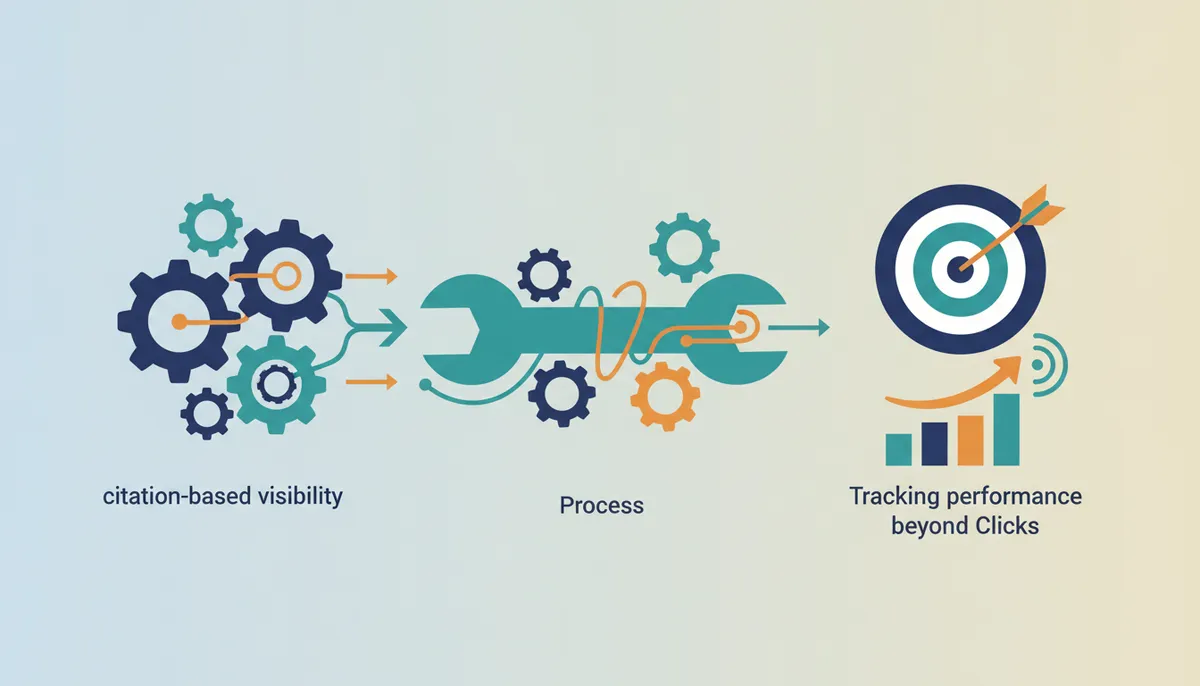
By 2027, search success depends on whether AI systems cite a brand within generated responses rather than where a page ranks in traditional lists. SEO writing strategies must now favor structural clarity and factual density above simple keyword repetition. Factual accuracy acts as the primary signal for inclusion when machines synthesize answers, replacing exact phrase matching as the dominant ranking factor.
Models require unambiguous entity definitions and verifiable claims to produce reliable citations. Content missing clear attribution or logical hierarchy fails extraction even if the hosting domain holds historical authority.
The operational constraint involves sacrificing traffic volume to gain intent precision. Brands often observe fewer total visits as AI platforms answer queries directly, yet the remaining traffic demonstrates notably higher conversion potential. This narrowing funnel penalizes thin, generic content while rewarding deep, technically rigorous documentation.
Practitioners must audit existing assets for extractability by linking every claim to a primary source or verifiable data point. Ignoring this shift leads to obsolescence in discovery channels where answers appear without links. Optimizing for AI content visibility demands embedding structured data and clear provenance into the core content architecture.
Promoting Content to Earn Backlinks and AI Citations
Active distribution turns static pages into referenced authorities for both crawlers and synthesis engines. Writers should target specific communities where domain authority compounds through genuine peer validation instead of automated scraping. A documented guide on backlink acquisition recently grew to over 4,500 monthly organic visits by prioritizing utility over volume. Specialized technical depth attracts the high-quality references necessary for AI citation inclusion.
Generic press releases fail because they lack the granular detail models require for factual grounding.
- Identify niche forums discussing unresolved protocol ambiguities.
- Share raw dataset snippets that validate your claims.
- Tag original researchers when extending their published findings.
- Update legacy threads with current 2026 compliance standards.
- Publish correction logs when external data sources change.
Broad visibility often conflicts with precise targeting because casting a wide net dilutes the semantic signal needed for entity recognition. Models prioritize sources with consistent topical focus over generalist hubs. Content appearing in disparate contexts suffers degraded semantic clarity, which reduces citation probability.
Neglecting this structured promotion leaves content invisible to synthesis layers regardless of on-page optimization. Silence results in exclusion from the generated answers defining user perception today. Distribution functions as a rigid engineering constraint rather than a marketing afterthought. Only verified, widely linked facts survive the filtering process of modern retrieval systems.
Checklist for Updating Content and Tracking AI Visibility
Quarterly audits of existing assets verify factual density and structural clarity for machine readability. Enterium recommends treating legacy pages as flexible data feeds where factual accuracy dictates inclusion in synthesized answers. Teams must integrate tools like Semrush to monitor brand mention frequency within generative interfaces rather than relying solely on click-through rates. This shift requires distinct tracking protocols because citation volume now outweighs traditional position metrics for long-term value.
High-utility technical guides promoted to specific communities earn the domain authority required for model trust. A documented guide on backlink acquisition recently grew to over 4,500 monthly organic visits by prioritizing utility over volume, proving that specialized depth attracts necessary references. Aggressive promotion without rigorous fact-checking invites model hallucination and reputational damage. The operational cost involves maintaining strict version control to ensure every claim remains verifiable against current standards. Neglecting this maintenance renders content invisible to synthesis engines regardless of historical traffic performance.
Update velocity often conflicts with verification rigor. Moving too fast introduces errors that disqualify content from citation pools entirely.
About
Daniel Reyes, Head of Content Engineering at Enterium, bridges the gap between traditional SEO writing tactics and the technical realities of AI content automation. With over a decade in data and ML platform engineering, Reyes specializes in building production-grade RAG systems and evaluation harnesses that directly influence how content is ingested and ranked by modern search algorithms. His daily work orchestrating vector stores and quality gates provides a unique, practitioner-level perspective on optimizing for AI visibility. At Enterium, a B2B publication dedicated to scaling content pipelines with LLMs, Reyes documents the precise architecture required to win synthesized answers. This article translates his engineering rigor into actionable SEO writing strategies, moving beyond basic keyword research to address how content structure and retrieval mechanics determine visibility in AI-driven search environments.
Conclusion
Scaling content for AI retrieval breaks when update velocity outpaces verification rigor, turning high-traffic assets into liability zones for model hallucination. The operational cost shifts from mere production to maintaining strict version control that ensures every claim remains verifiable against current standards. Teams must stop treating legacy pages as static archives and start managing them as flexible data feeds where factual accuracy dictates inclusion in synthesized answers. Prioritize structural clarity for machine extractability over traditional keyword density immediately, specifically for technical guides that serve as primary reference points.
Frequently Asked Questions
Teams can save significant weekly hours by integrating automated technologies into their workflow. Studies indicate that a portion of users save more than 10 hours per week, allowing staff to focus on strategic oversight rather than manual drafting.
Traditional SEO targets ranked lists while generative optimization targets synthesized answers. Success now depends on whether a brand is cited within responses, requiring writers to prioritize semantic clarity over simple click-through rate metrics for visibility.
Narrative styles often obscure the extractability required for machines to surface content as definitive sources. Writers must format data with strict hierarchy so algorithms can parse and recite information effectively in concise summaries.
Optimized content acts as an appreciating asset that drives traffic without recurring costs. Unlike paid ads where visibility stops when funding ends, well-structured articles continue delivering organic results month after month as permanent indexable entries.
Successful alignment generates human clicks while enabling machine extraction for synthetic answers. A single guide can achieve over 4,500 monthly visits while appearing in hundreds of distinct AI platform responses simultaneously.
References