Google ranking fixes: Update legacy pages first
Updating legacy pages first drives quicker ranking gains than publishing new content because Google prioritizes fresh signals on established URLs. Google uses over 200 distinct ranking factors to determine positions, yet a focused subset drives the majority of outcomes according to bigfinseo.com. The analysis reveals how aligning content optimization with AI Overviews optimization requirements creates immediate visibility lifts. Readers will learn to identify high-value targets using Personal Keyword Difficulty metrics rather than chasing saturated terms.
Technical precision remains non-negotiable for crawlability. For instance, title tags must stay under 60 characters to ensure proper display in results as noted by svitla.com. The guide details methods to consolidate keyword-targeting pages and enhance on-page SEO without expanding site bloat. By focusing on these core adjustments, marketers can fix Google Search Console rankings issues efficiently.
The Role of Search Intent and E-E-A-T in Modern Ranking Algorithms
Defining E-E-A-T and Search Intent in Google's Algorithm
Google's quality assessment protocols rely on E-E-A-T, a framework standing for Experience, Expertise, Authoritativeness, and Trustworthiness. These signals determine how algorithms evaluate the credibility of information providers rather than just matching keywords. Search intent defines the specific goal a user seeks to achieve, ranging from informational queries to transactional commands. Satisfying user intent remains the primary filter for relevance despite numerous factors influencing rankings.
Misaligned content fails regardless of technical perfection, making understanding and satisfying user intent perhaps the most necessary factor in modern SEO. AI systems have become sophisticated at matching queries with content that truly addresses what users seek, rendering simple keyword stuffing ineffective. High bounce rates, short time on page, and quick returns to search results signal that content didn't satisfy user intent.
| Component | Function |
|---|---|
| Experience | Validates first-hand usage of products or services |
| Expertise | Confirms author knowledge in the specific field |
| Authoritativeness | Measures domain reputation among peers |
| Trustworthiness | Assesses security, accuracy, and transparency |
Search engines track how users behave after clicking through to your site to verify these claims empirically. Operators must prioritize high-quality content creation alongside strategic keyword research to align with these behavioral signals.
Optimizing Content for AI Overviews and Mobile Search
AI Overviews are generative summaries that extract direct answers from well-structured pages before displaying traditional links. Winning these positions requires content that explicitly satisfies query intent with high clarity. The mechanism favors concise, factual statements located near the top of the document structure. Content without original insights now gets downgraded, while helpful, credible, and human-centered content ranks higher. Pages must prioritize immediate value delivery over narrative buildup.
Mobile optimization acts as a gatekeeper for visibility by dictating strict adherence to display constraints for on-page elements.
| Element | Constraint | Risk of Exceeding Limit |
|---|---|---|
| Title Tag | 60 characters | Truncation in SERP |
| Meta Description | 155 characters | Loss of context |
| Mobile Traffic | Significant share | Poor UX signals |
Strict brevity risks losing detailed context, yet Google's systems prioritize clear, direct data points for overview generation. Operators must balance thorough coverage with the need for extractable summaries. Auditing existing assets for these specific structural flaws often yields quicker gains than new content creation. The actionable step is to audit current title tags and meta descriptions against display limits immediately.
Checklist for Building Authoritativeness and Trust Signals
Demonstrating E-E-A-T requires explicit signals of firsthand experience rather than generic summaries. Content demonstrating E-E-A-T qualities tends to perform improved even though it is not a direct ranking factor. Operators must validate authorship through visible credentials and technical depth within the text structure.
| Signal Type | Implementation Method | Verification Target |
|---|---|---|
| Experience | Firsthand case data | Author bio linkage |
| Expertise | Technical specifics | Peer citation count |
| Trust | Transparent sourcing | Domain reputation |
Quality backlinks remain among the most powerful ranking factors in search algorithms, acting as external votes of confidence in your content's value and credibility. A common failure mode involves burying primary findings beneath excessive introductory narrative.
Placing author credentials and raw data tables prominently helps satisfy both human auditors and algorithmic extractors. This structural alignment makes trust signals machine-readable at crawl time.
| Action Item | Required Evidence |
|---|---|
| Update Legacy Pages | Add current year data |
| Consolidate Cannibals | Merge duplicate intents |
How Technical Foundations and On-Page Elements Drive Crawlability and Relevance
How Title Tags and H1 Headings Define Crawlability
Title tags and H1 headings function as critical signals for relevance, directing parser attention to specific content topics before deep indexing occurs. Search engines apply these elements to map page hierarchy, where aligning the primary keyword naturally in key areas like the title tag and H1 heading supports topical clarity. High-impact outcomes rely on precise technical health and clear content signals.
The mechanical distinction lies in scope: the title tag targets the search result snippet, while the H1 confirms on-page context for the user. Optimizing meta descriptions alongside these elements helps preserve click-through effectiveness, provided they remain under 155 characters to avoid truncation. A common failure mode involves keyword stuffing, which degrades user experience; instead, incorporating synonyms and related terms throughout the content is recommended.
| Element | Primary Consumer | Optimization Focus |
|---|---|---|
| Title Tag | Search Engine Parser | Snippet Relevance |
| H1 Heading | Human Visitor | On-Page Context |
However, aligning these elements strictly can limit semantic variation, potentially reducing long-tail keyword capture. The tension exists between exact match optimization for crawlers and natural language flow for readers. Most core strategies now prioritize user experience improvements over rigid keyword placement to satisfy intent.
Auditing legacy pages where title and H1 divergence is significant can reveal outdated content strategies that confuse modern ranking algorithms. Fixing this alignment yields immediate gains in indexation accuracy without requiring new content creation.
Fixing 4xx Errors and Redirect Chains with Site Audit
Eliminate 4xx errors immediately because they indicate broken paths that prevent content quality assessment. When a server returns a "not found" status, it isolates downstream assets from discovery, directly degrading the technical health required for high-impact ranking outcomes. Operators should prioritize these fixes over aesthetic updates since broken paths hinder crawler access.
| Issue Type | Crawler Impact | Fix Priority |
|---|---|---|
| 4xx Client Error | Access Blocked | Critical |
| Redirect Chain | Budget Waste | High |
| Mixed Content | Security Warning | Medium |
A strict sequence is recommended: resolve errors first, then address warnings. Ignoring these structural breaks means high-quality content remains invisible regardless of keyword relevance. The trade-off is engineering time spent on maintenance versus new creation, yet legacy debt compounds if left unchecked. Addressing these blockers ensures the user experience aligns with the site's intended architecture.
Validating Index Status via Google Search Console Pages Report
Operators confirm coverage by navigating to the Indexing > Pages report to separate indexed assets from excluded URLs. This view categorizes discovery failures by specific technical reasons rather than presenting a binary pass-fail metric. The Pages report explains why certain pages are not indexed, citing causes like duplicate content without a canonical tag or server errors.
| Exclusion Reason | Operator Action | Impact Scope |
|---|---|---|
| Discovered - currently not indexed | Improve internal linking | High |
| Duplicate without canonical | Add canonical tags | Medium |
| Server error (5xx) | Fix server config | Critical |
A common oversight involves ignoring pages marked "Discovered - currently not indexed," which indicates the crawler knows the URL exists but deems it low priority for rendering. This bottleneck often stems from poor internal link depth rather than content quality deficits. Fixing these crawl errors restores the path for value transfer from authoritative parent pages.
Static compliance checks miss these flexible fluctuations in crawler behavior. Recent analysis emphasizes the importance of a 14-day measurement window for validating fixes. Ignoring the specific exclusion reason leads to wasted effort on content that remains invisible to searchers.
Strategic Content Optimization Through Keyword Targeting and Asset Consolidation
Defining Low-Competition Keywords via Personal Keyword Difficulty

Personal Keyword Difficulty isolates terms where a specific domain holds realistic ranking potential by measuring difficulty against the site's own authority instead of global search volume. This metric, expressed as PKD %, predicts how hard it will be for that specific website to reach Google's top 10 positions for a given term. The calculation separates low-competition keywords from high-barrier terms, enabling teams to secure visibility without direct confrontation against established domain authorities on every front. Strategic value emerges when content relevance outweighs raw domain power. A single page with precise query alignment can outperform a generic high-authority asset on specific long-tail variations. Global difficulty scores often mislead teams into wasting crawl budget on unwinnable terms. Low competition indicates an achievable ranking probability for that specific host rather than a traffic guarantee.
Selecting targets based on achievable difficulty creates a reproducible pipeline for organic growth. This method shifts focus from creating new content to optimizing existing assets where the marginal cost of improvement yields disproportionate ranking gains. Teams must verify that selected terms align with actual user intent to avoid generating irrelevant impressions.
Enterium recommends auditing legacy pages for these low-friction opportunities before commissioning new content production.
Applying GSC Filters to Identify Pages Ranking Below Position Three
Export performance reports to isolate queries where the average position indicates content requiring immediate refreshment. Users should review queries where the site ranks just outside the top spots to find pages with ranking potential before committing resources to new drafts. This workflow prioritizes updating existing content over generating net-new assets, using established crawl paths rather than fighting for initial indexing.
High-impression queries with suppressed rankings often indicate a mismatch between current content depth and user intent. Minor textual tweaks sometimes suffice, while other times the section requires complete consolidation. Ignoring these near-miss opportunities leaves visibility on the table despite existing domain authority. A focused update cycle on these pages can restore visibility quicker than waiting for new content to mature.
- Filter GSC data for positions showing potential but lacking top-tier visibility.
- Sort by total impressions to identify high-value targets.
- Audit the top-ranking competitors for missing content gaps.
- Update the legacy page with current data and internal links.
301 Redirects vs Canonical Tags for Resolving Keyword Cannibalization
Merging ranking signals to a single primary URL permanently eliminates split authority. Use a canonical tag when similar but distinct content must remain accessible to users while signaling a preferred version to crawlers. This approach keeps duplicate or overlapping content live while guiding indexing priority.
| Feature | 301 Redirect | Canonical Tag |
|---|---|---|
| User Access | Old URL becomes inaccessible | Both URLs remain reachable |
| Signal Strength | Transfers equity permanently | Suggestive, not mandatory |
| Best Use Case | Obsolete or thin content | Similar but distinct content |
User access differs from signal consolidation. A redirect removes the weak asset entirely, forcing all traffic to the stronger version. Canonicalization preserves the dual presence, which is necessary when both pages serve a purpose but one should take precedence in search results. Teams must audit backlink profiles before deciding; if the weaker page has valuable inbound links, a redirect ensures those signals transfer fully. Relying on canonicals for pages with substantial content overlap may not resolve the ranking dilution issue as effectively as consolidation when the content offers no unique value.
Operational risk involves misidentifying a page as "weak" when it actually serves a specific long-tail query segment. Consolidating indiscriminately can erase visibility for specialized intent clusters that the primary page does not address.
Executing UX Improvements and Link Building for Sustainable Authority
How Navboost and Engagement Signals Define UX Rankings
Google's Navboost algorithm validates search result relevance by analyzing direct user click patterns. Systems rank content higher when visitors spend increased time on a site or navigate to additional pages, treating this behavioral evidence as a primary quality indicator. This mechanism converts UX optimization from subjective design theory into measurable interaction data.
Aligning with these signals requires specific operational shifts:
- Audit legacy pages for high bounce rates using Google Search Console data.
- Rewrite introductory paragraphs to match specific search intent immediately.
- Consolidate thin content pages to increase overall dwell time per topic.
- Implement internal linking structures that encourage deeper navigation paths.
Aggressive monetization often conflicts with engagement retention metrics. Placing ads above the fold increases revenue per visit yet frequently degrades the user experience scores that Navboost tracks. Immediate exits following early clicks eliminate ranking benefits regardless of the initial yield generated.
Visibility now depends on appearing in AI Overviews where trusted, direct answers dominate results. Sites ignoring these engagement signals lose ground to competitors possessing superior interaction profiles. Enterium recommends prioritizing content clarity over decorative elements that delay value delivery for sustainable growth.
Executing Mobile-First Design and Page Speed Optimization
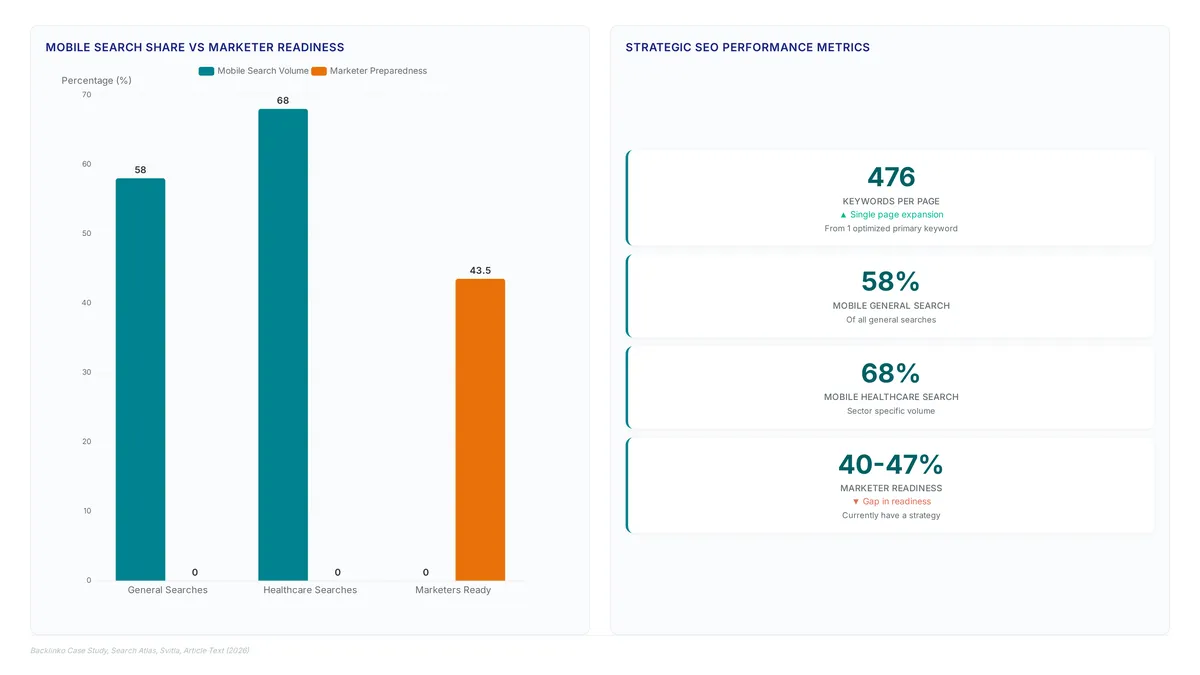
A majority of general searches occur on mobile devices, necessitating layouts that prioritize touch targets and viewport scaling.
- Compress images to WebP format to reduce payload size before rendering.
- Minify CSS and JavaScript files to eliminate parsing delays.
- Apply consistent spacing and font sizes to prevent layout shifts.
Google's PageSpeed Insights identifies specific loading bottlenecks affecting core web vitals. Clean design avoids clutter distracting from primary conversion actions.
Enterium operators must recognize that aggressive script minification breaks flexible content modules without testing across device fragments. Skipping this validation results in non-functional interfaces on specific screen densities. Mobile networks introduce variable latency that increases the impact of unoptimized assets unlike desktop environments.
| Optimization Target | Impact Metric | Implementation Complexity |
|---|---|---|
| Image Compression | Load Time | Low |
| Code Minification | Render Block | Medium |
| Font Consistency | Visual Stability | Low |
Site UX improvements directly influence how algorithms interpret engagement quality. Users interact with content rather than waiting for buffers when pages load instantly. This behavioral signal reinforces topical authority more effectively than static keyword density. Balancing feature richness against performance budgets on older hardware presents a genuine constraint.
Prioritize viewport configuration in your next deployment cycle to capture mobile traffic efficiently.
Checklist for Securing Backlinks via Unlinked Mentions and HARO
Quality backlinks function as external validation signals influencing search ranking algorithms directly. Operators should prioritize converting existing brand visibility into tangible link equity before seeking new placements.
- Scan web archives and news aggregators for unlinked brand references using manual search queries.
- Contact site administrators to request hyperlink insertion on pages already mentioning your organization.
- Register on media sourcing platforms to respond to journalist queries with expert technical commentary.
| Method | Effort Level | Link Quality |
|---|---|---|
| Unlinked Mentions | Low | High |
| Media Sourcing | Medium | High |
Becoming a primary source for industry publications establishes long-term domain authority more effectively than transactional link exchanges. This approach aligns content creation with genuine editorial demand rather than speculative outreach.
Dependency on existing brand awareness limits this strategy since unknown entities lack the initial mentions required for conversion. Teams must generate baseline visibility through other channels before this tactic yields volume. Significant manual correspondence replaces automated scaling as the primary operational cost. Enterium practitioners should track response rates to refine outreach templates over time. Building these connections requires patience but results in durable referral traffic sources.
About
Arjun Patel is an Applied LLM Engineer who benchmarks large language model providers and RAG architectures for content workloads. His expertise directly informs the strategic prioritization of legacy page updates, as modern SEO relies heavily on E-E-A-T demonstration and user experience optimization, factors that automated pipelines must rigorously validate. At Enterium, a B2B publication focused on AI content automation, Arjun analyzes how engineering teams scale content operations without sacrificing quality. He connects daily workflow realities, such as measuring inference latency and cost, to the practical necessity of updating existing content for improved Google Search Console rankings. By evaluating how LLM providers handle complex tasks like consolidating keyword-targeting pages or optimizing metadata, Arjun provides the technical grounding needed to fix ranking issues efficiently. His vendor-neutral approach ensures that recommendations for improving on-page SEO are based on reproducible data rather than hype, helping practitioners build resilient content systems that satisfy both algorithmic requirements and human readers.
Conclusion
Scaling link acquisition through unlinked mentions reveals a critical bottleneck: manual correspondence cannot sustain growth without a foundation of broad brand visibility. Teams relying solely on this method face diminishing returns as initial mention pools exhaust quickly. The operational cost shifts from technical implementation to persistent human outreach, demanding a strategic pivot toward generating baseline visibility first. You must establish topical authority through thorough content ecosystems before expecting volume from editorial conversions.
Implement a strict protocol where you exhaust unlinked mention opportunities only after securing a steady stream of new brand references via topic cluster development. Do not attempt to scale this tactic until your content strategy demonstrates deep subject matter coverage rather than isolated keyword targets. This ensures a continuous inflow of fresh mentions to convert.
Start this week by mapping your current content against core industry topics to identify gaps preventing broader media coverage. Use a web page content extractor to analyze how competitors structure their thematic depth compared to your existing assets. This audit reveals whether your limited mention volume stems from poor outreach or insufficient subject matter dominance. Focus your immediate energy on filling those content voids to naturally increase the surface area for future link opportunities.
Frequently Asked Questions
Long titles get cut off in search results. Keeping tags under 60 characters ensures full visibility and prevents loss of critical context for users scanning results.
Mobile devices drive most general search traffic today. Optimizing for small screens is essential since poor mobile user experience directly harms ranking potential and engagement metrics.
Legacy pages often yield faster ranking improvements than new posts. Google prioritizes fresh signals on established URLs, making existing asset updates a high-value strategic focus.
Misaligned content fails even with perfect technical setup. High bounce rates signal to algorithms that the page did not meet the specific goal the user sought to achieve.
Generative summaries extract direct answers from well-structured pages. Content must offer concise, factual statements near the top to win these prominent positions over traditional link listings.