Model Context Protocol: Stop Static CSV Exports
The Model Context Protocol SDK hit 100,000 downloads in its first month. That velocity signals desperation. Marketers are tired of static data traps. You need a three-layer stack: MCP for real-time retrieval, Skills for behavioral consistency, and Claude Projects for team-wide deployment.
Benjamin Wenner calls modern marketing AI an engine running on stale fuel. Models lack awareness of yesterday's events or current cost-per-acquisition targets. Logging into Google Ads or Meta to export reports for ChatGPT is obsolete. The proposed architecture connects intelligence directly to source systems. This eliminates the lag between data generation and analysis, transforming AI from a novelty into reliable infrastructure.
Layer 1 gives AI eyes into actual business performance without manual formatting. Layer 2 enforces specific behavioral patterns. Layer 3 packages these capabilities into a reusable environment. Teams stop treating powerful models like expensive clipboards. They start using them for genuine, real-time campaign automation.
The Critical Limitations of Static AI Analysis in Modern Marketing
Model Context Protocol as the Zapier Layer for AI
Model Context Protocol (MCP) is an open standard linking AI agents to live external data sources. Static workflows force models to analyze stale CSV exports; this protocol permits direct queries against active business systems. Anthropic announced the specification in November 2024 to link assistants to data systems without requiring custom integrations for every tool. Manual copy-pasting creates a delay between data generation and analysis, rendering insights obsolete before action occurs.
Adoption metrics indicate rapid industry validation. The AAIF MCP Dev Summit North America held in New York City in April 2026 drew approximately 1,200 attendees, signaling strong developer interest. This surge reflects a shift away from read-only Retrieval-Augmented Generation toward agents that perform actions on external systems. Marketing teams increasingly deploy this architecture to connect platforms like Eloqua and Marketo without replacing existing infrastructure.
| Feature | Static AI Analysis | Live MCP Stack |
|---|---|---|
| Data Source | Manual CSV Export | Direct API Query |
| Context | General Knowledge Only | Business Specific |
| Actionability | None (Read Only) | Execute Changes |
Static approaches fail because they cannot access real-time cost-per-acquisition targets or budget pacing. Infrastructure convergence including MCP integration drove the cost and complexity of building agentic workflows down notably between 2025 and 2026. AI without MCP works blind, knowing general information but nothing specific about a business's campaigns, customers, or performance. A fragmented workflow prone to human error remains the alternative, where analysis done on Monday is often stale by Wednesday due to the constantly moving nature of performance data.
Querying Live Google Ads Data to Fix Stale Fuel Analysis
Model Context Protocol (MCP) enables Google Ads to serve live campaign metrics directly to AI agents, replacing static CSV exports. Exporting reports and pasting CSVs into ChatGPT represents AI-assisted copy-pasting rather than AI-powered marketing. This manual transfer creates a static snapshot where the model remains unaware of current cost-per-acquisition targets or budget pacing issues. Decisions derived from such data are inherently delayed, often rendering analysis obsolete before implementation.
Direct integration solves this by allowing Claude to query the actual account via an official MCP server. This connection eliminates the risk of decisions made on stale information by pulling real-time performance data. Operators can request immediate checks on underperforming campaigns or search term reports without leaving the chat interface. This approach reduces the manual prep time and export-import cycles that previously consumed marketing operations budgets.
Dependencies absent in local file analysis emerge when relying on live queries. A local CSV is always available offline, yet live connections require the underlying data source to be accessible. Unlike read-only report files, live write-capable endpoints allow AI to perform actions, necessitating a clear understanding of the tool's capabilities versus simple context retrieval. Teams must balance the speed of live data against the stability of batched imports. Deploying this architecture ensures budget pacing adjustments occur while the data remains actionable. Analysis reflects the current state of the account, not yesterday's snapshot.
Takeaway: Replace manual exports with an MCP-connected Google Ads server to eliminate data lag and enable real-time campaign optimization.
The Blind Spot Risk of AI Operating on Static Snapshots
Architectural constraints force the model to function as a powerful engine running on stale fuel because the AI operates on a static snapshot rather than live data. This creates a critical blind spot where the system remains unaware of yesterday's events or current cost-per-acquisition targets. Output becomes inherently inconsistent without a live connection, oscillating between generic advice and actionable insights that require heavy manual editing. The risk involves deploying capital based on obsolete reality, not merely inefficiency. Marketing teams running recurring analysis workflows face compounded operational costs when reconciling these disjointed data points without engineering support. Generic assistants are effectively locked in a room without access to files, rendering them unable to validate claims against actual campaign performance. Shifting toward conversational, question-driven access eliminates the lag between data generation and strategic decision. Replacing manual export cycles with a live data stack ensures every recommendation reflects the current state of the business. Operators should audit their current workflow for any instance of CSV copy-pasting and prioritize connecting those specific data sources via Model Context Protocol.
Architecture of a Live Data Stack Using MCP and Claude
Defining the Three-Layer Stack: MCP, Skills, and Projects
Three distinct logical layers separate data access, behavioral rules, and team context to change AI from a novelty into infrastructure. Layer 1 uses the Model Context Protocol (MCP) to establish a universal client-server link, enabling the system to query live sources like Google Ads rather than analyzing static CSV exports. Marketing operations teams connect existing platforms without replacement through this design. Decisions rely on current account states instead of stale snapshots. Layer 2 deploys Skills to enforce behavioral consistency across all interactions.
| Layer | Component | Primary Function |
|---|---|---|
| 1 | MCP | Live data retrieval |
| 2 | Skills | Behavioral consistency |
| 3 | Projects | Team context packaging |
Configuring Client-Specific Projects with Inherited Agency Skills
Binding static business context to flexible Skills happens when configuring one Claude Projects instance per client for immediate behavioral alignment. Rules set in a Skill are inherited automatically by every conversation using that Skill. The model does not need re-briefing on attribution models or reporting formats. Populating each Project with the client's business model, target audience, and historical performance benchmarks occurs before team access. This deployment standard addresses the root cause of inconsistent AI output by separating variable data from invariant agency methodology. A junior strategist accessing a Project sees the senior analyst's framework applied to live queries without manual intervention.
| Configuration Layer | Function | Scope |
|---|---|---|
| Layer 2: Skills | Enforces behavioral rules | Agency-wide |
| Layer 3: Projects | Stores client context | Client-specific |
Required JSON schemas get checked against stored instructions before the model executes actions via the client-driven validation mechanism. Operators treat the Project knowledge base as a living document. Client goals shift over time. The model must not optimize for outdated targets. Updates prevent such errors.
MCP Actionable Tools Versus Read-Only RAG Limitations
MCP separates read-only context from executable Tools to enable direct system modification. Retrieval-Augmented Generation (RAG) primarily provides read-only context from indexed documents. MCP allows agents to fetch data and perform actions on external systems. AI agents fetch live data and execute actions like updating CRM records or triggering email campaigns. Read-only approaches lack the capability to execute actions. Operators manually bridge the gap between analysis and implementation when using read-only systems.
| Feature | Read-Only RAG | MCP Tools |
|---|---|---|
| Data Access | Static Index | Live Query |
| System Action | None | Execute Command |
| Workflow State | Manual Transfer | Automated Loop |
| Error Source | Copy-Paste | Logic Definition |
An agent uses MCP to log into Salesforce, re-prioritize leads, and suggest strategies in a described use case. Static analysis shifts to active workflow management. Marketers using MCP-enabled tools like Mailjet move from static dashboards to conversational access. Natural language questions about campaign performance derive directly from live databases. Read-only systems generate reports for humans to act upon. Actionable tools generate completed tasks. This architecture prioritizes the executable layer. Manual intervention steps inherent in legacy workflows disappear. Static analysis identifies problems. Actionable tools resolve them without human translation.
Implementing the Three-Layer Stack for Campaign Automation
Defining MCP Resources and Tools for Google Ads Integration
Configuration of the official Google Ads MCP server requires a strict split between read-only context and executable commands. This boundary stops the model from inventing actions while granting visibility into live account states. Static retrieval methods simply index documents, yet this protocol divides Resources from Tools so agents fetch data and act on external systems directly. Resources supply necessary read-only context like current campaign budgets or historical CPA trends. Tools define actionable commands the model executes, such as pausing underperforming ad groups or adjusting bids.
Implementation demands mapping specific API endpoints to these two categories inside the server configuration. Such architectural discipline forces the AI to operate on fresh data instead of stale exports. Diagnostic queries and operational changes then share a single source of truth within the system. Enabling AI to work where data lives removes the manual preparation and export-import cycles that previously consumed marketing operations budgets.
Implementation: Building Client Projects with Inherited Agency Skills
Agencies should establish one Project per client containing business models, target audiences, and historical performance benchmarks.
- Instantiate a new Project containing the client's target audience profiles and seasonal performance data.
- Attach agency-wide Skills to inherit standardized audit structures and reporting formats automatically.
- Link the Google Ads MCP server to enable live queries against the specific account context.
This setup guarantees every team member accesses a pre-briefed environment where Skills enforce consistent attribution modeling and tone. The Google Ads connection allows the system to surface budget pacing issues without manual data entry. Users can ask Claude to check which campaigns are underperforming against target CPA, pull search term reports, surface budget pacing issues, or compare performance metrics across different timeframes.
Granular client customization creates tension with the maintenance overhead of distinct Projects. Operators must balance specific context loading with the retention of broad, reusable behavioral patterns. A Skill captures an agency's best practices in a few hundred words, covering campaign audit structures, budget recommendation framing, tone for client-facing summaries, and key performance indicators (KPIs) to flag. Every team member who uses Claude with that Skill active gets the senior analyst's judgment baked in from day one, reducing the time it takes for a junior hire to absorb implicit knowledge. Static prompts become flexible, context-aware operational assets through this structure.
Validating Live Data Connections Against Static Snapshots
Live validation depends entirely on distinguishing between working on a static snapshot versus accessing live account data.
- Query Current State: Ask the system to report active budget pacing and compare it with your last manual export.
- Verify Tool Execution: Confirm the model uses set tools rather than recalling static training data for specific metrics.
- Audit Search Terms: Request immediate search term reports to ensure new negative keywords are visible instantly.
| Feature | Static Snapshot | Live MCP Connection |
|---|---|---|
| Data Freshness | Stale until next export | Real-time query |
| Error Source | Manual copy-paste | API configuration |
| Audit Speed | Hours per campaign | Seconds per query |
Operators often blame AI hallucination when the real failure is stale information from disconnected files. The system cannot identify underperforming campaigns against target CPA accurately without live links. Performance data moves constantly for marketing teams, and analysis done on Monday is often stale by Wednesday. An AI that sees live data differs categorically from one that cannot, eliminating the risk of acting on Monday's data during Wednesday's optimization window.
Strategic ROI and Operational Gains from Live AI Infrastructure
MCP Solves the NxM Integration Cost Center
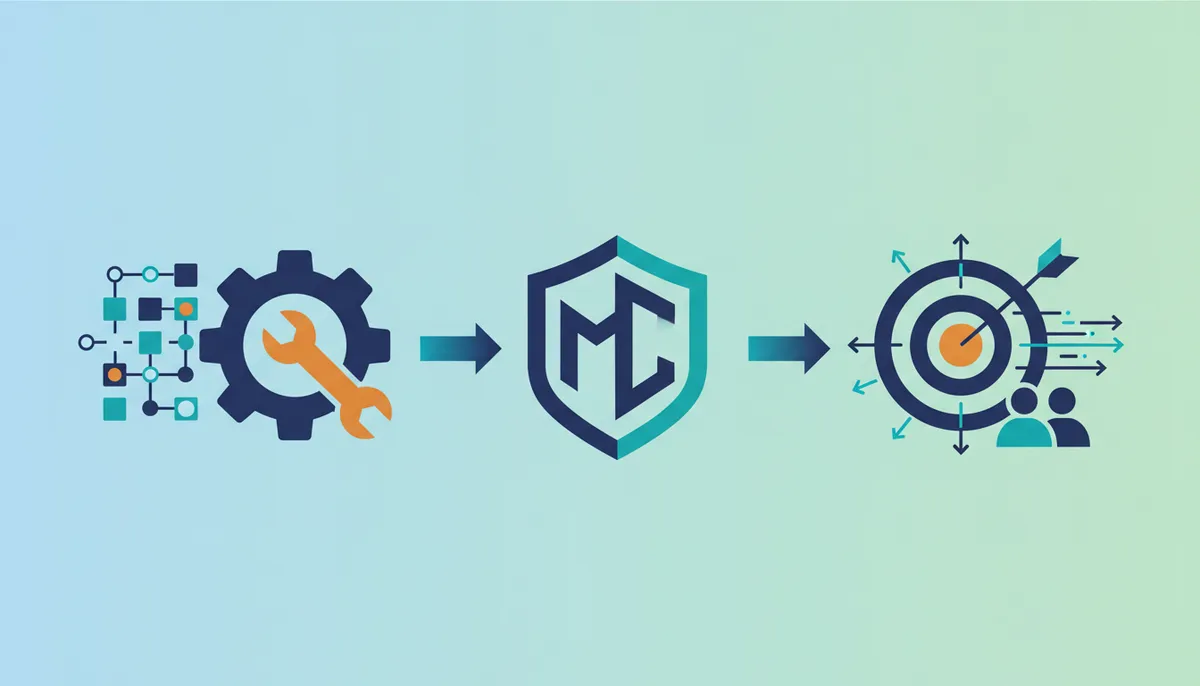
Model Context Protocol (MCP) adoption accelerates because it resolves the NxM integration problem, a historical cost center where teams wrote custom code for every combination of N large language models and M external systems. Previous methods relied on browser plugins or static dashboards that fractured workflows. MCP establishes a universal client-server architecture to replace these fragile connections. Organizations no longer face exponential engineering debt when adding new data sources or AI models. The cost and complexity of building these agentic workflows dropped notably due to this infrastructure convergence. A single protocol now enables scalable, real-time campaign optimization without linear increases in engineering headcount. Replacing custom connectors with this standard allows teams to focus on strategy rather than maintenance.
Executing CRM Updates and Email Campaigns via MCP Tools
MCP Tools enable AI agents to execute write operations like updating CRM records or triggering email campaigns, moving beyond read-only data retrieval. Retrieval-Augmented Generation (RAG) primarily provides static context from indexed documents, whereas MCP separates resources from tools to allow active modification of external systems. This distinction allows marketing teams to shift from passive analysis to agentic workflows where the AI autonomously re-prioritizes leads or launches retention sequences. Closing the loop between insight and action removes the need for manual copy-pasting. An agent can detect a high-value lead in a Google Ads campaign and immediately update the contact status in the CRM via an MCP Tool call. This approach eliminates the latency inherent in human-mediated data entry and reduces errors associated with static exports. Implementing validation gates within the tool definition helps prevent unauthorized changes to critical customer data. Automation speed requires rigorous input sanitization before any tool execution occurs. This architecture transforms the AI from a passive observer into an active participant in the marketing stack.
The Productivity Gap Between AI Demos and Production Data
Controlled demos often display impressive AI capabilities that vanish in production environments lacking access to specific, live numbers. Disappointment stems from adopting the tool without the supporting infrastructure required for real-time connectivity. Many teams adopt the model but fail to connect it to current business realities. Agents operate on static snapshots rather than flexible data streams without a protocol like Model Context Protocol. Retail data indicates that organizations bridging this divide with agentic stacks can reduce ampaign content production time by over 50%. Teams must move beyond treating AI as a chat interface and instead build a live data stack. This requires shifting from passive analysis to active data access where the system queries the source directly. Marketing teams remain stuck in a cycle of copying CSV files and pasting them into chat windows without this structural change. The result is not intelligence at scale but merely expensive, error-prone copy-pasting. Building this foundation transforms AI from a novelty into reliable infrastructure.
About
Arjun Patel is an Applied LLM Engineer who specializes in benchmarking LLM providers and RAG architectures for high-volume content workloads. His daily work involves rigorously evaluating the trade-offs between cost, latency, and output quality across various inference engines, making him uniquely qualified to dissect the Model Context Protocol (MCP). While many marketers rely on manual data exports from platforms like Google Ads or Meta, Arjun's engineering background focuses on eliminating these static snapshots by building live data pipelines that connect AI directly to source systems. At Enterium, a B2B publication dedicated to documenting how modern teams scale content operations, Arjun applies this technical expertise to move organizations beyond "AI-assisted copy-pasting." By analyzing the architectural requirements for real-time context, he helps content leaders implement the Enterium methodology, ensuring their automation stacks are grounded in reproducible, production-ready engineering rather than hypothetical workflows.
Conclusion
Latency and data staleness break systems faster than model errors do. The operational cost of maintaining manual validation gates grows linearly with every new tool integration, creating a bottleneck that static exports cannot solve. Teams relying on disconnected chat interfaces will find their efficiency gains plateau once initial novelty fades. You must treat live data connectivity as a fundamental infrastructure requirement, not an optional plugin, before attempting to deploy autonomous agents at scale.
Start by mapping your current data entry points where humans still copy values between systems this week. Identify the single highest-volume workflow where latency directly impacts revenue, such as lead status updates or inventory checks. Replace that specific manual handoff with a validated tool call that queries the source system directly. This targeted swap proves the architectural shift from passive observation to active participation without requiring a full platform overhaul.
The massive surge in SDK adoption signals that the industry is rapidly standardizing around live connectivity patterns. Ignoring this shift leaves your stack isolated while competitors automate the loop between insight and action. Build your live data stack now to ensure your AI agents operate on reality rather than snapshots.
Frequently Asked Questions
Static exports create stale fuel that renders insights obsolete before action occurs. Analysis done on Monday is often stale by Wednesday due to the constantly moving nature of performance data.
MCP gives AI direct eyes into your actual business performance without manual formatting. This shift eliminates the lag between data generation and analysis, transforming AI from a novelty into reliable infrastructure.
Direct integration removes the manual prep time and export-import cycles consuming budgets. Teams stop treating powerful models like expensive clipboards and start leveraging them for genuine, real-time campaign automation.
Skills solve the consistency problem by defining persistent rules for specific task types. Your agency's best practices get captured once so every conversation inherits them automatically without retraining staff.
The stack combines live data access, behavioral consistency, and reusable team environments. This approach ensures budget pacing adjustments occur while the data remains actionable for immediate business impact.
References