Brand citation tracking: why static SEO fails now
Over 40% of Google searches now return AI answers. For modern brands, citation is no longer optional, it is existential. LLM citation tracking diverges sharply from standard SEO. It measures how often a brand appears in responses from systems like ChatGPT, Gemini, and Perplexity, not where a URL sits on a static list. Platforms now apply massive prompt arrays to map brand presence across specific buyer path stages. This shift explains why Profound recently secured unicorn status with a billion-dollar valuation after its Series C round. The market is paying for clarity in a fragmented data environment.
We must also contrast these capabilities with AirOps. Teams deciding how to allocate resources need to understand the difference between monitoring relevance and engineering the content infrastructure that drives it. In an algorithmic environment where context dictates revenue, the distinction determines survival.
The Definition of Share of Model in Generative Search
Share of Model as the Probabilistic Citation Metric
Share of Model calculates the portion of AI-generated responses that cite a brand across systems like ChatGPT, Gemini, and Claude. The metric matters because over 40% of Google searches now return AI-generated answers before a single organic result. Static SEO rankings hold a URL position fixed until an algorithm update occurs. LLM citation displays probabilistic behavior. Identical queries issued at different intervals yield divergent results. Brand presence is fluid, not absolute.
This volatility introduces distinct operational risk. A brand might appear in 22% of responses today and vanish tomorrow without any change to its own content. Traditional "Share of Voice" measures impressions against a fixed inventory. Share of Model tracks inclusion within a flexible generation process. Platforms like Profound attempt to stabilize measurement by running structured query panels to monitor citation frequency over time. These tools measure model responses to crafted inputs, not necessarily how actual end-users phrase queries. That limitation defines the constraint.
Optimizing for citation authority demands continuous content deployment instead of one-time technical fixes. Underlying models re-weight context dynamically. The content pipeline must constantly feed fresh, structured data to maintain probability mass. Static assets decay quicker in this environment because the model "memory" equates to the sum of its current training retrieval, not a cached index. Brands must treat content as a real-time signal input. High-intent comparison queries must consistently retrieve their structured data over competitor noise.
Profound Brand Visibility vs Traditional SEO URL Rankings
Share of Model replaces static URL rankings with probabilistic citation authority across large language models. Traditional SEO tools measure line position in a deterministic list. Generative search optimization tracks whether a brand name appears at all within synthesized answers. We measure citation frequency, not click-through potential.
Profound distinguishes this approach by focusing on generative engine metrics instead of human-centric link placement. The market pivots from competing for clicks to competing for citations. Brands must optimize how AI systems summarize products rather than just ranking links. Creator content indexed by LLMs acts as a citation authority signal beyond social metrics. This decouples visibility from traditional domain authority scores.
| Metric Type | Traditional SEO | Generative Search |
|---|---|---|
| Primary Unit | URL Position | Brand Name Mention |
| Measurement | Deterministic Rank | Probabilistic Appearance |
| Goal | Traffic Acquisition | Model Inclusion |
| Volatility | Low (Update-based) | High (Query-based) |
Relying solely on legacy rank tracking creates a blind spot. A brand might rank first organically but remain absent from the AI overview panel. High organic traffic does not guarantee model inclusion. Enterprises should treat brand visibility in AI responses as a distinct KPI requiring dedicated instrumentation. Teams must audit query outputs directly rather than inferring presence from search console data.
Deploying AirOps and Profound for Citation Rate Improvement
Operationalizing citation rate requires coupling AirOps for structured content generation with Profound for continuous visibility auditing. This architecture addresses the AI marketing data fragmentation problem by closing the loop between production and measurement. Teams deploying targeted content pipelines typically observe meaningful improvements in brand appearance within 60 to 90 days of execution.
The workflow uses specific read/write capabilities where monitoring data triggers content updates. Unlike competitors focusing solely on auditing, this integration allows teams to generate content briefs and publish directly to CMS systems based on real-time gaps. Closed-loop automation ensures content strategy reacts dynamically to probabilistic model behaviors rather than static historical data.
Budget planning must account for enterprise-grade tooling costs. Purpose-built platforms like Profound typically start in the range of several thousand dollars per month. This figure reflects the complexity of simulating thousands of query variations across multiple models. Recent market validation supports this valuation, evidenced when Profound secured a significant amount million in new capital during its Series C round.
| Component | Primary Function | Strategic Value |
|---|---|---|
| AirOps | Content Operations | Generates structured, factual briefs optimized for retrieval |
| Profound | Visibility Monitoring | Quantifies brand presence across generative interfaces |
Distinguish clearly between simulation and actual user traffic. These tools measure response frequency against crafted prompts. They do not inherently quantify end-user volume without correlating against web analytics. Organizations must treat citation rate as a leading indicator of potential influence rather than a direct proxy for revenue without further attribution modeling.
Mechanics of LLM Citation Tracking and Measurement
Defining Query Intent Categories for Citation Panels
Effective panels stratify prompts into awareness-stage questions, comparison queries, feature-specific questions, and post-purchase support queries. This taxonomy mirrors the buyer process rather than generic keyword clusters. Query intent categories determine which data sources an LLM retrieves. A brand dominant in awareness terms may remain invisible during high-stakes evaluation. Citation rate on high-intent comparison queries correlates most directly with AI-influenced purchase decisions. This segmentation is vital for revenue attribution.
Operators must distinguish between broad definitional prompts and specific competitor juxtapositions. Tools like Airefs track prompt-based monitoring at lower price points. Enterprise workflows often require deeper integration with content operations. The platform collects data on prompt volumes to determine brand surfacing, but simulation cannot replicate actual end-user variance. Set categories reflect structured testing parameters instead of the chaotic phrasing of organic user input.
Neglecting comparison queries creates a false sense of security where total volume masks revenue leakage. Teams should negotiate 60 to 90-day pilots to validate if their content structure supports these distinct intent layers. Prioritize comparison and feature-specific panels first. These drive immediate commercial impact.
Executing Structured Query Panels to Track Citation Lift
Executing structured query panels requires deploying hundreds of discrete prompts mapped precisely to product types and buyer process stages. This process moves beyond static keyword tracking to measure flexible citation frequency across multiple large language model providers. Operators define specific query intent categories, including awareness questions and comparison queries, to simulate real user interactions at scale. The platform aggregates data on prompt volumes and agent interactions to determine brand surfacing in AI outputs Data Collection Architecture. Tracking these rates over time allows teams to quantify lift. A brand might appear in 31% of responses by March after sitting at lower levels in January.
The operational workflow involves five distinct steps:
- Map product attributes to specific buyer path stages.
- Generate diverse prompt variations for each intent category.
- Deploy prompts across target LLMs at scheduled intervals.
- Aggregate citation counts and competitor mentions.
- Correlate visibility spikes with content deployment dates.
Simulation volume differs from actual user exposure. The data reflects how models respond to crafted prompts, not necessarily how many humans see those specific responses. Consequently, this metric serves as a leading indicator for content strategy rather than a direct replacement for traffic analytics. Teams must pair this visibility data with actual referral logs to validate revenue impact. Without this correlation, optimization efforts risk targeting model quirks rather than genuine market demand. The cost of ignoring this gap is a dashboard full of green metrics while sales remain flat. Treat panel data as a directional signal for content deployment, not an absolute truth about market share.
Data Limitations in LLM Citation Monitoring
Current monitoring stacks rely on query simulation rather than live end-user traffic data. Dashboards display how models respond to crafted prompts, not how many actual users receive those responses. Tools like Profound quantify visibility lifts across intent categories. The data remains a leading indicator instead of a direct revenue attribution source. Operators must pair these signals with GA4 analytics to validate traffic shifts.
A secondary limitation involves the probabilistic nature of citation behavior, where identical prompts yield varying brand mentions across time windows. This variance complicates the detection of genuine optimization gains versus random model drift. Standalone monitors often lack content generation capabilities. They require integration with operations platforms like AirOps to close the loop between insight and deployment. Without this coupling, teams possess visibility but lack the mechanism to execute fixes for low citation rates. The constraint of this gap is delayed reaction time to competitor surges in high-intent comparison queries.
Treat citation dashboards as early warning systems rather than absolute truth sources.
Strategic Comparison of Profound and AirOps Platforms
Profound Monitoring vs AirOps Content Infrastructure Scope
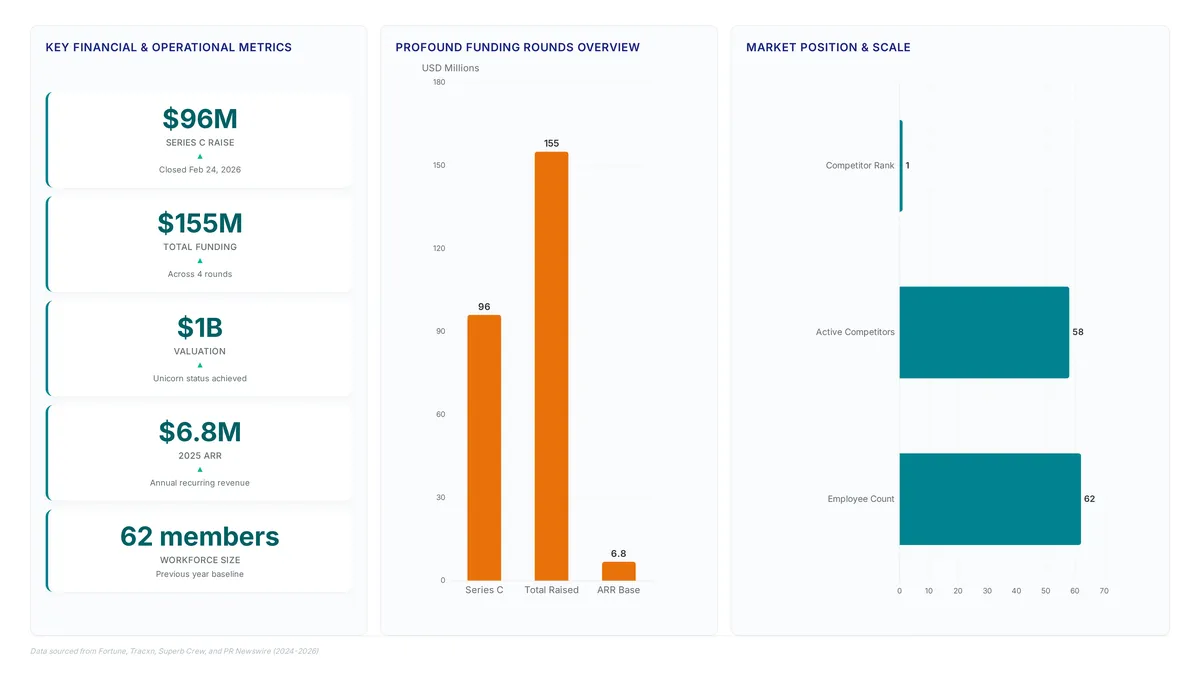
Profound operates as a generative search monitoring platform while AirOps functions as LLM-optimized content production infrastructure. This distinction separates measurement from execution. Profound tracks citation frequency across simulated query panels to quantify brand visibility within AI responses. Teams observe shifts in appearance rates over time, validating whether strategic adjustments influence model outputs. Conversely, AirOps constructs the structured topic clusters and definitional content that retrieval systems prioritize during generation. It connects directly to CMS environments to publish authoritative data sources at the scale required for model ingestion.
Structured content pipelines prevent visibility dashboards from reflecting baseline noise instead of optimization potential. Organizations attempting to track performance without addressing content structure often find their data lacks actionability.
| Feature | Profound | AirOps |
|---|---|---|
| Primary Function | Citation tracking | Content generation |
| Data Output | Visibility metrics | Published articles |
| Workflow Role | Measurement | Execution |
Profound distinguishes its utility by offering capabilities that allow users to generate briefs based on visibility gaps, effectively bridging the gap between auditing and creation. This integration reduces the latency between identifying a missing citation and deploying a fix. However, relying solely on internal simulation means the data reflects potential visibility rather than confirmed user exposure. The platform cannot verify how many actual end-users received a specific response. Operators must treat these metrics as leading indicators. Effective deployment pairs Profound's analytics with AirOps' production workflows to close the loop between insight and implementation.
Pairing AirOps Output with Profound Citation Data
Teams execute this workflow by deploying AirOps to generate structured comparison frameworks, then validating impact through Profound's citation rate tracking. AirOps functions as content strategy infrastructure, connecting to CMS environments to publish the authoritative topic clusters that retrieval systems prioritize. This production capability addresses the volume requirements for model ingestion but lacks native measurement. Profound distinguishes its platform by offering capabilities that allow users to generate content briefs based on visibility gaps. This integration enables a cycle where production directly responds to citation data rather than static keyword rankings.
| Dimension | AirOps Capability | Profound Capability |
|---|---|---|
| Primary Function | Content production infrastructure | Generative search monitoring |
| Data Output | Structured topic clusters | Citation frequency reports |
| Workflow Role | Execution and publishing | Measurement and auditing |
Content velocity often conflicts with measurement fidelity. AirOps accelerates the creation of definitional content. Yet the probabilistic nature of LLM responses means citation lifts are not immediate. Meaningful improvements typically manifest over a 60 to 90-day window following targeted deployment. Early adopters apply no-code automation platforms to orchestrate such workflows across high-growth tech sectors. Teams risk producing high-volume content that fails to shift share of model without this paired approach because the feedback mechanism remains broken. Production tools must feed measurement loops, not content repositories.
Vendor Selection Criteria: LLM Breadth and Query Refresh Rates
Selection hinges on LLM breadth covering ChatGPT, Gemini, Claude, Perplexity, Copilot, and Llama-based systems. AirOps functions as content infrastructure requiring external validation. Profound integrates monitoring directly into the workflow loop.
| Feature | Monitoring Focus | Production Focus |
|---|---|---|
| Primary Function | Citation tracking | Content structuring |
| Data Latency | Daily updates | Project dependent |
| Integration | Slack, API alerts | CMS, Brand guidelines |
| Best Use Case | Visibility audits | Pipeline orchestration |
Broad coverage sometimes comes at the expense of update speed as some vendors sacrifice one for the other. Enterprises increasingly adopt no-code platforms to manage these complex tasks without deep engineering reliance. Brands unable to measure the impact of their structured content rely solely on production tools. Monitoring without execution capabilities creates a data-rich but action-poor environment. Commission a 30-day baseline citation audit scoped to the top three product categories to establish a clear starting point.
Implementation Steps for Generative Search Optimization
Defining the LLM-Optimized Content Pipeline Structure
Data structures must align with how large language models retrieve information rather than how humans scan pages. This architecture prioritizes definitional content and comparison frameworks that bots ingest as authoritative training signals. Traditional SEO targets keyword density. This approach builds topic clusters designed explicitly for model consumption. Teams produce these structured assets by connecting directly to CMS environments to enforce consistency at scale. The platform builds content pipelines structured to feed training patterns. Generated output must align with the factual accuracy required for citation. Recent market activity validates this shift, as companies now apply no-code automation to orchestrate these specific marketing workflows. The system automatically generates AI-optimized content briefs that focus on factual accuracy to maximize retrieval probability.
Publishing unstructured text at scale dilutes citation potential compared to fewer, highly structured entries. Platforms distinguish themselves by offering "read/write" capabilities. Users generate content briefs and publish directly to CMS systems, integrating content creation into the visibility loop.
Executing a 90-Day Vendor Pilot with Baseline Citation Audits
Initiate the pilot by defining a query universe derived strictly from brand-specific prompts rather than vendor suggestions. This constraint ensures the baseline citation audit reflects actual customer language instead of generic industry terminology. Request current-state reporting across at least three distinct LLMs using a minimum of 50 the queries to establish a statistically significant starting point. Limit the initial scope to a single product line for 90 days. Target a 10-15% lift in citation rates.
Static panels expose whether optimization efforts genuinely influence model retrieval or merely shift noise. Teams must verify that the vendor tracks probabilistic citation behavior daily. Weekly scans miss critical volatility in model outputs. Automation features enable no-code workflows for unifying data and synthesizing insights. Tools become operational hubs rather than just analytics dashboards. Some platforms offer read/write capabilities that generate briefs based on visibility gaps, creating a closed-loop system for iterative improvement. The market shift toward competing for citations requires this level of granularity rather than broad impression metrics. A failed pilot often stems from measuring awareness queries while ignoring high-intent comparison terms that drive revenue.
Strategic Risk of Delaying Generative Search Investment Until 2027
Waiting until 2027 to invest in generative search optimization cedes structural advantage to competitors currently locking in citation authority. LLM training patterns are not static. They solidify around existing authoritative content, creating a feedback loop where early movers define the "truth" for their category. Citation authority acts as a compounding asset. Brands building this infrastructure now capture the bulk of future AI-influenced retail decisions. Delaying implementation treats visibility as a future optimization problem rather than a present-day revenue leak. EMARKETER has projected that AI-influenced retail decisions will exceed $200 billion in the near term. Organizations ignoring this shift risk becoming invisible references in high-intent comparison queries where purchase decisions finalize.
The cost of waiting is not merely lost traffic but the permanent erosion of brand definition within synthetic search results. Once an LLM establishes a dominant narrative for a product category, overturning that baseline requires disproportionate effort compared to establishing it initially. Generative search optimization is a priority for 2026. LLM citation patterns are being shaped currently based on existing content and authority signals. Brands building citation authority in the next 12 to 18 months will have structural advantages before the window closes.
About
Daniel Reyes serves as Head of Content Engineering, where he architects production-grade AI content pipelines from ingestion to evaluation. His decade of experience building RAG systems and vector stores provides the precise technical foundation required to analyze why brands are becoming invisible to generative search. Unlike traditional marketers, Reyes understands the underlying mechanics of how LLMs retrieve and cite information, making him uniquely qualified to explain the shift from "share of voice" to "share of model." At Enterium, a publication dedicated to documenting how modern teams scale content with LLMs, Reyes applies this engineering rigor to help B2B leaders navigate emerging tools like Profound and AirOps. His daily work involves configuring the very quality gates and orchestration layers that determine whether a brand gets cited by models like Claude or Gemini. This article translates those complex pipeline realities into actionable strategy for content operators facing an existential visibility crisis.
Conclusion
Scaling generative search efforts reveals that citation volatility creates unpredictable revenue gaps. A brand's presence can fluctuate drastically within weeks. This instability transforms visibility from a marketing metric into a critical operational liability requiring constant management. The compounding nature of LLM training means that delaying investment allows competitors to cement their narratives as the default truth for your category. You must treat the current environment as a finite window to establish citation authority before these patterns solidify permanently.
Organizations should commit to a 60 to 90-day pilot program immediately to validate their content strategy against real-time model behavior. This timeline aligns with the typical latency required for deployment impacts to manifest in model responses. Do not wait for broader market adoption. The structural advantage belongs to those who define category parameters now. Begin by commissioning a 30-day baseline citation audit scoped specifically to your top revenue-generating products. This targeted assessment provides the empirical data needed to negotiate effective pilot terms with vendors. By establishing this baseline, you convert abstract visibility risks into actionable intelligence. Securing your brand's position in synthetic results requires proactive infrastructure development rather than reactive optimization.
Frequently Asked Questions
Brands face existential risk when citation rates fluctuate wildly without content changes. A brand might appear in 22% of responses today and vanish tomorrow, requiring constant monitoring rather than static ranking checks to maintain visibility.
Traditional SEO tracks fixed URL positions while share of model measures probabilistic brand mentions. Over 40% of Google searches now return AI answers, making brand inclusion in these dynamic responses more critical than organic link placement.
Teams should target a 15% lift in citation rates during initial optimization phases. This requires scoping efforts to a single product line for 90 days while deploying fresh structured data to influence model retrieval patterns effectively.
High organic traffic does not guarantee model inclusion because LLMs use probabilistic generation. A brand might sit at 31% of responses by March after sitting lower previously, showing that URL rank and citation authority are distinct metrics.
Profound achieved a billions valuation, marking its status as a unicorn startup. This significant financial backing highlights the urgent market need for tools that help brands navigate fragmented AI visibility data landscapes effectively.
References