Keyword strategy fixes for modern AI search queries
Only a minority of marketers possess a set AI content strategy, leaving most brands unprepared for modern search shifts. Success now demands a pivot from simple volume metrics to a complete strategic planning approach that accounts for semantic intent and answer synthesis.
This guide cuts through the noise. First, we define the critical gap between basic data gathering and true strategic planning, a disconnect plaguing the industry according to recent adoption metrics. Next, we dissect how AI search engines parse queries differently than traditional tools, rendering old keyword research methods increasingly obsolete for capturing organic search visibility. Finally, we outline an eight-step framework for executing an effective keyword strategy designed specifically for this new environment.
We avoid speculative market sizing to focus on actionable fixes for content visibility in an era of AI-powered search suggestions. By addressing competitor ranking gaps and analyzing SERP features like AI Overviews in Google, marketers can prioritize terms based on actual business goals rather than outdated heuristics. This guide provides the necessary steps to check AI visibility for any domain without relying on guesswork or inflated promises.
The Distinction Between Keyword Research and Strategic Planning
Defining Keyword Strategy as a Plan for Search Queries and AI Prompts
A keyword strategy defines the specific search queries a brand targets, the methods used to rank, and the priority assigned to each entity. This definition moves beyond simple term discovery to address how AI systems process intent rather than exact matches. User behavior shifts rapidly as AI Overviews and conversational search gain traction. People now ask complete questions like "What should I wear to an outdoor wedding in October?" instead of typing short phrases. Research finds terms while strategy dictates appearance based on business goals. Modern approaches require tracking long-tail traffic growth driven by queries consisting of four or more words. Raw search volume for broad keywords becomes less necessary as AI thinks in terms of entities like products, people, and abstract concepts. Operators must verify how often their content is directly referenced or summarized by AI Overviews to gauge true visibility. Ignoring this shift causes a measurable loss of relevance in generative answers. Prioritizing business goals over volume data requires discarding legacy metrics that no longer predict performance. Valid planning now demands a complete view of organic search behavior rather than isolated keyword lists. Effective planning requires auditing existing visibility to understand where specific professional needs are currently underserved before attempting to target new conversational angles.
Applying Strategic Prioritization to Online Accounting Software Versus Contractor Terms
Chasing generic volume burns budget on users seeking free tools or definitions rather than paid solutions. Strategic prioritization selects high-relevance terms over high-volume generics to optimize resource allocation. Keyword research might show online accounting software is searched 10 times more than accounting software for contractors. A strategy might prioritize the latter due to substantially lower competition and higher conversion potential. This approach acknowledges that long-tail traffic growth is specifically driven by conversational queries consisting of four or more words. Volume potential conflicts with conversion probability. Targeting contractor-specific language aligns content with purchase intent, even if absolute traffic numbers remain smaller. Marketers must assess whether their goal is brand awareness or direct revenue generation before committing to a keyword tier.
| Metric | Generic Terms | Specific Terms |
|---|---|---|
| Search Volume | High | Low |
| Competition | Extreme | Moderate |
| User Intent | Informational | Transactional |
Implementing this distinction requires mapping business goals directly to query complexity. Teams should prioritize phrases that reflect specific operational constraints rather than broad category names. Content serves users ready to engage rather than those merely browsing. Auditing existing visibility helps identify where specific professional needs are currently underserved by competitors, allowing teams to focus on high-value opportunities.
Comparing Traditional Keyword Research Databases to Modern AI Visibility Requirements
Traditional keyword research databases fail to capture new information-seeking behaviors that never existed in standard search logs. Advanced keyword research now uses machine learning to identify patterns in search behavior that humans might miss, yet traditional tools often miss critical conversational queries and emerging trends. This gap leaves operators blind to the conversational queries driving modern traffic growth.
| Feature | Traditional Research | Modern AI Requirements |
|---|---|---|
| Data Source | Historical organic results | Real-time prompt generation |
| Coverage Scope | Known competitor terms | Novel information behaviors |
| Primary Blind Spot | Uncovered niche topics | Emerging conversational intent |
| Strategic Value | Volume validation | Intent discovery |
Database-driven methods validate existing demand but cannot predict emerging intent. Supplementing database metrics with direct observation of AI-powered search suggestions finds opportunities beyond competitors. Augmenting standard volumetric analysis with manual prompt testing helps identify these invisible gaps. Stagnant growth despite high keyword coverage scores reveals the cost.
How AI Search Engines Process Queries Differently Than Traditional Engines
From Exact-Match to Intent-Based Query Processing
Modern AI engines parse semantic intent instead of matching exact character strings found in legacy indexes. Traditional organic search relied on term frequency, while contemporary systems evaluate relationships between words to satisfy a user's underlying goal. This architectural shift means conversational queries containing four or more words now drive the majority of new traffic growth. Operators targeting short, generic keywords miss this volume because AI models prioritize context over density.
The mechanism involves vector embeddings that map query meaning to content concepts instead of relying on literal string matches.
| Feature | Traditional Engine | AI Search Engine |
|---|---|---|
| Matching Logic | Exact keyword presence | Semantic intent alignment |
| Query Length | Short, fragmented | Conversational (4+ words) |
| Result Format | List of blue links | Synthesized answer |
Optimizing for intent creates tension between broad topic coverage and specific answer precision. Content answering a question directly often cannibalizes the need for users to click through to the source site. Brands must structure data so AI systems verify authority markers while retaining enough unique detail to justify a visit.
Failure to adapt means losing visibility to competitors who format content for machine readability. Enterium recommends auditing existing assets against semantic clusters rather than single-term rankings. The immediate step is restructuring headers to answer specific questions fully.
Analyzing Search Landscapes for AI Overviews and Product Cards
Manual audits of result pages identify AI Overviews and product carousels displacing standard organic listings. Visual inspection reveals whether a query triggers a synthesized answer block or a shopping feed, both pushing traditional blue links below the fold. Ignoring these interface elements leads to overestimating the value of top-ten rankings for specific high-intent terms.
Evaluation extends to testing how generative systems cite sources during organic search vs AI search scenarios. Practitioners execute queries in tools like Google AI Mode to observe which page types receive citations and if specific brands are recommended within the generated text. Testing confirms whether content structures align with extraction patterns of current models.
| Analysis Target | Manual Check Action | Strategic Implication |
|---|---|---|
| SERP Features | Note elements before rank one | Traffic potential is reduced if AI blocks dominate |
| Citation Source | Test page types in AI Mode | Only certain formats get referenced in answers |
| Brand Presence | Verify recommendation inclusion | Absence indicates a visibility gap in training data |
A sharp tension exists between optimizing for click-through rates on traditional links and engineering content for AI visibility where no click occurs. Legacy metrics reward position one, yet the new environment rewards being the cited source within the overview itself, even if that source appears lower in the raw index. Citation frequency now rivals ranking position as a primary performance indicator.
This dual approach captures the full scope of modern discovery, accounting for both direct navigation and synthesized answer inclusion. Monitoring these distinct layers prevents incomplete performance baselines.
Evaluating Search Intent Formats and Angles for Content Alignment
Ranking for 'nintendo switch 2' with a blog post fails because product listing ads dominate results, signaling strict product-seeking intent. Operators audit the SERP feature set to determine if the engine prioritizes commerce over information before drafting content. A joint OpenAI and Harvard study found that roughly one-third of AI prompts represent entirely new information-seeking behaviors that never existed in Google search. These novel queries require conversational depth rather than the spec-sheet density found in product pages.
| Query Type | Dominant Format | Required Angle |
|---|---|---|
| Product Model | Shopping Carousel | Transactional / Spec-focused |
| Problem Statement | AI Overview | Diagnostic / Solution-oriented |
| Comparison | Featured Snippet | Analytical / Contrasting |
Validation requires matching the content format to the observed angle of existing top results. If top results are commercial listings, an informational guide will not satisfy the ranking algorithm regardless of writing quality. Targeting only high-volume product terms ignores long-tail growth driven by complex, multi-word questions. Strategy balances immediate conversion potential against compounding value of answering unique user problems competitors overlook. Enterium recommends mapping intent signals before allocating resources to ensure the content angle aligns with the display mechanism. Format contradictions with user goals render high-quality content invisible.
Data from 558015 distinct query sessions supports the shift toward multi-step reasoning in search behavior. Two primary vectors now define success: citation presence and semantic relevance. Teams ignoring these 2 fundamental shifts risk obsolescence as machine learning models evolve beyond simple keyword matching. The gap between legacy optimization and modern requirements widens daily.
Success demands rigorous alignment between user intent, content format, and display mechanism. Static strategies based on historical data fail when algorithms prioritize flexible understanding over static keyword counts. Organizations must continuously test how their assets appear within generated answers versus traditional lists. Only through constant iteration can brands maintain visibility across both paradigms. The cost of inaction exceeds the investment required for adaptation.
Executing an Eight-Step Framework for Modern Keyword Strategy
Defining the Eight-Step Framework for Search and AI Visibility

Reviewing existing visibility across search engines and AI systems establishes the necessary baseline for identifying performance gaps. Extracting current ranking data from Google Search Console allows teams to map organic presence against conversational query patterns. Tracking AI visibility offers a clearer view of actual performance, adapting strategies for a search future driven by synthesized answers rather than simple ranked links. This dual-audit approach determines whether content satisfies traditional exact-match logic or meets the semantic requirements of modern AI SEO strategy. Subsequent clustering efforts lack the precision needed for lasting results without this core review.
Data aggregation takes priority over hypothesis generation in the initial workflow:
- Export query performance logs from Google Search Console.
- Analyze search data to find gaps competitors are missing.
- Cluster related terms into meaningful semantic groups.
- Validate topic associations against AI platform outputs.
Historical rank alone ignores how algorithms analyze search data in ways humans cannot. Prioritizing volume before verifying intent is a common error that inflates traffic with low-value users. Optimization efforts target empty traffic rather than genuine buyer intent when this audit is skipped. Effective strategy requires establishing a verified performance benchmark before scaling production.
Executing Keyword Gap Analysis and Prompt Gap Identification
Run gap filters to isolate Missing terms where competitors rank but your domain does not. Apply filters to surface keywords where rivals hold visibility while you remain absent. Refine these lists by Position within the top rankings and filter by Intent to match business goals.
- Export raw data for Missing and Untapped categories.
- Sort by search volume to prioritize high-traffic opportunities.
- Tag entries with Keyword difficulty scores for resource planning.
| Filter Type | Definition | Strategic Use |
|---|---|---|
| Missing | Rivals rank; you do not | Immediate recovery targets |
| Untapped | Some rivals rank; you do not | Expansion opportunities |
| Position | Rank range (e.g. Top 10) | Quick-win identification |
AI Overviews frequently synthesize answers from various sources, so a strict top-10 filter might exclude content primed for generative citation. Balancing traditional traffic potential with semantic relevance resolves this tension. Exact-match volume matters, yet conversational queries drive modern discovery.
Organizing findings into this structured format enables precise strategy formulation. Conversational search explosion means a greater emphasis on longer, more specific queries. Marketers track the growth of organic traffic derived from queries consisting of four or more words. Ignoring these conversational nuances limits visibility in both traditional boxes and generative interfaces. Validating these gaps against actual business goals before content creation begins ensures resources target genuine buyer intent.
Validating Resource Requirements and Competing Authority Scores
Validate keyword priorities by cross-referencing Personal Keyword Difficulty scores against actual asset inventory.
- Run a SERP Analysis to extract Authority Scores and backlink counts for top-ranking domains.
- Map existing Blog posts, Ebooks, Videos, Testimonials, case studies, Proprietary data, and Images against target topics to identify repurposing candidates.
- Flag keywords requiring Proprietary data or case studies if current content lacks unique evidence.
- Assess Testimonials and Images to determine if visual assets can boost relevance without new writing.
| Asset Type | Repurposing Potential | Resource Cost |
|---|---|---|
| Blog posts | High | Low |
| Proprietary data | Critical | High |
| Videos | Medium | Medium |
High-volume keywords demand evidence types that cannot be fabricated. A deeper analysis involves checking the Authority Score of competing domains to gauge the backlink velocity required for parity. Text-only updates may fail regardless of semantic optimization if rivals hold notably more referring domains. This constraint forces a choice between targeting attainable long-tail queries or investing in original data collection.
Production should be prioritized on keywords where available assets and budget can realistically compete for citations in AI-generated answers. Content remains indistinguishable from generic AI summaries without unique assets like proprietary datasets.
Aligning Keyword Priorities With Business Goals and Resource Constraints
Mapping Marketing Goals to Keyword Intent Types
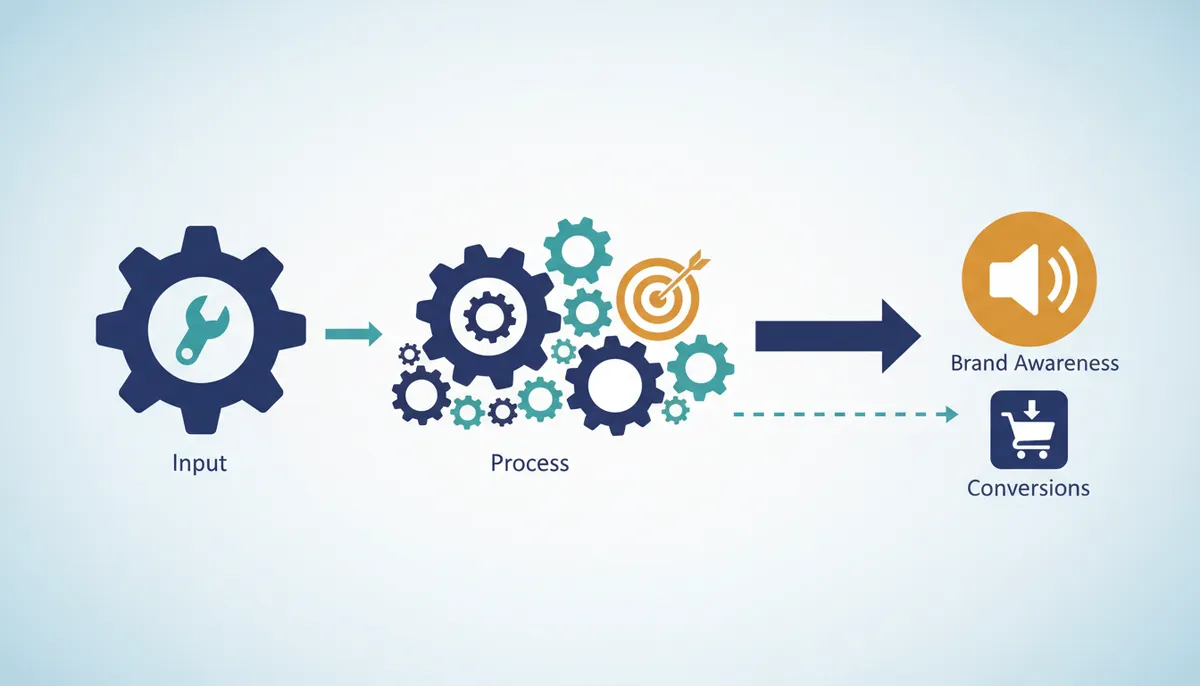
Determining which keyword intent types to pursue demands clarity on customer objectives. Organizations that map these intentions to structured content portfolios maintain search visibility regardless of algorithmic shifts. This logic directs budget away from broad terms with high volume but low specificity. Artificial intelligence systems now parse entities and topical clusters rather than isolated strings. Strategic focus must shift toward longer, specific queries signaling genuine buyer interest.
Content budgets remain finite while query complexity grows. Modern search engines interpret the "why" behind user questions, favoring natural conversational phrasing over rigid templates. Research efforts should target the specific problems users articulate in full sentences. Aligning output with these articulated needs produces material that satisfies both human readers and machine classifiers.
| Goal | Primary Intent | Content Focus |
|---|---|---|
| Awareness | Informational | Broad topic clusters and entities |
| Conversion | Transactional | Commercial evaluation and long-tail signals |
Brands seeking awareness benefit from covering wide topical ground. Conversion-focused entities prioritize commercial terms indicating immediate purchase readiness. Local firms must treat geographic locations as core entities within their niche definition. Executing this alignment requires disciplined planning documented in the full keyword research strategy for 2026. Such preparation builds durability against future ranking volatility.
Auditing Internal Assets Against Ranking Requirements
Comparing current production capacity against the media formats demanded by target queries prevents futile effort. AI-driven search systems analyze voice commands, images, and video alongside written text. This multimodal capability means text-only articles often fail to satisfy algorithmic requirements for specific result types. Strategies must incorporate spoken phrases and visual metadata to remain competitive.
Machine learning tools identify patterns and content gaps based on established topic authority. This reality dictates how to prioritize keywords using tangible resource availability rather than raw search volume metrics alone.
| Asset Type | Required for Format | Strategic Action |
|---|---|---|
| Video Crew | Visual Demonstrations | Optimize metadata or target text-based queries |
| Proprietary Data | Original Research | Publish study or target secondary angles |
| Subject Experts | Deep Technical Guides | Schedule interviews or narrow scope |
Neglecting this audit creates accumulating content debt across formats the organization cannot sustain long-term.
Resource Gaps Preventing Execution of AI Search Strategies
Pursuing conversational queries without the capacity to generate diverse media formats limits visibility when results require multimedia assets. Teams frequently attempt to fix low search visibility by rewriting text alone. This approach ignores that SERP features analysis often demands original research or professional production skills. The mismatch consumes resources while generating no traffic improvements.
| Goal | Required Asset | Risk Gap |
|---|---|---|
| Awareness | Broad topic clusters | Shallow coverage dilutes authority |
| Conversion | Transactional data | Lack of commercial intent signals |
Effective implementation requires cataloging time, capital, skills, knowledge, and tool access. A strategy targeting informational queries fails if staff cannot produce primary studies. Competing for AI Overviews in Google without verified data sources creates a false economy of effort. The penalty extends beyond wasted time to include eroded domain credibility among algorithmic evaluators. Success depends on matching ambition to actual production capabilities.
About
Hannah Brooks, Marketing Operations Lead at Enterium, specializes in the architecture of reliable AI content pipelines. Her daily work involves rigorously evaluating tooling stacks and orchestrating workflows where keyword strategy must evolve beyond traditional SEO to satisfy AI search queries. As teams shift from simple volume metrics to measuring content visibility within AI Overviews, Brooks applies her RevOps background to define reproducible methods for SERP features analysis and competitor ranking gaps. At Enterium, a brand dedicated to documenting how modern teams scale content with LLMs, she ensures that keyword research methods align with actual business goals rather than vanity metrics. By focusing on pipeline architecture and quality gates, Brooks connects high-level organic search theory to the practical realities of content automation. Her analysis provides the concrete, vendor-neutral guidance technical marketers need to prioritize keywords that drive real ROI in an era of AI-powered search suggestions.
Conclusion
Scaling conversational query targeting breaks when organizations ignore the production gap between text rewriting and multimedia asset creation. The operational cost of this mismatch is not merely wasted hours but eroded domain credibility as algorithms deprioritize content lacking verified data or visual depth. You must stop chasing long-tail questions your team cannot substantiate with original research or professional media. The strategic pivot requires mapping every target query to a specific resource capability before drafting begins. If your team lacks subject experts for deep technical guides, narrow the scope immediately rather than publishing shallow content that dilutes authority.
Commit to a capability-first framework within the next thirty days where no new keyword cluster enters the roadmap without an assigned asset owner and format plan. This prevents the accumulation of content debt that occurs when text-only strategies attempt to compete for rich result placements requiring video or proprietary studies. Start by auditing your top twenty priority questions this week to verify if you possess the visual metadata or original data required to answer them fully. Only target queries where your available resources match the format demands of the expected search result.
Frequently Asked Questions
Most brands lack a defined AI content strategy to handle modern shifts. Only a portion of marketers have such a plan, leaving the majority unprepared for generative engine changes.
You must target conversational queries consisting of four or more words. Long-tail traffic growth is specifically driven by these longer phrases as AI systems prioritize semantic intent over short keyword matches.
A significant adoption gap exists because only a portion of marketers possess a defined AI content strategy. This leaves most brands unable to effectively pivot from simple volume metrics to holistic planning.
Strategy dictates appearance based on business goals rather than just finding terms.
References