Human traffic lost: Why AI agents fetch 40 pages
Bots now account for 57.5% of web page requests, surpassing human traffic according to Cloudflare data. The rise of the AI agent marks a fundamental shift where machine answer engines replace human search, rendering traditional web policing obsolete while forcing new monetization models for content licensing. Readers will learn how the transition from human clicks to machine summarization dismantles decades of search quality standards, why substantial platforms no longer enforce cloaking rules with the same vigor, and what strategies publishers must adopt to license their data directly to AI firms.
The era of optimizing for human eyeballs is ending as answer engines consume content without generating visits. Cloudflare reports that this crossover occurred in June, roughly 18 months ahead of executive forecasts, driven by agents fetching pages on behalf of users. This behavior changes the incentive structure entirely. Unlike the advertising model that powered Google's strict enforcement against hidden keywords and doorway pages, answer engines simply select the best snippet and discard the rest. There is no penalty email for low quality, only silent exclusion from the summary.
This erosion of web policing means the rules of engagement have changed without a public vote. Publishers can no longer rely on search traffic as a primary distribution channel when machines strip out necessary information and present a summary instead. The path forward involves negotiating direct access and licensing deals rather than fighting for position in a list that users rarely see. Understanding these mechanics is critical for anyone attempting to sustain a business model in an environment where the reader is increasingly a script.
The Transition From Human Search To Machine Answer Engines
How AI Agents Replace Human Search with Page Summaries
AI web crawling mechanically replaces human browsing by fetching 30 or 40 pages to synthesize single answers without generating user clicks. This shift transforms the web from a destination for human readers into a raw data feed for machine answer engines. Traffic patterns confirm this transition, as bots now account for 57.5% of all requests for actual web pages compared to 42.5% for humans. The volume of this automated consumption is expanding rapidly, with AI-driven segments expanding roughly eight times quicker than human visits over the last year.
| Metric | Human Search Behavior | AI Agent Behavior |
|---|---|---|
| Page Fetch | 1 to 3 pages per query | 30 or 40 pages per query |
| Click Path | Direct navigation to source | No external click (zero-click) |
| Revenue Model | Ad impressions on page load | None for publisher |
This architecture creates a hard reality: while zero-click interactions now represent approximately 60% of all searches globally, the publisher loses the ad impression entirely. The limitation is structural; the agent satisfies user intent internally, rendering the source page invisible to the monetization layer. Publishers must redefine content visibility not by ranking position but by inclusion in these synthesized responses. Current analytics often fail to capture the full scale of this activity, as visible AI traffic in standard tools represents less than 1% of actual AI interaction. The immediate next step is auditing server logs to quantify the ratio of bot-to-human requests on your specific domains.
Enforcing Payment Required Responses for Unpaid Bot Crawls
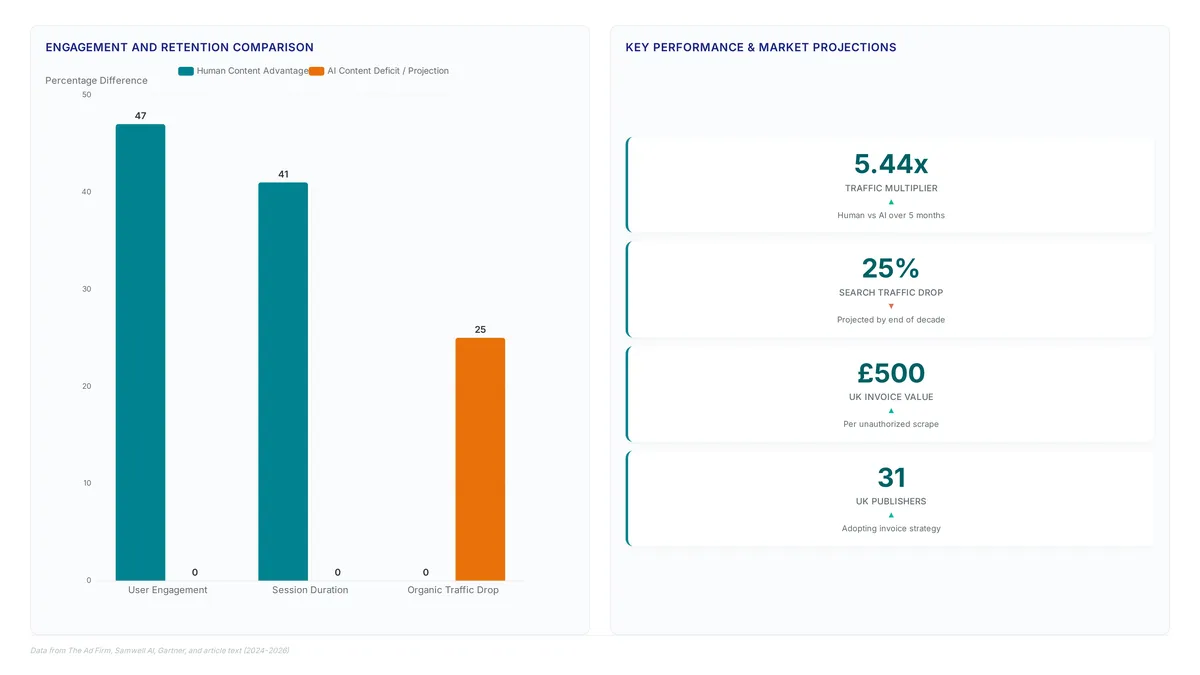
Payment required responses block default AI access until crawlers settle invoices for content reuse. Cloudflare announced that new sites on its network would block AI crawlers by default, shifting the burden of proof to the reader. This technical gate enforces a legal boundary where unauthorized consumption triggers financial liability rather than simple exclusion. In Britain, 31 publishers have implemented a strategy where loading a page or reusing an article without payment constitutes agreement to a £500 invoice. No payments have been collected from OpenAI yet under this scheme, indicating that enforcement relies on the threat of litigation rather than immediate liquidity.
The traditional traffic-exchange model collapses when crawlers consume content without returning human visitors. Historically, search engines granted free access to build indexes that drove audience growth, but answer engines now resolve queries directly, severing the link between discovery and site visitation. Data indicates that 97% of llms.txt files receive zero requests from retrieval bots, signaling that technical standards for bot communication remain largely ignored by substantial operators.
| Traffic Characteristic | Human-Centric Search | Machine Answer Engine |
|---|---|---|
| Primary Goal | Navigation and reading | Data extraction and synthesis |
| Site Interaction | Multiple page views | Single summary generation |
| Revenue Impact | Ad impressions and clicks | Zero direct monetization |
Meanwhile, the operational reality is that zero-click architecture allows platforms to monetize attention without hosting the underlying content costs. Publishers face a scenario where their infrastructure subsidizes the training and operation of competitors' models. Relying on voluntary compliance or deprecated exchange models exposes publishers to uncompensated resource depletion. The immediate step is to audit bot logs for non-compliant user agents and deploy policy gates that require valid credentials for any non-human traffic.
The Erosion Of Traditional Web Policing And Cloaking Rules
Redefining Cloaking: Intent to Manipulate vs Machine Optimization
Google defines cloaking as serving different content with the intent to manipulate rankings and mislead people. This specific intent separates prohibited deception from legitimate optimization for machine readers. Providing structured data to machines while showing images to humans is not deceptive if the substance remains the same. The technical boundary rests on whether the core information delivered to the user aligns with the signal sent to the crawler. Answer engines complicate this distinction because these systems often ignore standard optimization files. Excessive tailoring for specific AI crawlers may yield negligible visibility gains compared to maintaining consistent human-facing content. Publishers optimizing solely for machine parsing risk investing in invisible infrastructure while actual retrieval bots bypass their specialized signals entirely. Operational risk involves diverging too far from the human experience in pursuit of algorithmic favor. Publishers must verify that their machine optimization strategies do not accidentally trigger deception filters by altering core facts.
Adapting Content for AI Readers Amidst Invisible Traffic Gaps
Optimizing for machine readers requires shifting focus from file deployment to content substance given current visibility gaps. Publishers must prioritize high-quality human writing over volume to maintain long-term value in this opaque environment. Data indicates that human-written content generates 5.44 times more traffic over a five-month period compared to synthetic alternatives, highlighting a significant disparity in retention five-month period. Answer engines ignore low-signal pages without issuing penalties, making invisible exclusion the primary risk rather than ranking demotion. Enterium advises clients to implement strong content licensing frameworks while enhancing semantic depth in core articles to attract selective scraping. Publishers should audit their referral traffic sources immediately to identify early signs of decoupling between page views and brand mentions. Structural limitations define this new environment where quality outweighs quantity.
The Penalty Gap: From Explicit Bans to Silent Index Ignoring
Historical enforcement relied on visible Manual Actions that alerted operators to specific violations requiring remediation. Answer engines now execute silent rejection by simply excluding low-quality content from their synthesis windows. This opacity creates severe visibility blind spots for publishers attempting to diagnose traffic loss. Analytics platforms exacerbate this by failing to capture the majority of bot interactions, rendering standard dashboards ineffective for traffic analysis. The shift demands proactive quality auditing rather than reactive penalty management. Enterium provides the monitoring infrastructure required to detect these silent failures before revenue impact becomes irreversible. Teams remain unaware that their content is being skipped entirely without external validation tools. The cost of this invisibility exceeds any historical penalty because the operator never receives the bill. Detection requires specialized forensic tooling that operates outside standard analytics pipelines. Invisible exclusion replaces public shaming as the primary enforcement mechanism.
Monetization Strategies For Licensing Content To AI Firms
Defining the AI Content Licensing Marketplace Model
Old deals let crawlers roam freely because they brought human traffic back with them. Answer engines break this loop by consuming pages to resolve queries directly, leaving source sites with zero clicks. Publishers now define the licensing marketplace model as a shift toward charging per crawl instead of chasing indirect ad revenue. Cloudflare introduced a marketplace allowing owners to charge per crawl, issuing a "payment required" response to bots that do not pay. This approach treats bot traffic as a billable utility instead of a marketing channel. Operators implementing invoice-based terms can use legal frameworks where loading a page constitutes agreement to pay. The constraint is operational complexity; managing thousands of micro-transactions or legal notices requires strong infrastructure. Technical enforcement layers are necessary to detect non-compliant agents and serve payment gates dynamically. Publishers must decide whether to block access entirely or monetize the drain on server resources. Solutions enable publishers to negotiate and enforce these new commercial terms at scale.
Implementing Invoice-Based Enforcement and Bot Paywalls
In Britain, 31 publishers have implemented a strategy where loading a page or reusing an article without payment constitutes agreement to a £500 invoice enforceable by county court. This strategy converts the act of scraping into a binding contractual agreement, bypassing the need for complex technical handshakes. Collecting cash remains difficult despite the legal claim; no payments have been collected from substantial firms like OpenAI under this specific scheme yet. Litigation serves as a use point rather than a cash-flow solution for immediate operational costs. Technical enforcement complements legal posturing by shifting the default network posture from open to paid. Cloudflare now allows network operators to issue a "payment required" response to bots that do not settle tolls before rendering content. This configuration treats bot traffic as a billable utility, effectively reversing the historical assumption that crawler access is inherently free. Such changes force a pivot where content value is decoupled from user clicks and tied directly to licensing fees.
| Strategy | Mechanism | Primary Risk |
|---|---|---|
| Legal Invoicing | Contract via load | Collection latency |
| Bot Paywalls | Technical block | Model exclusion |
Deploying invoice-based headers alongside technical paywalls establishes both legal standing and technical barriers. Relying solely on one vector leaves the asset exposed to either ignoring the bill or bypassing the gate. The operational goal is to make unauthorized access legally expensive and technically difficult simultaneously. Combining these methods creates a dual barrier system.
- Legal notices establish contractual liability upon access.
- Technical gates block rendering until payment verification occurs.
- Flexible invoicing targets specific non-compliant user agents.
- Court enforcement adds weight to unpaid toll demands.
Risks of Ad-Dependent AI Answers and Trust Erosion
Perplexity attempted to use ads but removed them, claiming users need to trust they are receiving the best answer rather than the best-paid one. This pivot highlights a fragile equilibrium where ad integration directly compromises the perceived neutrality of the response engine. When Google inserts sponsored content into summaries, it risks eroding the core trust required for users to accept synthesized answers as factual. This structural shift means ad-dependent models must monetize the interaction itself, creating pressure to inject commercial bias. Trust evaporates if users suspect financial incentives shaped the output. Publishers should avoid relying on ad-revenue sharing from answer engines as a primary strategy. Original reporting and accuracy keep data valuable as a premium input rather than a commoditized ad slot.
Technical Implementation Of Bot Blocking And Legal Protection
Robots.txt as a Legal Contract for Bot Access
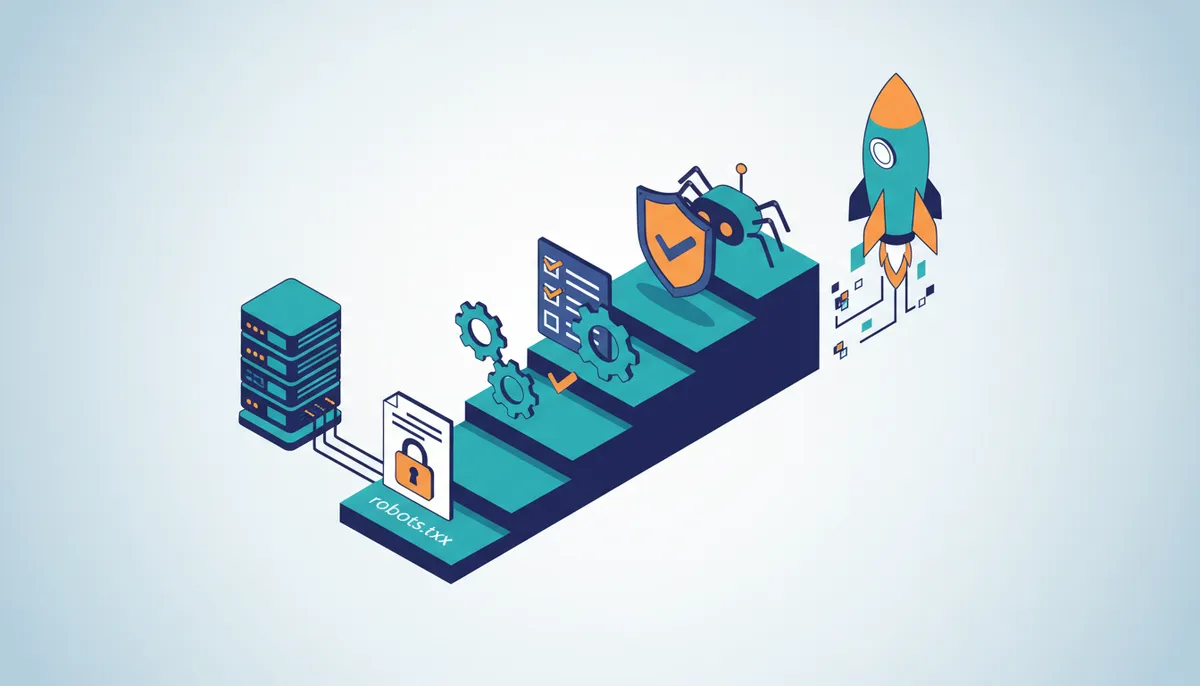
Change the standard robots.txt file from a polite request into an enforceable legal boundary defining access rights.
Historical norms relied on search engines returning traffic, but modern agents often consume content without providing clicks or readers in return. This economic disconnect necessitates treating the file as a binding contract rather than a mere suggestion. While technical blocking remains primary, the legal weight of these directives is shifting as publishers demand compensation for data usage.
- Identify user-agents associated with generative AI training.
- Apply
Disallowdirectives to prevent unauthorized ingestion. - Reference explicit licensing terms within the file comments.
The limitation of this approach is that technical compliance varies by actor; some scrapers ignore the file entirely. However, establishing a clear contractual refusal strengthens subsequent legal claims against unauthorized usage. The cost of inaction is the silent loss of intellectual property to uncompensated model training.
Configuring Robots.txt Rules to Block Specific AI User-Agents
Block unwanted AI crawlers by explicitly disallowing their specific user-agent strings in your root robots.txt file.
- Identify the exact user-agent token for the target bot, such as
GPTBotorChatGPT-User. - Apply a
Disallow: /directive immediately below that token to deny all path access. - Verify that beneficial search engines like Googlebot remain allowed to preserve organic visibility.
| User-Agent Token | Access Intent | Recommended Action |
|---|---|---|
| GPTBot | Training data | Disallow all paths |
| ChatGPT-User | Answer synthesis | Disallow all paths |
| Googlebot | Search indexing | Allow critical paths |
| Bingbot | Search indexing | Allow critical paths |
This configuration creates a technical barrier that aligns with the legal intent of denying uncompensated data usage. Cloudflare announced that new sites on its network would block AI crawlers by default, reflecting an industry-wide shift toward restrictive access policies. The limitation is that compliant bots respect these rules while malicious scrapers ignore them entirely.
A critical tension exists between blocking training bots and maintaining visibility in the resulting answer engines. If you block GPTBot, your content cannot be read to generate answers, effectively removing your brand from the conversation. A segmented approach where high-value summary pages remain accessible while deep archival content is restricted can help preserve entity presence in AI responses while protecting core intellectual property from bulk ingestion.
Risks of Over-Blocking and the Silent Ignoring of Low-Quality Pages
This shift means a misconfigured robots.txt file can render a domain invisible rather than demoted. Operators must distinguish between blocking training data and allowing answer synthesis to maintain visibility.
- Audit user-agent strings to separate training bots from answer engines.
- Avoid blanket
Disallow: /rules that prevent all machine access. - Monitor AI referral traffic to verify legitimate agents still reach content.
| Strategy | Visibility Impact | Revenue Risk |
|---|---|---|
| Block All AI Crawlers | Total Exclusion | High |
| Block Training Only | Maintained Citations | Low |
| Allow All Agents | Maximum Exposure | Moderate |
Technical tracking indicates that algorithms now trigger AI Overviews for 48% of tracked queries, making selective access critical for publishers. Operators face a tension between protecting intellectual property and remaining part of the machine-readable web. Effective governance is required to navigate these access policies without sacrificing distribution. Platforms enabling granular control over which agents can ingest data while preserving pathways for answer engine citations allow publishers to avoid the binary trap of total blockade or total exposure.
About
Arjun Patel is an Applied LLM Engineer who specializes in benchmarking LLM providers and RAG architectures for high-volume content workloads. His daily work involves rigorously evaluating inference economics, latency, and output quality across diverse models, making him uniquely qualified to analyze the shift toward machine readership. As AI agents now generate over half of web traffic, understanding how these systems parse and summarize content is critical for modern content engineering. At Enterium, Arjun applies this technical expertise to document how B2B teams can build resilient content pipelines that remain effective when bots overtake humans as the primary audience. His analysis moves beyond speculation, offering vendor-neutral data on how automated agents interact with published material. This perspective ensures that content leaders can architect systems where human oversight remains central, even as AI-driven traffic accelerates. By focusing on reproducible metrics and pipeline architecture, Arjun helps practitioners adapt their strategies for an system dominated by automated fetching rather than traditional browsing.
Conclusion
Blanket blocking strategies now function as self-imposed exile, silently removing brands from the 48% of queries triggering AI Overviews. As automated requests surpass human traffic, the cost of inaction shifts from server load to total distribution invisibility. Publishers can no longer afford a binary approach to access control; the risk lies not in bot traffic volume, but in the inability to distinguish between value-extracting scrapers and citation-generating answer engines. A detailed governance model is the only viable path forward to protect intellectual property while maintaining market presence.
Organizations must immediately implement a segmented access policy that differentiates training bots from synthesis engines. This requires moving beyond simple allow-lists to flexible rules that preserve high-value summary pages for answer generation while restricting deep archival ingestion. Do not wait for traffic metrics to confirm the drop; the window for influencing how agents perceive your entity closes as these models solidify their knowledge bases.
Start this week by auditing your current user-agent strings to identify which specific AI agents are currently granted full access versus those completely blocked. This granular visibility is the prerequisite for any effective strategy. Enterium provides the specialized governance frameworks necessary to execute this segmentation without sacrificing distribution channels.
Frequently Asked Questions
Bots now generate 57.5% of page requests, surpassing human activity. This majority share means your server resources are primarily consumed by automated agents rather than potential customers visiting your site directly.
Approximately 60% of searches globally now end without a click to the source. Publishers lose ad revenue because answer engines satisfy user intent internally, leaving the original content invisible to monetization layers.
Standard tools display less than 1% of actual AI interaction occurring on your domain. Relying on these dashboards creates a false sense of security while agents consume your content unseen in server logs.
Organic search traffic faces a projected 25% drop as answer engines capture query resolution. Publishers must shift strategies from chasing rankings to negotiating direct licensing deals for their data with AI firms.
An AI agent fetches 30 or 40 pages to synthesize one answer, unlike humans who visit few pages. This high-volume fetching strains servers without generating the ad impressions or clicks needed for revenue.
References