Automated publishing cuts indexing lag to minutes
No verified percentage or count exists in the provided source to quantify adoption rates or efficiency gains. Automated content publishing functions as a technical imperative rather than a mere convenience for modern enterprises. Readers will examine the structural shift toward native CMS auto-publishing and how it eliminates bottlenecks in high-volume environments.
The analysis details the mechanics of multi-stage approval workflows that maintain editorial control while accelerating output. We explore how AI content generation integrates with CRM-driven content personalization to deliver targeted messages without human lag. The discussion extends to automated sitemap updates and IndexNow integration, which ensure search engines ingest changes immediately upon release.
Technical teams will learn to architect pipelines that support API-first content delivery across distributed systems. The text evaluates the necessity of content workflow automation in reducing latency between creation and indexing. Finally, we assess how CMS publishing tools now handle complex logic previously requiring custom code. This approach ensures that search engine indexing happens in near real-time, a critical factor for visibility in 2026.
The Role of Automated Publishing in Modern Content Operations
Automated content publishing replaces manual CMS entry with API-driven delivery systems. This definition of headless CMS centers on decoupling content storage from presentation layers, allowing JSON payloads to populate websites and apps simultaneously. Traditional workflows require operators to copy paragraphs, fix formatting breaks, and manually ping search engines for indexing. These repetitive tasks introduce latency and human error into the publication cycle.
Contentful represents an API-first architecture that enables automated content publishing across digital experiences without manual intervention. Teams choosing this path eliminate the need to upload images or update sitemaps by hand. The shift reduces ramp time compared to training staff on disjointed manual processes. However, adopting headless systems requires engineering resources to build the initial connectivity that native tools provide out-of-the-box. Organizations must weigh the speed of API delivery against the cost of maintaining custom integrations.
| Feature | Manual Workflow | Automated Pipeline |
|---|---|---|
| Formatting | Human correction required | Enforced by schema |
| Indexing | Manual sitemap update | Instant API notification |
| Distribution | Single channel copy | Multi-endpoint sync |
Operators should choose headless architectures when content volume exceeds the capacity of human editors to maintain consistency. The limitation lies in the upfront configuration; simple blogs may not justify the infrastructure overhead. For complex operations, the alternative is unsustainable scaling of labor.
Sight AI Agents for Instant Indexing.
Sight AI deploys 13+ specialized agents to transition content from ready to indexed in minutes. This API-driven pipeline replaces manual CMS entry with a coordinated sequence of generation, formatting, and publication tasks. Where traditional methods require hours of repetitive work, this architecture compresses the cycle significantly. The system handles ideation through flexible personalization, tailoring outputs before they reach the publishing stage.
IndexNow integration serves as the final trigger, notifying search engines the moment content goes live. This protocol eliminates the latency inherent in waiting for crawler discovery. Operators gain immediate visibility for new assets without manual sitemap updates or ping requests. Such speed matters because 71% of organizations now use generative AI in at least one business function, creating volume that manual indexing cannot match AI in Content Marketing.
However, relying solely on speed introduces risk if quality gates are absent from the agent chain. A fully automated pipeline that publishes errors instantly amplifies mistakes just as fast as it distributes success. Without these checks, the native CMS publishing capability becomes a liability rather than an asset.
Teams should test these pipelines against known failure modes before exposing them to production traffic. The goal is not speed, but reliable delivery at scale.
Validating CMS Integration and Automation Depth
Validating CMS integration requires verifying that tools trigger custom workflows via webhooks upon content creation or updates. This mechanical check separates true automation from simple drafting assistants that leave publishing to manual entry. Evaluations of dozens of solutions prioritize automation depth alongside search engine indexing features to determine practical value for marketing teams.
Teams must decide when to choose a headless CMS based on the need for API-first content delivery across multiple channels. A headless approach allows JSON payloads to populate websites and apps simultaneously, whereas traditional monoliths often require separate handling for each view. However, adopting this architecture introduces complexity in managing multi-environment staging; a broken schema in production can halt the entire pipeline. The cost of this rigidity is measurable in engineering hours spent on version control and rollback procedures.
Understanding what automated content publishing entails reveals a dependency on structured data rather than rich text editing. Teams can standardize processes without heavy engineering by using guided workflows that enforce consistency before content reaches the live environment. The limitation here is that overly rigid templates may stifle creative formats required for specific campaign types. Enterium recommends mapping these constraints against business goals before committing to a specific vendor stack.
Inside the Architecture of API-Driven Content Pipelines
API-Driven Publishing Mechanics in Headless CMS
API-driven publishing mechanics in headless CMS rely on RESTful and GraphQL interfaces to decouple content storage from presentation layers. This separation allows engineering teams to treat articles as versioned artifacts moving through a build pipeline rather than static database entries. These interfaces enable developers to query specific content fields without exposing the entire database schema, supporting an API-first content delivery model.
The architectural shift requires rethinking how content reaches search engines. Traditional sitemaps update periodically, but modern pipelines can trigger IndexNow integration immediately upon commit. This protocol notifies search engines of URL changes instantly, reducing the latency between publication and indexing. Teams building these systems must balance query flexibility against caching complexity.
| Feature | RESTful Approach | GraphQL Approach |
|---|---|---|
| Data Fetching | Multiple round-trips | Single request |
| Over-fetching | Common | Eliminated |
| Caching | HTTP-level | Application-level |
A critical tension exists between immediate indexing and quality assurance. Pushing content to IndexNow the moment a draft saves risks exposing unreviewed material to crawlers if the approval workflow lacks a strict "publish" state gate. Automation workflows emphasize treating content as a build pipeline with versioned artifacts and acceptance tests, including style validation.
The system must reject invalid payloads at the gateway, not within the CMS interface.
Implementing Webhook Automation for Content Triggers
These systems fire custom workflows on content changes using webhook-based triggers that push state changes to downstream services immediately. Operators configure these hooks by defining a target URL and selecting specific event types such as entry creation or status transitions. Automation tools allow teams to create Zaps that trigger on new content creation or updates, connecting data sources to generative AI for drafting and formatting.
- Define the payload schema to match the receiving service expectations.
- Set up signature verification to validate request authenticity.
- Map content state changes to specific pipeline actions like cache invalidation.
| Feature | Contentful Approach | Sanity Approach |
|---|---|---|
| Trigger Scope | Entry, Asset, Comment | Document, Transaction |
| Payload Format | JSON (Configurable) | JSON (Mutable) |
| Retry Logic | Exponential backoff | Customizable via plugin |
A common failure mode involves ignoring signature headers, leaving pipelines vulnerable to spoofed updates from untrusted actors. The limitation is that webhook delivery guarantees are often "at-least-once," requiring idempotent handlers to prevent duplicate processing during network partitions. Without this safeguard, a single editorial save could trigger multiple redundant build jobs, wasting compute resources.
Automating sitemap updates requires chaining the CMS webhook to a regeneration function that recalculates XML indices before notifying search engines. This sequence ensures search crawlers encounter valid URLs rather than stale references. Most operators overlook the latency introduced by synchronous sitemap regeneration, which can block the publishing thread if the site contains thousands of pages. Asynchronous processing decouples the editorial experience from the heavy lifting of index maintenance. Teams should test failure recovery by simulating downstream timeouts to verify that queued content eventually reaches publication without manual restart.
Validating Native CMS Auto-Publishing and IndexNow Setup
Verify the HTTP 200 status code from the CMS endpoint before trusting any search engine notification. Content teams often assume that a successful draft save equates to public availability, yet native CMS auto-publishing frequently stalls at the final serialization step if approval gates remain ambiguous. Some platforms combine generation with immediate publishing to eliminate this latency, ensuring the artifact exists publicly before the indexing signal fires. If the content URL returns a 404 when the IndexNow ping arrives, search engines discard the request permanently.
Operators must validate the sequence of operations to fix delayed search engine indexing.
- Confirm the API-first publish response includes the live URL.
- Execute the IndexNow submission only after verifying the live status.
- Monitor the receiver logs for acceptance codes rather than transmission success.
| Validation Step | Manual Check | Automated Gate |
|---|---|---|
| Content Visibility | Browser refresh | HTTP HEAD request |
| Signal Timing | Post-publish delay | Async callback trigger |
| Error Handling | Visual inspection | Retry on 4xx/5xx |
The cost of skipping this validation is measurable: bots crawl the submitted URL, find nothing, and deprioritize future crawls for that domain. Unlike manual updates where an editor sees the missing page, automated pipelines silently propagate errors across thousands of entries without human intervention. This creates a compounding deficit in crawl budget allocation that simple volume increases cannot fix.
Implementing a mandatory health check middleware that blocks indexing signals until the live environment confirms content presence is a recommended best practice. Without this circuit breaker, the pipeline optimizes for speed while sacrificing discoverability.
Comparing Leading Platforms for Enterprise Automation Needs
Defining CRM-Driven Personalization in Content Systems
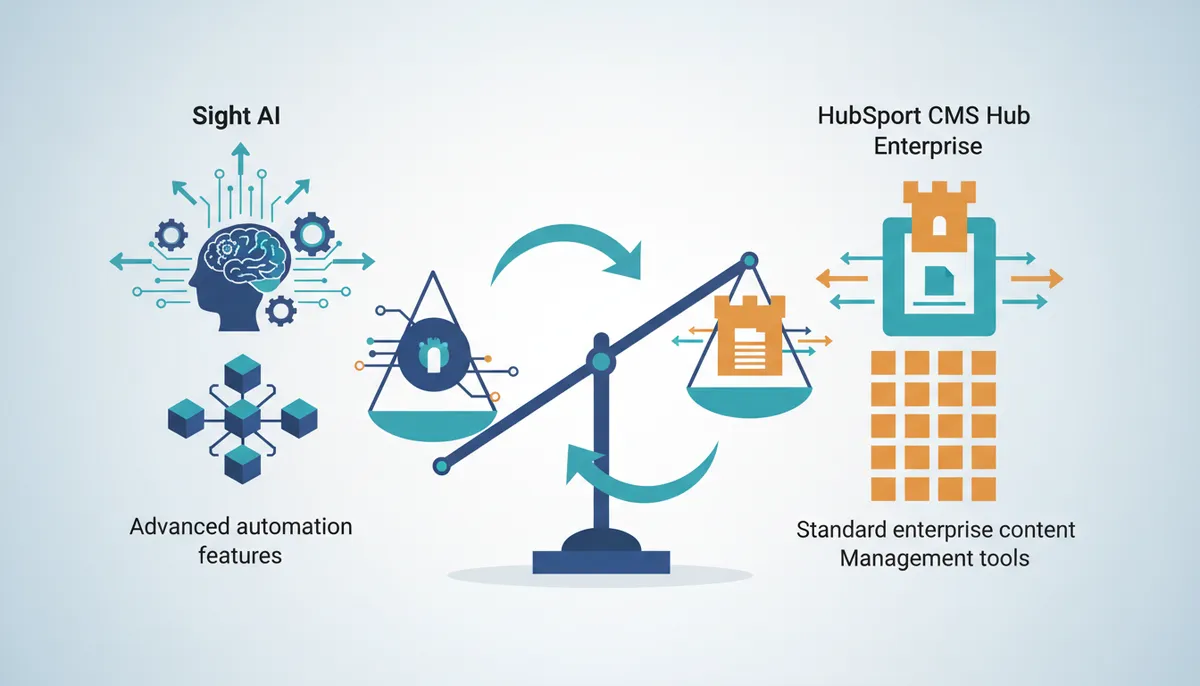
Flexible content adaptation occurs when systems pull visitor data stored within the CRM to alter page elements in real-time. This mechanism depends on Multi-Stage Approval Workflows routing content through customizable chains with role-based permissions. Governance remains intact while granular personalization rules execute automatically. Content evolves as the lead progresses through the sales funnel without manual intervention.
| Feature Dimension | Static Publishing | CRM-Driven Personalization |
|---|---|---|
| Data Source | File System | Visitor Contact Record |
| Update Trigger | Manual Deploy | Real-Time Request |
| Governance Model | Pre-publish Review | Workflow Gates + Live Logic |
| Content Variance | Low | High |
Teams must audit flexible content rules regularly to prevent rule conflicts as the contact schema expands. Architectural complexity rises alongside targeting precision, demanding stricter version control.
Automating Social Publishing with Native Extensions
Such systems typically include Advanced Post Scheduling with explicit timezone support to prevent premature or delayed visibility across global audiences.
| Feature | Native Integration | External AI Tools |
|---|---|---|
| Integration Depth | Database-level access | API polling required |
| Latency | Instant on publish | Queue-dependent |
| Configuration | Inline settings | Separate dashboard |
Operators choosing between headless platforms and integrated solutions weigh flexibility against simplicity. External AI tools offer sophisticated generation capabilities yet often introduce latency where native solutions execute instantly. Governance presents a constraint; native sharing often lacks the complex, multi-stage approval chains found in enterprise hubs. Teams requiring strict editorial sign-offs before social exposure must layer additional workflow automation. Keeping the sharing logic within the CMS reduces failure points for publishers prioritizing speed over complex orchestration. This configuration suits publishers needing consistent output without maintaining separate scheduling infrastructure.
AI Agents vs Approval Workflows
Traditional CMS platforms enforce governance through multi-stage approval workflows that route content through customizable chains. Latency versus control defines the architectural divergence. AI-powered approaches prioritize immediate search visibility via native CMS auto-publishing, effectively removing human gatekeepers from the indexing path. Established platforms apply role-based permissions to validate every transition, ensuring compliance before any public exposure occurs.
| Dimension | AI-Driven Approach | Traditional CMS Approach |
|---|---|---|
| Governance Model | Agent-driven execution | Human-led approval chains |
| Primary Latency | Seconds to index | Minutes to days |
| Risk Profile | Unverified publication | Bottleneck delays |
Instant indexing increases the surface area for errors reaching production search results. A single hallucinated claim in an agent-generated draft becomes globally visible before editorial review can intervene. Rigid approval hierarchies introduce measurable friction slowing down high-volume content strategies. The decision rests on whether the organization values speed of distribution or certainty of message. Teams requiring strict regulatory adherence should favor the structured approval workflows found in enterprise platforms. Organizations competing on real-time relevance may accept the risk of automated publishing. Mapping risk tolerance against publication frequency before selecting a pipeline architecture is advisable.
Implementing Strong Workflows for Multi-Channel Distribution
Native WordPress Automation Mechanics
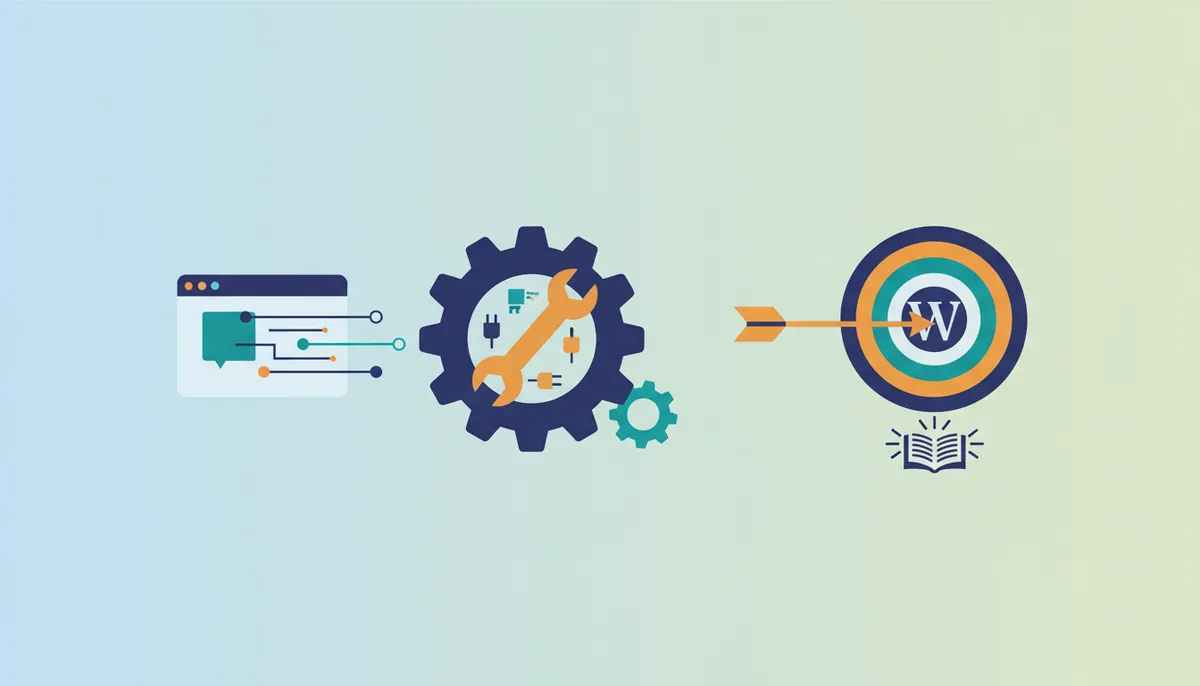
Embedding publishing automation directly into the dashboard kernel defines how native WordPress solutions operate. This architecture removes external middleware dependencies entirely. Operators configure timezone-aware scheduling to align post availability with specific audience active windows without manual calculation. Defining rules once handles repetitive distribution tasks while maintaining a consistent delivery cadence across multiple channels. Such an approach reduces human error risks during high-volume publishing cycles. Teams managing complex multi-site environments must monitor server load metrics carefully during peak generation windows because this constraint impacts performance. Validating webhook payloads before enabling global distribution rules prevents malformed data propagation. Only approved content reaches public-facing endpoints after these verification steps occur.
Configuring Centralized Calendars and Integration Tools for Multi-Channel Workflows
Authenticating the CMS account in an integration platform starts the process. Workflows then trigger on new content creation or updates. This configuration establishes the API-first content delivery required to move assets from planning to publication without manual intervention. A central marketing calendar platform organizes these assets before they reach the execution layer. Operators chain actions into automated sequences called Multi-Step Workflows to connect this planning layer with thousands of external applications. A single trigger, such as a status change in the calendar, initiates complex downstream events across disparate systems under this architecture. A documented e-commerce deployment used this exact chaining method to connect inventory updates with generative AI, cutting content creation time by 70% while boosting SEO performance through optimized copy. Complex conditional logic requires careful mapping of input fields to avoid data corruption during the handoff. Validation steps must precede the final publish action so operators prevent malformed content from reaching production. Implementing a staging environment where these automated sequences run against a test instance before connecting to the live WordPress installation isolates configuration errors from the public-facing site.
The final step involves verifying that the published post triggers the correct indexing signals.
Validating Team Approval Workflows and Optimal Timing
Routing draft posts through assigned reviewers before any network transmission occurs validates approval chains. Dedicated social media scheduling platforms enforce these multi-stage governance structures to prevent unauthorized or premature publication. The system relies on Team Approval Workflows to sequence human verification steps, ensuring content accuracy prior to automation.
Operators must verify that Optimal Timing Suggestions apply historical engagement data rather than generic heuristics. Publishing high-value assets during low-activity windows often results from unverified default configurations. This failure mode isolates configuration errors from production traffic.
About
Sofia Marchetti is a B2B Content Strategist specializing in how automated content systems drive pipeline through topical authority and durable distribution. With over a decade of experience in B2B SaaS, she is uniquely qualified to analyze automated content publishing because her daily work involves architecting the exact content workflow automation pipelines discussed in this article. At Enterium, a brand dedicated to documenting how modern teams scale content with LLMs, Sofia bridges the gap between theoretical AI generation and revenue-focused execution. Her expertise connects CMS integration and IndexNow protocols directly to business outcomes, ensuring that AI-powered content publishing serves strategic goals rather than just volume. By focusing on pipeline architecture and quality gates, she provides the practitioner-level insights necessary for marketing operations teams to implement native CMS auto-publishing effectively. This analysis reflects Enterium's commitment to vendor-neutral, reproducible methodologies for building reliable content engines that compound value over time.
Conclusion
Scaling these architectures reveals that data corruption during field mapping becomes the primary bottleneck, not the speed of generation. When conditional logic grows complex, the operational cost shifts from content production to error remediation. Teams often overlook how malformed handoffs between planning layers and execution systems create silent failures that degrade SEO value over time. You must implement a strict validation gate where automated sequences run against a staging environment before touching live inventory or public-facing posts. This approach isolates configuration errors and ensures that Team Approval Workflows function as intended governance tools rather than bureaucratic hurdles.
Start by mapping your current input fields against downstream requirements this week to identify potential data mismatches before they trigger downstream failures. Do not rely on generic heuristics for Optimal Timing Suggestions; verify that your system uses historical engagement data specific to your audience behavior. The real risk lies in assuming that a successful trigger equals a successful publication without verifying indexing signals post-deployment. Establish a routine where every new workflow variant undergoes a test instance run to confirm that status changes initiate the correct downstream events without manual intervention. This discipline prevents the accumulation of technical debt that eventually stalls content operations at scale.
Frequently Asked Questions
Publishing errors instantly amplifies mistakes across all channels. Without checks, 71% of organizations using generative AI risk distributing flawed content at scale rather than achieving reliable delivery.
Instant API notification eliminates waiting for crawler discovery cycles. This approach ensures search engines ingest changes immediately upon release, providing near real-time visibility that manual sitemap updates cannot match.
Simple blogs may not justify the required infrastructure overhead. Organizations must weigh the speed of API delivery against the high cost of maintaining custom integrations before committing engineering resources.
True automation triggers custom workflows via webhooks upon content updates. This mechanical check separates systems that handle publishing from simple drafting assistants that still leave the final entry to manual human intervention.
These workflows maintain editorial control while significantly accelerating overall output volume. They allow teams to integrate AI generation with personalization logic without introducing the latency found in traditional manual processes.
References