Dify cuts LangChain boilerplate for real apps
Dify sits on 147K+ GitHub stars for a reason: it kills the LangChain boilerplate. This isn't just another wrapper; it's an open-source AI operating system that forces a choice between weeks of coding drudgery and expensive vendor lock-in. You get a centralized hub for LLM workflows, RAG pipelines that actually work, and production deployment that doesn't surrender your data sovereignty.
The Visual Workflow Builder replaces spaghetti code with a drag-and-drop canvas. The RAG Pipeline handles chunking and indexing instantly. The Prompt IDE offers Git-like versioning so you stop guessing which iteration broke production. You swap between OpenAI, Anthropic, or local Ollama instances on a whim based on cost or performance.
This approach lets indie hackers and enterprises ship features without hiring dedicated ML teams. Every app auto-generates REST API endpoints, enabling immediate integration via a single POST request. Whether you self-host via Docker or run it in the cloud, your data stays under your control while Agent Mode handles the heavy reasoning.
The Role of Dify as an Open-Source AI Operating System
Dify as Open-Source AI OS vs Vendor Lock-In
Dify acts as a self-hosted operating system for AI, swapping proprietary black boxes for transparent visual workflow orchestration. Engineers drag, drop, and deploy complex logic without surrendering data sovereignty to external clouds. The platform's Apache License 2.0 status ensures deployment remains under direct organizational control, preventing the vendor lock-in typical of closed ecosystems. Market validation is clear: the project secured $30 million in funding while maintaining a community-driven development model.
Operators gain a RAG Pipeline that handles chunking and indexing locally, dodging the latency and cost penalties of managed services. Unlike single-vendor suites, Dify supports Multi-Model Support, enabling smooth switches between OpenAI, Anthropic, or local Ollama instances within a single graph. This flexibility mitigates the risk of provider outages or sudden price hikes affecting the entire production stack. Self-hosting introduces an operational cost: teams must manage their own infrastructure updates and scaling policies.
The rapid accumulation of over 100,000 GitHub stars signals a broader industry shift toward infrastructure that prioritizes transparency over convenience. Organizations adopting this model retain full auditability of their Prompt IDE with Versioning histories, a strict requirement for regulated industries. The $180 million valuation reflects investor confidence in a future where AI operations are portable rather than proprietary.
- Retain full ownership of embedding vectors and retrieval logs.
- Eliminate per-seat licensing fees for internal dashboard access.
- Deploy behind firewalls to satisfy strict data residency mandates.
- Avoid vendor-specific API rate limits that throttle production traffic.
Evaluate Dify for any workflow where data egress costs or compliance constraints outweigh the convenience of managed APIs.
Building RAG Pipelines with Visual Workflow Builder
The Visual Workflow Builder constructs retrieval-augmented generation logic through a drag-and-drop canvas that chains prompts, tools, and LLM calls without manual boilerplate. This interface eliminates spaghetti code by mapping entire AI logic flows as visible flowcharts, allowing operators to inspect routing decisions before deployment. Teams assemble a production-ready RAG system rapidly by uploading documents and selecting embedding models, delegating chunking and indexing tasks to the platform's backend.
Defining agent mode in AI within this context means configuring the LLM to autonomously select tools, execute web searches, and chain reasoning steps within set guardrails. Unlike static prompts, this flexible execution allows the system to decide when to retrieve data versus when to call an external API. The underlying frontend technology relies on Next.js to render the responsive visual environment used for these complex orchestration tasks.
| Feature | Function | Operational Benefit |
|---|---|---|
| RAG Pipeline | Handles chunking, indexing, retrieval | Reduces setup from weeks to minutes |
| Agent Mode | Flexible tool selection and reasoning | Adapts to query complexity automatically |
| Instant API | Auto-generates REST endpoints | Embeds logic via single POST request |
Over 290 community contributors maintain the open-source codebase under an Apache License 2.0. Visual abstraction introduces a latency limitation; additional orchestration layers can increase token processing time compared to direct API calls. Engineers must balance the speed of development against the raw performance requirements of high-throughput production environments. Validate response times against service level agreements before scaling agent autonomy.
Validating Prompt Versioning and Multi-Model Support
The Prompt IDE with Versioning enforces disciplined iteration by tracking every change like a Git commit, preventing the chaos of manual file naming conventions. Operators validate logic mapping by comparing prompt variants side-by-side before deployment, ensuring that regression testing becomes a standard gate rather than an afterthought. This structured approach eliminates the risk of deploying untested "v3_final_FINAL" drafts to production environments.
Connectivity verification requires switching Multi-Model Support targets between cloud providers like OpenAI and local instances via Ollama within the same visual interface. The table below contrasts deployment modes for validation:
| Feature | Cloud Provider | Local Ollama |
|---|---|---|
| Latency | Network dependent | Near-zero local |
| Cost Model | Token-based | Hardware CAPEX |
| Data Control | Vendor managed | Fully sovereign |
Cloud models offer superior reasoning for complex tasks. Local execution guarantees data sovereignty but demands significant GPU resources. Switching models mid-workflow allows expensive calls only where necessary, optimizing total spend. The project's scale, supported by over 290 contributors, ensures these integration points remain stable despite rapid feature additions. Validate fallback chains weekly to prevent single-provider outages from halting entire workflows.
Inside the Mechanics of Visual Workflows and RAG Pipelines
Anatomy of Dify's RAG Pipeline: Chunking, Indexing, and Retrieval
Raw text ingestion often fails because token limits exceed model capacity rather than due to insufficient processing power. Dify functions as a specialized IDE-like canvas that automates the ingestion sequence to prevent these truncation errors. The mechanism initiates when the platform ingests raw text and applies configurable splitting rules before vectorization. This process populates a vector index using selected embedding models, grounding responses in specific organizational data rather than parametric memory alone.
| Component | Function | Operational Risk |
|---|---|---|
| Chunking | Splits text into fixed-size tokens | Context fragmentation if delimiters mismatch domain syntax |
| Indexing | Maps vectors to high-dimensional space | Latency spikes during bulk re-indexing operations |
| Retrieval | Executes similarity search against query | False positives from ambiguous semantic matches |
The platform integrates a dedicated RAG engine to synchronize search technology with generative outputs. Chunk size directly impacts retrieval accuracy since larger segments preserve context but increase noise during similarity scoring. Operators must tune splitting parameters to match document structure because default settings often ignore semantic boundaries in technical manuals. Ignoring this configuration step results in retrieval gaps where the embedding model cannot locate the facts despite their presence in the source file. Validate chunk boundaries against domain-specific delimiters before scaling ingestion volumes.
Executing Model Switching and Prompt Chaining on the Visual Canvas
Engineers resolve integration errors by dragging distinct LLM nodes onto the Visual Workflow Builder canvas to chain prompts dynamically. This drag-and-drop interface eliminates API endpoint generation failures by allowing engineers to swap between OpenAI, Anthropic, or local Ollama instances within a single logic flow without rewriting code. The system connects with multiple global providers, enabling users to compare performance metrics directly inside the visual environment before committing to a production path.
| Failure Mode | Root Cause | Resolution Step |
|---|---|---|
| API Timeout | Cloud provider latency | Switch node to local Ollama instance |
| Context Drift | Inconsistent model logic | Chain specific models per task step |
| Auth Error | Invalid key rotation | Re-bind credentials in node settings |
Flexible architecture allows teams to implement solutions for daily tasks, such as reaching out to multiple clientele via email algorithms, within a single day. The underlying frontend technology, constructed using Next.js, ensures the responsive web experience required for complex workflow design remains stable during heavy iteration. Model capability often conflicts with cost constraints. Switching to a cheaper model for simple summarization steps while reserving high-intelligence models for complex reasoning optimizes token spend. Frequent model switching introduces latency variance that requires careful timeout configuration on downstream nodes to prevent premature workflow termination. This architectural choice forces a decision between homogeneous simplicity and heterogeneous efficiency.
Validate all model switches against strict latency budgets before deploying to production environments.
Avoiding Spaghetti Code Logic in Drag-and-Drop AI Workflows
Unstructured visual logic creates unmaintainable architectures when operators chain nodes without set boundaries. The platform mitigates this risk through an IDE-like canvas that enforces structural clarity on complex RAG pipelines. Users visualize their entire AI logic mapped as a flowchart, replacing opaque boilerplate with transparent execution paths. This approach prevents the "spaghetti code" phenomenon common in unchecked drag-and-drop environments by making dependency chains explicit before deployment.
| Risk Factor | Visual Mitigation | Operational Outcome |
|---|---|---|
| Hidden Dependencies | Full flowchart mapping | Immediate identification of circular references |
| Integration Errors | Node-level configuration | Reduced troubleshoot time for model failures |
| Logic Drift | Versioned workflows | Reproducible states for error in model integration |
When an error in model integration occurs, the visual trace allows engineers to isolate the specific node causing the failure rather than debugging the entire stack. Rapid prototyping frequently conflicts with long-term maintainability requirements. Visual workflows degrade quicker than code without strict versioning because changes lack historical context. The consequence of ignoring this discipline is a "black box" workflow where only the original creator understands the routing logic. Teams must treat visual assets with the same rigor as source code to avoid operational debt. Enforce mandatory version tags on every workflow commit to preserve auditability.
Deploying Production-Ready AI Applications with Dify
Defining Dify's Target User Profiles for Enterprise Deployment
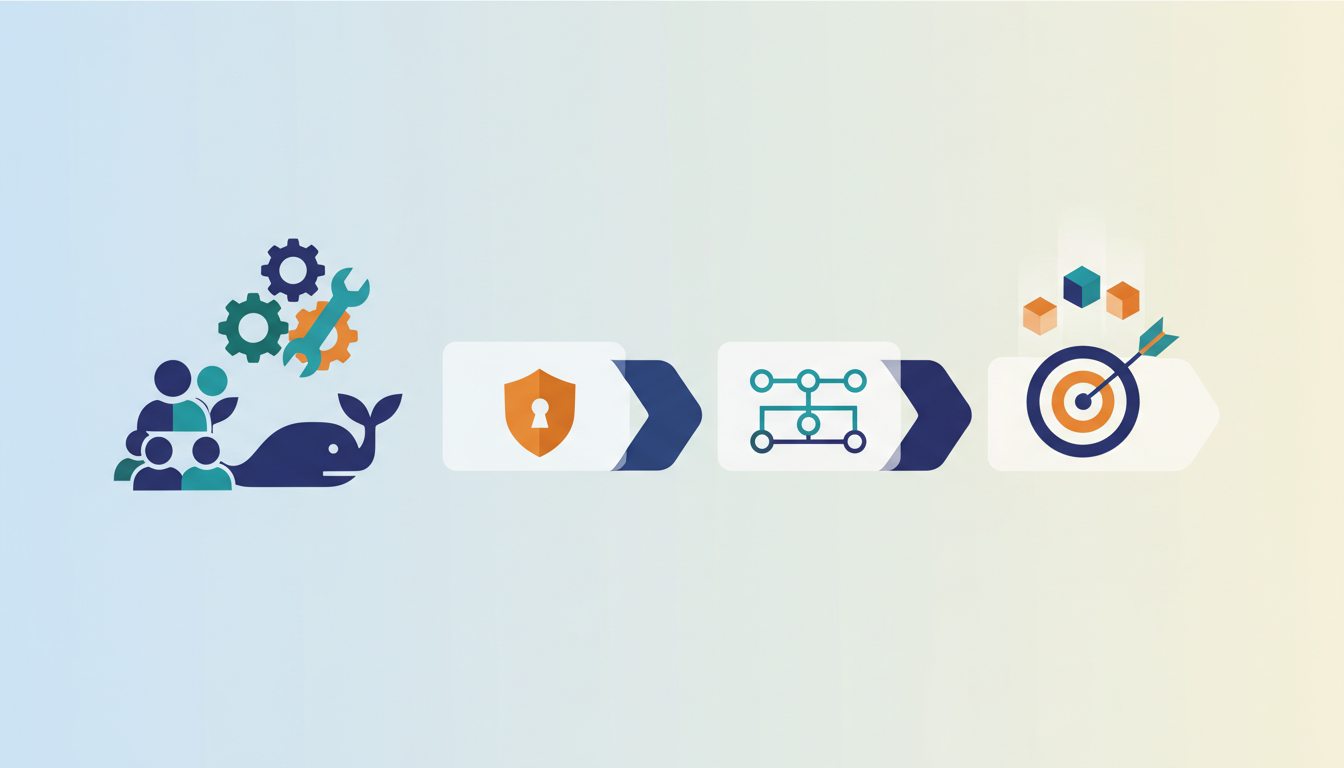
Indie Hackers ship AI features for SaaS products without hiring dedicated ML teams or spending months parsing arXiv papers. Solo founders bypass complex setup procedures to deploy functional RAG pipelines rapidly. Reducing boilerplate code lets these operators focus on product-market fit rather than infrastructure maintenance. Product Managers can prototype AI workflows and validate ideas before engineering commits to show, not pitch.
| User Group | Primary Constraint Resolved | Operational Gain |
|---|---|---|
| Indie Hackers | Limited engineering bandwidth | Rapid feature iteration |
| Enterprise Teams | Data sovereignty requirements | Self-hosted control |
Enterprise Teams require deployment behind firewalls with SSO, RBAC, and audit logs included as standard components. Such organizations apply commercial licensing to secure enterprise-grade support and proprietary integrations beyond the standard Apache 2.0 scope. Self-hosting introduces an operational burden regarding update management and internal scaling. Cloud options reduce maintenance yet shift trust boundaries to the vendor, a constraint for regulated industries handling sensitive PII.
Deploying Dify via Docker for Self-Hosted RAG Pipelines
Deploying with Docker on your own server allows you to keep your data yours, bypassing complex setup ceremonies that typically consume development cycles. This approach delivers a functional RAG pipeline quickly, allowing developers to skip manual orchestration logic. The deployment relies on the Apache License 2.0, which permits unrestricted self-hosting and modification of the core platform code. Self-hosting Dify eliminates cloud subscription fees but requires the user to provide their own API keys for LLM providers, shifting the cost structure to a direct "pay-as-you-go" model based on token usage.
The system uses a visual workflow builder to chain prompts and retrieval steps, replacing opaque boilerplate with transparent execution paths. Rapid iteration sometimes conflicts with governance needs because unmanaged access exposes sensitive embeddings if network policies remain permissive. Teams must enforce strict environment variable management to prevent credential leakage during the initial setup phase. Dify was established in March 2023, growing from inception to over 100,000 GitHub stars in approximately three years, supporting a strong plugin system, yet operators should validate resource limits before scaling to production workloads.
Checklist for Implementing SSO and Prompt Management Best Practices
Enterprise readiness begins when Enterprise Teams self-host behind their firewall, where SSO, RBAC, and audit logs come standard so IT teams can maintain oversight. These groups use such capabilities to keep data under local control while avoiding per-seat charges for every dashboard viewer. The architecture integrates state-of-the-art agent capabilities while maintaining performance and compliance standards. Infrastructure logs track activity for cost analysis, enabling enterprises to monitor conversation expenses effectively whether self-hosted or on the cloud.
| Control Layer | Configuration Target | Compliance Outcome |
|---|---|---|
| Identity | SSO Integration | Centralized access management |
| Authorization | RBAC Policies | Role-based access control |
| Governance | Audit Logging | Activity and cost tracking |
Prompt management strategies allow users to write, test, and A/B compare prompts in a dedicated editor, tracking every iteration like they would with Git. Commercial licensing options provide necessary support structures for organizations needing proprietary integrations beyond standard scopes.
Strategic Trade-offs Between Dify Cloud and Self-Hosted Architectures
Defining Dify Cloud Versus Self-Hosted Deployment Models
Dify Cloud functions as a managed SaaS solution, whereas self-hosted variants execute via Docker on private infrastructure. The managed service abstracts server maintenance yet enforces usage limits that often force upgrades or migration. Self-hosting removes subscription fees but transfers the operational burden directly to the deploying team. This architectural split fundamentally alters data sovereignty because self-hosted instances let organizations keep data behind their own firewalls. Internal teams manage SSO, RBAC, and audit logs without external dependency. Operators choosing self-hosting gain full control over data sovereignty but must provision their own API keys for underlying models. The platform's Apache License 2.0 permits unrestricted modification for these private deployments. This freedom introduces specific constraints since self-hosting requires the user to provide infrastructure and handle scaling personally. Teams must weigh the security benefit of local data against the heavy responsibility of managing their own environment.
Applying Deployment Choices for SaaS Products Versus Internal Tools
Founders using the managed approach eliminate server maintenance to focus entirely on product logic rather than Kubernetes configurations. Enterprises selecting self-hosted architectures achieve full data sovereignty by keeping vectors within private firewalls. The cost involves accepting total responsibility for operational uptime and patch management cycles. Organizations shifting from rigid products to custom builders often underestimate the cultural shift required for internal teams as they move toward becoming "solution builders." Self-hosting removes subscription fees but demands dedicated engineering time for infrastructure logs and cost monitoring. A hidden tension exists where rapid prototyping speed in the cloud can outpace security review processes in large firms.
Comparing Boilerplate Elimination Against LangChain Setup Complexity
Dify eliminates the need to write boilerplate code for prompt templates and API calls, a task that remains mandatory when building AI apps from scratch using standard libraries. Developers Who Hate Boilerplate bypass the LangChain setup ceremony entirely to secure a working RAG pipeline in 10 minutes flat. This visual approach replaces opaque recursive function calls with a transparent IDE-like canvas that maps logic flow explicitly. The platform's infrastructure logs activity for cost tracking, enabling enterprises to monitor conversation costs effectively whether self-hosted or on the cloud. Teams requiring deep customization of retrieval algorithms often find the visual workflow builder constraining compared to raw Python flexibility.
About
Arjun Patel is an Applied LLM Engineer at Enterium, where he specializes in benchmarking RAG architectures and LLM providers for production content workloads. His daily work involves rigorously evaluating the trade-offs between custom codebases like LangChain and managed platforms, making him uniquely qualified to assess Dify's visual workflow builder. Unlike theoretical overviews, this analysis stems from his hands-on experience debugging "spaghetti code" and measuring inference economics across substantial vendors. At Enterium, a brand dedicated to vendor-neutral content automation methodologies, Arjun focuses on reproducible pipeline architectures that balance cost, latency, and quality. This article connects his technical evaluation of Dify's open-source capabilities to the broader challenge of building scalable AI apps without vendor lock-in. By grounding his insights in concrete performance metrics rather than hype, Arjun provides the actionable intelligence B2B teams need to decide whether Dify fits their specific operational constraints.
Conclusion
Scaling AI applications exposes a critical fracture where rapid prototyping speed often outpaces security review processes in large firms. While visual builders eliminate boilerplate code, the ongoing operational cost shifts from development time to the heavy responsibility of managing infrastructure logs and patch cycles for self-hosted environments. Teams must recognize that achieving full data sovereignty demands dedicated engineering resources that many underestimate during initial adoption. Organizations should commit to managed SaaS deployments for external products to maintain focus on logic rather than Kubernetes configurations, reserving self-hosted architectures strictly for internal tools requiring absolute vector isolation within private firewalls. This distinction prevents the cultural shock of internal teams suddenly becoming solution builders without adequate support. Start by mapping your current retrieval pipelines against compliance requirements this week to determine if your data vectors truly require firewall containment or if cloud convenience suffices. Adopting Dify as your primary interface allows you to validate this architecture quickly while avoiding the trap of opaque recursive function calls. The path forward requires balancing the desire for custom retrieval algorithms with the practical necessity of maintaining operational uptime without exhausting your engineering bandwidth on maintenance tasks.
Frequently Asked Questions
Dify secured $30 million in funding to support its open-source development model. This capital injection signals strong investor confidence in avoiding vendor lock-in while maintaining community-driven growth for your AI infrastructure projects.
The platform holds a $180 million valuation reflecting market trust in portable AI operations. This high value reduces your risk of project abandonment, ensuring long-term support for critical data sovereignty and compliance needs.
You can secure a working RAG pipeline in just 10 minutes flat using the visual builder. This speed eliminates weeks of LangChain boilerplate coding, letting you deploy production-ready retrieval systems immediately.
Indie hackers ship features without hiring dedicated ML teams by using pre-built workflows. The visual canvas replaces complex coding, allowing small groups to manage sophisticated AI logic and multi-model switching easily.
Every application auto-generates REST API endpoints for immediate integration via a single POST request. This feature allows you to embed AI into your product instantly without rewriting your existing backend architecture code.
References