Content intelligence: measuring the 5.44x traffic gap
Human-written content drives 5.44 times more traffic over five months than AI-generated equivalents, according to Samwell.ai. This isn't a suggestion to ban bots; it's a mandate to deploy content intelligence. You need hard data to quantify the performance gap between artificial and human creation, not blind faith in generative tools. While a 2025 report indicates half of marketers now use generative AI for materials like blog posts and emails, Merriam-Webster assigned "slop" as its 2025 word of the year to describe the resulting low-quality digital output.
The disconnect is stark.samwell.ai research reveals that human-generated content achieves 41% longer session durations, suggesting AI fails to sustain user engagement. When you cannot isolate attribution sources, you create a false sense of productivity gains while quietly eroding brand trust.
We will define the specific performance gap through rigorous benchmarking and detail the mechanics required to isolate content sources amidst fragmented data. The path forward involves constructing hybrid workflows that leverage AI for ideation while preserving human oversight for final execution. Moving beyond anecdotal evidence allows organizations to optimize strategies that maximize both traffic quality and retention rates.
Defining Content Intelligence and the Performance Gap Between AI and Human Creation
Defining Content Intelligence and the Slop Phenomenon
Content intelligence applies data systematically to benchmark, evaluate, and optimize digital assets against specific ROI targets. This discipline separates strategic deployment from the generation of slop, a term Merriam-Webster selected as its 2025 word of the year to describe low-quality output produced in quantity by artificial intelligence. A 2025 report indicates that half of marketers now use generative tools for blogs, slides, and emails, yet raw adoption often ignores quality thresholds. Content intelligence frameworks resolve this by isolating variables like distribution amplification and tagging hybrid workflows to measure true engagement rather than fleeting traffic spikes.
| Metric Focus | Traditional AI Deployment | Intelligent Content Framework |
|---|---|---|
| Primary Goal | Volume and speed | ROI and trust impact |
| Measurement | Short-term traffic spikes | Long-term conversion and recirculation |
| Governance | Unchecked automation | Human-in-the-loop validation |
Attribution is where most strategies fracture. Without consistent tagging, enterprises cannot separate AI contributions from human refinement. This leads to false economies where cheap production costs mask poor performance. Most firms lack the attribution frameworks required to track these distinctions across fragmented global campaigns. Consequently, organizations risk scaling low-value assets that fail to drive product demo conversions or encourage return visits over time.
Modern CMS platforms offer built-in capabilities to label content as human-created, AI-generated, or AI-assisted. Teams must use these to validate whether productivity gains translate to sustained audience growth. This granularity prevents the dilution of brand authority with unverifiable noise by ensuring every asset is accounted for within the analytics framework.
Real-World Traffic Gaps: Human vs AI Content Metrics
The numbers don't lie: human-written assets generate 5.44 times more traffic over five months than pure AI output. This disparity stems from engaged time, where human-generated pieces sustain reader attention 41% longer than automated drafts. The mechanism involves semantic depth and narrative variance that current models struggle to replicate without human oversight. When audiences encounter slop, set as low-quality digital content usually produced in quantity by artificial intelligence, they exit quickly, signaling search engines to deprioritize the page. High-velocity AI production often sacrifices the emotional connection required for brand loyalty. While AI can ensure coverage, this prevalence does not guarantee superior search rankings or deep user engagement.
Effective measurement requires separating hybrid workflows from fully automated streams using available tagging tools. Without isolating these variables, teams cannot accurately measure the ROI of their human editors versus their model subscriptions. For network architects building content pipelines, the implication is clear: raw throughput is a vanity metric if the end-user disengages immediately.
- Tag all inputs at the CMS layer to distinguish human, hybrid, and AI sources.
- Filter analytics dashboards to compare session duration across these specific tags.
- Audit your current content mix against these engagement baselines before scaling generation tools.
Organizations must align with long-term goals before expanding their generative footprint.
The Short-Term KPI Trap in AI Performance Benchmarking
Optimizing for immediate traffic spikes often masks a failure to drive downstream business value. Teams frequently celebrate when an AI-generated blog post draws significant volume within the first two weeks, yet this short-term KPI focus ignores whether the content converts readers or encourages return visits. Data indicates that while human-written articles achieve a Click-Through Rate of 3%, AI-generated counterparts average only 1.5%. This discrepancy suggests that initial visibility does not equate to sustained engagement or brand loyalty.
The failure mechanism lies in the disconnect between top-of-funnel acquisition and bottom-funnel action. Without consistent tagging frameworks, enterprises cannot isolate AI's contribution from distribution variables, leading to skewed performance attribution based on vanity metrics alone. Consequently, operators may scale production of low-value assets that inflate traffic reports while depressing overall ROI.
| Metric Focus | Outcome | Risk Profile |
|---|---|---|
| Short-Term Traffic | High Initial Volume | Low Conversion |
| Long-Term Engagement | Sustained Growth | High Loyalty |
Relying solely on early traffic data creates a false positive signal for content strategy. A piece might rank well for structured queries yet fail to drive conversions to product demo pages or support the emotional connection required for subscriber growth. Research shows human faces in video drive 47% higher subscriber conversion rates than avatars, a gap raw traffic counts miss entirely.
Tagging all assets by creation source helps separate attribution noise from genuine performance signals. Operators must benchmark baseline metrics before automation to detect when efficiency gains erode long-term equity. Ignoring this distinction results in a content portfolio that looks successful on dashboards but fails to move revenue.
Mechanics of Attribution and the Technical Challenges in Isolating Content Sources
Content Tagging Architecture for AI Attribution
Embedding metadata at the point of creation separates generative signals from human impact. Calculating performance remains tricky because the technology spans multiple use cases beyond simple text generation. Many firms lack consistent tagging frameworks because this is a relatively new area requiring custom schema definitions. Operators must deploy smart tags within the CMS to label assets as human, AI, or hybrid before publication. Analytics platforms conflate distribution velocity with content quality without this structural separation, obscuring the root cause of engagement drops. Fragmented data carries a measurable cost; enterprises often cannot distinguish whether a traffic dip stems from poor writing or algorithmic de-ranking. Detection accuracy varies notably by domain, necessitating technical guards rather than relying on subjective review alone. Keyword optimization risks increase when models repeat phrases for SEO purposes, requiring human refinement to introduce contextual transitions.
| Data State | Visibility | Actionability |
|---|---|---|
| Untagged | None | Impossible |
| Siloed | Partial | High Friction |
| Centralized | Full | High Precision |
Organizations should centralize these metrics in a single intelligence platform to avoid data fragmentation across global teams. A unified view reveals whether short-term spikes mask long-term retention failures. Rapid deployment conflicts with the granularity required for accurate attribution. Teams that skip the tagging step lose the ability to iterate on prompt engineering strategies effectively.
Centralizing Analytics to Benchmark Before Automation
Consolidate fragmented data streams into a single content intelligence view before deploying generative models to establish valid performance baselines. Enterprises often produce content across multiple teams for global campaigns, resulting in fragmented data sources that obscure the true impact of automation tools. Operators cannot isolate AI contributions from distribution variables like amplification or channel mix without a unified dashboard. The technical workflow requires filtering assets by specific tags to compare human versus machine output on equal footing.
- Capture baseline metrics for existing human-authored assets to gauge current marketing ROI.
- Deploy smart tags within the CMS to label content as human, AI, or hybrid at creation.
- Filter analytics by these tags to measure engaged time rather than simple page views.
Relying on short-term traffic spikes creates a false economy where initial volume masks poor retention. Human-generated assets frequently demonstrate deeper audience connection, yet many firms miss this nuance by tracking only top-of-funnel reach. A unified view reveals that while automated drafts may scale quickly, they often lack the narrative variance required for sustained audience engagement.
| Focus Area | Siloed Measurement | Centralized Intelligence |
|---|---|---|
| Data Scope | Single channel only | Cross-platform aggregation |
| Attribution | Ambiguous source | Precise tag-based filtering |
| Outcome | Inflated short-term wins | Accurate long-term ROI |
Decentralized logging prevents correlating brand consistency with conversion rates over time. When data remains siloed, teams cannot determine if a drop in conversions stems from content quality or distribution failure. Operators must centralize metrics to distinguish between a model's efficiency and its actual effectiveness in driving business goals. This structural discipline prevents the adoption of tools that generate volume but erode trust.
Mechanics: The Short-Term KPI Trap in AI Performance Benchmarking
Isolating attribution signals by distinguishing between content origin and distribution variables ensures accuracy in performance reports.
Strategic Application of Hybrid Workflows to Maximize Traffic and Retention
Defining the Hybrid Workflow: Balancing AI Scale with Human Depth
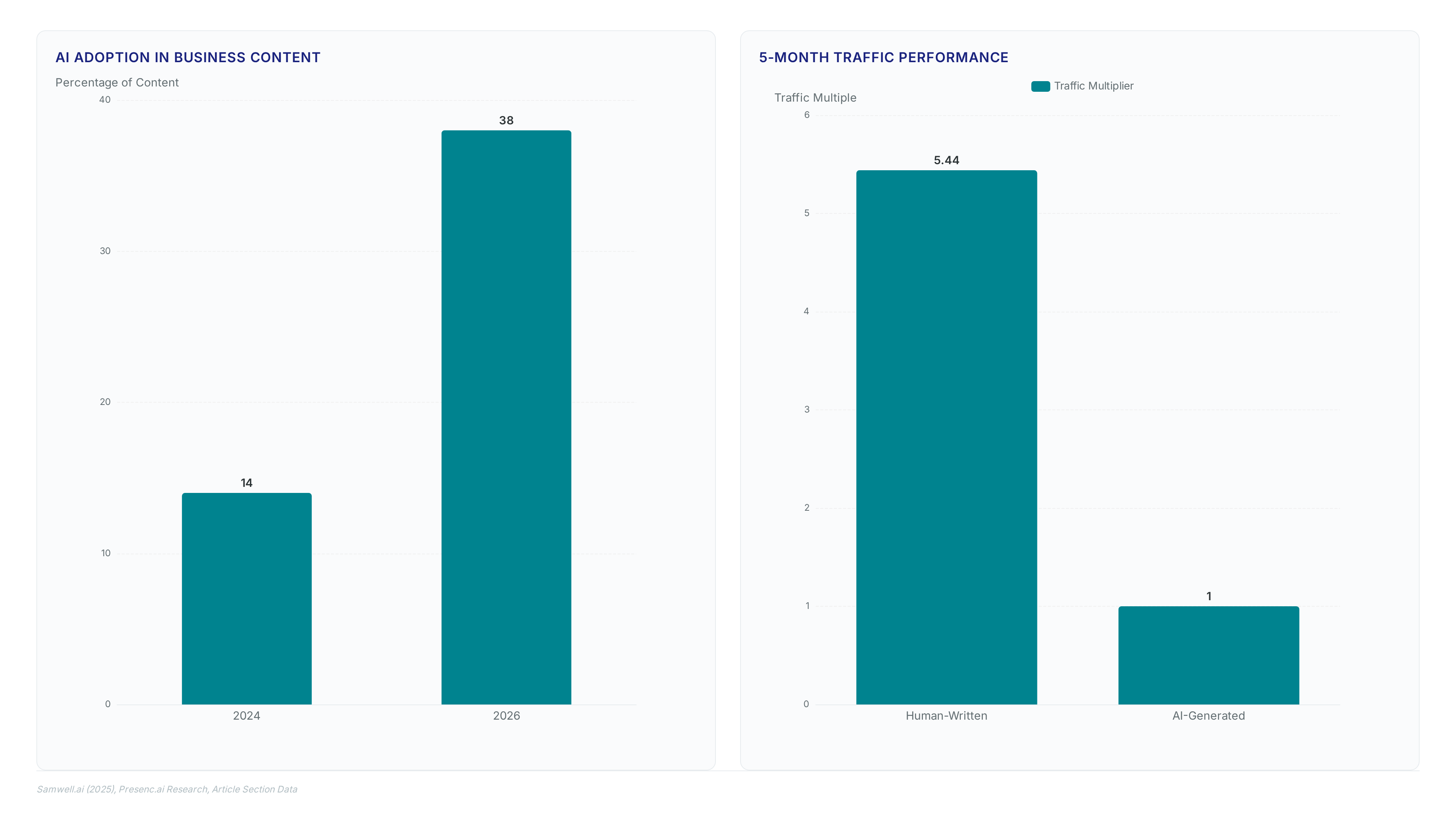
Assigning artificial intelligence to handle volume and structure while humans manage nuance delivers the strongest commercial results. Roughly 38% of business content now involves AI assistance, a sharp rise from 14% in 2024, indicating massive resource reallocation toward these mixed workflows. This scale demands a clear separation between generative throughput and editorial depth to maintain quality standards. External studies on content performance often lag by two or three years, and AI adoption has shifted so rapidly that relying on old data creates significant blind spots for specific organizations. Isolating the contribution of automated tools remains difficult when distribution channels and amplification tactics vary wildly across campaigns. Many firms still lack consistent tagging frameworks to track these variables accurately.
| Workflow Stage | Primary Actor | Function |
|---|---|---|
| Drafting | AI | Generates structural bulk |
| Refinement | Human | Adds unique point of view |
| Validation | Hybrid | Ensures brand consistency |
Operators must capture baseline performance metrics before integrating AI to gauge marketing ROI, even as 'FOMO' drives rapid adoption cycles. Recording this data before tool integration is necessary because the rush to gain a competitive advantage often obscures the need for historical context. Without this foundation, distinguishing between temporary traffic spikes and genuine audience retention over time becomes guesswork. Modern CMS capabilities allow teams to use tools like Smart Tags to create labels for "hybrid" or "AI-assisted" content, enabling precise filtering when analyzing long-term performance trends. Skipping this governance creates an inability to optimize the human-AI ratio effectively.
Deploying Engaged Time and Recirculation Rate for Retention Strategy
AI models excel at generating initial query matches yet often fail to sustain the narrative depth required for long-form consumption. Human-authored assets frequently drive the emotional resonance necessary for repeat visits, a metric where synthetic text struggles to compete. Operators should tag content by creation method to isolate these performance deltas within their analytics stack.
| Metric | AI-Optimized Use Case | Human-Optimized Use Case |
|---|---|---|
| Engaged Time | Quick reference, definition lookup | Complex analysis, storytelling |
| Recirculation | Low (linear consumption) | High (exploratory browsing) |
| Primary Goal | Immediate answer resolution | Community building |
Teams must analyze traffic sources by distinguishing between SEO queries seeking quick facts and AEO patterns indicating deep research intent. Content designed for LLM scraping often satisfies a single prompt without encouraging further exploration, leading to high entry but low return rates. Pieces using unique human perspective support the kind of connection that drives users back to the site repeatedly. Studies indicate human faces in video drive 3.2 times more emotional engagement than synthetic counterparts, a principle that extends to written nuance. Research analyzing close to 800 articles across dozens of websites concluded that human-written content drew 5,444 times more traffic than AI-produced equivalents. A common failure mode occurs when teams optimize all assets for immediate traffic, inadvertently training their audience to consume and leave without building brand loyalty. An AI-generated blog post might draw significant traffic within the first two weeks yet fail to drive conversions or encourage visitors to return. Auditing existing libraries helps identify high-traffic but low-retention pages that may require a different strategic.
Pre-Automation Checklist: Capturing Baseline Metrics to Gauge Marketing ROI
Stop automation workflows until you record current engagement baselines for existing human-authored assets. Many teams skip this step due to adoption pressure, creating a permanent blind spot for marketing ROI calculations. Without a pre-integration snapshot, distinguishing between organic growth and algorithmic noise becomes impossible. Define specific goals for AI-assisted content before generating a single token. Machines excel at maintaining brand consistency, whereas human writers provide the unique perspective required for deep audience connection.
| Metric Focus | AI Strength | Human Strength |
|---|---|---|
| Primary Output | Volume and personalization | Unique point of view |
| Retention Driver | Consistent formatting | Emotional resonance |
Implement smart tags immediately to label content origin as human, hybrid, or machine-generated. This tagging structure allows operators to filter performance data effectively within a unified dashboard. Centralizing these metrics prevents data silos that often plague enterprise environments. By using integrated content intelligence platforms, teams can apply these filters to compare performance rates across creation methods accurately. Skipping this setup creates a dataset where high-volume, low-quality outputs skew long-term strategy decisions. Only by isolating variables now can you validate whether future traffic spikes represent genuine value or temporary inflation.
Implementing a Unified Tagging System and Conversion Tracking for AI Content Cohorts
Defining Conversion Pathways for AI Content Cohorts
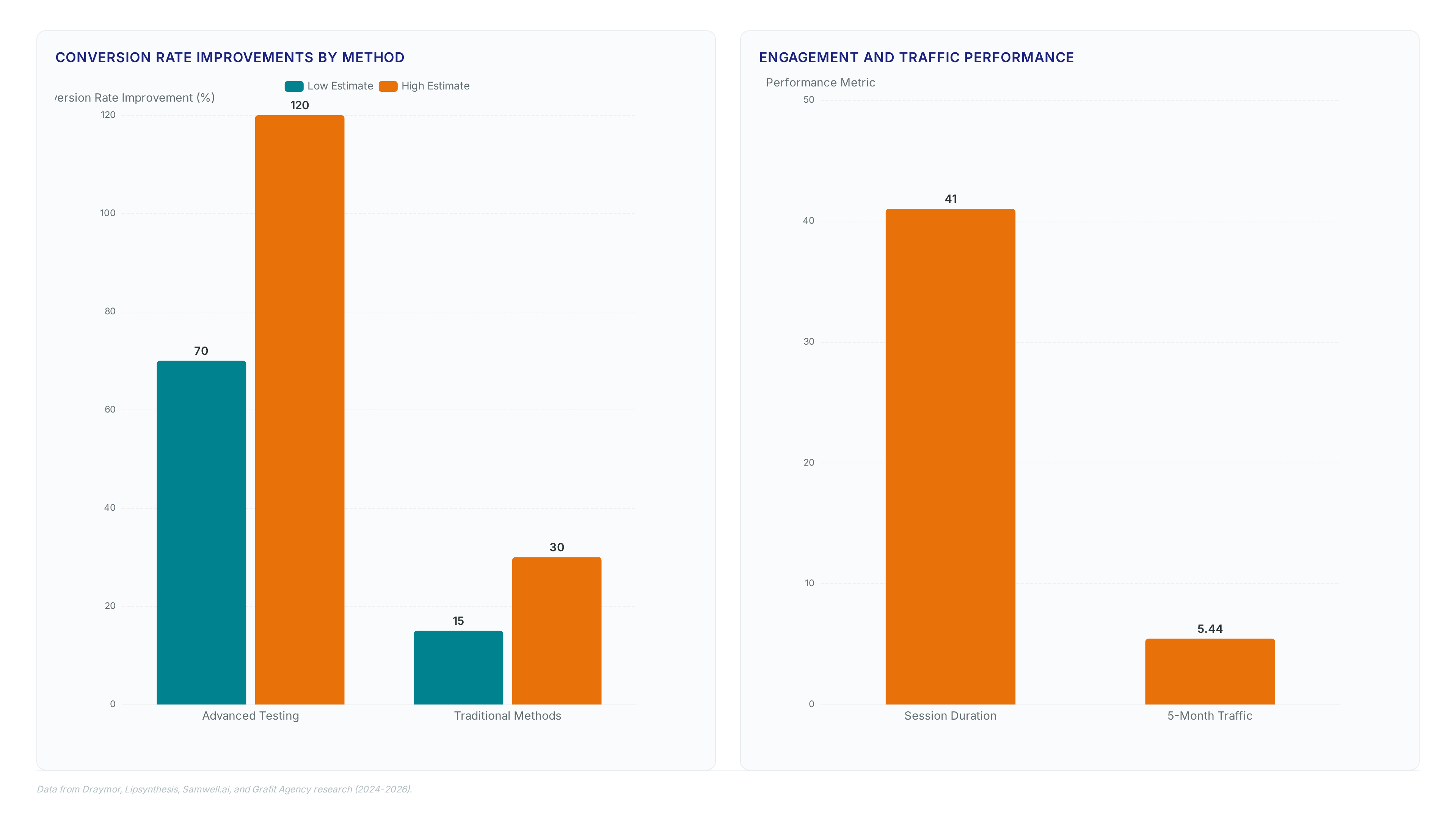
Isolate AI-driven traffic by mapping distinct conversion pathways for direct purchases, form fills, and resource downloads within your analytics stack. Sales teams need to know AI's impact on prospects converting via downloading resources, form fills, using ROI calculators, and direct purchases. Companies using advanced testing systems to optimize the balance between AI and human content have seen conversion rates improve by 70, 120% within 3, 4 months. This approach requires moving beyond anecdotal or short-term metrics, like a quick traffic spike, to put hard numbers behind performance.
- Assign smart tags in the CMS distinguishing "AI-generated," "human-written," and "hybrid" assets immediately upon publication.
- Configure distinct SMART TAGS within the CMS to separate traditional organic queries from large language model citations.
Organic reach should balance referral traffic from LLMs, traditional digital channels like social media, and direct traffic from sources like email newsletters. Operators must define specific rules where AI-assisted content receives a unique identifier alongside human-authored assets to enable accurate cohort analysis.
- Apply metadata flags distinguishing AI-generated, human-written, and hybrid content during the editorial workflow.
- Route tagged assets to a central dashboard capable of filtering by creation method and traffic source simultaneously.
- Monitor recirculation rates to determine if specific cohorts drive downstream conversions or merely satisfy immediate query resolution.
| Traffic Source | Measurement Focus | Attribution Challenge |
|---|---|---|
| Traditional SEO | Direct clicks and session depth | Distinguishing brand search from generic queries |
| AEO / LLM | Citation frequency and indirect lift | Tracking users who never click through to site |
| Direct / Email | Retention and repeat visits | Isolating newsletter impact from organic discovery |
Validating these tags against baseline performance is critical before scaling automated generation workflows. Without consistent attribution frameworks, teams risk optimizing for visibility that fails to translate into measurable business outcomes. The cost of ambiguous tagging is a distorted view of content ROI, where high-volume/low-intent traffic masks deficiencies in engagement quality. Implementing these rules now prevents data corruption as answer engine adoption accelerates across the enterprise environment.
Validating Data Feedback Loops Using Engaged Time and Recirculation Rate
Replace bounce rate monitoring with engaged time and recirculation rate to detect when AI content fails to sustain reader attention. Traditional metrics often mask the inability of synthetic text to hold an audience, whereas deep engagement signals reveal true content utility. An AI-generated blog post might draw significant traffic initially yet fail to encourage visitors to return or drive conversions to product demo pages over time.
- Tag all assets as AI-generated, human-written, or hybrid within the CMS to enable precise cohort filtering.
- Filter analytics views to compare recirculation rate differences between these distinct creation methods.
- Correlate low engagement scores with specific content types to identify where human oversight is missing.
About
Hannah Brooks, Marketing Operations Lead at Enterium, specializes in the precise architecture of content pipelines where AI meets human governance. Her daily work involves evaluating tooling stacks, designing workflow automation, and establishing the strict quality gates necessary to prevent the "slop" often associated with unchecked generative AI. This operational expertise makes her uniquely qualified to analyze the detailed performance differences between AI-generated and human-written content. At Enterium, a B2B publication dedicated to vendor-neutral content automation methodologies, Hannah focuses on reproducible systems rather than hype. She understands that measuring content performance is not about declaring a winner between machine and creator, but about optimizing the handoff points within a production pipeline. Her approach ensures that organizations can use LLMs for scale while maintaining the rigorous standards required for high-value B2B communication. By grounding her analysis in real-world metrics and governance frameworks, she provides actionable insights for teams aiming to build reliable, high-ROI content operations.
Conclusion
Scaling content intelligence breaks when organizations mistake volume for value, creating a hidden operational debt where low-recirculation assets drain budget without building audience loyalty. The immediate cost is wasted spend, but the real damage is the corruption of strategic data that leads leadership to double down on ineffective synthetic drafts. You must shift from tracking raw traffic to enforcing engagement quality as the primary gatekeeper for publication within the next quarter. Treat any content cohort failing to match human-written retention benchmarks as a critical system error rather than a minor variance. This requires a fundamental change in how production pipelines validate output before it reaches the public domain. Start this week by filtering your analytics to isolate recirculation rates specifically for assets tagged as AI-generated, then halt production on any topic cluster where these scores fall below your human-written baseline. This targeted pause prevents further data pollution while you recalibrate your hybrid workflow. Only by rigorously separating high-performing human insights from average automated text can you secure the long-term trust required for sustainable growth.
Frequently Asked Questions
Human-written pieces sustain reader attention significantly longer than automated drafts. Data shows human-generated content achieves 41% longer session durations, proving that manual oversight drives deeper engagement than pure automation.
Relying on immediate traffic spikes often obscures long-term value deficits in automated text. Since human content sustains attention 41% longer, focusing only on initial views misses the critical retention gap.
Session duration is the clearest indicator of whether content resonates with your audience.
Teams must compare session durations between hybrid and fully automated workflows.