AI content performance: Track citations not clicks
Generative engines like Perplexity, ChatGPT, and Google now prioritize direct answers, fundamentally breaking traditional SEO metrics.
The central thesis is that AI content performance measurement replaces vanity metrics with hard data on how large language models actually consume and cite web content. Without this shift, marketing teams panic over falling traffic while missing the zero-click browsing activity dominating modern discovery. You cannot manage what you cannot see, and standard analytics dashboards remain blind to the retrieval systems powering these new interfaces.
This article details how to instrument your stack to capture bot activity and measure citation rates across substantial platforms. Finally, we provide concrete steps for tracking AI-referred traffic to validate whether your content chunks are driving real value or just feeding the machine.
The Role of Citation Rates and Zero-Click Browsing in Modern Visibility
Defining AI Content Performance Measurement and Citation Rates
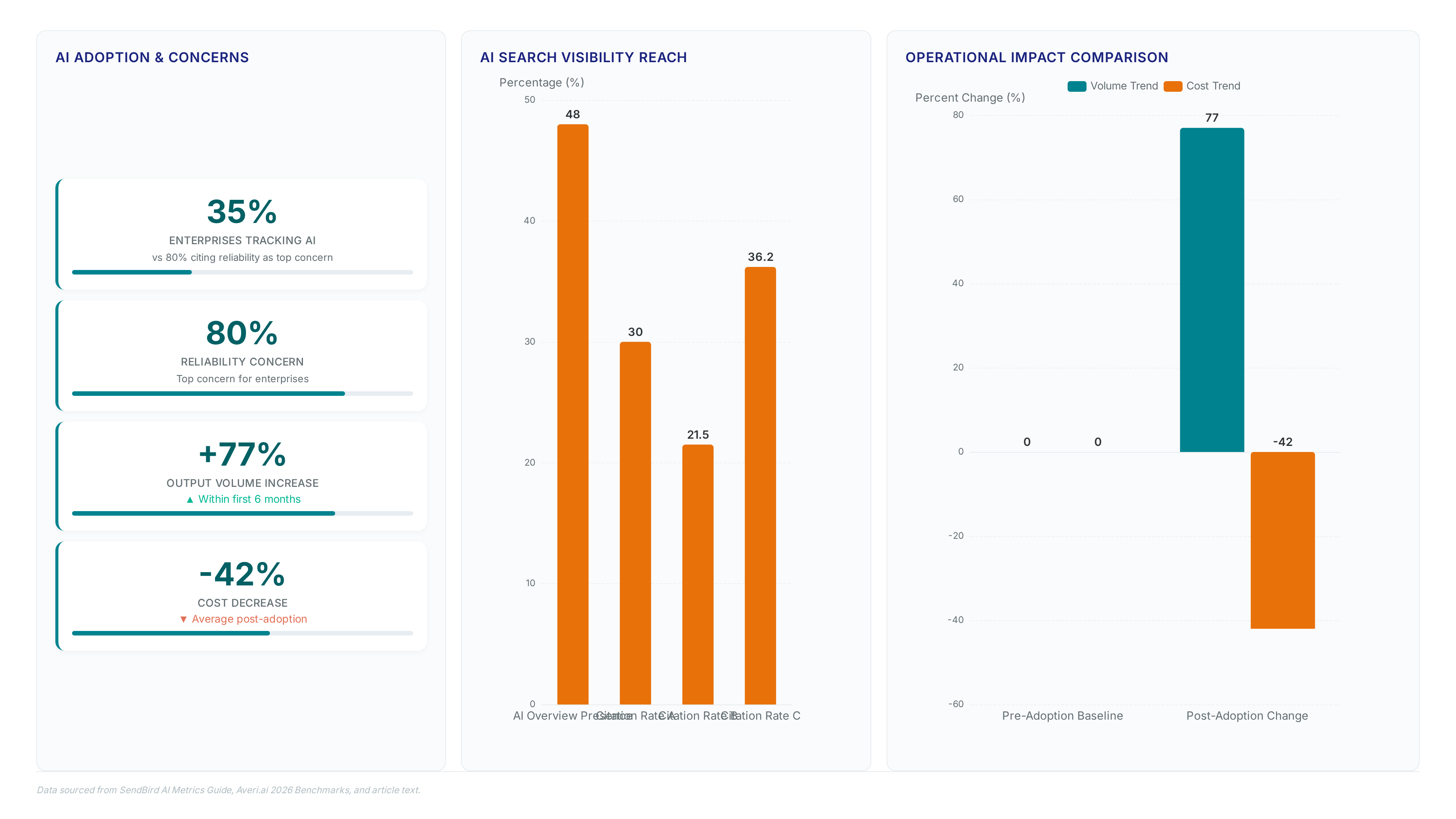
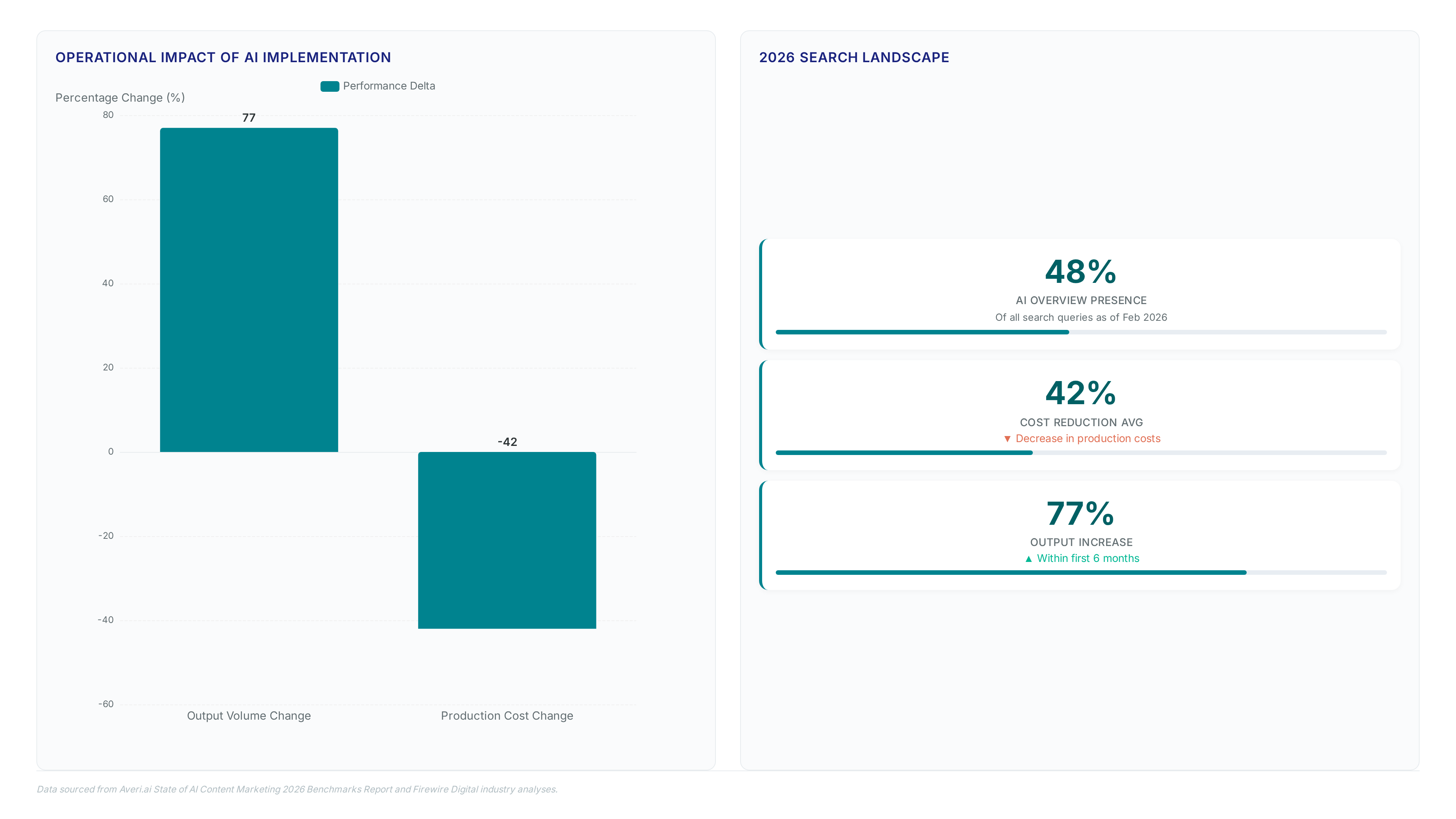
Stop chasing clicks if the engine already answered the user's question. AI content performance measurement benchmarks large language model impact on revenue where traditional click analytics fail. As of February 2026, Google's AI overviews appear in a significant share of all search queries, fundamentally altering visibility patterns for digital assets. This metric suite tracks how Perplexity, ChatGPT, and similar engines reference brand content without generating downstream traffic. The definition of citation rate quantifies how often an AI model accurately names or links a source within its generated response. Research indicates 86% of these citations originate from domains brands already control, yet standard tools miss this upstream signal entirely.
Zero-click browsing occurs when users consume answers directly on the answer engine surface, bypassing the source website. Traditional SEO dashboards track rankings and sessions, but they cannot measure citation frequency or entity visibility across these new interfaces. Operators must distinguish between high citation volume and actual referral traffic to avoid misinterpreting stable rankings as declining performance. This divergence requires synthetic monitoring to validate hypotheses about retrieval frequency versus user click-through behavior.
Optimizing for citation accuracy creates tension with click inducement. Visibility in traditional search depends on position within a list of ten results. AI search defines visibility as the sum of outcomes across all prompts the to a category. This reality demands a shift from ranking tracking to mention tracking. Measurement must therefore capture both the upstream alignment signals and the downstream conversion outcomes to determine true ROI.
Tracking AI-Referred Traffic Using WordPress VIP and Parse.ly
Where did the visitor come from? AI-referred traffic identifies sessions originating from generative engines like ChatGPT and Perplexity rather than traditional search indexes. For businesses using an enterprise-grade CMS like WordPress VIP, built-in AI content analytics features in Parse.ly can identify AI referrers such as ChatGPT, Perplexity, and Google AI Overviews. This visibility prevents teams from misinterpreting stable citation rates as traffic losses when zero-click browsing increases. Traditional analytics rely on direct user click-through data, while AI measurement tools must analyze how often AI models reference your brand and which topics trigger those mentions, often requiring synthetic monitoring or specialized agents. A common failure mode occurs when content generates high upstream alignment signals but fails to produce downstream performance metrics like engaged time or events. If a user clicks after reading an answer, that user often exhibits higher conversion potential than a casual searcher. This approach reveals whether a decline in referral traffic negatively impacts business or merely reflects a shift in discovery mechanics.
The Risk of Relying on Traditional SEO Metrics for Zero-Click Browsing
Blind faith in legacy dashboards is dangerous. Traditional SEO metrics like rankings and clicks fail to capture zero-click browsing activity where users consume answers without visiting source pages. This blindness creates a dangerous gap between perceived and actual content performance in an AI search vs traditional search environment. Standard dashboards report declining sessions while missing the citation frequency that now drives brand authority upstream.
The disconnect is stark: only a minority of enterprises currently track specific AI performance metrics, even though a large majority cite reliability of AI operations as their top concern. Traditional tools focus on direct user click-through data, whereas AI content throughput measurement requires analyzing how often models reference your brand through synthetic monitoring or specialized agents.
| Metric Type | Traditional Focus | AI Performance Gap |
|---|---|---|
| Visibility | Rankings, Views | Citation rate, Entity visibility |
| Engagement | Clicks, Bounce Rate | Topical authority coverage |
| Source Data | Direct traffic logs | Model reference frequency |
Relying solely on session counts risks misdiagnosing stable citation rates as traffic failures, leading teams to cut high-performing content prematurely. Operators must deploy content intelligence to distinguish between lost clicks and shifted visibility. Without this distinction, organizations cannot validate if their content strategies align with how LLMs retrieve information.
Inside the Data Flow of LLM Citations and Bot Activity
Upstream AI-Alignment Signals and Passage Relevance Mechanics
Retrieval systems prioritize passage relevance over traditional link ranking, creating a void where AI referral data used to exist. Upstream AI-alignment signals determine how specific content chunks rank inside these retrieval systems long before any citation occurs. Standard search indexes order pages based on backlinks, yet generative engines test how content chunks rank in retrieval systems and how often they appear for representative queries. This mechanical shift explains why high-ranking SEO pages sometimes vanish from AI answers while deeper archive content surfaces instead. Traditional metrics track user clicks, but new frameworks prioritize entity visibility and topical authority coverage. Content output volume increases notably within the first six months of AI implementation, yet few teams measure if these new chunks actually retrieve. Traditional optimization targets keyword density and heading volume against top-ranking pages. AI optimization targets extractability, entity clarity, and topical depth so answer engines can cite the material.
A page might satisfy a human reader but fail passage relevance tests because its key data lacks clear entity boundaries for the model. The retrieval system cannot isolate a fact without those boundaries. The brand loses the citation opportunity entirely when the model fails to isolate data.
Analyzing URL-Level Discrepancies Between Citations and Clicks
Look closer at the URL level. Analysis reveals content clusters gaining AI citations while suffering simultaneous traffic declines. Answer engines summarize technical answers directly, satisfying user intent without requiring a click to the source domain. Operators must compare search impression volume against actual visit counts to identify where zero-click browsing absorbs demand. Some pages maintain stable traffic despite high citation rates, indicating durability or incomplete indexing by scraping bots. Content output volume increases within the first six months of AI implementation in marketing workflows. This surge often dilutes passage relevance scores if quality control lags behind production speed. Visibility in traditional search is set by position in a list of ten results.
The Risk of Unmeasured Downstream Effects in Content Clusters
Blind spots emerge when marketers cannot observe how content clusters absorb query volume without dedicated intelligence software. Production costs for content formats decrease following tool adoption. This efficiency creates a volume problem that obscures specific downstream effects. Only a minority of enterprises currently track specific AI performance metrics. Most cite reliability of AI operations as their top concern. It is difficult to see how well those content clusters respond to query volumes in AI answer engines without content intelligence software. Simulating LLM behavior requires posing synthetic queries to test which chunks surface. Traditional analytics rely on direct user click-through data. AI measurement tools must analyze how often AI models reference a brand and which topics trigger those mentions. The result is a portfolio heavy on upstream alignment but light on actual conversion value.
Scaling output conflicts with verifying that each new piece drives measurable business outcomes rather than just adding to the index. A cluster generates citations but no clicks. The topic demand is being satisfied upstream. The brand retains authority but gains no revenue. Enterprises must pivot from counting total mentions to evaluating whether those mentions trigger deeper site navigation or visible calls to action. The industry moves from measuring output to measuring business impact. Output-only measurement leads to performance tracking failure.
Steps for Instrumenting Analytics to Track AI Referrals
Defining the AI Referrer Tracking Workflow in Parse.ly
Parse.ly removes manual setup work by pre-defining AI referrer buckets that sort traffic from generative engines automatically. This design skips the messy regex rules needed to separate bot activity from real visitors across many different LLM scrapers. Teams do not wait for individual engine integrations because the system reads crawler logs and maps them to known AI-referred traffic sources right away.
- Establish baseline metrics for engagement and conversions before analyzing AI impact.
- Segment sessions by source to distinguish between news posts and product pages.
- Compare cohorts over specific timeframes to quantify changes in downstream behavior.
These ready-made buckets let groups start measuring now without configuring dozens of AI answer engines one by one. Substantial platforms sit alongside competitors like Perplexity and Claude within this view, including Google's AI overviews. Staff must still run synthetic queries to mimic LLM behavior and confirm their content actually appears in these tracked channels. The job shifts from gathering data to understanding why high citation frequency sometimes fails to lift session counts. Marketers gain visibility into these patterns so they can build an AI-assisted content strategy based on hard referral numbers instead of stories.
Establishing Baselines for AI Impact on Engagement and Conversions
Set your baseline before the signal gets noisy. Setting baselines for traffic by channel and revenue per visit creates a solid truth before AI visibility twists the signal. This step shows teams their current position with standard search traffic before AI became a main worry. Groups need to record present engagement levels and conversion rates first to know their standing before widespread LLM scraping started.
- Segment sessions by source and content type, distinguishing news-related posts from product pages or white papers to identify which formats attract scrapers.
- Compare performance by cohort across specific timeframes to quantify shifts in conversions rather than just raw session counts.
- Analyze how revenue per visit fluctuates when isolating traffic that bypasses traditional search indexes.
Old analytics depend on direct user clicks, yet modern measurement checks how often models mention a brand via synthetic monitoring or special agents traffic sources The focus moves from counting output volume to tracking downstream business results like pipeline retention and customer acquisition cost business impact. One specific tension exists here: chasing high citation rates might meet brand visibility goals while lowering immediate click revenue at the same time. Teams must accept that some content clusters will drive many impressions but fewer clicks since answers get summarized directly. Testing these ideas needs synthetic queries to check retrieval frequency against real analytics data. Operators can only tell if a traffic drop means failure or successful zero-click brand interaction by separating these variables.
Weekly Audit Checklist for Separating Bot Traffic from Human Visitors
Good measurement means telling upstream AI alignment signals apart from the downstream effects they cause. Old tools look at direct user clicks while effective systems analyze how often models cite a brand through synthetic monitoring
- Tag AI referrals by content type to identify which formats attract scrapers versus humans.
- Form a hypothesis regarding topic visibility and test it against conversion rates rather than raw impressions.
- Review bot activity logs to analyze crawler logs from AI engines and see what is being indexed and how frequently.
| Metric Focus | Human Visitor | AI Crawler |
|---|---|---|
| Primary Signal | Click-through rate | Citation frequency |
| Interaction | Scroll depth, events | Retrieval indexing |
| Goal | Conversion | Context absorption |
Staff often mix up high retrieval counts with marketing success, yet a page can get cited heavily while making zero dollars. This conflict demands a clear line between passage relevance in retrieval systems and actual downstream value. Tracking only upstream signals makes a false loop where content volume grows but business impact stays flat. Enterprise groups should instrument and audit content regularly to stop this split. Automating the separation of these traffic streams keeps strategy reviews focused on economic results instead of vanity numbers.
Strategic ROI from Optimizing Content for AI Answer Engines
Defining Strategic ROI Thresholds for AI Citation Visibility
Positive returns appear only when citation frequency converts into measurable downstream engagement instead of sitting as a vanity metric. High-impression scenarios often trap operators in a citation without traffic paradox where content authority grows while revenue stagnates. Research indicates that frequently cited assets may require strategic pivots, such as embedding deeper site navigation links to capture value from zero-click browsers. Action becomes necessary when passage relevance tests confirm high retrieval rates yet conversion data remains flat. Traditional SEO targets keyword density. AI optimization demands extractability and entity clarity so answer engines cite specific brand claims. Teams must distinguish between resilient content maintaining traffic and assets losing intent to summarized answers.
| Scenario | Signal | Strategic Response |
|---|---|---|
| High Citation / Low Click | Brand mentioned, no referral | Add visible CTAs within cited chunks |
| Low Citation / High Click | Strong traditional SEO | Optimize for entity visibility |
| High Citation / High Click | Ideal alignment | Scale topic cluster production |
Accepting zero-click brand building while demanding immediate transactional returns creates tension. A citation may suffice as a loyalty signal if a page serves top-of-funnel education. Product pages require direct referral traffic to justify the production cost. Organizations should deploy Enterium solutions to instrument these specific thresholds. This approach ensures that AI-referred traffic correlates with business outcomes rather than just presence. Isolating these variables prevents teams from optimizing for visibility that never translates to revenue.
Applying Hypothesis-Driven Testing to AI Content Strategy Adjustments
Strategy must pivot when high citation frequency fails to generate measurable downstream traffic. This specific failure mode, often called a citation without traffic scenario, demands immediate tactical changes like embedding deeper site navigation links to capture value from zero-click browsers. Operators form a hypothesis that shifting topic focus toward extractability and entity clarity will improve visibility. They then A/B test these variations against control groups to verify impact on conversions. The optimization target differs fundamentally from legacy search. Traditional tools prioritize keyword density. AI systems reward topical depth and clear entity definitions.
| Optimization Target | Traditional SEO | AI Answer Engines |
|---|---|---|
| Primary Metric | Clicks and Rankings | Citation Frequency |
| Content Structure | Heading Volume | Entity Clarity |
| Success Signal | Session Count | Brand Mention Quality |
Review AI-driven content metrics alongside other channels on a monthly or quarterly basis to inform content goals. Some topics tolerate zero-click results if the user returns later. High-value transactional pages require explicit conversion paths to justify production costs. Balancing broad informational coverage with the need for direct revenue generation creates the real challenge. A content cluster showing high retrieval rates but flat conversion data means the strategy must shift from volume to visible calls to action. Relying solely on impression counts creates a false sense of security while revenue stagnates. Enterium recommends validating every strategic pivot with structured experiments that isolate variable changes in passage relevance. Testing specific hypotheses helps teams distinguish between content that is merely indexed and content that drives business outcomes.
Risk of High AI Citations Without Downstream Traffic Conversion
Frequent AI citations without measurable downstream traffic indicate a broken conversion path requiring immediate structural repair. This citation without traffic scenario creates an illusion of authority while revenue stagnates, forcing teams to reconsider content goals. Operators must embed more visible calls to action or direct visitors deeper into the site to capture value from zero-click interactions instead of celebrating visibility.
High citation rates can suppress brand search volume if users never leave the answer engine interface. This flexible carries a hidden cost. Content driving high impressions may see fewer clicks as questions get summarized. On-site engagement for remaining visitors can still improve if navigation is optimized. Teams optimizing for AI visibility must verify that passage relevance tests align with actual conversion paths, not retrieval frequency. Strategic benchmarks for SaaS traffic allow organizations to measure performance against specific peer groups rather than generic averages. Distinguishing between market shifts and generative engine impact remains impossible without this granular comparison. Enterium recommends auditing URL-level data weekly to separate bot traffic from human visitors. This ensures that conversion metrics reflect genuine user intent rather than crawler activity. The strategic pivot involves moving from volume-based metrics to value-based outcomes. Every citation needs a assigned path to monetization.
About
Daniel Reyes serves as Head of Content Engineering at Enterium, where he architects production-grade AI content pipelines from ingestion to publication. His decade of experience in data and ML platform engineering positions him uniquely to dissect AI content efficiency measurement, a critical shift as generative answer engines like Perplexity and Google's AI Overviews redefine visibility. Unlike traditional SEO metrics that track clicks, Reyes's daily work involves building the very retrieval-augmented generation (RAG) systems and evaluation harnesses that determine how LLMs ingest and surface information. At Enterium, a B2B publication dedicated to vendor-neutral content automation methodologies, he translates complex pipeline architecture into actionable insights for technical marketers. This article moves beyond anecdotal traffic panic by applying the rigorous quality gates and reproducible measurement standards Reyes implements in real-world systems. By grounding performance analysis in actual pipeline behavior rather than surface-level rankings, he provides the precise data B2B teams need to navigate zero-click browsing environments effectively.
Conclusion
Scaling content for AI overviews exposes a critical fracture: high citation volume often masks a complete failure to drive revenue. When nearly half of all queries return summarized answers, the operational cost shifts from acquiring traffic to proving value within seconds of a user's potential arrival. Relying on visibility alone is a strategic error that divorces brand authority from business outcomes. Organizations must immediately stop treating AI citations as a primary success metric unless they directly correlate to downstream engagement or conversion.
The recommendation is clear: by the start of the next fiscal quarter, shift your reporting framework to prioritize value-based outcomes over raw impression counts. If a content chunk generates frequent AI citations but zero traffic, it requires structural repair or removal. Do not wait for annual reviews to address this disconnect; the window to define extraction logic before it becomes entrenched is closing. Teams must embed explicit monetization paths into every high-value passage to ensure that being quoted translates to tangible business impact.
Start this week by isolating your top ten most-cited pages and auditing their specific conversion rates from organic search sources. If these pages show high visibility but flat engagement, rewrite the immediate surrounding context to include stronger, more specific calls to action that compel users to leave the answer interface. This direct intervention ensures your content chunks serve as revenue drivers rather than just data sources for external platforms.
Frequently Asked Questions
Zero-click browsing hides your actual visibility because users consume answers directly on the platform. Since a portion of queries now show AI overviews, stable rankings no longer guarantee session growth without tracking citation rates.
Yes, research indicates that 86% of citations originate from domains brands already control like their main websites. This means optimizing your existing web assets is more critical than chasing new external backlinks for AI visibility.
Only a portion of enterprises currently track specific AI performance metrics despite most citing reliability as a top concern. This gap leaves many teams unable to distinguish between real performance drops and shifts in discovery mechanics.
Traditional dashboards miss zero-click browsing activity entirely, creating a dangerous blind spot for modern marketers. Without specialized tools, you cannot see the 86% of citations that drive brand authority upstream without generating immediate clicks.
You must shift focus from pure session counts to upstream alignment signals like citation frequency and bot activity. Tracking these inputs helps validate whether your content chunks are feeding the machine even when downstream traffic appears lower.