LLM social strategies: turn competitor data into posts
Large language models can reduce manual social media workload by approximately 80% through automated workflows. You will learn how to analyze competitor data for engagement drivers, construct detailed content briefs to eliminate ambiguity, and execute a repeatable strategy for maximum reach.
Vague prompts and inconsistent output belong to the past. Modern teams deploy automated publishing systems grounded in hard data, processing click-through rates and retention stats to expose campaign gaps before writing a single word. By integrating these metrics, brands convert raw competitor analysis into platform-ready assets without sacrificing brand voice or strategic depth.
This guide dissects the mechanics of building an AI content engine that handles everything from trend spotting to performance optimization. We examine why a reliable seo content brief serves as the fundamental layer for any successful generative workflow. Finally, we detail how to repurpose high-performing drafts across multiple channels while maintaining the nuance required for genuine audience connection.
The Role of LLMs in Modernizing Social Media Workflows
LLM-Powered Content Creation and Brand Voice
LLM-powered content creation turns competitor insights into platform-ready posts. This process accelerates production timelines while attempting to preserve specific tonal requirements through model fine-tuning. The mechanism relies on training systems against a brand's core information to align outputs with established guidelines. Operators frequently deploy a "Social Strategist's AI Stack," using distinct tools such as ChatGPT for drafting, Claude for strategic nuances, and Perplexity for research rather than relying on a single provider. This architectural choice mitigates the risk of generic output but increases orchestration complexity. Technical alignment does not guarantee strategic relevance without human oversight. Effective workflows combine AI efficiency with human creativity so content connects with audiences.
| Component | Function |
|---|---|
| Competitor Data | Input for trend analysis |
| Core Information | Basis for voice alignment |
| Human Review | Strategic validation gate |
Enterium solves this by integrating voice consistency checks directly into the generation pipeline so speed does not erode identity. Precise brand training prevents the system from amplifying noise rather than signal.
Executing Multi-Platform Workflows with AI Stacks
Content repurposing adapts posts for multiple platforms to save time and maintain brand consistency while reducing human intervention. These workflows replace manual reformatting with automated pipelines that ingest a core narrative and output platform-specific variants, ensuring tonal alignment without duplicating effort. The described automated workflows are designed to support content production across 7 or more distinct social platforms, including X (Twitter) and others. A primary tension exists between customization depth and throughput speed; teams must balance granular optimization against the need for rapid deployment across channels. Some workflows apply custom scripts to manage these transitions. Integrated solutions offer consolidated alternatives for operators seeking to avoid the maintenance overhead of disjointed toolchains. The strategic implication is a shift from creation-focused labor to governance-focused oversight. By automating the mechanical distribution of content, teams reclaim capacity for high-level strategy and performance analysis. The result is a scalable engine capable of sustaining high-frequency publication schedules that would otherwise require significant headcount expansion.
| Workflow Component | Manual Execution | Automated Stack |
|---|---|---|
| Platform Count | 1-2 channels | 7+ channels |
| Format Adaptation | Manual rewrite | Structural mapping |
| Cost Structure | Hourly labor | Fixed subscription |
Manual Strategy Versus AI-Driven Content Engines
Manual social strategies rely on human drafting for each post, whereas AI-driven engines automate generation across multiple channels simultaneously. This architectural shift moves operators from traditional keyword search optimization to Generative Engine Optimization (GEO), focusing content structure on machine synthesis rather than just human reading. Manual workflows allow deep contextual nuance. AI tools enable quicker, more tailored, and scalable workflows for brands.
| Feature | Manual Workflow | AI-Driven Engine |
|---|---|---|
| Primary Output | Single-platform draft | Multi-platform variants |
| Optimization Target | Keyword density | LLM synthesis patterns |
| Scaling Method | Hiring more writers | Adding compute cycles |
| Consistency | Variable by author | Enforced by system prompt |
The industry evolution toward scale via AI marks a distinct change in operational timelines, compressing production from weeks to minutes. This efficiency introduces a specific failure mode: the shift is described not as replacing creativity but as a current-phase enhancement that removes repetitive tasks. Teams must decide if their brand voice tolerates the homogenization risk inherent in high-volume automated pipelines. Enterium provides the controlled environment necessary to balance these generative forces with strict human oversight gates. The strategic choice is no longer about capability but about managing the cost between absolute volume and curated distinctiveness. This approach follows a thorough process involving analyzing competitors, generating ideas, building briefs, drafting, editing, repurposing, and optimizing performance.
Inside the Architecture of an Automated Content Engine
How LLMs Decode Competitor CTR and Retention Metrics
Automated pipelines ingest raw competitor posts to extract engagement data for quantitative gap analysis. Modern AI-driven tools process these metrics on paid social campaigns to highlight specific engagement drivers that manual review misses. By feeding historical data into a model, operators receive a structured assessment of sentiment and audience resonance based on verifiable performance indicators. These systems also scan broader industry conversations, analyzing hashtags and keywords to identify emerging trends before they saturate the feed.
Businesses using this approach convert raw insights into platform-ready posts, significantly accelerating reaction time to market moves. The mechanical advantage lies in volume; AI-powered workflows reduce the manual workload required for this analysis substantially.
| Input Signal | LLM Extraction Target | Strategic Output |
|---|---|---|
| Paid Social CTR | Conversion efficiency | Budget reallocation |
| Video Retention | Drop-off timestamps | Hook optimization |
| Comment Sentiment | Audience pain points | Messaging pivots |
A critical tension exists between speed and depth; while LLMs rapidly flag high-performing formats, they may overlook detailed contextual shifts in niche communities without human oversight. Relying solely on aggregate metrics can mask the specific creative elements driving success. These insights build a strong foundation for crafting targeted content ideas by focusing on the elements that drive real engagement with your audience.
Generating Platform-Specific Briefs from a Brand Infobase
Platforms use features like 'Brand Voice' or centralized information hubs called an 'Infobase' to store brand details for AI access. This hub allows users to provide the AI with details about tone, audience, and objectives, ensuring the model distinguishes between visual content requirements for Instagram and detailed document carousels optimized for LinkedIn. This architectural separation prevents tone drift when scaling output across distinct channels.
The process relies on structured prompting to convert static brand guidelines into flexible, platform-native instructions.
- Ingest brand core information into the Infobase to establish a persistent context window.
- Direct the LLM to sort raw ideas into format-specific buckets, such as concise threads for Twitter or visual narratives for Instagram.
- Output actionable briefs that specify tone, audience targets, and calls-to-action without manual reformatting.
Custom-built workflows demonstrate how daily posting can occur without human intervention by strictly adhering to these generated briefs. Modular architectures further support this by adapting single content sources for publication across multiple distinct endpoints simultaneously.
| Platform | Primary Format | Brief Focus |
|---|---|---|
| Carousels, Reels | Visual storytelling, hashtag strategy | |
| Document carousels | Thought leadership, detailed analysis | |
| Concise threads | Real-time engagement, brevity |
The operational tension lies between rigid standardization and creative flexibility; over-constraining the Infobase yields consistent but sterile output, while loose parameters risk brand misalignment. Providing the AI with sufficient context regarding brand personality and goals ensures the output feels genuine and not generic. Strategic oversight is required to tune these repositories, ensuring automated engines produce high-fidelity briefs that drive genuine engagement rather than generic noise.
Validating Tone Consistency and Human Oversight in Drafting
This step involves generating drafts instantly with LLMs and refining them with human oversight. A centralized Brand Core repository trains models to reflect specific voice constraints during the initial generation phase. This architectural component reduces the frequency of tonal drift but does not eliminate the need for manual review of technical claims. Operators must weave in specific examples that generic models cannot synthesize from training data alone.
The conversion of abstract ideas into structured briefs defines the scope for downstream generation tasks. This step ensures objectives and target audiences are explicitly set before any text is produced. However, reliance on automated briefs can obscure detailed industry shifts that require contextual awareness. Human oversight remains the primary control mechanism for maintaining brand integrity across channels.
- Compare generated drafts against the Brand Core definitions for tone and style.
- Insert verified case studies and specific product metrics into the narrative.
- Validate all technical assertions against current documentation.
While automated tools can generate thought-provoking daily content, combining AI efficiency with human creativity allows businesses to produce platform-specific content that connects with audiences and drives results.
Executing a Six-Step AI Content Strategy for Maximum Engagement
Defining the Six-Step AI Repurposing Workflow
Systematic extraction replaces manual rewriting when transforming long-form assets into platform-native formats. The workflow starts by ingesting inputs like webinar transcripts or whitepapers to isolate high-value segments for redistribution. Operators configure the system to map these segments against specific channel constraints, converting dense text into concise Twitter threads or visual LinkedIn carousels. Training models with brand voice parameters allows outputs to reflect established tone without constant human correction. Payton, VP of Marketing at Broadside, shared their experience in 2025: "I've been testing it against ChatGPT…I love how it's customized to the information that" drives their specific marketing goals.
- Ingest into the content engine.
- Extract key insights based on audience relevance.
- Apply platform-specific formatting rules automatically.
- Validate output against brand guidelines.
Generic LLMs often lack the context to distinguish between a blog summary and a social hook without explicit structural guardrails. Enterprises address this gap by using unified platforms to integrate strategy and scoring. Averi distinguishes itself by offering a unified "content engine" that includes strategy, creation, scoring, publishing, and analytics in a single plan, whereas other solutions may require stitching together separate tools for each function. Zach Chmael, CMO of Averi, states: "We built Averi around the exact workflow we've used to scale our web traffic over 6000% in the last 6 months."
Executing Platform-Specific Optimization Prompts
Strict prompt engineering constraints maintain reader attention spans when transforming dense paragraphs into mobile-ready formats. Operators must instruct the model to insert line breaks and convert blocks of text into scannable lists, a technique proven to improve readability on small screens. This structural shift allows the content engine to turn competitor insights into platform-ready posts while preserving the intended brand voice. Distilling a 2,000-word blog post into a Twitter thread, a five-slide LinkedIn carousel, and three Instagram Story frames illustrates the process.
- Define a one-sentence hook that isolates the primary value proposition.
- Request three concise bullet points that outline key benefits without jargon.
- Mandate an engaging question at the end to drive comment section interaction.
- Enforce a hard word limit to prevent verbosity and ensure fit.
Aggressive summarization can strip necessary nuance from complex technical topics if lacks clarity. Teams using these systems shift from retrospective monthly reporting to real-time optimization cycles, allowing quicker reaction to engagement data. A sample prompt for optimization is: "Reformat this post with a strong one-sentence hook, three concise bullet points outlining key benefits, and an engagin" conclusion to maximize impact. AI-powered workflows using LLMs for content generation can reduce manual workload by approximately 80%, allowing teams to focus on refinement rather than creation. Every output meets mobile-first formatting standards automatically. Integrating this prompt template into existing content briefs standardizes output structure across all channels.
Validating Engagement Metrics and Localization Standards
Diagnosing low engagement on AI-generated posts begins with verifying that localization standards match regional formatting expectations.
- Audit date outputs to ensure they follow MM/DD/YYYY or DD/MM/YYYY conventions specific to the target market.
- Confirm currency symbols align with local expectations rather than defaulting to a single standard.
- Review engagement metrics to identify if formatting errors correlate with drops in click-through rates.
Inconsistent formatting can reduce conversion potential in non-US markets. Global scalability conflicts with local relevance; forcing a single format reduces operational overhead but sacrifices conversion potential in non-US markets. Localizing elements like currency (e.g. $) and date formats (MM/DD/YYYY) maintains professional credibility. Averi's platform includes analytics and scoring to help teams fine-tune outputs to meet these regional standards automatically. Optimization techniques allow teams to fine-tune outputs to meet these "AI-readable" regional standards automatically. Failure to localize correctly signals automated, low-effort production to the audience. Correcting these structural elements ensures the brand voice remains credible across diverse geographies.
Measurable ROI and Strategic Advantages of AI-Driven Content Operations
Generative Engine Optimization as the New ROI Standard
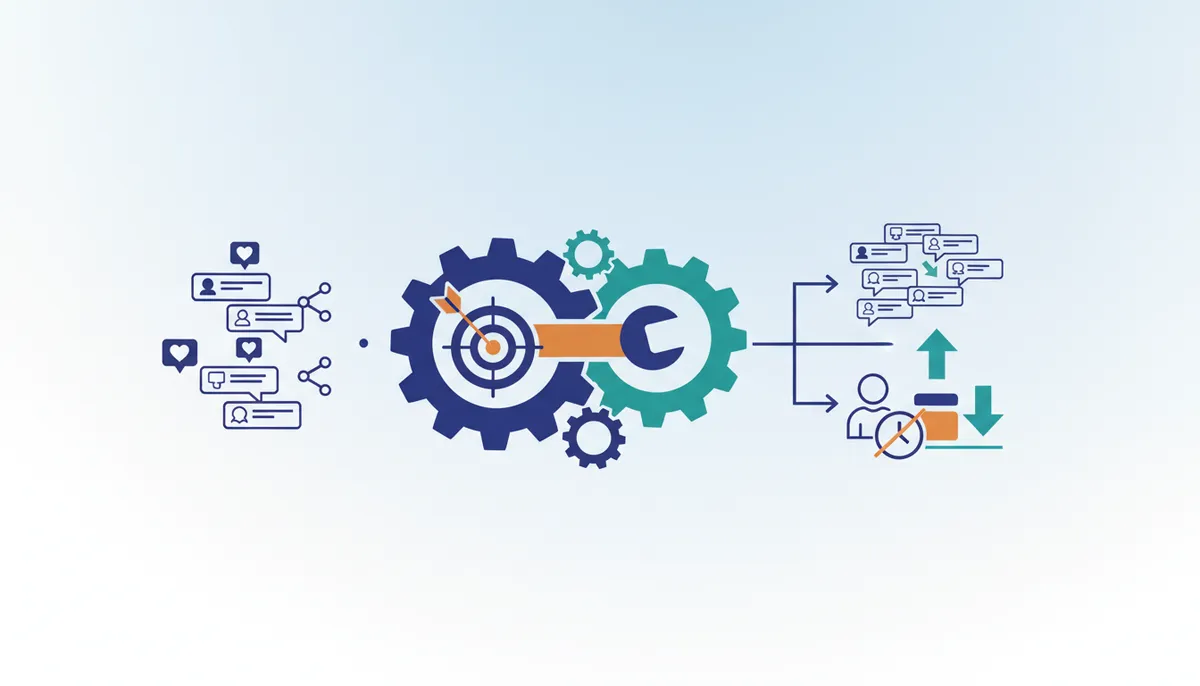
Keyword-based SEO is yielding ground to Generative Engine Optimization (GEO), a discipline built for LLM synthesis rather than human scanning. The technical goal moves from crawling frequency to semantic authority, requiring content that AI agents can cite accurately during query resolution. Traditional SEO targets readers skimming pages. GEO targets the vector embeddings retrieval systems use to construct answers. Reducing manual research time while increasing output precision defines the operational win.
Platforms now offer dual scoring for both SEO and GEO metrics, letting teams validate content against two ranking algorithms at once. Averi AI combines marketing logic with human oversight. The Solo Plan at $99/month provides access to these dual-scoring mechanisms, allowing smaller teams to deploy enterprise-grade validation without custom engineering. This price point represents the lowest-cost option including both content production capabilities and dual SEO plus GEO scoring.
LLM tools change high-level ideas into actionable briefs defining objectives, audiences, tone, and calls-to-action. Automated workflows produce citable assets instead of generic filler. Editorial overhead drops while brand messaging stays consistent across channels. This Solo Plan removes friction from stitching together disparate tools for competitor analysis and draft generation. Operators gain a unified interface where dual SEO/GEO scoring validates content against human search patterns and LLM synthesis requirements before publication.
Workflows start by ingesting brand core information to generate platform-specific briefs. Teams execute a six-step process turning raw insights into scheduled posts across seven channels.
| Feature Component | Traditional Stack | Averi Solo Workflow |
|---|---|---|
| Strategy & Briefing | Manual Research | AI-Generated Briefs |
| Content Scoring | Single Metric (SEO) | Dual SEO/GEO |
| Publishing | Third-party Scheduler | Native Automation |
| Monthly Cost | Fragmented | A monthly fee |
The primary function of these systems is to turn competitor insights directly into platform-ready posts, effectively accelerating the creation timeline while attempting to preserve brand voice. Separate tools might offer deeper specialization in isolation. Context switching between research, writing, and scheduling tools creates a hidden tax on throughput.
Averi distinguishes itself from generic LLMs by offering a unified "content engine" including strategy, creation, scoring, publishing, and analytics in a single plan. Other solutions require stitching together separate tools for each function. Centralizing the content engine reduces configuration errors and ensures every published asset carries the same strategic weight. Organizations adopting this model shift focus from mechanical distribution to high-level campaign orchestration.
Validating Localization and Multi-Model Stack Requirements
Current best practices involve a 'Social Strategist's AI Stack' combining multiple models: ChatGPT for general drafting, Claude for specific strategic nuance, and Perplexity for real-time research validation. No single model's limitation degrades final output quality when used this way.
LLM-powered gap analysis tools analyze existing content, compare it against competitor output, and highlight specific areas for improvement. Currency symbols and date formats must match the target region to prevent brand misalignment during cross-border distribution. Content aligning with regional identifiers maintains trust during distribution.
| Model Role | Primary Function | Validation Gate |
|---|---|---|
| ChatGPT | General Drafting | Brand Voice Check |
| Claude | Strategic Nuance | Tone Consistency |
| Perplexity | Research Insights | Fact Verification |
Managing three separate subscriptions and context windows creates operational overhead. Integrating validation layers directly into the production pipeline removes manual hand-offs. Third-party stacks offer flexibility but lack unified governance for enterprise-scale consistency. Automating verification of date formats and currency localization preserves specialized capabilities of distinct LLMs without the modularity cost. Teams avoid the latency of switching contexts while maintaining rigorous standards for 99 markets by 2027.
About
Arjun Patel is an Applied LLM Engineer at Enterium, where he benchmarks large language models and RAG architectures specifically for content workloads. His daily work involves rigorous, vendor-neutral evaluation of inference economics, latency, and output quality across substantial providers. This technical grounding makes him uniquely qualified to dissect the mechanics of building effective content briefs powered by LLMs. Unlike generic guides, Arjun's approach translates complex model behaviors into reproducible pipeline steps that B2B teams can implement immediately. At Enterium, a brand dedicated to documenting how modern teams scale content operations, Arjun applies these same engineering principles to every article. He connects theoretical model capabilities to the practical realities of production content systems. By focusing on concrete architecture rather than hype, he ensures that strategies for analyzing competitors and generating briefs are rooted in data. This guide reflects Enterium's commitment to practitioner-led methodology, offering a clear path from research to publication.
Conclusion
Fragmented toolchains create a hidden tax on throughput. The cost of managing multiple context windows often outweighs the flexibility they offer. While combining distinct models provides niche advantages, the operational friction of switching between platforms erodes the efficiency gains promised by automation. True scale requires a unified content engine rather than a patchwork of disparate subscriptions. Relying on separate tools for drafting, strategy, and research introduces unnecessary latency and governance risks that hinder consistent global deployment.
Teams should consolidate their workflow into a single orchestrated system before expanding into new regional markets. This shift moves the operational model from mechanical assembly to high-level campaign orchestration, ensuring that localization nuances like currency symbols and date formats are handled automatically without manual intervention. The immediate priority is to eliminate the siloed validation steps that slow down production cycles.
Start by mapping your current content hand-offs this week to identify where manual context switching occurs between drafting and fact-checking phases. Replacing these fragmented interactions with an integrated scoring mechanism allows your team to focus on refinement rather than format verification. Adopting a unified approach ensures that every asset carries consistent strategic weight without the overhead of managing multiple vendor relationships.
Frequently Asked Questions
Automated workflows reduce manual social media workload by approximately 80%. This massive efficiency gain allows teams to shift focus from repetitive drafting to high-level strategy refinement.
Strategic implementation has helped scale web traffic over 6000% in just six months. This explosive growth demonstrates the power of replacing chaotic guessing with rigid, data-driven content architectures.
Systems support content production across seven or more distinct social platforms simultaneously. This capability ensures brands maintain consistent messaging without the heavy labor costs of manual reformatting for each channel.
You do not need fragmented toolchains to achieve significant results. Integrated engines simplify operations by combining strategy, creation, and publishing into a single, cohesive pipeline for maximum efficiency.
AI analyzes competitor data to create precise briefs that eliminate ambiguity. This process transforms raw metrics into clear instructions, ensuring every generated post aligns perfectly with your strategic goals.
References