Model routing cuts AI costs by half
Organizations routing tasks to cost-effective models save 40-60% compared to using premium models for every operation. The market leaders have distinct strengths. Claude 3.5 from Anthropic excels in generating natural human-like tones for marketing copy, while GPT-5.1 by OpenAI handles complex business logic and data reasoning. For teams embedded in Google Workspace, Gemini 2.5 Pro offers unmatched integration with Google Ads and GA4, whereas Llama 3 provides a critical open-source alternative for high-volume, private internal tools.
Stop treating model selection as a brand loyalty contest. Functional fit drives ROI. We outline strategic deployment tactics for sales functions and marketing operations, ensuring your infrastructure uses the right tool for email sequences, visual assets, or risk assessment. The goal is clear: stop overspending on premium models for simple tasks and start building a cost-effective AI strategy grounded in architectural reality.
Core LLM Capabilities and Business Architecture Fundamentals
LLM Optimization: Context Windows, Fine-Tuning, and RAG Set
LLM optimization directs specific tasks toward models possessing matching architectural constraints instead of forcing a single universal engine to handle everything. The context window sets the maximum token count a model processes in one pass, which directly limits the volume of available for immediate reasoning without external retrieval. Retrieval-Augmented Generation (RAG) bypasses this memory limit by querying external databases for the snippets before prompt construction. This architecture allows systems to access live customer data from Salesforce or HubSpot rather than relying on static training weights. Organizations deploying portfolio architectures that route tasks to the most cost-effective model typically save 40-60% compared to using premium models for all operations. Fine-tuning adjusts model weights to adopt unique styles or domain-specific reasoning patterns. Despite its utility for specialized formats, 90% of business use cases do not need fine-tuning. The operational risk lies in conflating knowledge gaps with style deficiencies; updating weights for facts that change weekly creates maintenance debt. RAG serves as the primary mechanism for flexible data, preventing costly retraining cycles when source documents update.
When to Choose Fine-Tuning Over Prompt Engineering and RAG
Style adoption drives the decision to fine-tune when prompt engineering cannot sustain unique patterns or domain-specific reasoning. A legal tech startup successfully fine-tuned a model on 10,000 example clauses to achieve this level of specialization. A well-architected RAG system almost always outperforms a lightly fine-tuned model for general knowledge retrieval tasks. Unnecessary weight updates incurred significant wasted compute resources. Operators must distinguish between style adoption and knowledge expansion. RAG excels when the system requires access to live customer data from platforms like Salesforce.
The Financial Risk of Unnecessary Fine-Tuning and Model Selection
Fine-tuning modifies model weights for style adoption, yet the vast majority of business use cases function optimally with prompt engineering alone. The financial waste of over-engineering is tangible; avoiding unnecessary weight updates saves substantial compute resources. Enterprises should select self-hosted LLM options like Llama 3 only when data sovereignty mandates local inference, as infrastructure costs often exceed API pricing for standard workloads. A tension exists between domain specificity and maintenance overhead: fine-tuning locks a model to a static dataset, whereas RAG systems access live data without retraining. Validating prompt-based baselines before committing to weight modification is necessary, as the latter incurs significant iteration latency.
| Decision Factor | Prompt Engineering (RAG) | Fine-Tuning |
|---|---|---|
| Primary Use | Knowledge retrieval, flexible context | Style adoption, format enforcement |
| Cost Profile | Low variable cost per token | High upfront compute and validation |
| Update Cycle | Immediate via database sync | Requires full retraining pipeline |
| Data Freshness | Real-time access | Static at training cutoff |
Businesses maximize ROI by routing specific marketing tasks to specialized models rather than relying on a single universal engine. These multi-model pipelines are designed to balance latency, cost, and accuracy without unnecessary complexity.
Comparative Performance Analysis of Leading Enterprise Models
GPT-4 Turbo vs Claude 3 Opus: Context Windows and Core Strengths Set
OpenAI GPT-4 Turbo provides a 128K token context window optimized for versatile marketing copy and complex reasoning tasks. Anthropic Claude 3 Opus extends this capacity to 200K tokens, prioritizing long-form document analysis and safety-critical workflows. The architectural divergence dictates deployment strategy. GPT-4 excels at iterative creative drafting where brand tuning remains necessary. Claude offers superior instruction following across extensive legal or technical corpora. Input pricing reaches approximately $75 per million tokens for Claude compared to $10 for GPT-4. This cost disparity necessitates routing high-volume, lower-complexity creative work to the more economical engine while reserving the larger context model for deep analytical retrieval. Relying on a single provider ignores the specific economic constraints inherent in token processing and context retention. Operators implement gateway logic to direct creative iterations toward cost-efficient models while reserving massive context windows for tasks demanding full-document synthesis. This portfolio approach maximizes return on investment by aligning model capabilities with specific operational requirements rather than defaulting to a universal solver.
Deploying Gemini 2.5 Pro for Google Workspace and GPT-5.1 for Business Logic
Teams deeply integrated with Google Workspace achieve optimal workflow efficiency by using Gemini 2.5 Pro. This model is identified as best for teams using Google Workspace, integrating with Google Ads, GA4, Sheets, and Docs to use real-time data in workflows. The primary advantage lies in its native access to current search data, making it the preferred choice for tasks requiring immediate market context rather than static knowledge. Tight coupling creates a constraint. Teams operating outside the Google system or requiring complex, multi-step reasoning often find the model less adaptable than alternatives designed for general business logic.
Conversely, GPT-5.1 accessed via ChatGPT Enterprise excels at refining call-to-action copy and performing large-scale data analysis. Its architecture supports complex reasoning chains necessary for dissecting complex financial reports or generating visual assets through DALL-E integration. Organizations recognize that relying on a single universal model creates inefficiencies. The cost of using a high-reasoning model for simple data retrieval or a search-native model for complex logic degrades overall ROI. A balanced portfolio architecture routes specific tasks to the specialized engine best suited for that workload.
| Dimension | Gemini 2.5 Pro | GPT-5.1 |
|---|---|---|
| Primary Strength | Real-time search data connectivity | Complex business logic and reasoning |
| Best Integration | Google Workspace (Docs, Sheets, Ads) | ChatGPT Enterprise and DALL-E |
| Ideal Use Case | Live campaign analysis and reporting | CTA refinement and strategic planning |
Deploying this split-architecture maximizes output quality while controlling token spend. The strategic imperative is clear: match the model's native strengths to the specific operational task rather than forcing a one-size-fits-all solution.
Accuracy Ratings and Cost Structures: Claude's Consistency Versus GPT-4's Ecosystem
Verified testing metrics assign Claude a "Very High" rating for accuracy paired with "Excellent" consistency, distinguishing it from GPT-4's "High" accuracy and "Very Good" reliability profile. This differential matters for compliance-heavy workflows where output variance introduces unacceptable risk. OpenAI's model offers a broader application system. The limitation is a measurable decrease in instruction adherence during extended reasoning chains. Enterprises prioritizing brand safety often route high-stakes documentation tasks to Anthropic to mitigate hallucination rates inherent in more creative engines.
| Dimension | Claude 3.5 | GPT-4 Turbo |
|---|---|---|
| Accuracy Rating | Very High | High |
| Consistency | Excellent | Very Good |
| Primary Strength | Instruction Following | App System |
| Ideal Use Case | Safety-Critical Docs | Versatile Copy |
Cost structures further dictate architecture. Although GPT-4 input tokens are priced lower, the total cost of ownership rises when human review corrects consistency errors. Teams deploying at scale must evaluate the cost of revision cycles alongside base API rates. A model that requires fewer revision cycles often delivers superior ROI despite higher base API rates. The strategic error lies in treating all generation tasks as homogeneous commodities. A split-path pipeline where Claude handles regulatory content and GPT-4 manages ideation drafts balances the precision required for legal copy against the creative breadth needed for marketing campaigns. Operators should implement quality gates that route tasks based on these distinct performance profiles.
Strategic Deployment of LLMs Across Marketing and Sales Functions
Defining Brand-Aligned Copy Machines and Conversion Psychology in LLMs
Generic text generation fails marketing because it lacks conversion psychology and specific brand constraints. Teams require a brand-aligned, channel-specific copy machine rather than a universal chatbot to produce actionable results. GPT-4 Turbo frequently provides consistent, ideationally rich first drafts that serve as strong foundations for campaign assets. However, raw model output often requires significant human editing to match tone without strict guardrails. A critical technical requirement involves pairing the default model with brand + data guardrails to prevent hallucinations before shipping final content. This configuration ensures output remains factually aligned with company standards while maintaining voice consistency. Real-time behavioral analysis allows systems to translate complex consumer sentiment data into immediate strategic adjustments. Without these controls, models revert to average internet speech patterns that dilute brand equity. The operational goal is not merely text production but the systematic reduction of editing cycles through precise prompt engineering. Success depends on defining clear failure modes where human intervention remains mandatory.
Deploying GPT-4 Turbo and Claude 3 for Fashion Brand Editing and B2B Keyword Strategy
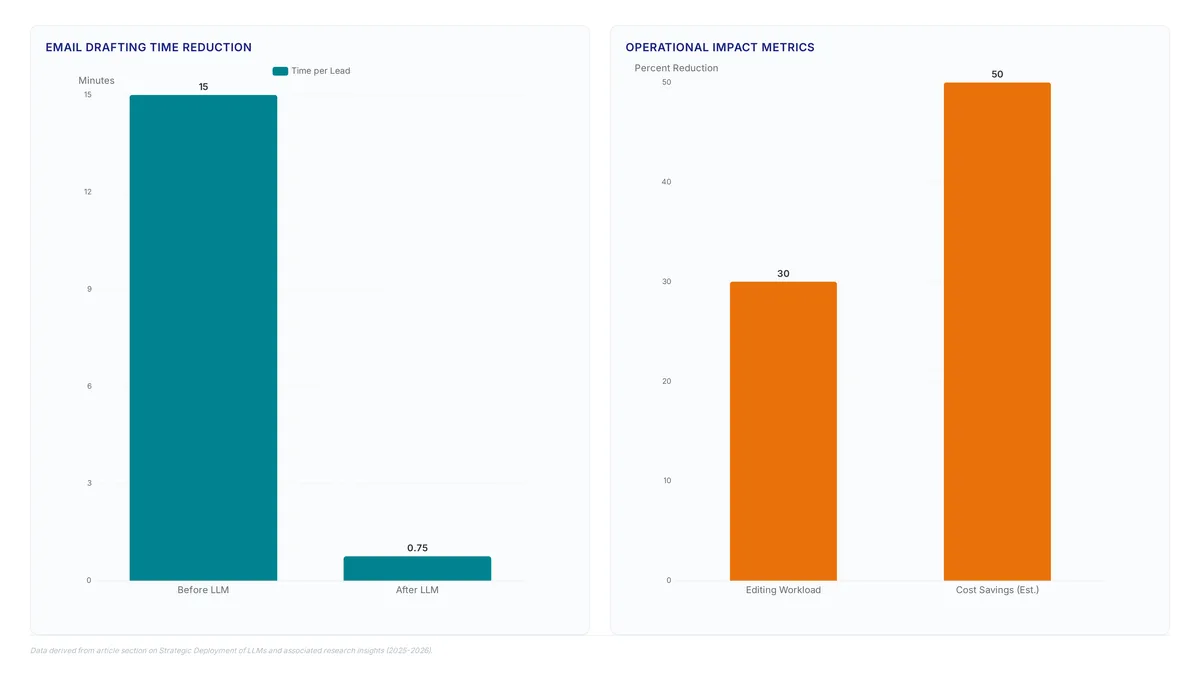
Feeding GPT-4 Turbo a structured style guide and historical copy reduces manual editing workload by 30%. This configuration transforms the model into a brand-aligned engine capable of mimicking specific tonal nuances without constant human intervention. A New York fashion brand used this approach to maintain an "effortlessly cool" voice across channels, proving that context-rich prompts outperform generic instructions. However, raw creative output still requires human oversight to prevent subtle drifts in brand personality over long campaigns.
For SEO strategy and deep research, Claude 3 uses its 200K context window to synthesize massive document sets. A Texas B2B SaaS client deployed this capability to analyze entire product archives, resulting in the identification of over 150 high-intent, long-tail keyword topics. This method addresses inconsistent brand voice by grounding generation in existing authoritative documents rather than broad training data. The trade-off is latency; processing such large contexts takes longer than standard prompt-response cycles.
| Model | Primary Strength | Ideal Use Case |
|---|---|---|
| GPT-4 Turbo | Ideation & Tone Matching | Multichannel campaign drafting |
| Claude 3 | Long-Context Analysis | SEO strategy & document synthesis |
Teams should implement data guardrails to validate output against brand standards before publication. This portfolio approach maximizes ROI by matching model capabilities to specific operational constraints. Next, define your brand's style guide as a machine-readable document to enable immediate deployment.
Checklist for RAG Implementation in Sales Emails and Support Ticket Summarization
Deploying Retrieval-Augmented Generation systems requires strict validation of knowledge sources to eliminate hallucinated discount policies in sales correspondence. A California cybersecurity firm reduced email drafting time from 15 minutes to 45 seconds per lead by integrating GPT-4 with live CRM data, proving that deep integration drives efficiency over raw model speed. However, relying solely on model memory without external grounding risks factual drift in customer commitments. Operators must implement brand guardrails to verify output against current pricing tables before delivery.
| Task Type | Recommended Configuration | Primary Constraint |
|---|---|---|
| Sales Email Drafting | GPT-4 + CRM Retrieval | Data freshness |
| Support Summarization | Gemini Pro 1.5 | Context window size |
For high-volume support tickets, Gemini Pro 1.5 offers a 1 million token context window, enabling the analysis of a full week's conversation history in a single pass. Yet, this massive capacity introduces latency trade-offs that may delay real-time agent assistance during peak loads. The operational cost of incorrect policy citation exceeds the compute expense of verification layers. Enterium recommends establishing a 14-day shipping cycle to test these data guardrails against live customer interactions before full deployment. Teams should validate that the system rejects unstated discounts rather than hallucinating approvals.
Technical Integration Patterns for CRM and Self-Hosted Infrastructure
Defining Secure Self-Hosted Llama 3 Architectures for Zero Data Leakage
Running Llama 3 70B on AWS, GCP, or Azure establishes a private inference boundary that keeps proprietary data off public APIs. This setup removes third-party data retention risks found in SaaS consumption models. Engineers must provision GPU instances with enough VRAM to load the 70B parameter weights before starting the inference server.
- Select a cloud region with compliant data residency and launch a dedicated virtual private cloud.
- Install the model weights locally from a verified repository to ensure binary integrity.
- Implement strict identity and access management policies restricting model access to authorized services.
- Deploy content filtering mechanisms to screen inputs and outputs against organizational safety.
Operational overhead represents the main constraint; teams forfeit automatic vendor updates and handle patching cycles manually. Self-hosted nodes demand significant in-house ML expertise to deploy and manage, unlike API-based services. Engineering teams bear full responsibility for latency optimization and scaling logic without a managed service layer. Organizations where regulatory compliance outweighs managed infrastructure convenience find this approach suitable. Expenses remain fixed at infrastructure rates rather than fluctuating with token volume, creating a deterministic cost structure.
Integrating GPT-4 and GitHub Copilot for CRM Manual Conversion
GPT-4 acts as a powerful engine within GitHub Copilot to ingest hundreds of pages of logistics manuals for CRM conversion. A Florida logistics client utilized this pattern to change static documentation into searchable wiki articles without manual rewriting. The model mimics technical tones effectively while reducing editing time compared to generic drafting.
Operators should follow these steps to replicate the architecture:
- Ingest raw PDF manuals into a secure staging bucket accessible only to the development environment.
- Route parsed segments through GPT-4 to generate concise, intent-based summaries suitable for retrieval.
- Validate output against original source text to eliminate hallucinated specifications before publishing to the knowledge base.
Workflow costs stay low because many business use cases do not require expensive fine-tuning, relying instead on strong prompt engineering. Teams must evaluate AI through a lens that explicitly avoids unnecessary expense by matching model complexity to task difficulty. This integration pattern supports organizations seeking rapid deployment of internal knowledge systems. Auditing existing manual repositories identifies high-volume conversion candidates as the immediate next step.
Avoiding Unnecessary Fine-Tuning Costs in CRM Data Projects
Fine-tuning is technically unnecessary for standard CRM logic unless the model must adopt a unique style or domain-specific reasoning pattern, though a substantial U.S. Bank uses a fine-tuned Llama model for internal risk analysis. Most integration failures stem from over-engineering simple retrieval tasks that prompt engineering handles more efficiently. Operators should prioritize Retrieval-Augmented Generation (RAG) to connect live customer data rather than retraining weights on static records. This approach avoids significant waste observed when firms skip architectural validation before committing to model adaptation.
- Map existing CRM schema fields to specific prompt variables before selecting a model stack.
- Implement a vector database to index historical interactions for flexible context injection.
- Route queries through a standard API provider if proprietary data isolation is not the primary constraint.
- Reserve weight modification exclusively for cases requiring unique style adoption or complex reasoning patterns.
| Strategy | Cost Profile | Best Fit Scenario |
|---|---|---|
| RAG + Prompting | Low operational expense | Live data queries, standard Q&A |
| Fine-Tuning | High compute + maintenance | Unique style, complex reasoning |
Self-hosting Llama 3 remains valid for zero-leakage requirements, yet many teams overlook that public APIs often suffice for non-sensitive sales logic. The hidden cost of fine-tuning involves continuous retraining as CRM schemas evolve, creating a maintenance burden most teams cannot sustain. Evaluation should focus on integration depth with tools like Salesforce rather than raw model capability alone. Deploying a RAG-first architecture allows teams to validate business value before considering parameter updates. This sequence ensures capital allocation matches actual technical necessity rather than speculative optimization.
About
Hannah Brooks, Marketing Operations Lead at Enterium, brings direct operational expertise to the complex environment of large language models. Her daily work involves rigorously evaluating AI tooling stacks and architecting the workflow automation necessary to scale B2B content pipelines reliably. This article reflects her hands-on experience in selecting models based on concrete trade-offs in cost, latency, and output quality rather than marketing hype. At Enterium, a brand dedicated to documenting how modern teams build and measure AI-driven content operations, Hannah focuses on the practical reality of integrating LLMs into existing martech ecosystems. She connects theoretical model capabilities to the specific demands of marketing governance and ROI measurement. By analyzing how different models perform within structured production environments, she provides the vendor-neutral insights needed to construct reliable content engines. This guide translates her technical assessment of model performance into actionable strategies for teams aiming to industrialize their content creation without compromising on quality or control.
Conclusion
Scaling LLM operations reveals that architectural mismatch drives operational waste far more than token volume. When firms deploy fine-tuning for tasks solvable via Retrieval-Augmented Generation, they lock themselves into unsustainable retraining cycles as CRM schemas evolve. The math is clear: paying premium rates for models capable of complex reasoning on simple retrieval tasks destroys margin potential. You must treat model selection as a flexible routing problem, not a static procurement decision.
Enterium recommends establishing a 14-day shipping cycle to test these data guards before locking in long-term contracts. This specific window allows teams to validate whether prompt engineering suffices for ninety percent of interactions without incurring the heavy compute costs of weight modification. Do not assume domain adaptation requires retraining; verify the gap first. Start this week by mapping your top five CRM schema fields to specific prompt variables and running them against a standard API provider. This immediate audit isolates whether your latency or accuracy issues stem from model capability or poor context injection. Only proceed to fine-tuning if style adoption fails under this rigorous stress test.
This significant cost disparity necessitates strategic task routing based on complexity. Simple queries should apply cheaper options to maximize overall operational ROI.
Q: What reduction in manual workload occurs when using LLMs for copy?
A: Using LLMs for copy reduces manual editing workload by 30%. This efficiency gain allows marketing teams to focus on strategy rather than draft refinement. Implementing these tools transforms the model into a productive partner for content creation.
Q: What testing cycle does Enterium recommend for deploying new data guardrails?
A: Enterium recommends establishing a 14-day shipping cycle to test these data guardrails effectively. This timeframe allows teams to validate model behavior against brand standards before full rollout. Rapid iteration ensures safety without sacrificing deployment speed or agility.
Frequently Asked Questions
Companies save 40-60% by routing simple tasks to cost-effective models instead of premium ones. This portfolio approach prevents overspending on complex engines for basic operations. Organizations should audit current workflows to identify candidates for cheaper model allocation.
Approximately 90% of business use cases function optimally without fine-tuning. Most needs are met through prompt engineering and retrieval systems. Teams should avoid unnecessary weight updates that create maintenance debt and waste compute resources on static data.
Input pricing reaches approximately $75 per million tokens for Claude compared to $10 for GPT-4. This significant cost disparity necessitates strategic task routing based on complexity. Simple queries should utilize cheaper options to maximize overall operational ROI.
Using LLMs for copy reduces manual editing workload by 30%. This efficiency gain allows marketing teams to focus on strategy rather than draft refinement. Implementing these tools transforms the model into a productive partner for content creation.
Enterium recommends establishing a 14-day shipping cycle to test these data guardrails effectively. This timeframe allows teams to validate model behavior against brand standards before full rollout. Rapid iteration ensures safety without sacrificing deployment speed or agility.
References