AI content strategy: Stop hallucinated brand data
Marketing teams moved past the pilot phase ages ago. The real work now involves fixing the brand gaps that appear when Large Language Models (LLMs) synthesize your company's narrative. You need specific architecture to automate content optimization tools and enforce accurate AI brand visibility monitoring across substantial models. The goal is simple: implement automated content workflows that leverage IndexNow integration for SEO while keeping a tight leash on sentiment analysis in AI responses.
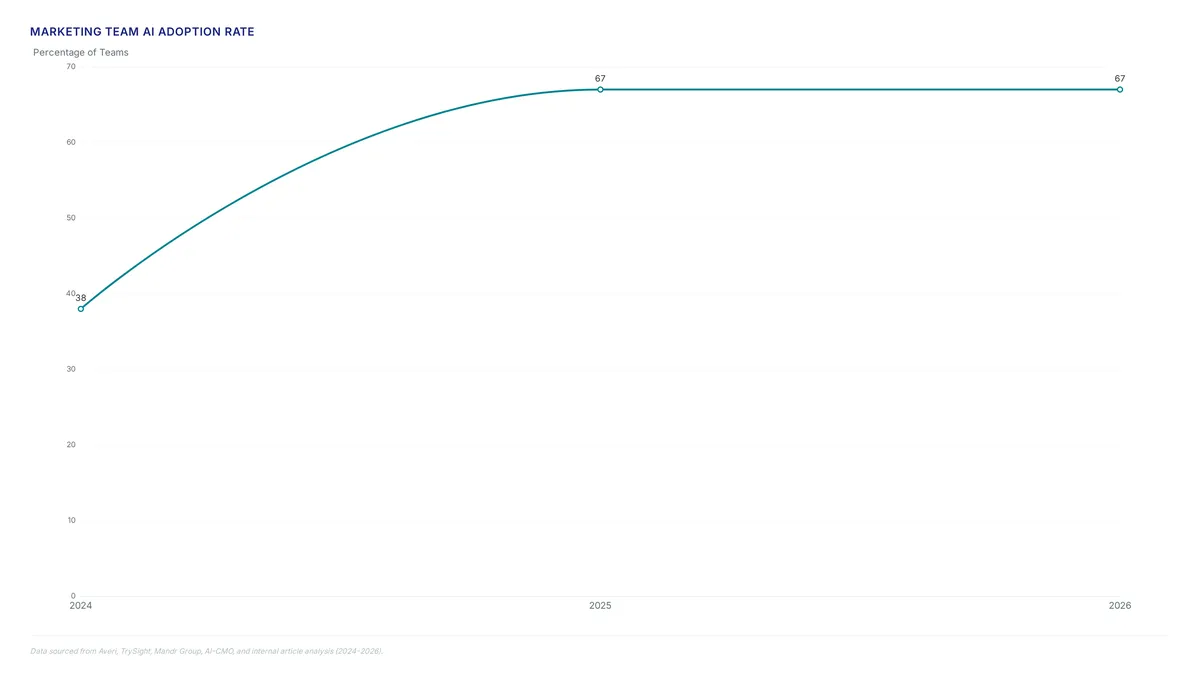
The window for passive observation closed quickly. We saw adoption jump from a significant share in 2024 to near-ubiquity today. This acceleration demands reliable SEO and GEO optimization protocols immediately. We will compare functional approaches to AI content platform comparison without vendor cheerleading, focusing strictly on the mechanics of AI-generated content ranking. If you want to generate AI-optimized articles at scale without feeding hallucinated brand data into the ecosystem, understanding these underlying systems is non-negotiable.
The Role of AI Content Strategy in Modern Search Visibility
Defining AI Content Plan for GEO and Search Visibility
Stop optimizing just for links. AI content methodology now chases model citations alongside traditional search rankings. With AI Overviews appearing on a significant share of Google queries as of April 2026 and reaching billions of monthly users, the game has shifted to direct answer extraction. Brands must monitor how large language models synthesize facts, a process entirely distinct from counting keyword density. Modern workflows integrate automated content publishing to feed fresh data into indexing pipelines the second it goes live.
This definition expands standard SEO into Generative Engine Optimization (GEO). While a majority of marketing teams now use AI for content creation as of 2025/2026, few actually track model attribution rates. A viable strategy requires visibility tracking across both algorithmic lists and conversational responses. Operators must verify that brand entities appear in model context windows with correct sentiment and factual accuracy.
Click-through metrics alone are blind to zero-click answer boxes. The constraint here is measurement; standard analytics platforms miss citation-based visibility entirely. Teams need specialized tools to capture brand mentions within generated text streams. Without this dual-layer approach, your content remains invisible to the expanding segment of users relying on synthesized answers. Production systems require separate quality gates for ranking position and model citation frequency.
Applying AI Tools for Automated Indexing and GEO Content Generation
Think of specialized AI platforms as unified control planes for visibility tracking and automated indexing. ChatGPT processes billions of prompts daily alongside hundreds of millions of weekly active users. If your content fails to appear in those model responses, you risk obsolescence. Effective strategies close this gap by synchronizing publication pipelines with real-time citation monitoring. This architecture validates whether an LLM can retrieve and synthesize brand facts during query generation, a capability traditional SEO tools lack.
The mechanism often hinges on IndexNow integration to push content updates directly to search crawlers, slashing the latency between publication and discoverability. Teams using no-code workflow builders report that AI helps personalize customer journeys, yet personalization fails without accurate indexation. High-volume generation often sacrifices the structural clarity required for GEO optimization, leading to uncited assets despite frequent updates. Advanced tools mitigate this by enforcing schema compliance before dispatch, ensuring machine readability matches human readability.
Automated publishing introduces a single point of failure. If the initial content mapping lacks semantic depth, the system efficiently distributes low-value signals. Operators must maintain human-in-the-loop quality gates for topic modeling logic. Consolidating workflows prevents data silos from fragmenting SEO strategy and generative output. This consolidation provides a cohesive view of brand presence in AI-driven environments.
Selecting Platforms: Production Volume vs. Enterprise Monitoring
Platform selection resolves the inconsistent brand voice bottleneck by matching architecture to throughput requirements. Teams facing high-volume production demands often prioritize SEO scoring integration to maintain baseline quality while scaling output. Certain platforms address this by automating article generation with embedded optimization metrics, allowing operators to publish rapidly without manual keyword insertion. The drawback is often limited visibility into how external models synthesize those published facts.
Enterprise operations requiring share-of-voice benchmarking face a different constraint: measuring brand presence across fragmented LLM responses. Specialized enterprise tools target this gap by monitoring competitive citation rates rather than just search rankings. This approach validates whether a brand appears in model outputs relative to peers, a critical metric as AI-driven search evolves. The cost is latency in detecting narrative drift once a model ingests conflicting data sources.
You must choose between scaling production velocity or deepening competitive intelligence. A hybrid approach often emerges where automated workflows handle draft creation while specialized tools audit final model citations. This separation ensures that speed does not compromise the accuracy of brand representation in AI responses. Aligning tool choice with the specific phase of content maturity is necessary for success.
Inside AI Content Platforms: Architecture and Automation Mechanics
No-Code Workflow Builders and Specialized AI Agents
Discrete prompts chain together inside no-code workflow builders to form executable content pipelines without requiring Python scripting. This architectural shift moves automation beyond simple text generation toward conditional orchestration. AirOps functions specifically as a workflow orchestration layer rather than a primary content generator or visibility tracker. Such separation allows teams to connect disparate APIs while maintaining strict control over the generation logic. Platforms like Sight AI deploy 13+ Specialized AI Agents purpose-built for generating listicles, guides, and explainers. These agents encode GEO optimization rules directly into their system prompts so outputs align with search engine expectations before human review.
Flexibility competes with specialization in this operational environment. No-code builders require manual configuration of every step but support arbitrary logic paths. Specialized agents offer immediate utility for standard formats yet lack customizability for novel content types. Teams must implement external quality gates to catch these divergence points before publication. The choice depends on whether the organization prioritizes bespoke process control or rapid deployment of standard content types.
| Feature | No-Code Workflow Builders | Specialized AI Agents |
|---|---|---|
| Primary Function | Orchestration and logic chaining | Format-specific generation |
| Configuration | Manual node mapping | Pre-trained templates |
| Best Use Case | Complex, multi-step workflows | High-volume standard articles |
| Flexibility | High (custom logic) | Low (fixed schemas) |
Implementing Automated Indexing with IndexNow and Brand Monitoring
IndexNow pushes URL updates directly to search engines, bypassing crawl queues for immediate re-indexing. This automated publishing step ensures new content becomes available to LLM scrapers without waiting for scheduled bot visits. Fresh articles sit in a "discovery gap" without this trigger while competitors gain share of voice. Tracking brand presence requires monitoring outputs across ChatGPT, Claude, and Perplexity rather than just traditional SERPs. Operators deploy agents that parse model responses for sentiment analysis and entity recognition. The platform tracks brand mentions across ChatGPT, Claude, Perplexity, and other platforms with sentiment analysis. Sight AI combines this monitoring with specialized generation agents to close visibility loops automatically.
| Feature | Manual Tracking | Automated Pipeline |
|---|---|---|
| Detection Speed | Days to weeks | Real-time |
| Coverage | Limited samples | Full model set |
| Action | Reactive edits | Auto-regeneration |
The content pipeline must validate facts before the IndexNow trigger fires.
- Configure webhook listeners for content publication events.
- Route drafts through a fact-validation agent.
- Submit approved URLs to the IndexNow API endpoint.
- Run parallel queries against target LLMs to verify brand mention tone.
Speed does not compromise the brand authority stored in AI knowledge bases when this separation exists.
Comparing the provider's Long-Form Generation to AirOps Data Connections
The provider integrates Chatsonic directly into its long-form editor to provide immediate research context without leaving the drafting environment. This architecture favors speed for writers needing quick facts to support SEO-optimized content creation. Differentiated outputs reflect current database states rather than static model knowledge.
Operators choosing between no-code vs traditional content automation must decide if they need speed or data fidelity. The provider suits teams prioritizing velocity, while AirOps serves those requiring strict data accuracy from internal systems. Some platforms offer an autopilot mode to handle publishing, yet this feature often lacks the conditional logic found in custom workflows. Teams must implement explicit health checks on data sources before triggering generation steps. Final output remains trustworthy through these validations. Enterium recommends mapping data freshness requirements before selecting a generation strategy.
Comparing Leading AI Content Tools for Specific Team Needs
All-in-One Strategy vs High-Volume Writing
Integrating generation with monitoring fixes brand gaps in model responses. Modern AI content strategies increasingly combine these functions to address visibility issues. Advanced platforms allow teams to observe how models like ChatGPT and Claude discuss their brand. This capability directly addresses the reality that many marketers lack a documented content marketing strategy. Visibility tracking mechanisms ensure generated content aligns with current brand perception rather than relying solely on historical data. The provider is noted for its long-form content quality, handling structure, tone, and SEO signals. Alternatively, some architectural approaches prioritize long-form article structure and tone consistency. Some systems function as strategic feedback loops. Others operate as production engines for scale. Generating content without monitoring can create a disconnect between output and brand reality. Teams needing rapid deployment of structured articles may find focused writing tools more efficient for immediate throughput. Selection should depend on whether the primary bottleneck is strategic insight or production capacity.
| Feature | Strategic Monitoring Focus | High-Volume Writing Focus |
|---|---|---|
| Primary Focus | Brand visibility & gap closing | Long-form structure & volume |
| Research Mode | Real-time model response analysis | Assisted drafting & SEO |
| Ideal Use Case | Strategic alignment & monitoring | High-velocity publishing |
Deploying No-Code Workflows for Programmatic SEO Bulk Operations
Connecting external data sources into prompt chains requires a dedicated orchestration layer. No-code workflow orchestrators fill this role when standard platforms cannot support specific logic without engineering intervention. The mechanism relies on chaining API calls to fetch data, process it through an LLM, and publish results automatically. This approach enables differentiated, large-scale content production by grounding outputs in real-time inventory or pricing data. Broken connectors and schema changes introduce significant maintenance overhead. Unlike integrated solutions where LLMs support content strategies designed for AI-driven discovery within a single interface, disjointed workflows demand rigorous monitoring. Teams must verify if their data complexity justifies the infrastructure debt before committing. The strategic choice depends entirely on whether unique data combinations provide the competitive edge or if speed to market dominates priorities.
| Dimension | No-Code Orchestrator | All-in-One Platform |
|---|---|---|
| Data Integration | Direct SQL/API access | Limited native connectors |
| Maintenance Burden | High (custom logic) | Low (vendor-managed) |
| Best Fit | Complex data logic | Rapid deployment |
Enterprise Share-of-Voice Benchmarks Versus Competitor Tracking
Systematic tracking across curated queries over time anchors some enterprise strategies. Profound includes a prompt library management feature to systematically track visibility across a curated set of the queries over time. This architecture allows teams to maintain strict control over the specific semantic ground their brand occupies within model responses. Other approaches diverge by prioritizing competitor comparison tracking to help brand managers understand how their visibility stacks up against specific rivals. Peec includes competitor comparison tracking to help brand managers understand how their visibility stacks up against specific competitors. The mechanism here focuses on relative market position rather than absolute query coverage.
| Feature Dimension | Prompt Library Approach | Competitor Tracking Approach |
|---|---|---|
| Primary Metric | Absolute query coverage | Relative competitor gap |
| Data Structure | Curated prompt libraries | Flexible competitor sets |
| Optimization Goal | Consistent brand voice | Sentiment differential |
Implementing an Integrated AI Content Workflow for Organic Growth
Defining the Integrated AI Content Workflow Components
Operational loops fuse visibility tracking, specialized generation agents, and automated indexing infrastructure into one continuous process. Specialized agents do more than draft text; they consume performance metrics to alter tone and factual density in real-time. Automated indexing infrastructure subsequently pushes these optimized artifacts directly to search engines using protocols like IndexNow, which speeds up algorithmic recognition. This smooth handoff shrinks the delay between creating content and its discovery by users. Dependency on specific model behaviors demands that teams keep their data strategies agile. Platforms must allow flexible data integration to sustain responsiveness. Content teams operate without direction when a unified data layer is missing, leaving them unsure why certain brand narratives vanish from generative answers. Disjointed operations waste compute cycles and stall organic growth.
Closing Content Gaps Using AI Visibility Score Data
AI Visibility Score data pinpoints topics missing from LLM responses across substantial platforms. Operators ingest these scores to quantify brand absence instead of guessing at missing themes. The mechanism employs sentiment analysis to label every detected mention as positive, neutral, or negative within generative answers. Granular feedback lets teams prioritize high-volume gaps where competitor citations dominate conversations. Practitioners should deploy automated workflows that trigger draft creation when visibility metrics signal a need for updated content. This method prevents content sprawl while guaranteeing every new piece addresses a proven discovery failure. Integration transforms raw scoring data into an executable remediation plan without manual triage. Raw data becomes a responsive engine that evolves alongside model behaviors.
Checklist for Selecting Platforms by Strategic Bottleneck
Platform selection hinges on the specific bottleneck hindering the content operation.
| Priority | Recommended Capability | Operational Outcome |
|---|---|---|
| Volume | Automated Drafting | Scales production velocity |
| Customization | No-Code Builder | Aligns with unique data schemas |
| Monitoring | Sentiment Analysis | Quantifies brand absence |
Note that 94% of digital leaders plan to increase investment in AEO this year, signaling a shift from pure ranking to answer-engine discovery. Latency in the feedback loop often creates a larger hurdle than generation speed.
About
Sofia Marchetti is a B2B content and demand-generation strategist who specializes in aligning automated content systems with revenue outcomes. Her decade of experience in B2B SaaS makes her uniquely qualified to analyze AI content approach platforms, specifically regarding the critical task of fixing brand gaps in LLM responses. Unlike generic tool reviews, Sofia's daily work involves architecting pipelines where topical authority and GEO/SEO directly influence pipeline growth. This article reflects her practitioner-led approach at Enterium, a publication dedicated to documenting how modern teams build scalable content operations without sacrificing quality. By focusing on reproducible workflows and vendor-neutral comparisons, she connects the theoretical potential of AI generation to the practical necessities of brand visibility monitoring and sentiment analysis. Her analysis avoids hype, offering instead a clear-eyed view of how to integrate no-code AI workflow builders and IndexNow protocols into existing stacks. For content leaders navigating the noise of competing platforms, Sofia provides the concrete architecture needed to ensure AI-generated content ranks effectively while maintaining strict brand governance.
Conclusion
Scaling AI-driven content reveals that latency in the feedback loop often creates a larger hurdle than generation speed itself. When teams rely on disjointed operations, they waste compute cycles and stall organic growth because content teams operate without direction when a unified data layer is missing. The shift from auxiliary support to core infrastructure means that dependency on specific model behaviors demands that teams keep their data strategies agile. Platforms must allow flexible data integration to sustain responsiveness, or brands will remain unsure why certain narratives vanish from generative answers.
Organizations should mandate unified data layers before expanding production volume to ensure every new piece addresses a proven discovery failure. This approach prevents content sprawl while guaranteeing that raw scoring data transforms into an executable remediation plan without manual triage. Start by deploying automated workflows that trigger draft creation specifically when visibility metrics signal a need for updated content. This method quantifies brand absence instead of guessing at missing themes, allowing practitioners to prioritize high-volume gaps where competitor citations dominate conversations. By focusing on these measurable gaps, teams can evolve their raw data into a responsive engine that adapts alongside model behaviors.
Frequently Asked Questions
You risk invisibility to nearly half of all search queries today. AI Overviews now appear on 48% of Google queries, meaning traditional link-building alone no longer guarantees brand visibility for users seeking direct answers.
Most marketing departments have already adopted these tools for daily operations. Currently, 67% of marketing teams use AI for content creation, signaling that manual processes may soon become a competitive disadvantage for slower organizations.
Your content must compete within an enormous volume of daily user interactions. ChatGPT processes 2.5 billion prompts daily, so failing to optimize for model retrieval means missing chances to influence billions of potential customer conversations.
Adoption has nearly doubled in just two years, showing rapid market shifts. The rate jumped from 38% in 2024 to current levels, indicating that early adopters gained significant advantages in automating their content workflows before competitors.
Your content strategy must account for a massive global user base. There are over 800 million weekly active users on major platforms, requiring brands to ensure their facts are accurately synthesized within these high-traffic conversational environments.
References