AI content strategy: Fix brand gaps in LLM responses
Most marketing teams now use AI for content creation. Picking the right AI content strategy platform is mandatory, not optional. Sight AI integrates brand monitoring across models like ChatGPT and Claude to close specific content gaps. Top contenders like Averi's Solo Plan cover the entire engine from strategy to analytics. Finally, IndexNow integration and CMS auto-publishing features ensure rapid indexing without manual overhead.
The shift from simple text generation to strategic discoverability defines the current environment. Platforms must prove they can track how AI models position your brand while simultaneously generating optimized articles to fix those narratives. Sight AI exemplifies this by combining sentiment analysis with specialized agents for listicles and guides. This dual approach prevents the common pitfall of creating content that never gets cited or indexed.
Standalone writers fail compared to systems offering Autopilot Mode for continuous publishing. Enterprise teams use these architectures to compress workflows and accelerate organic growth. By focusing on GEO optimization and real-time gap analysis, organizations ensure their content ranks in Google and appears in AI responses. The following sections break down the specific capabilities that separate market leaders from basic chatbots.
The Role of AI Content Strategy in Modern Search Visibility
Defining AI Content Plan Beyond Traditional SEO
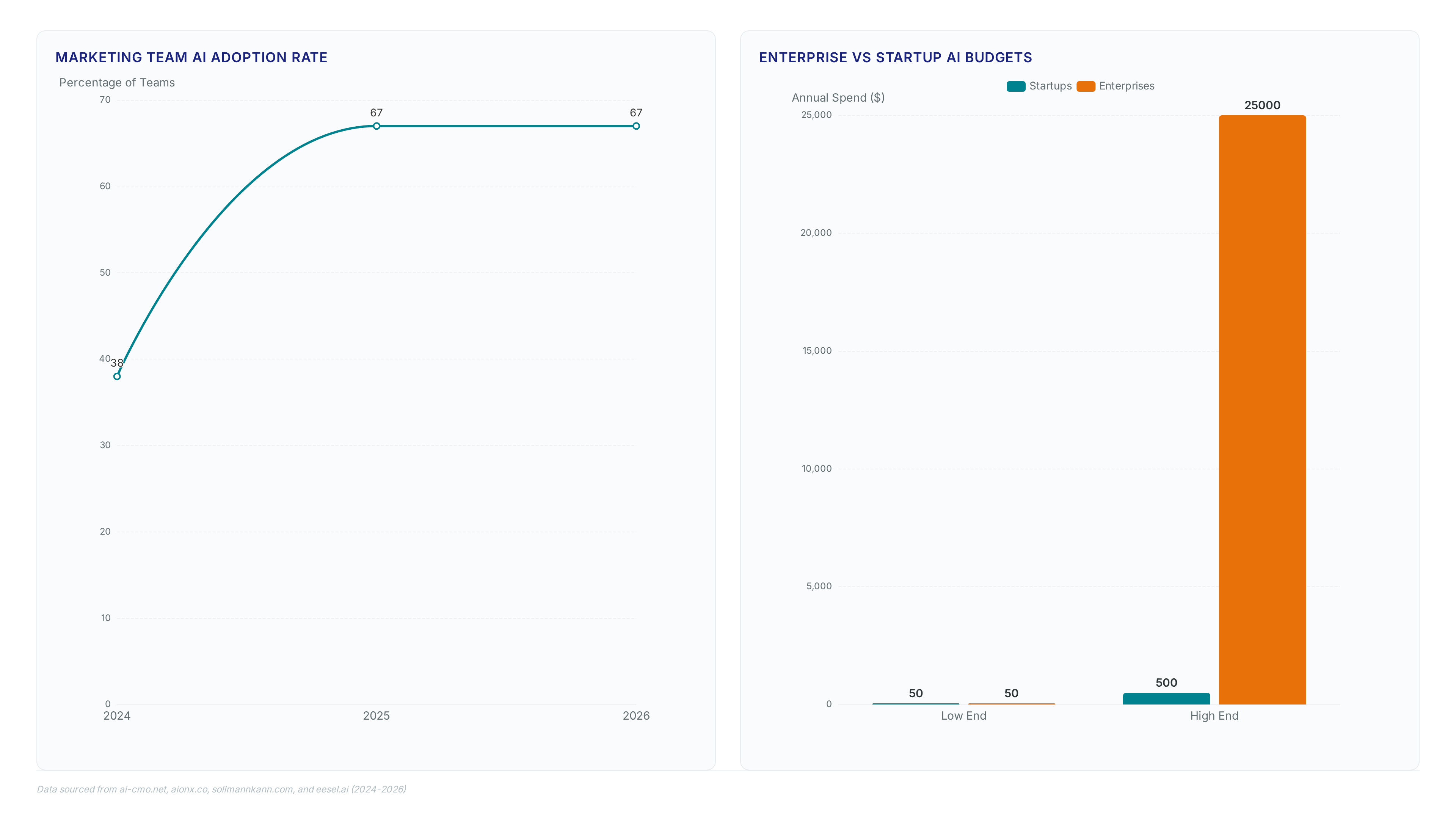
AI content methodology shifts focus from simple keyword rankings to securing citations inside large language model outputs. As of 2025 and 2026, a majority of marketing teams now use AI for content creation, a significant rise from a minority in 2024. This reflects an operational definition that has expanded to include AI visibility tracking. The discipline ensures brand entities show up in responses from ChatGPT, Claude, and Perplexity instead of appearing only on search engine result pages. Scale matters here because ChatGPT processes billions of prompts daily with hundreds of millions of weekly active users, turning model citation into a primary discovery channel.
Sight AI combines these capabilities, allowing teams to monitor AI Visibility Score while generating optimized content. This unified approach prevents the fragmentation of tracking creation separately from distribution outcomes. Integrated platforms address the specific need to appear in AI model responses unlike tools that only generate content or monitor visibility. Marketers must treat AI models as distinct publication venues requiring specific formatting and validation protocols.
Applying GEO Optimization to Fix Inconsistent Brand Voice
GEO optimization aligns generation agents with verified citation patterns found in AI responses. When content fails to appear in AI responses, the root cause often stems from a mismatch between training data and current model retrieval heuristics. AI visibility tracking platforms surface these gaps by monitoring where competitors secure citations while your brand remains absent. This data drives the creation of targeted assets that match the specific structural preferences of models like ChatGPT and Claude. Sight AI combines this monitoring with generation, allowing teams to close content gaps without switching contexts. Unlike tools focused purely on text creation, this approach ensures output matches the formatting and factual density required for model ingestion. Complexity is the constraint; maintaining consistent voice across automated workflows requires strict guardrails to prevent hallucination or tone deviation. Teams relying solely on generation tools miss the feedback loop necessary to validate if their content actually influences model behavior.
| Feature Category | Generation-Only Tools | Integrated Strategy Platforms |
|---|---|---|
| Primary Function | Drafting text | Monitoring and drafting |
| Voice Consistency | Manual review required | Automated against citation data |
| Gap Identification | None | Real-time competitor analysis |
| Indexing Speed | Standard crawl cycles | Accelerated via IndexNow |
By 2027, AI is projected to structure interactive media and entire multichannel campaign flows, marking a critical year for generative AI acceleration. This hybrid workflow ensures that high-volume production does not dilute brand identity across different model outputs. Marketers should audit their current stack to verify if it includes automated indexing capabilities, as platforms like Sight AI apply IndexNow integration to push newly published content to search engines quicker through automated sitemap updates.
Sight AI vs Writesonic: Selecting Platforms for Visibility vs Volume
Selecting between Sight AI and Writesonic depends on whether the bottleneck is discovery or production volume. Sight AI functions as infrastructure for AI visibility tracking, monitoring brand citations across ChatGPT, Claude, and Perplexity to guide content gap closure. This approach targets the specific niche where brands must appear in model responses rather than just search indexes. Teams using this method gain a Reporting Dashboard to measure quantitative impacts on visibility trends over time. Unlike Jasper which offers versatile content creation across formats, Sight AI is positioned specifically for finding content opportunities, writing expert-quality articles, and publishing them automatically to rank on Google and get recommended by AI models.
For organizations requiring custom workflow orchestration without engineering overhead, AirOps serves as a no-code AI workflow builder best for growth and content teams wanting to build custom AI content workflows. It acts as a workflow orchestration layer, connecting data sources, prompts, and publishing steps into reusable apps. Teams should deploy Sight AI when they need a single platform covering the full AI content roadmap loop, while reserving Writesonic for phases requiring massive content scale across diverse formats like ads, landing pages, and social posts.
Inside AI Content Platforms: Architecture and Workflow Automation
No-Code Workflow Builders and Prompt Chaining Mechanics
AirOps functions as a workflow orchestration layer that connects external data sources to prompts without requiring engineering resources. This architecture replaces brittle scripts with visual interfaces where operators map database fields directly into prompt variables for bulk operations. The system ingests structured inputs, executes sequential model calls, and pushes formatted output to CMS endpoints automatically.
| Feature | No-Code Builders | Traditional Automation |
|---|---|---|
| Interface | Visual drag-and-drop canvas | Python/Node.js scripts |
| Data Ingestion | Native connector library | Custom API integrations |
| Iteration Speed | Minutes per change | Hours per deploy cycle |
| Maintenance | Platform-managed | Engineering team dependent |
The technical advantage lies in prompt chaining, where the output of one model call becomes the input for the next, enabling complex reasoning paths that single-shot prompts cannot achieve. Teams can construct custom AI content workflows that validate facts against source documents before drafting, significantly reducing hallucination rates in production content.
However, this flexibility introduces latency; each chain step adds round-trip time to the model provider, potentially slowing bulk runs compared to optimized code. The trade-off is vendor lock-in; migrating visual workflows to a new provider requires rebuilding the entire logic map manually. As workflows mature, the lack of version control and unit testing in visual interfaces creates operational risk. The most effective deployment strategy involves prototyping in no-code environments before committing high-volume production lines to engineered solutions.
Implementing Autopilot Mode for Continuous Content Generation
Autopilot Mode executes continuous generation loops by triggering specialized agents when visibility gaps appear. Instead of manual drafting, operators define trigger conditions where brand absence in model responses initiates a publishing sequence. Specific architectures apply this approach to run workflows that monitor substantial AI platforms, automatically generating assets to close specific citation deficits. This approach shifts the operational model from reactive creation to proactive infrastructure maintenance.
The system deploys 13+ Specialized AI Agents tuned for distinct formats like listicles or explainers, ensuring structural alignment with retrieval heuristics. Unlike generic writers, these agents ingest visibility data to produce content targeting precise entity gaps. A key economic tension exists between subscription models and unit-cost pricing; producing ten 1,500-word articles on a pay-per-word basis at a low per-word rate totals a modest monthly sum without bundled tracking features.
| Component | Manual Workflow | Autopilot Execution |
|---|---|---|
| Trigger | Calendar deadline | Real-time visibility gap |
| Agent | General purpose | Format-specific specialist |
| Publishing | Human CMS entry | Automated IndexNow push |
| Feedback | Monthly report | Immediate sentiment loop |
Continuous automation introduces a risk of entity drift if feedback loops lack sentiment analysis guards. Without strict constraints, high-volume publishing can dilute brand positioning even as citation counts rise. The AI Visibility Score tracks brand mentions across substantial AI platforms with sentiment analysis to show not where a brand appears but how it is positioned. The IndexNow Integration then accelerates discovery, pushing updates to search engines immediately upon publication. This architecture ensures that scaling output does not compromise the precision required for GEO optimization.
Validating Prompt-Level Tracking and Historical Visibility Data
Effective validation requires tools that track exactly when AI models reference a brand across specific prompts rather than aggregating metrics. Prompt-level tracking exposes the precise query contexts where visibility fails, unlike dashboards showing only total mention counts. Platforms include a prompt library management feature for systematic tracking of visibility across curated queries, allowing operators to verify historical data retention.
| Capability | Aggregate Monitoring | Prompt-Level Tracking |
|---|---|---|
| Data Granularity | Weekly totals | Per-query timestamp |
| Historical Access | 30-day rolling window | Full retention |
| Root Cause Analysis | Impossible | Direct prompt mapping |
| Actionability | Trend spotting only | Gap closure |
Without this pairing, teams cannot distinguish between a model refusing a query versus simply lacking knowledge about the brand. The cost of this granularity is storage and processing overhead, which often limits free tiers to recent data only. Teams should test historical retrieval capabilities to confirm the system retains the original prompt context. This step ensures the tool supports forensic analysis rather than just surface-level reporting. For teams needing both production and dual SEO plus GEO scoring, options exist at a competitive monthly price point including these capabilities. The platform allows users to see how AI models talk about their brand and use those insights to generate content that closes specific gaps.
Comparing Leading AI Content Tools for Enterprise and Growth Teams
Defining All-in-One AI Platforms vs Point Solutions
All-in-one architectures merge visibility tracking with content generation, while point solutions isolate single functions like prompt monitoring or search analytics. Integrated suites such as Sight AI close the loop between observing brand gaps in AI models and deploying content to fix them. Specialized tools serve different operational niches. For instance, Promptwatch acts as a prompt-level AI monitoring tool best for teams needing granular tracking of brand mentions across specific queries. Conversely, Peec functions as an AI search visibility tool focused on tracking brand mentions and competitive positioning within model outputs. This architectural divergence creates a clear cost between workflow cohesion and functional depth.
Budget-conscious teams are often directed toward professional-grade optimization tools at accessible price points, yet these may lack the unified index required for autonomous remediation. Fragmented stacks introduce latency. By the time an operator manually transfers a visibility alert from a tracker to a writer, the citation window in the target model may have shifted. Unified platforms enable operators to respond to visibility loss with immediate tactical action rather than relying on retrospective reporting. The strategic imperative lies in minimizing the distance between detection and deployment.
Matching Enterprise Workflows to AirOps and Profound
Growth teams select AirOps when engineering resources are scarce but custom workflow logic is required. This no-code builder allows operators to chain database queries and model calls visually, avoiding the latency of script maintenance. The platform excels where standard templates fail, enabling specific data transformations before content generation begins. However, this flexibility demands manual configuration of every step, which can slow initial setup compared to pre-packaged suites.
These teams track brand positioning against competitors across AI answer engines rather than generating drafts directly within the tool. Such specialized monitoring typically fits within enterprise software budgets ranging from an undisclosed amount to a substantial sum monthly depending on scale. The limitation is a lack of native publishing; insights must be exported to trigger content actions elsewhere. Software budgets ranging from a nominal amount to a moderate sum monthly depending on scale. The tradeoff is a constraint where data exists without direct action. Operators must decide between building bespoke automation layers or buying deep visibility analytics. Choosing the wrong architecture creates silos where data exists without action or content lacks strategic direction. Mapping specific workflow gaps before committing to a vendor stack ensures the chosen architecture aligns with operational needs.
Writesonic Volume Generation vs Sight AI Integrated Autopilot
Writesonic excels at high-volume long-form article creation, while Sight AI links visibility gaps directly to automated publishing workflows. Writesonic has built a reputation for long-form content quality, handling structure, tone, and SEO signals effectively. Its format breadth extends beyond articles to cover ads, landing pages, social posts, and product descriptions, making it useful for marketing teams needing content across multiple channels. Generating high volumes of content without a feedback loop risks creating inventory that does not address specific citation deficits in AI models.
Sight AI resolves this tension through Autopilot Mode, which triggers generation only when brand absence is detected in model responses. This closed-loop architecture prevents the accumulation of irrelevant drafts that can plague high-volume strategies. Unlike tools that only generate content or monitor visibility, Sight AI integrates both functions to ensure every published piece targets a verified gap. Writesonic supports multi-format needs like ads and landing pages, yet it does not natively connect output to real-time AI search data.
Writesonic serves teams needing broad format support without engineering overhead. Conversely, operators focused on appearing in ChatGPT, Claude, and Perplexity responses should prioritize integrated systems that combine monitoring with generation. The drawback is clear: volume tools maximize word count, whereas integrated platforms maximize citation probability. Content teams must decide if their bottleneck is creation speed or strategic relevance before selecting a vendor.
Implementing an Automated AI Content Plan for Maximum ROI
Defining Automated AI Publishing and IndexNow Integration
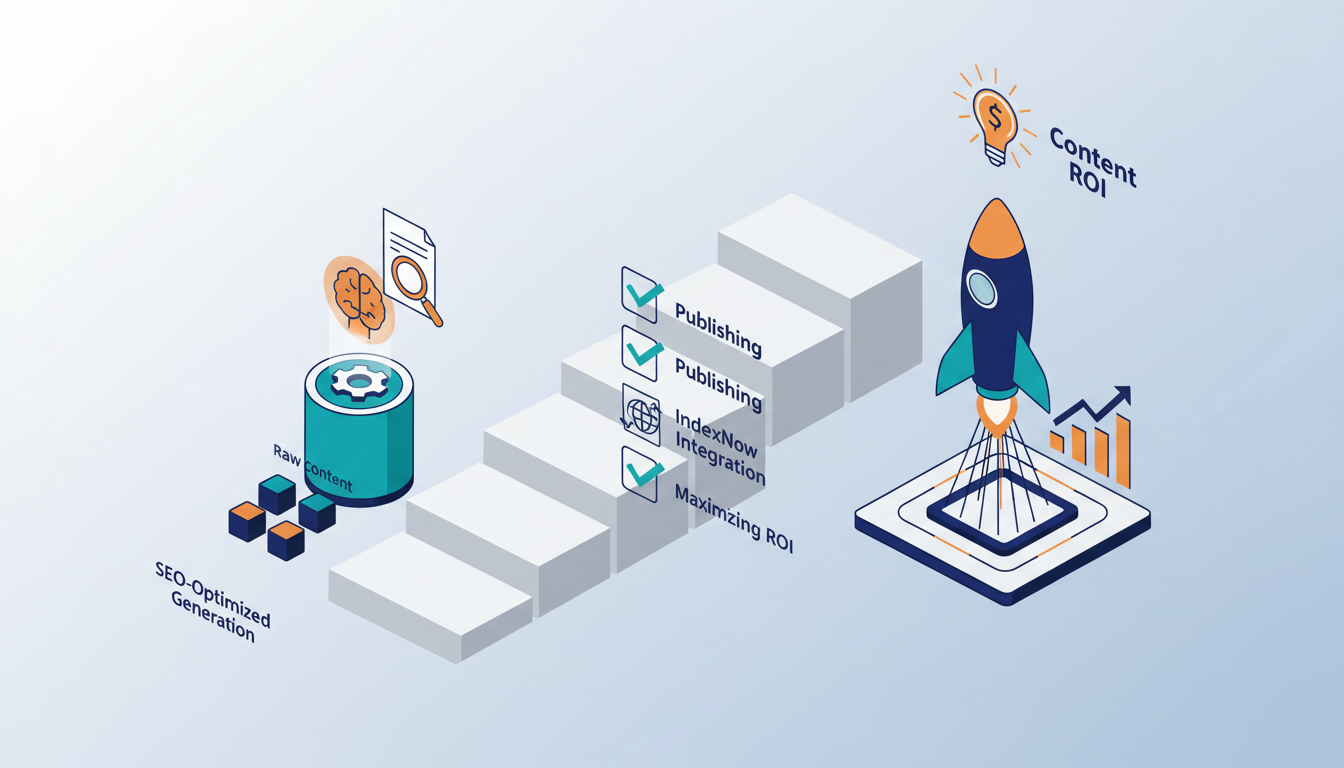
Automated AI publishing connects visibility gaps directly to content generation and instant indexing protocols. True automation requires more than text synthesis; it demands a closed-loop system where IndexNow pushes new URLs to search engines immediately upon publication. Without this protocol, content sits idle in sitemaps while competitors gain citation traction. Platforms like Sight AI integrate this by triggering index requests the moment CMS Auto-Publishing confirms a live status. This reduces the latency between creation and discovery from days to seconds.
- Monitor brand mentions across ChatGPT, Claude, and Perplexity to identify missing narratives.
- Deploy 13+ Specialized AI Agents to draft responses targeting those specific gaps.
- Operators initiate Autopilot Mode to change passive visibility data into active publication workflows without manual triggers.
This configuration connects the AI Visibility Score directly to content generation agents, ensuring that every detected gap in ChatGPT or Claude responses triggers a targeted remediation article. Unlike static writing tools, this system closes the loop between identifying a missing narrative and publishing the fix.
- Configure brand monitoring queries to establish a baseline for Perplexity and other model citations.
- Set threshold rules where a drop in sentiment or missing mention triggers the 13+ Specialized AI Agents.
- Enable CMS Auto-Publishing to push approved drafts live and initiate IndexNow requests immediately.
Validate platform capabilities by confirming native support for ads, landing pages, and articles before scaling production volume. Teams must verify that SEO scoring mechanisms evaluate content against live search data rather than static rules. Writesonic distinguishes itself with format breadth, covering ads, landing pages, social posts, and product descriptions in addition to articles. This diversity prevents the fragmentation often seen when separate tools handle different content types. However, broad format support can dilute specialization if the underlying models lack domain-specific tuning for technical or regulated industries. Operators should demand transparency in how scoring algorithms weigh semantic relevance versus keyword density.
| Feature Category | Validation Requirement | Risk if Missing |
|---|---|---|
| Format Support | Native ads, landing pages, articles | Tool sprawl and inconsistent voice |
| Scoring Logic | Live SERP integration | Optimization based on outdated signals |
| Workflow | Direct publishing integration | Manual latency in deployment |
Fix slow content indexing by prioritizing platforms with automated sitemap updates and instant push protocols. Best practices for AI content methodology now require closed-loop systems where visibility gaps trigger immediate remediation workflows. Averi distinguishes itself as the lowest-cost option including both content production and dual scoring, directly competing with integrated value propositions option. Enterium recommends auditing format coverage quarterly to align with evolving search behaviors.
About
Arjun Patel is an Applied LLM Engineer who specializes in benchmarking large language models and RAG architectures for real-world content workloads. His expertise makes him uniquely qualified to evaluate AI content approach platforms, as his daily work involves rigorously testing the very inference economics, latency, and output quality that determine a tool's success. Unlike theoretical strategists, Patel assesses these platforms through the lens of production pipeline architecture, focusing on how brands can ensure their content is actually cited by models like ChatGPT and Claude. Writing for Enterium, a vendor-neutral publication dedicated to AI content automation, he connects complex engineering realities to practical marketing outcomes. His analysis cuts through industry hype to provide reproducible, data-driven insights on how teams can build reliable systems for content generation and distribution. By grounding his evaluation in hands-on experience with substantial providers, Patel offers technical marketers the concrete metrics needed to select tools that genuinely improve organic visibility and operational efficiency.
Conclusion
Scaling content production exposes a critical fragility: cheap generation creates massive volumes of unoptimized text that search engines increasingly ignore. As AI Overviews dominate nearly half of all queries, the operational cost shifts from writing words to engineering visibility. Teams relying on disjointed tools face compounding latency where content fails to index or score against live data. This inefficiency turns potential scale into a liability, wasting budget on assets that never reach an audience. The market has moved beyond simple creation; success now demands integrated systems that couple production with real-time performance scoring.
Organizations must transition to unified platforms that handle strategy, creation, and analytics within a single workflow by the next fiscal planning cycle. Do not layer new generation tools onto broken feedback loops. Instead, consolidate your stack to ensure every output is automatically validated against current search behaviors. This consolidation prevents the fragmentation that dilutes brand voice and obscures performance data.
Start this week by auditing your current content pipeline for scoring gaps. Specifically, verify if your existing tools evaluate drafts against live search engine results or static rules. If your platform cannot measure semantic relevance before publishing, you are producing blind. Replace these disjointed processes with a solution like Averi's Solo Plan to secure both production and dual scoring capabilities immediately.
Frequently Asked Questions
Traditional freelance writing costs range from an undisclosed range per word, making AI platforms a far cheaper alternative for scaling production. This price difference allows teams to generate significantly more content while staying within strict monthly budget constraints.
As of 2026, a portion of marketing teams now use AI for content creation, showing a massive shift from a portion in 2024. This rapid adoption means ignoring AI tools puts your strategy at a severe competitive disadvantage immediately.
ChatGPT processes a large number prompts daily, creating a huge opportunity for brands to appear in AI responses. Marketers must optimize content specifically for these model queries to ensure their brand gets cited accurately by users.
A complete content engine with GEO scoring is available at the an undisclosed amount price point, offering a budget-friendly solution for solo founders. This low entry cost includes essential features like strategy, creation, and analytics without hidden fees.
AI Overviews now appear on a portion of Google queries, reaching a large number monthly users and changing search dynamics. Brands must adapt their content structure to fit these overview formats or risk losing visibility to competitors.
References