AI-assisted content: 13 steps to beat generic automation
Generating almost 70K clicks over 16 months proves that AI-assisted content beats generic automation when humans control the editorial context.
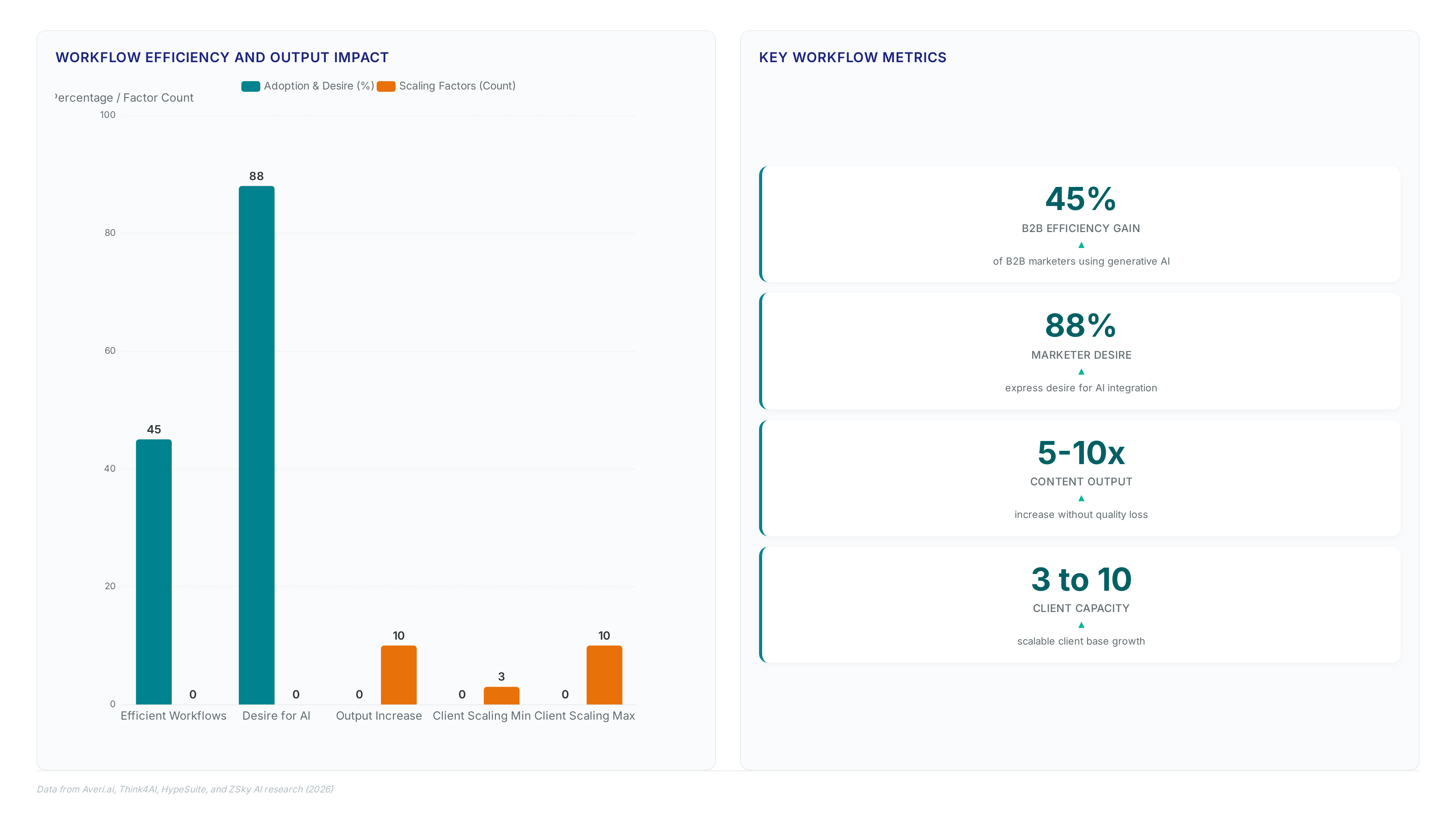
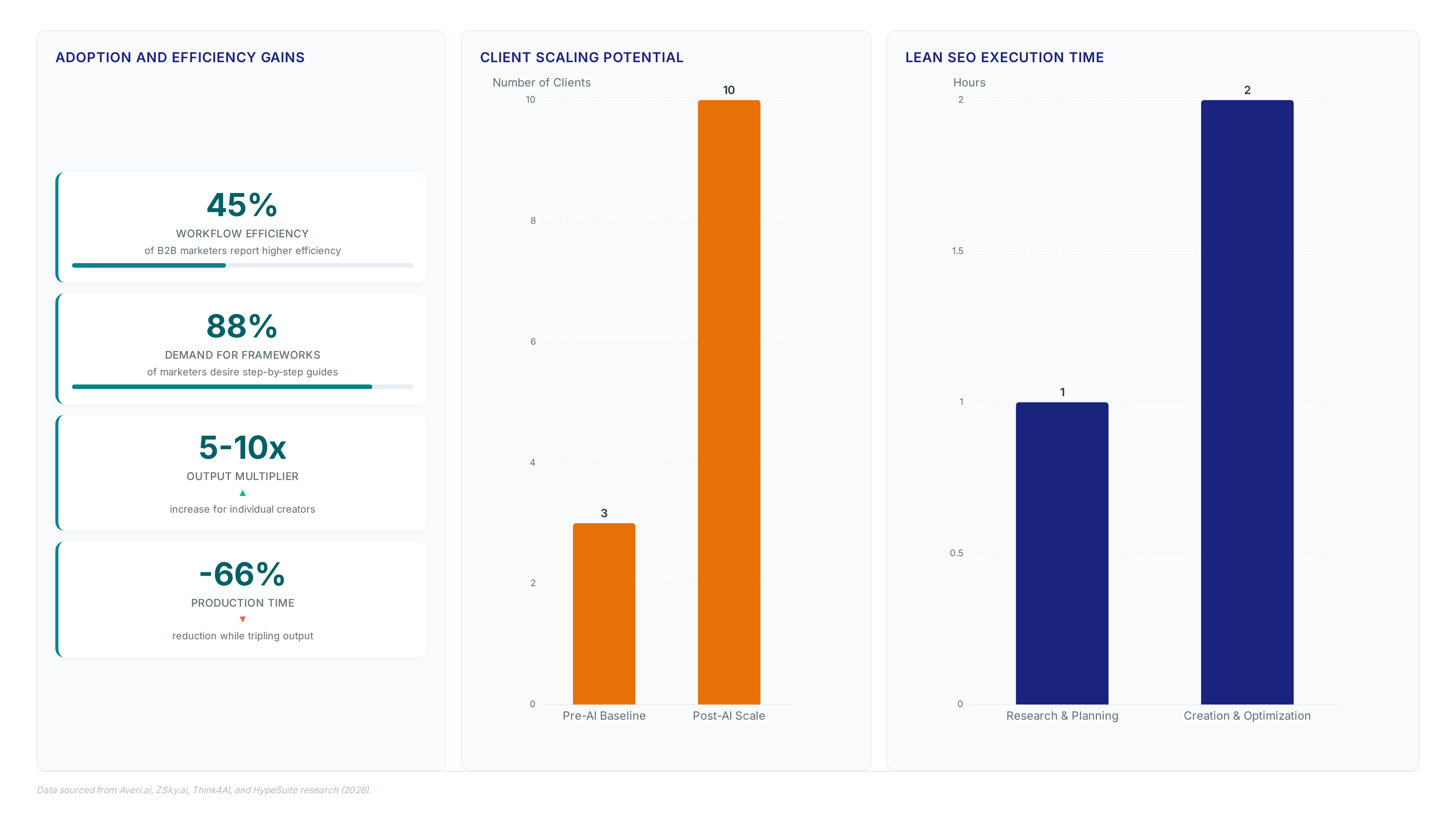
The model matters less than the research, instructions, and fact-checking surrounding it. Arthur Andreyev, CMO at SEO PowerSuite Ltd, demonstrates that refusing to publish a first draft from ChatGPT allows creators to own the topic, argument, and structure. Data supports this disciplined approach, showing that a significant share of B2B marketers using generative AI report more efficient workflows compared to non-users according to Averi.ai. Individual creators using these specific workflows produce 5 to 10 times more content without sacrificing quality as noted by Think4AI.
This guide details a thirteen-step workflow designed to turn raw research into accurate, original articles. You will learn how to build a source pack and write a decision brief before ever asking for an outline. The article explains how to execute a claim audit and optimize for search while maintaining strict human oversight. It also covers the strategic difference between letting AI generate text versus assisting a set editorial vision. By following these steps, writers can avoid the trap of publishing isolated prompts that disappear among hundreds of similar pages.
The Strategic Difference Between AI-Generated and AI-Assisted Content
Defining AI-Assisted Content Through Editorial Context
Vague prompting yields vague results. AI-assisted content emerges only when specific editorial constraints replace open-ended requests, forcing generative models out of their statistical comfort zones. Without stored context, models default to safe, generic outputs that lack any real ranking power. Practitioners prevent this failure by establishing editorial context within dedicated projects containing reference files and product documentation. This method allows tools to analyze tone and style from existing copy samples rather than guessing at a brand voice.
Defining the article position before generation begins marks the critical distinction. Authors must specify what they believe, what readers should do differently, and what gaps the piece fills. This pre-writing decision brief ensures the output adds unique value rather than repeating established facts. Linear processes struggle with scale yet shifting to AI-first content workflows allows teams to increase output while cutting production time. Strict governance over risk levels enables this efficiency. Low-risk topics permit broad automation whereas high-risk subjects demand human leadership for arguments and evidence.
Skipping this setup carries a measurable cost: content becomes indistinguishable from competitors. Nearly half of B2B marketers reported more efficient workflows after integrating generative AI by streamlining the review process. Success depends on treating the model as an execution engine, not a strategist.
Takeaway: Store your brand voice samples and product docs in a dedicated project before generating a single sentence.
Applying Article Position to Avoid Safe AI Defaults
Defining a specific article position before drafting forces generative models to abandon safe, replaceable defaults. AI usually produces content that is factually correct but strategically invisible without explicit constraints on what the text must argue. Models optimize for probability, not point of view, creating this limitation. Practitioners resolve the issue by writing a decision brief that codifies beliefs and prohibited arguments before requesting an outline.
| Topic Risk | Human Role | AI Role |
|---|---|---|
| Low-risk | Verification | Drafting, structuring |
| Medium-risk | Interpretation | Research, summarizing |
| High-risk | Argumentation | Editing, formatting |
This separation clarifies the distinction between AI-generated vs AI-assisted content; the latter requires human-set boundaries to generate value. Feedback loops allow systems to learn from past interactions yet initial directional input remains a manual requirement. Speed conflicts with distinctiveness. Automating the entire process yields generic vs high-quality AI content trade-offs where volume increases but strategic differentiation collapses. A lean startup founder can execute a scalable SEO-focused workflow in focused blocks dedicated to research, planning, creation, and optimization.
Skipping the positioning phase renders the subsequent automation inefficient. The decision brief acts as the governance layer that prevents the model from reverting to median probability tokens. Authors control the topic, argument, sources, structure, and examples to ensure every output adheres to the set strategic angle. Resulting text blends into the existing search environment rather than disrupting it without this guardrail.
Risks of Treating AI as a Replacement for Editorial Judgment
Removing human editors creates undifferentiated results because models optimize for statistical safety rather than strategic point of view. This workflow explicitly will not treat AI as a replacement for editorial judgment or measure success only by how quickly a draft is produced. Text becomes factually correct but commercially invisible when teams ignore the generic AI output problem. The approach fails because it treats the technology as a full replacement for judgment instead of a force multiplier for set positions.
Freelance social media managers have scaled client bases by automating visuals yet scaling text volume without editorial guardrails invites strategic drift. The industry shift toward agentic systems that autonomously research topics makes this risk acute; quicker generation of wrong-headed arguments compounds errors before publication.
Throughput conflicts with distinctiveness. Output defaults to the mean of its training data without a decision brief constraining the model.
- Teams lose the ability to challenge incumbent narratives in their sector.
- Content fails to capture links because it offers no new evidence or stance.
- Readers ignore materials that lack a clear perspective or actionable insight.
Practitioners must reject the notion that one prompt yields a finished article. The cost of skipping editorial judgment is content that ranks for nothing because it argues nothing. Success requires measuring the quality of the argument, not the velocity of the draft.
How Editorial Context and Source Packs Drive Search Ranking
Defining the Source Pack Hierarchy for AI Grounding
Separating official documentation from casual community chatter stops factual drift before a draft even begins. A structured source pack sorts evidence into three distinct tiers to manage how a model infers information. Primary sources cover original research and product docs, acting as the single source of truth for technical claims. Strong secondary sources offer practitioner analysis, whereas discovery sources like Reddit threads spot questions but rarely back final assertions.
This hierarchy carries weight because models treat all input tokens equally unless told otherwise. If an AI digests a forum complaint next to an API reference, it might hallucinate a non-existent bug. Teams applying this tiered method report smoother workflows than those depending on uncurated web browsing. The operational constraint remains clear: discovery inputs must never override primary documentation during the grounding phase.
| Tier | Content Type | Usage Rule |
|---|---|---|
| Primary | Docs, Data | Mandatory for facts |
| Secondary | Analysis | Context only |
| Discovery | Forums, Social | Question mining |
Executing this structure demands a change in perspective regarding research time. A lean startup founder can finish the planning phase in one hour by focusing entirely on source validation before generation starts. This upfront work guarantees the resulting content answers real user intent instead of echoing generic platitudes found in lower-tier results. Skipping this step carries a measurable cost: content becomes indistinguishable from the noise it aims to cut through.
Validating Search Intent Using Rank Tracker Metrics
Validating search intent means analyzing specific phrases users employ to describe the same problem before drafting begins. Practitioners examine search volume and keyword difficulty alongside related questions to confirm real demand exists for a topic. Tools like RankDots change one broad seed topic into hundreds of related content ideas, allowing teams to compare these metrics in a single interface. This process reveals whether competitors already rank for the target terms or if the query contains mixed intents that require separate pages.
- Identify different phrases describing the core problem.
- Review search volume and difficulty scores.
- Analyze questions competitors answer that you do not.
- Determine if the topic splits into multiple search intents.
The industry shift toward agentic systems means tools now autonomously monitor competitors and identify gaps rather than waiting for prompts. A lean founder can execute this research phase in one hour, reserving two hours for creation and optimization within a scalable workflow.
| Metric Type | Purpose | Risk if Ignored |
|---|---|---|
| Search Volume | Confirms demand | Wasted effort on empty queries |
| Keyword Difficulty | Estimates competition | Targeting unwinnable terms |
| Related Questions | Uncovers user context | Missing semantic depth |
Relying solely on volume metrics without checking the types of pages already ranking leads to misaligned content formats. Analyzing the types of pages already ranking in top results is necessary to ensure the planned format matches user expectations. Teams must verify that their planned format matches the dominant result type before committing resources to generation.
Checklist for Constructing Effective Decision Briefs
Constructing effective decision briefs requires defining the editorial stance before generating a single sentence of draft text. The objective is not to micromanage syntax but to pre-determine the argument, ensuring the output aligns with brand voice without constant human correction. Models default to safe, replaceable content that lacks strategic value without this specific position. The point of the brief is not to control every sentence but to make sure the necessary editorial decisions have already been made.
- Define conversion intent and primary SEO keywords before requesting an outline.
- Select vetted sources from your source pack to ground technical claims.
- Specify persona constraints to maintain consistent tone across articles.
- List prohibited arguments to prevent the model from adopting neutral or conflicting stances.
This structured approach transforms linear workflows into flexible processes where agents perceive tasks and execute sequences with minimal intervention. By establishing these guardrails, teams avoid the trap of measuring success solely by drafting speed rather than strategic alignment. The shift to AI-first content workflows allows teams to triple output while cutting production time, provided the brief explicitly constrains the model's latitude to maintain editorial distinctiveness.
| Component | Purpose | Risk if Missing |
|---|---|---|
| Persona | Defines audience voice | Generic, tone-deaf phrasing |
| Conversion Intent | Aligns content goal | Informative but useless text |
| Vetted Sources | Grounds factual claims | Hallucinated or weak evidence |
| Prohibited Angles | Enforces brand stance | Neutral or conflicting messaging |
Treating the brief as the primary control mechanism for quality is necessary. Humans own the angle and business priority while AI functions as a scalable first-draft engine rather than a replacement for judgment. This separation allows operators to produce significant volumes of content while maintaining the proprietary insights necessary for search ranking.
Executing a Thirteen-Step Workflow for Original Article Drafting
Defining the Section-by-Section Drafting Constraint
Generating full drafts in one go often triggers quality decay because LLMs produce text probabilistically, meaning tiny context shifts alter subsequent token selection. Asking for long outputs increases the chance that quality degradation happens before the model reaches the conclusion. This architectural constraint forces operators to break generation into discrete, manageable units instead of monolithic blocks.
- Instruct the model to draft only the current section based on the approved outline.
- Review the specific argument and evidence before prompting for the next segment.
- Assemble completed sections and request a structural critique rather than a rewrite.
This method exploits context window limits to maintain focus, stopping the repetition and logic gaps common in long-form generation. Linear pipelines let errors compound silently, yet this approach allows immediate correction of probabilistic drift. Granular control introduces latency though, swapping raw speed for structural integrity. Teams prioritizing rapid publication over accuracy often miss these subtle logical fractures until post-publish audits. Effective workflows must interrupt the generation stream to insert human verification gates. Advanced systems now incorporate feedback loops where agents learn from these interruptions, adjusting future outputs based on why specific sections required modification feedback loops for agents. Enterium recommends enforcing these hard stops to preserve editorial authority.
Executing the Six-Point Outline Approval Protocol
Approving a structured outline before drafting prevents expensive rewrites later in the production cycle. This protocol requires every proposed section to answer a specific question, state a main point, cite evidence, and offer a practical takeaway. Teams using this method observe that fixing a weak outline takes minutes, whereas correcting structural flaws after drafting usually means rewriting large parts of the article. The process begins by submitting the decision brief to ChatGPT with strict instructions to generate only the hierarchy, not the full text.
- Request a detailed outline where each node defines its core inquiry and supporting data.
- Manually verify that every section aligns with the pre-set editorial position.
- Iterate on the structure until the logical flow supports the central argument without gaps.
- Lock the approved framework to serve as the rigid constraint for subsequent generation.
Small context shifts can degrade output quality over long sequences, a flaw this approach addresses by isolating the structural planning phase. Operators ensure the model does not drift into generic content patterns by separating structure from prose. A unified platform often simplifies this strategy by connecting outline approval directly to creation modules. Time spent upfront is the cost here, yet this investment eliminates the need for massive downstream restructuring. Editorial judgment remains the primary control mechanism, transforming the outline from a simple list into a binding contract for the draft. Without this gate, the likelihood of producing replaceable, low-value content increases notably.
Checklist for Critiquing AI Drafts Against Logic Gaps
Assemble the full draft before asking ChatGPT to generate a structural critique rather than a simple rewrite. This specific prompt strategy forces the model to evaluate global coherence instead of local sentence fluency. Operators must explicitly request identification of repeated arguments, contradictions, and unfulfilled promises from the introduction.
| Failure Mode | Detection Signal | Correction Action |
|---|---|---|
| Argument Loop | Same claim reappears in sections 3 and 5 | Merge paragraphs or delete redundant instance |
| Logic Gap | Conclusion lacks cited evidence from source pack | Insert primary data or remove the claim entirely |
| Tone Drift | Sudden shift from technical to conversational | Re-generate paragraph with strict voice constraints |
Skipping this review creates content lacking distinct perspective, often described as a missing "soul" in fully automated workflows where human oversight is absent (automated content). Efficient tools exist, yet human-centric editing remains the mandatory final gate to verify logical consistency (human-centric editing). Teams that neglect this step risk publishing pieces with abrupt transitions or unsupported assertions that damage credibility.
- Scan the editing report for any sections flagged as overlapping or contradictory.
- Manually verify that every introduced concept receives a concrete practical takeaway.
- Reject generic passages that fail to support the central argument set in the brief.
- Confirm all product claims reference the approved source pack documentation.
Enterium recommends treating the AI critique as a diagnostic map, not an automatic fix command. The operator must decide which structural changes to apply before beginning the final human polish.
Measuring ROI and Mitigating Risks in High-Stakes Content
Defining the Final Claim Audit for Factual Accuracy
Fact-checking begins before any optimization occurs. The author audits every significant claim, scrutinizing statistics, product capabilities, comparisons, dates, quotes, and statements regarding platforms like Google. This process separates verified facts from interpretations, guaranteeing that each statement remains traceable, explainable, and defensible by a human operator. Relying on AI summaries for data introduces probabilistic errors that compromise high-risk topics. Practitioners must return to original sources rather than accepting generated approximations.
Advanced workflows employ a Research Agent to execute multiple targeted searches for facts, statistics, and controversies instead of running a single broad query. LLMs generate text probabilistically, meaning small context shifts alter subsequent output. Without manual verification, a model might conflate a product capability with a roadmap item or misquote a platform update.
| Claim Type | Verification Source | Risk Level |
|---|---|---|
| Statistics | Original research reports | High |
| Product Features | Official documentation | Medium |
| Opinions | Direct interviews | Low |
Skipping this claim audit invites the publication of defensible errors that damage long-term credibility. No operator should use AI for high-risk topics without this manual gate.
Replacing Generic Passages with Specific Experience and Data
Interchangeable AI text fails to rank. Swap generic outputs for internal data to fix this issue. Generic drafts often claim a brief improves quality, whereas experienced operators insist the brief must contain the central argument and approved sources before generation begins. This distinction transforms a probabilistic draft into a defensible asset.
| Generic Passage | Specific Replacement |
|---|---|
| "AI helps craft content." | "My brief requires the expected reader outcome." |
| "Verify your claims." | "I return to original sources rather than summaries." |
Manual intervention drives this mechanism. The author replaces vague assertions with screenshots, acknowledged mistakes, or product context that only the publisher possesses. Agentic workflow tools promise flexible execution yet cannot invent the specific judgment required to separate verified facts from interpretations. The constraint is clear: this process demands deep subject matter expertise. If an operator cannot recognize a bad answer, no amount of prompting will secure the output. Content lacking these specific details remains replaceable by competitors using identical models. Practitioners must ensure every necessary statement is something they can trace and defend. The final step involves a claim audit where every statistic returns to its primary source. This rigor prevents the removal of uncertainty that often plagues synthetic text. The author checks that the AI has not removed uncertainty or trade-offs, ensuring the article contains real judgment and experience.
Checklist for Verifying Sources Against AI Summaries
Validate every statistical claim by returning to the primary document instead of trusting AI summaries. This manual step prevents probabilistic errors from corrupting high-stakes content where accuracy determines credibility. Operators should flag sentences containing numbers or factual assertions for immediate cross-referencing against original research. Distinguishing between observed data and generated opinion ensures that every statement remains traceable and defensible under scrutiny.
- Isolate all sentences containing specific metrics, dates, or product capabilities.
- Trace each figure back to its primary source document or official announcement.
- Mark any claim lacking a verifiable URL as unverified opinion rather than fact.
This discipline addresses the reality that a strong majority of marketers seek the specific frameworks leading organizations use to maintain quality at scale. The cost is time; verifying sources manually slows initial drafting but eliminates the need for costly post-publication corrections. Generic outputs often blend observation with hallucination, making the claim audit necessary for risk mitigation. Without this gate, content risks becoming indefensible noise that search algorithms and readers alike will reject.
About
Hannah Brooks, Marketing Operations Lead, approaches AI-assisted content not as a creative experiment but as a scalable engineering challenge. With deep expertise in martech stack design and workflow orchestration, she is uniquely qualified to dissect the 13-step workflow for accurate article generation. Her daily work revolves around building governance frameworks and defining quality gates that ensure automated pipelines deliver consistent ROI without sacrificing brand integrity. At Enterium, a B2B publication dedicated to content automation methodologies, Hannah evaluates how modern teams integrate LLMs into production environments. She connects the article's focus on research and editorial decision-making to real-world operational reliability, emphasizing that successful automation requires rigorous human oversight at critical junctions. By translating complex pipeline architectures into reproducible steps, she helps technical marketers and content leaders move beyond hype to implement measurable, vendor-neutral systems that actually ship.
Conclusion
Scaling AI-assisted content creates a specific operational bottleneck: the verification lag. As systems shift from passive prompt-response tools to agentic workflows that autonomously research and draft, the volume of unverified claims will outpace human review capacity. This acceleration means that without rigorous gates, organizations will publish indefensible noise quicker than they can correct it. The real cost is not the time spent drafting, but the reputational debt incurred by publishing probabilistic errors as facts. You must treat every automated statistic as a potential liability until traced to its origin.
Implement a strict source-trace protocol before any agentic draft reaches publication. This is not about slowing down creativity, but ensuring that high-velocity output does not dilute your authority. If your team cannot verify a number against a primary document within minutes, that claim must be removed or flagged as unverified opinion. This discipline separates professional insight from generic synthesis.
Start this week by isolating every sentence containing a metric or date in your current draft pipeline and demanding a direct URL to the primary source for each one. Any assertion lacking this link gets marked as unverified immediately. This single action forces the necessary friction to maintain credibility while you adopt more autonomous tools.
Frequently Asked Questions
Skipping the decision brief causes models to revert to safe, generic defaults. This failure mode occurs because a portion of B2B marketers report efficiency only when human judgment defines the argument first.
Individual creators utilizing these structured workflows produce 5 to 10 times more content without sacrificing quality. This scale is achievable because the model acts as an execution engine rather than a strategist.
No specific software is mandatory since the workflow applies regardless of the tools you use. The article notes that a portion of B2B marketers achieve efficient workflows by streamlining their existing review processes.
Letting AI define the position results in content that is factually correct but strategically invisible. Models optimize for probability rather than point of view, creating generic output that blends into search results.
Storing brand samples prevents the need to explain tone and standards for every new chat.