Workflow automation logic for 340% Year One ROI
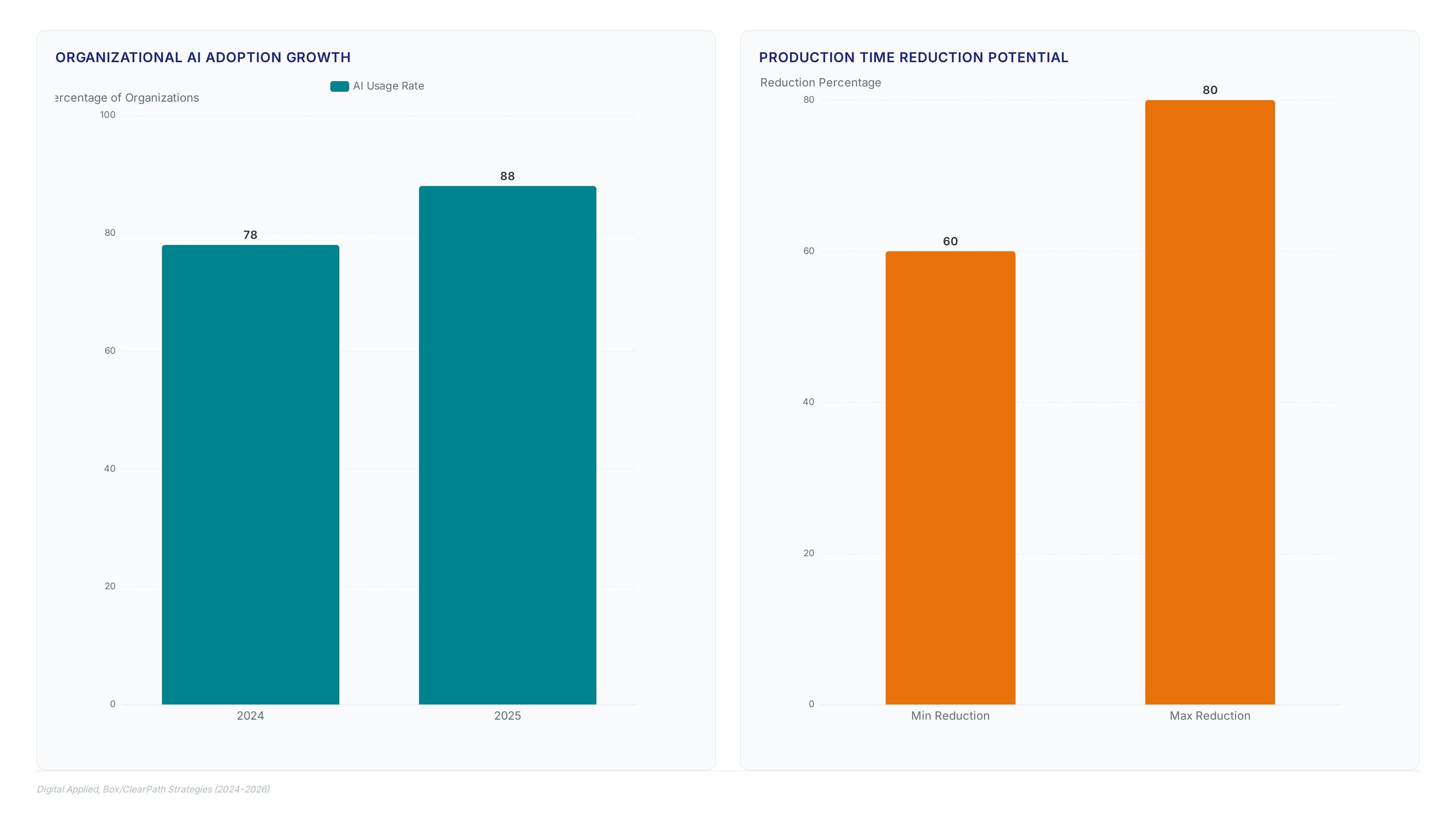
Teams using integrated AI workflows achieve a 340% Year One ROI while cutting production time by 60-80%. The math is simple: automation handles the heavy lifting of research and drafting, freeing humans to own strategy and voice. This isn't about replacing writers; it's about removing the friction that turns content operations into a bottleneck. Integration is the only variable that separates chaotic experimentation from scalable revenue.
This guide dissects the mechanics of modern content operations. We will construct an integrated content stack connecting writing, SEO, and distribution into a single logical flow. We'll examine specific automation logic using platforms like Make and Zapier to bridge gaps between AI writing tools such as Claude and Jasper. The goal is measurable ROI derived from reducing errors and accelerating publishing cycles without sacrificing the 95%+ quality maintained through human editorial oversight. Unified systems now drive the editorial calendar with SEO optimization and analytics. Data from ClearPath Strategies indicates that 73% of top organizations prioritize identifying time-consuming tasks as the critical first step. By starting small with specific formats like blog posts, teams can scale systematically. This article provides the blueprint for navigating the 2026 content workflow environment, ensuring your organization uses workflow automation to solve the impossible equation of creating more high-quality content with fewer resources.
The Role of Human-AI Collaboration in Modern Content Workflows
Defining Human-AI Collaboration in 2026 Content Workflows
Human-AI collaboration is an orchestrated pipeline. Artificial intelligence executes research and drafting; human operators enforce strategy and voice. This architecture separates generation from governance, allowing automation to handle volume while humans maintain editorial standards. Successful teams report significant reductions in production time by delegating repetitive tasks to algorithms. Human-AI collaboration outperforms either approach used in isolation.
The operational model requires distinct functional layers spanning long-form writing, social copy, and Go-To-Market sales automation. Unlike simple tool usage, this approach integrates automation platforms to connect disparate systems into a cohesive unit. Investment in such workflow automation is necessary to free human creativity for high-value strategic work. Despite these advances, consensus indicates that human intervention remains necessary at almost every step for high-quality, well-researched content.
| Component | Primary Role |
|---|---|
| AI Engines | Draft generation, keyword mapping, initial research |
| Humans | Strategic oversight, fact verification, tonal alignment |
| Orchestration | Workflow logic, quality gates, distribution triggers |
Executing the Split: AI Research Drafts Versus Human Editorial Oversight
Operational workflow separation assigns research-heavy work to specific models while reserving final voice calibration for human editors. This division leverages specific model strengths: certain engines handle long-form drafts while others manage rapid ideation cycles. Teams adopting this hybrid human-AI workflow maintain high quality standards while eliminating repetitive drafting tasks.
| Task Category | AI Execution | Human Oversight |
|---|---|---|
| Research | Data synthesis, competitor analysis | Source verification, strategic relevance |
| Drafting | Initial structure, SEO formatting | Tone adjustment, narrative flow |
| Optimization | Keyword density, meta tags | Brand alignment, audience resonance |
Input costs for entry-level stacks vary, yet the hidden latency of unverified AI output creates editorial bottlenecks. Automation accelerates volume but cannot validate factual accuracy or detailed brand positioning without intervention. Relying solely on algorithmic generation risks publishing plausible but incorrect information that damages credibility. Best practices suggest deploying specific Large Language Models for distinct workflow stages based on their unique capabilities. A common failure mode involves skipping the human review gate to save time, which ultimately increases rework hours when errors surface post-publication. The most effective operators treat AI as a force multiplier for research and structure, not a replacement for strategic judgment. Investment in this split architecture shifts labor from production mechanics to high-value editorial strategy.
Manual Creation Versus Integrated AI Stacks: Measuring the Efficiency Gap
Manual content pipelines fail modern velocity requirements because isolated tools cannot match the throughput of unified systems. The efficiency gap is quantifiable: workflow automation delivers substantial returns in year one when teams replace siloed applications with connected stacks. This return derives from a significant increase in output volume while preserving editorial standards through structured human oversight. Identifying these bottlenecks is the primary hurdle, as a majority of top organizations cite locating time-consuming tasks as the first step toward modernization. By 2027, 88% of organizations reported regularly using these methods.
| Metric | Manual Workflow | Integrated AI Stack |
|---|---|---|
| Production Speed | Linear, human-limited | Significant output multiplier |
| Operational Cost | High labor overhead | Strong Year One ROI |
| Architecture | Siloed point solutions | Unified API pipelines |
| Scaling Model | Add headcount | Add compute nodes |
The mechanism driving this shift involves embedding generative capabilities directly into content management layers rather than relying on standalone generators. Modern features exemplify this by executing keyword optimization within the editor, removing the need for manual data transfer between platforms. However, full autonomy remains impractical for high-stakes communications; hybrid designs requiring human intervention at specific checkpoints yield the most reliable results. Maximizing speed often tempts operators to remove review gates, yet successful content operations connect AI writing, SEO tools, scheduling, and analytics into unified workflows rather than siloed point solutions. Teams must architect workflows where AI handles research and drafting while humans retain authority over final narrative alignment. Start small and scale systematically by beginning with one content type, perfecting the workflow, and then expanding to other formats and channels.
Inside the Integrated Content Stack and Automation Logic
The Integrated Stack: Connecting Claude, Make, and Surfer via APIs
API authentication keys bind Claude, Make, and Surfer into a single execution graph rather than isolated utilities. This architecture routes structured briefs from Make directly to the Claude API for drafting, then passes the output to Surfer for keyword density analysis before human review. Implementing this full-stack typically requires an entry-level investment covering subscriptions for LLM access, automation logic, and SEO scoring layers. Operators should anticipate a deployment window to configure connections and align brand voice parameters across tools.
| Tool | Role | Cost |
|---|---|---|
| Make | Visual logic builder | $9/mo |
| Zapier | Linear app connector | From $9/mo |
| Claude | Research-heavy drafting | $20/mo |
| Surfer | SEO scoring | Varies |
Executing the Pipeline: From AI Briefs to Buffer Distribution
Pipeline execution begins when Make triggers Claude to draft content from a structured brief. This mechanism links research data directly to generation, removing manual copy-paste errors common in disjointed stacks. A typical loop moves from briefs to Surfer optimization, then pauses for human approval before publishing and distributing through Buffer.
Mid-tier implementations for this architecture cover advanced API calls and multi-user access. However, complex branching logic in automation introduces fragility; a single schema change in an upstream API can halt the entire production line. Users are advised to deploy specific Large Language Models for distinct workflow stages, such as Claude for research-heavy tasks and GPT for long-form drafts, suggesting a best-of-breed approach rather than relying on a single vendor.
A critical limitation arises when teams automate distribution before stabilizing the quality gate, leading to brand-diluting errors at scale. Best practices dictate always editing and fact-checking AI output and using AI for first drafts rather than final copy to maintain high quality standards. For teams ready to architect these systems, Digital Applied helps content teams build and optimize AI-powered workflows.
Make vs Zapier and Surfer vs Clearscope: Choosing the Right Nodes
Select Make for complex branching logic where 1000+ app integrations suffice, whereas Zapier suits linear tasks across 7000+ apps. Multi-step content workflows often fail when simple triggers cannot handle conditional routing. The cost disparity reflects this capability gap; Zapier starts higher than Make due to its extensive library, yet Make provides superior visual debugging for complex pipelines. Teams prioritizing rapid deployment over granular control often select Zapier, while engineering-led content ops prefer Make for its strong logic handling. SEO tool selection similarly hinges on budget constraints versus feature depth.
Measurable ROI from Automated Content Production Pipelines
Defining Production and Performance Metrics for AI ROI
Distinguishing production metrics from performance metrics prevents teams from confusing output velocity with business value. Production data tracks internal efficiency, measuring time per piece to quantify the labor saved by automation. In contrast, performance metrics validate external impact, monitoring SEO rankings, conversions, and backlinks to ensure increased volume drives revenue. This separation is vital because optimizing solely for speed can degrade the very quality required to improve search visibility.
| Metric Category | Key Data Points | Strategic Goal |
|---|---|---|
| Production | Time per piece, output volume | Reduce operational friction |
| Performance | Traffic, leads, SEO rankings | Increase market share |
Scaling automation requires evidence that higher output maintains engagement standards rather than diluting them. Brands like JoyFizz demonstrate that linking production speed to personalized messaging optimizes overall campaign performance. The lag between production gains and performance results creates analytical tension; operators often scale volume before verifying that conversion rates remain stable. Consequently, successful teams prioritize human-AI collaboration where AI handles research and drafts while humans focus on strategy and final editing. Only by maintaining clear quality standards and review processes can organizations expand throughput to capture broader market share while sustaining the 95%+ quality rate seen in optimized workflows.
Executing the Three-Phase Implementation Roadmap
Phase 1 Foundation requires selecting tools and documenting processes during weeks one and two. This initial setup establishes the editorial standards necessary before automation begins. Without clear guidelines, AI writing tools generate inconsistent output that fails brand requirements. Teams often skip documentation, causing rework later when scaling.
Phase 2 Pilot demands building a single workflow for one content type over weeks three and four. Teams must test this pipeline with 5-10 pieces to validate logic before expansion. Specialized research tools handle intent analysis separately from generation platforms in this stage. Restricting the pilot to one format reveals integration gaps that broad testing misses.
Phase 3 Scale expands content types and adds automation layers during weeks five through eight. This final stage focuses on training teams and implementing full analytics tracking. Real-world examples show brands like JoyFizz using this method to personalize messaging at volume. The trade-off is increased maintenance overhead as workflow complexity grows exponentially with each new content type.
| Phase | Duration | Primary Goal |
|---|---|---|
| Foundation | Weeks 1-2 | Select tools |
| Pilot | Weeks 3-4 | Test workflow |
| Scale | Weeks 5-8 | Expand types |
Enterium recommends validating each phase against production metrics before proceeding.
Validating Hub-and-Spoke Versus Pipeline Integration Patterns
Pattern 1: Hub-and-Spoke relies on Notion as a central repository to synchronize disparate tools, whereas Pattern 2: Pipeline executes linear triggers where one action immediately initiates the next. This architectural choice dictates whether your system prioritizes state management or execution speed.
| Feature | Hub-and-Spoke | Pipeline |
|---|---|---|
| Primary Logic | State synchronization | Event triggering |
| Best For | Multi-channel coordination | High-volume linear tasks |
| Failure Mode | Sync latency | Broken chain reaction |
| Tool Example | Airtable | Make |
Teams facing an inconsistent publishing schedule often select pipelines for their reliability in sequential handoffs, yet this rigidity complicates error recovery when a single step fails. Conversely, hub architectures allow editors to modify briefs mid-stream without breaking the entire workflow, though they introduce synchronization delays. While complex agent networks may require advanced orchestration (Reddit.com/r/AI_Agents/comments/1p7y24c/the_best_ai_tools_to_automate_a_cotent_creation/), simple linear flows function adequately via Zapier due to its ease of use and extensive app library. Operators must recognize that treating content as a build pipeline demands versioned artifacts and acceptance tests rather than simple file transfers. Enterium recommends validating your chosen pattern against a pilot of 5-10 pieces before scaling to ensure the integration supports required editorial gates.
Migrating to an Automated Workflow in Five Strategic Steps
Notion, CoSchedule, and Airtable: Defining the Content Calendar Core
Defining the content calendar core requires selecting a hub that balances database flexibility with native scheduling logic. Teams facing the "impossible equation" of resource constraints often underestimate how tool architecture dictates workflow scalability.
- Notion functions as a flexible content hub where AI and database-driven calendars merge, though it lacks native social publishing without third-party connectors.
- CoSchedule operates as a purpose-built marketing calendar featuring an integrated AI assistant, designed to simplify marketing timeline visibility.
- Airtable serves as a customizable content database offering granular views, ideal for teams needing structured data alongside automation triggers.
| Feature | Notion | CoSchedule | Airtable |
|---|---|---|---|
| Primary Strength | Knowledge base integration | Marketing timeline visibility | Database granularity |
| Pricing Tier | $10/user/mo (Plus) | $29/user/mo | Up to $20/user/mo |
| Best Fit | Documentation-heavy teams | Social-first marketers | Data-centric ops |
The hidden cost of choosing a rigid calendar is the eventual need to migrate state when content types evolve beyond simple dates. While Notion offers a low entry price, its reliance on external triggers for distribution requires strong connector setups. Conversely, Airtable provides strong automation but demands stricter schema definitions upfront. Operators must define their editorial standards before locking into a platform, as migrating structured content later incurs significant downtime. Select your centralized data repository based on whether your team prioritizes document context or scheduling precision. Starting small and scaling systematically allows teams to validate integration depth before committing to extensive paid plans.
Deploying Buffer, Hootsuite, and Lately for Cross-Channel Distribution
Buffer provides simple scheduling while Hootsuite offers enterprise management capabilities for social media automation. Teams should execute this distribution sequence to change static drafts into flexible, multi-channel campaigns without manual reformatting.
- Ingest the approved long-form asset into an AI repurposing engine to generate platform-specific variations.
- Map these outputs to a content calendar within your chosen hub to visualize coverage gaps before publishing.
- Monitor engagement metrics across all connected profiles simultaneously using unified dashboards.
- Extract short-form video segments from original long-form content as part of the distribution and amplification process.
- Activate recurring campaigns to ensure content reaches audiences across channels over extended periods.
| Tool | Primary Function | Best Fit Scenario |
|---|---|---|
| Buffer | Simple Scheduling | Small teams needing linear execution |
| Hootsuite | Enterprise Management | Complex orgs requiring granular access |
| Lately | AI Repurposing | Maximizing output from single assets |
The operational tension lies between centralized control and distribution velocity; highly rigid approval chains in enterprise setups can impact the speed gains promised by automation. While brands scale messaging through these tools, uncritical adoption of auto-posting can dilute brand voice if human oversight gates are removed entirely. Lately generates AI social posts and Missinglettr creates auto-drip campaigns to ensure content reaches audiences across channels. Opus Clip creates AI video clips from long-form content as part of the distribution and amplification process. Teams should treat distribution not as an afterthought but as a build artifact requiring version control and acceptance testing. The cost of ignoring this architectural rigor is a fragmented presence where increased volume fails to translate into measurable audience growth.
Implementation: Validating Workflow Success via Production and Performance Metrics
Track time-per-piece weekly to confirm your automated stack achieves the targeted 60-80% reduction in production duration. Neglecting performance metrics while optimizing for speed risks generating vast quantities of irrelevant content that fails to drive revenue.
- Establish a baseline for editorial revisions before deploying automation agents.
- Measure content volume increases against the entry-level cost bracket to verify efficiency gains.
- Correlate traffic spikes with specific workflow triggers to isolate high-performing configurations.
Treating content creation as a build pipeline allows technical teams to apply versioned artifacts and acceptance tests to every draft. This approach shifts the operational focus from manual drafting to strategic oversight of the automated system. However, agentic audits promising completion within 72 hours require strict guardrails to prevent logical drift in complex topics. Practitioners should configure their analytics dashboard to flag any deviation from historical engagement averages immediately. Teams adopting this validation model often discover that expanding to new content formats introduces unique complexity not present in single-format workflows. Running parallel pilots for different content types helps calibrate expectation versus reality. Successful validation proves the workflow delivers business value rather than just accelerating content churn.
About
Arjun Patel, an Applied LLM Engineer at Enterium, brings rigorous empirical analysis to the complex environment of workflow automation. His daily work involves benchmarking LLM providers and RAG architectures specifically for content workloads, making him uniquely qualified to dissect the mechanics of AI-driven pipelines. At Enterium, a brand dedicated to documenting how modern teams scale content with LLMs, Patel's vendor-neutral approach ensures that automation claims are grounded in reproducible data rather than hype. His insights bridge the gap between raw model capabilities and the architectural decisions required to build reliable, high-volume content operations for B2B teams.
Conclusion
Scaling workflow automation reveals that logical drift becomes the primary bottleneck once initial speed gains are realized. While entry-level pricing tempts rapid adoption, the operational cost shifts from software subscriptions to the continuous maintenance of quality guardrails. Teams often mistake increased output volume for success, yet without strict version control on content artifacts, higher production rates merely accelerate the distribution of irrelevant material. The real break point occurs when expanding to new formats introduces complexity that single-format pilots never exposed.
Organizations must mandate performance correlation before widening their automation scope. Do not approve additional budget for new connectors or AI drafting tools until you have verified that traffic spikes directly align with specific workflow triggers. This validation phase should span a minimum of four weeks to capture meaningful engagement averages. Treat your content stack as a build pipeline where every draft requires acceptance testing rather than manual approval.
Start by establishing a baseline metric for editorial revisions this week before deploying any new agents. Measure current revision cycles against your target reduction goals to identify where human intervention remains necessary. This data point becomes your control variable for all future efficiency claims, ensuring your team optimizes for revenue impact instead of mere velocity.
Frequently Asked Questions
Teams achieve a 340% Year One ROI by cutting production time and reducing errors. This financial return allows organizations to reinvest savings into strategic initiatives rather than just maintaining basic output levels.
Integrated AI workflows reduce content production time by 80% through efficient task delegation. This drastic time savings enables teams to publish significantly more content while maintaining strict editorial standards throughout the entire process.
An entry-level automated content stack typically starts around $100 per month for essential tools. This affordable price point allows smaller teams to access powerful automation without needing a large enterprise budget to begin modernizing.
Human oversight ensures workflows maintain a 95% quality rate despite increased automation speeds. Without this critical human review layer, organizations risk publishing plausible but factually incorrect information that damages long term brand credibility.
About 73% of top organizations start by identifying specific time-consuming tasks to automate first. This focused approach prevents chaotic experimentation and ensures that initial automation efforts deliver immediate, measurable value to the content team.