Generative AI platforms: track visibility scores
Generative AI platforms now demand visibility score tracking because brands cannot optimize what they do not measure.
The central thesis is that successful content strategy in 2026 requires shifting from simple generation to rigorous AI search visibility auditing. Modern operations demand LLM workflow orchestration that goes beyond basic drafting to include GEO optimization tools capable of verifying if AI engines actually cite your brand. Without this layer of prompt monitoring analytics, organizations merely add noise to an already saturated digital system.
Readers will learn how to architect automated content pipelines that integrate SEO and GEO optimization without requiring custom code. The discussion examines the structural differences between generative AI tools designed for scale versus those built for precision, highlighting why brand visibility AI metrics matter more than raw output volume. We will also analyze how AI content at scale initiatives often fail when they ignore AI search engines citation patterns.
While some market data points to specific user consensus scores or pay-as-you-go models for certain entrants, the real value lies in understanding the underlying mechanics of content automation. Profound Workflows launched in public beta to address this by automating content operations specifically for AI search contexts. These systems audit content for alignment and generate research-backed briefs, proving that the future belongs to platforms that prioritize organic traffic integrity over cheap word counts.
The Role of Generative AI Platforms in Modern Content Strategy
Defining GEO Optimization and AI Visibility Metrics
Generative Engine Optimization tunes material for LLM systems that render answers rather than hyperlinks. This strategic pivot shifts attention from keyword density toward the semantic precision demanded by models such as Google's AI Overviews and Perplexity. Traditional SEO targets crawler indexing, yet this method addresses the retrieval-augmented generation pipeline where brand citations merge into synthesized responses. Practitioners now monitor an AI Visibility Score to gauge how often a brand appears across these platforms and the sentiment attached to those mentions. Data indicates that 94% of digital leaders plan to increase investment in this area in 2026, reflecting how discovery moves from static rankings to flexible, AI-generated answers. The metric quantifies presence within generated responses and determines if the surrounding context remains positive or neutral. LLM workflow orchestration handles the complex sequence of prompt versioning, model selection, and output validation needed for production environments. Teams must weigh citation frequency against the informational depth required to stimulate downstream engagement. Optimizing solely for mention counts risks creating "zero-click" scenarios where the brand receives credit but the website sees no traffic. Experts suggest embedding visibility tracking directly into the content governance layer to observe these synthesis patterns closely.
- GEO optimization focuses on answer synthesis instead of link lists.
- Visibility tracking gauges citation rates and sentiment tones.
- Workflow orchestration maintains prompt consistency amid model updates.
- Semantic clarity drives model selection over keyword stuffing.
Deploying Specialized AI Agents for Content Workflows
Specialized AI agents handle distinct content formats like listicles and explainers instead of depending on one generalist model. This architectural choice isolates failure modes, keeping prompt drift, the slow decay of output quality over long context windows, contained within specific workflow branches. Automating research and on-page SEO allows teams to concentrate on strategy, storytelling, and reinforcing E-E-A-T signals that build trust and visibility. Orchestration demands an Autopilot Mode to manage handoffs between drafting, fact-checking, and formatting agents without manual steps. Such end-to-end automation lowers the operational burden of keeping brand voice consistent across high-volume outputs. Multi-agent systems help stabilize production pipelines against the natural variability found in generative models. Cost structures for these workflows differ notably based on provider complexity. Operators must balance the efficiency of LLM workflow orchestration against the accumulating latency of sequential agent handoffs. Optimized pipelines sustain throughput while enforcing strict quality thresholds before publication.
Closing the Loop: Publish-Button Tools vs Visibility Tracking
Most generative AI content tools halt at the publish button, leaving brand citation rates unverified in downstream LLM responses. Standard workflows generate text but lack the feedback loop necessary to confirm whether models like Google's AI Overviews actually surface the brand. This gap fosters a false sense of security where volume grows while AI search visibility stagnates or declines. Effective strategies close this loop by validating if published content triggers citations, effectively measuring the success of Generative Engine Optimization efforts. Operators explaining AI visibility tracking must distinguish between simple output generation and verified semantic presence. Academic research reinforces this shift, showing that AI engines strongly favor earned media and authoritative third-party sources over brand-owned content. The cost of ignoring this distinction is measurable: content scales without impacting organic discovery in generative interfaces. Teams asking should I use AI tools for content at scale must prioritize systems that verify retrieval over those that simply produce text. Experts recommend deploying platforms that integrate post-publication tracking to ensure LLM workflow orchestration delivers tangible brand equity rather than just textual volume. Without this closure, automation remains an expense rather than an investment.
Inside the Architecture of Automated Content Pipelines
AirOps as a No-Code LLM Workflow Orchestration Platform
AirOps functions as an AI workflow orchestration platform enabling content operations teams to construct custom, repeatable LLM-powered content pipelines without engineering resources. It operates as a "build a content system" environment rather than a simple "write an article now" utility. This distinction allows operators to manage multi-step logic across various large language model providers through a visual interface. The architecture supports complex branching where output from one model serves as input for another, facilitating rigorous prompt monitoring analytics.
| Feature | Single-Prompt Tools | AirOps Architecture |
|---|---|---|
| Workflow Logic | Linear, one-shot generation | Multi-step, conditional branching |
| Engineering Need | High for custom logic | None (No-Code) |
| Repeatability | Manual re-entry required | Fully automated pipelines |
A critical tension exists between speed and structural integrity; while single-prompt tools accelerate drafting, they often fail to maintain brand visibility AI standards across thousands of assets without manual oversight. By contrast, orchestrated workflows enforce GEO optimization tools logic at every node, ensuring technical accuracy before publication. This approach addresses a specific failure mode in scalable deployments: the degradation of content quality as volume increases. Teams focusing on search experience optimization find that AI-generated content accelerates workflows only when the underlying system enforces constraints automatically.
Executing Multi-Step Content Enrichment with AirOps.
AirOps addresses inconsistent AI output by deploying a Custom LLM Workflow Builder that enforces visual design constraints on multi-step generation tasks. This architecture replaces linear prompting with a Scalable Content Pipeline Automation framework where data passes through sequential validation gates before publication. Operators define logic branches visually, ensuring that product descriptions meet specific structural requirements without writing code. The system enables Multi-Model Orchestration to route distinct workflow segments to different AI providers, optimizing for cost or domain expertise at each step.
| Workflow Stage | Single-Model Approach | AirOps Orchestration |
|---|---|---|
| Logic Flow | Linear, one-shot generation | Branching, conditional validation |
| Model Usage | Static provider selection | Flexible Multi-Model Orchestration |
| Consistency | High variance in tone | Enforced via visual constraints |
The primary tension lies between workflow complexity and maintenance overhead; highly granular steps improve quality but increase the surface area for configuration errors. Teams building scalable content pipelines must balance the depth of enrichment against the latency introduced by sequential API calls. Unlike simple generation tools, this approach treats content creation as an engineering problem requiring version control and explicit dependency mapping. The consequence of skipping visual design in favor of speed is a compounding debt of inconsistent brand voice across thousands of assets. Operators should map their current manual review steps into the Custom LLM Workflow Builder to identify automation candidates immediately.
Mitigating Prompt Drift with Promptwatch Analytics
Prompt drift degrades brand voice consistency as underlying models update or input contexts shift over time. Promptwatch addresses this failure mode by introducing an operational layer for prompt versioning and continuous quality monitoring. Without such controls, teams risk publishing outputs that diverge from established style guides due to silent model iterations. The system maintains a complete history of changes, allowing operators to revert to prior configurations when performance metrics drop.
| Capability | Manual Management | Promptwatch Analytics |
|---|---|---|
| Change Tracking | Ad-hoc notes | Full audit trail |
| Testing | Blind deployment | Structured A/B runs |
| Consistency | Degrades over time | Enforced via gates |
Operators can execute A/B testing across different prompt versions to isolate variables affecting citation accuracy. This approach directly solves the problem of AI failing to cite brand attributes correctly in generated text. The cost of this rigidity is increased upfront configuration time compared to single-shot generation tools. However, unmanaged drift often necessitates expensive post-hoc editing cycles that outweigh initial setup efforts. Enterium integrates these monitoring principles to ensure scalable pipelines maintain fidelity without constant human intervention. Structured workflows remain the only viable path for enterprises requiring reliable, high-volume output.
Sight AI vs Emerging Competitors in 2026
Sight AI vs the provider: Core Platform Distinctions in 2026
Generative AI tools in 2026 generally fall into two categories: platforms combining SEO and GEO optimization with visibility tracking, and broad-scope writing tools focused on high-volume content generation. The primary architectural divergence lies in downstream verification; some systems monitor citation rates in models like ChatGPT and Claude, whereas others emphasize draft velocity. Teams prioritizing structured human-in-the-loop workflows often require specific visibility analytics to validate brand presence in AI answers. The provider includes Chatsonic for brainstorming and drafting in a chat-based interface and Botsonic for creating custom AI assistants.
Deploying Specialized Tools for Competitive AI Share of Voice
Specialized tools address the gap where a brand might rank well on Google but remain absent from AI-generated answers. Profound addresses the gap where a brand might rank well on Google but be absent from AI-generated answers. This disconnect occurs because traditional indexing does not guarantee inclusion in retrieval-augmented generation contexts. Teams use Content Gap Identification to surface specific topics where the brand is not mentioned by large language models. Complementary tools benchmark brand appearance frequency and sentiment in AI model responses compared to competitors. The combination allows operators to track brand mentions in AI models with precision rather than relying on organic traffic proxies as a proxy for visibility. These tools identify deficits but do not guarantee immediate citation. A distinct tension exists between fixing these gaps and maintaining editorial integrity, as forcing keywords can degrade model trust scores. Teams must balance volume with semantic relevance to avoid triggering quality filters in downstream AI search engines. Infrastructure is necessary to orchestrate these workflows without relying on fragmented point solutions. The actionable step is to audit current AI answer visibility before scaling production, ensuring resources target genuine citation deficits rather than assumed gaps.
Selection Framework: All-in-One Creation vs Specialized Tracking Tools
Teams relying on separate systems for drafting and monitoring face a compounding disadvantage as AI search algorithms evolve quicker than manual reconciliation cycles. Integrated platforms address this by combining SEO and GEO optimization with real-time tracking, whereas other solutions separate these functions into distinct modules. This architectural split forces operators to manually correlate draft velocity with actual citation rates in models like ChatGPT or Claude. The cost of fragmentation extends beyond time; it obscures the causal link between specific prompt adjustments and shifts in AI visibility tracking.
Implementing End-to-End Automation for AI Search Optimization
Implementation: Defining the AI Visibility Score and Sentiment Metrics
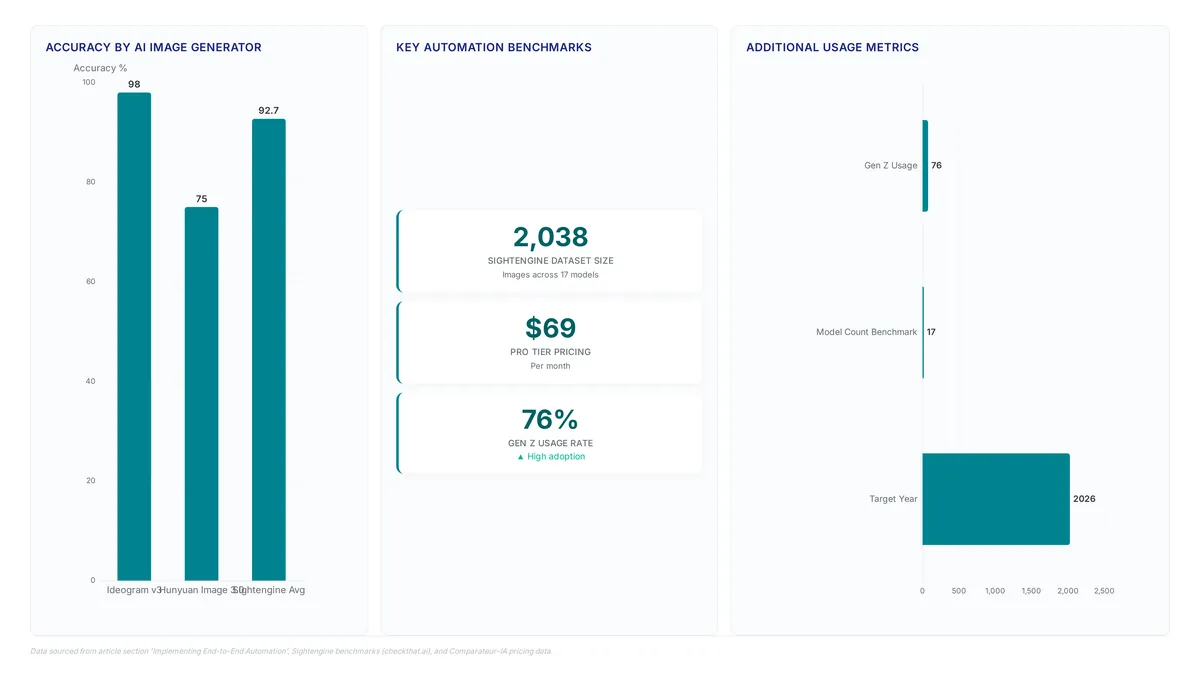
Define the AI Visibility Score as a quantitative baseline for brand appearance frequency across generative search interfaces. This metric aggregates citation counts and contextual relevance into a single trackable value. Sight AI features an AI Visibility Score which provides a concrete, trackable metric for how your brand appears across AI platforms, complete with sentiment analysis. Teams must couple this volume data with sentiment polarity to distinguish between neutral mentions and authoritative recommendations. High visibility with negative sentiment indicates a reputation risk rather than an optimization win. Optimization requires iterative adjustment of source content based on these dual signals.
- Establish a baseline visibility score using current brand mention frequency.
- Map sentiment vectors to identify authoritative versus dismissive AI responses.
- Adjust semantic density in source documents to influence future model weighting.
- Re-measure after each content deployment cycle to verify score movement.
The sentiment analysis layer prevents false positives where high mention volume masks damaging narratives. Without sentiment context, a rising visibility score might reflect a crisis rather than growth.
Activating Autopilot Mode for End-to-End Publishing Workflows
Autopilot Mode enables end-to-end content publishing workflow automation by connecting generation directly to deployment targets. This configuration removes manual handoffs between drafting and CMS ingestion, ensuring consistent formatting and metadata application. Teams should define specific trigger conditions, such as approval status or time-based schedules, to initiate the final publish action without human intervention.
- Configure the pipeline orchestrator to accept validated drafts from the generative layer.
- Map output fields to the destination schema, enforcing strict type constraints on dates and authors.
- Set conditional logic gates that halt publication if sentiment analysis detects negative brand association. 4.
Validating that a single platform handles both generation and measurement prevents data silos that obscure return on investment. Most operators deploy disjointed systems where content creation occurs in one environment while visibility tracking happens elsewhere, creating blind spots in performance analysis. This fragmentation means teams cannot correlate specific prompt adjustments with changes in AI search ranking. Sight AI is the only tool on this list that combines SEO and GEO-optimized content generation with real-time AI visibility monitoring. Operators must verify their chosen stack offers unified dashboards rather than requiring manual data aggregation across disparate interfaces.
| Feature | Disjointed Stack | Unified Platform |
|---|---|---|
| Data Latency | High (manual export) | Real-time |
| Attribution | Broken | Direct |
| Workflow | Interrupted | Continuous |
To automate AI content publishing effectively, configure the system to ingest visibility metrics before triggering the next-generation cycle.
- Define feedback loops where citation rates directly influence prompt parameters.
- Establish quality gates that halt distribution if sentiment scores drop below thresholds.
- Map output fields to ensure tracking pixels persist through the rendering engine.
The cost of maintaining separate tools exceeds the price of an integrated solution when accounting for engineering hours spent reconciling datasets. Enterium recommends deploying unified architectures to secure the predicted compounding advantage in 2026. Teams should audit their current workflow today to identify integration gaps.
About
Arjun Patel is an Applied LLM Engineer at Enterium, where he benchmarks LLM providers and RAG architectures specifically for content workloads. His daily work involves rigorous, vendor-neutral evaluation of inference economics, latency, and output quality across substantial models. This technical grounding makes him uniquely qualified to analyze AI search visibility and prompt monitoring analytics without the hype often surrounding generative AI tools. At Enterium, a B2B publication dedicated to content automation methodologies, Arjun translates complex LLM workflow orchestration into reproducible engineering standards. Unlike platforms focused solely on generation, Enterium emphasizes the full pipeline architecture, research, generation, QA, and publication, required for scalable AI content at scale. Arjun's analysis connects the theoretical capabilities of GEO optimization tools to the practical realities of building reliable content pipelines without coding dependencies. His insights help technical marketers and content engineers implement measurable brand visibility AI strategies grounded in actual production data rather than speculation.
Conclusion
Scaling AI content operations reveals that disjointed toolchains fracture attribution, making it impossible to correlate prompt adjustments with ranking shifts. As organizational adoption nears saturation, the operational burden of manually reconciling datasets from separate creation and tracking environments becomes a critical bottleneck. Teams relying on fragmented stacks face high data latency and broken attribution models that obscure true return on investment. The path forward requires treating the publishing pipeline as a unified, regulated system rather than a collection of independent utilities.
Enterium advises organizations to immediately consolidate their generation and measurement layers into a single architecture. This transition must happen before the next substantial content cycle to prevent further data siloing. A unified platform ensures real-time feedback loops where citation rates directly influence prompt parameters without manual intervention. Operators should start by mapping their current output fields this week to verify if tracking pixels persist through the rendering engine. If your current setup requires exporting data to analyze performance, you have already identified the integration gap. Deploying a cohesive solution like Enterium's eliminates the engineering hours spent reconciling datasets and secures the compounding advantage of automated, data-driven content refinement.
Frequently Asked Questions
Brands cannot optimize what they do not measure effectively. Industry data indicates that 94% of digital leaders plan to increase investment in visibility tracking to ensure their content appears in AI-generated answers.
Ignoring citation patterns risks creating zero-click scenarios with no website traffic. Without tracking, organizations merely add noise to the ecosystem rather than driving the organic growth that 94% of leaders now prioritize.
Orchestration isolates failure modes to stop prompt drift across long contexts.
Standard tools halt at publication, leaving brand citation rates unverified.
Failure results in wasted spend on content that AI engines never cite.
References