Generative AI Reality: Fixing Misaligned Strategy
Karen Hao's analysis at MAICON 2026 argues that a constructed reality around artificial general intelligence distorts organizational strategy and investment priorities. Vendors position generative models as the sole path to progress, obscuring the tangible value of earlier machine learning systems in critical sectors like healthcare and education.
The Constructed Reality of Generative AI
A handful of corporations constructs the prevailing story surrounding generative AI and AGI. These entities frame AGI as the singular engine of future abundance, widening the chasm between promotional claims and technical deployment realities. Conflating text generation with genuine reasoning capacity creates a strategic blind spot for enterprises. Distinguishing marketed AGI potential from the bounded utility of existing models prevents organizational drift.
Pre-Generative Machine Learning in Education and Healthcare
Predictive modeling systems existing before the generative explosion provide tangible societal benefits in education and healthcare today sciencedirect.com(https://www.sciencedirect.com/science/article/pii/S0268401224000161). Structured data analysis powers these tools rather than synthetic content creation, offering necessary stability for critical infrastructure. Indigenous technologists deploy these older machine learning architectures to revive the Māori language, successfully preserving cultural history against digital erasure. High-impact AI functions effectively without large language models or agentic behaviors.
| Feature | Pre-Generative ML | Generative AI |
|---|---|---|
| Primary Output | Predictions | Synthetic Content |
| Data Dependency | Structured Tables | Unstructured Text |
| Failure Mode | Bias in Training | Hallucination |
Pushing the AGI narrative diverts capital from maintaining these proven systems. Auditing current pipelines helps organizations identify where predictive stability outperforms generative novelty.
Risks of Consolidated Power
A small group of companies has consolidated extraordinary power over AI's direction. Centralization fosters narrative dominance where stakeholders frame generative AI and AGI as the only viable paths for technological progress forbes.com(https://www.forbes.com/sites/eriksherman/2026/05/27/the-ai-giants-see-a-potential-meltdown/). Development incentive structures now prioritize scale over societal utility. Many high-value applications in education and healthcare rely on machine learning systems that predate current generative models, yet these receive diminished investment focus.
Mechanics of Power Consolidation
Specific capital allocation patterns funnel extraordinary power toward a handful of firms while excluding smaller competitors. Entry barriers stem less from algorithmic complexity than from the sheer volume of data required for model training. Homogenization defines the resulting innovation environment where funding targets only select use cases. Enterprises depending on these centralized models inherit provider biases and strategic blind spots.
How Narrative Control Shapes Investment
Investment capital flows toward generative models because hyperscaler narratives frame them as the sole path to progress. This constructed reality directs organizations to prioritize flashy chatbots over stable, pre-generative systems that sustain healthcare and education. Market incentives align with specific product roadmaps when a small consortium controls narrative dominance, ignoring broad societal needs.
Historical analysis of media frames reveals how persistent narratives reinforce specific viewpoints while excluding alternative technical approaches. Such narrative dominance ensures funding flows to generative applications even when predictive modeling offers higher reliability for critical infrastructure.
Challenging AGI Hype with Proven Utility
Pre-generative predictive technologies have governed policy decisions and disease monitoring for years without public visibility. These systems operate on structured data analysis rather than synthetic content generation, providing stability for critical infrastructure. High-impact AI does not require large language models or agentic behaviors.
Operational reality and market rhetoric remain starkly disconnected. This divergence creates a strategic blind spot where organizations overlook strong, existing solutions in favor of experimental generative interfaces. Organizations prioritizing narrative dominance over functional utility risk misallocating capital toward unproven agentic behaviors while neglecting established predictive engines.
Operationalizing Responsible AI Scaling
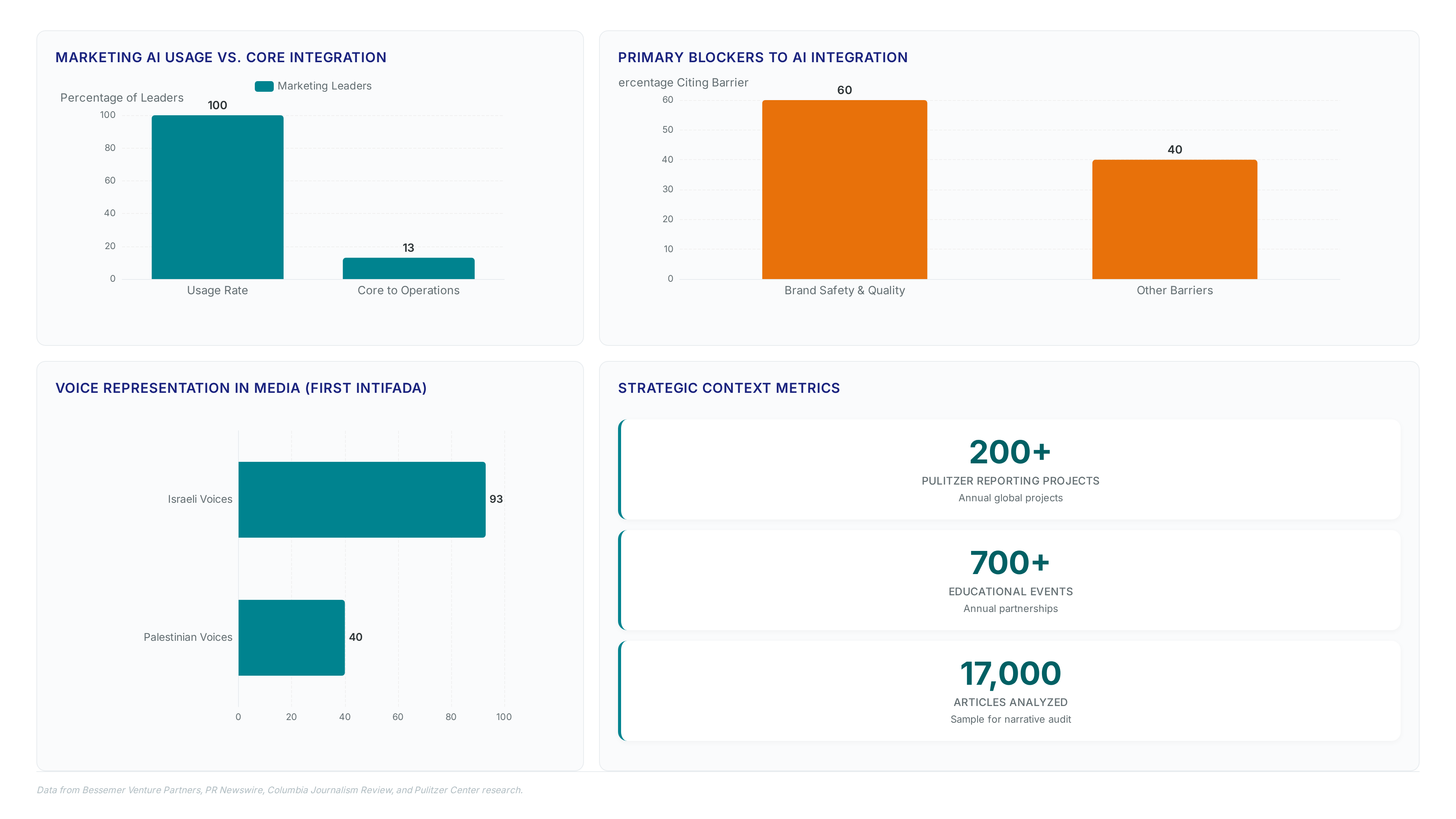
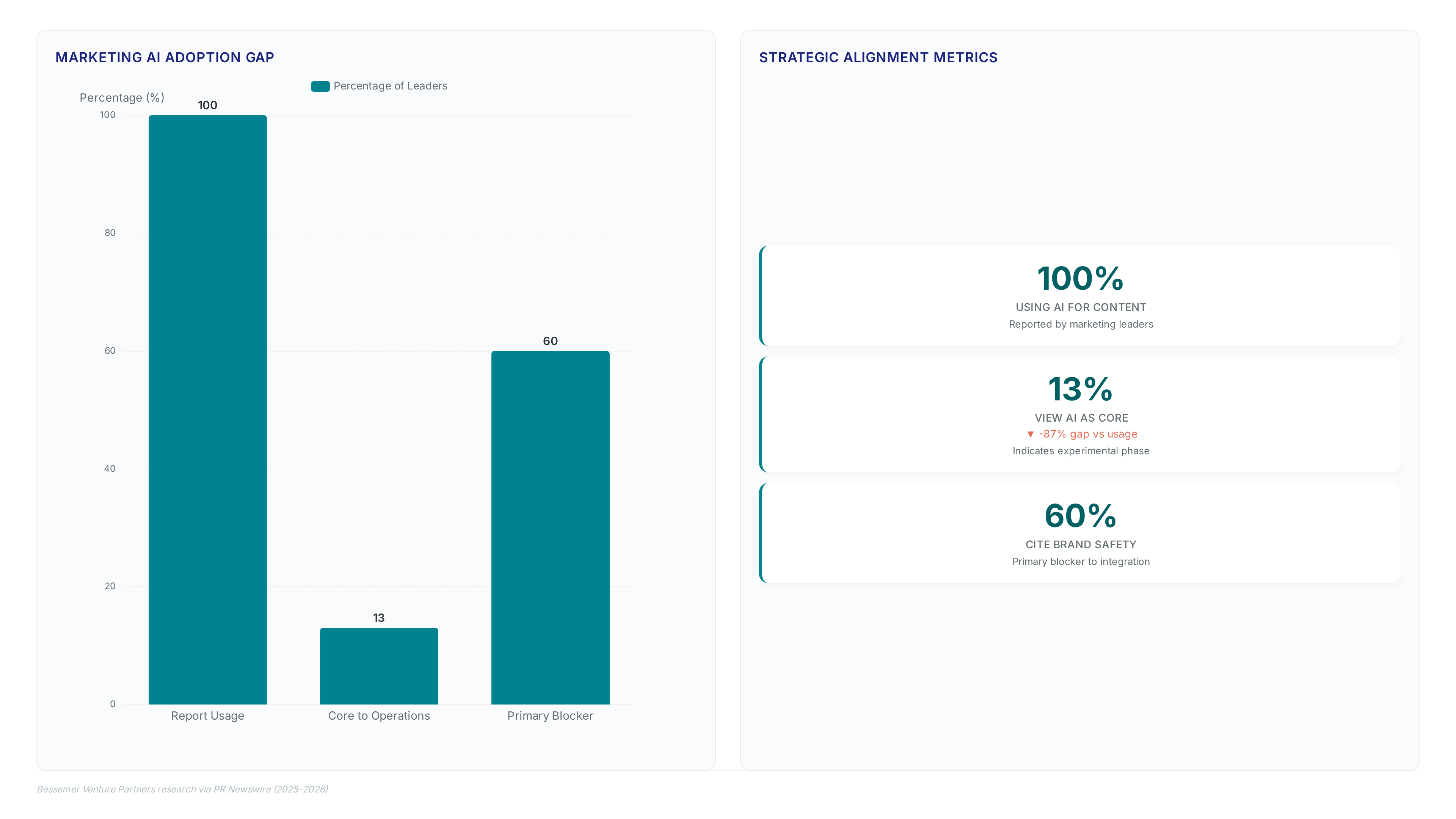
Enterprise AI deployment looks nothing like the prevailing market discourse on AGI. Marketing leaders universally deploy tools for content generation, yet a mere fraction view these systems as core to business mechanics renegademarketing.com(https://renegademarketing.com/blog/9-ai-adoption-stalls-b2b-teams/). This dissonance creates a strategic blind spot where investment flows toward superficial automation rather than structural integration.
Evaluating Vendors Beyond Hype
Evaluating AI vendors requires dissecting resource allocation models rather than accepting generative capability claims. Leaders must assess platforms based on underlying realities instead of constructed narratives about AGI. Vendors frequently market capabilities lacking empirical validation. Investigative reporting found no evidence that specific AI monitoring services saved student lives despite aggressive marketing, representing a tangible misallocation of institutional budgets on ineffective tools.
Organizations must shift focus toward auditing source integrity and demanding proof of utility before committing capital. A pragmatic framework prioritizes systems enhancing existing machine learning workflows over hyped generative novelties.
Checklist for Balancing AI Risk and Opportunity
- Recognize the gap between pilot usage and operational centrality before scaling infrastructure
- Address quality control barriers, as brand safety and quality control remain primary blockers to deeper integration crescendo.ai(https://www.crescendo.ai/blog/ai-automated-quality-assurance)
- Audit whether current investments favor generative hype over stable, pre-generative systems that sustain critical sectors
- Verify if a platform's roadmap aligns with actual business mechanics rather than constructed narratives about AGI
Strategic Levers for Influencing AI Development
Passive adoption of generative narratives must yield to active governance of development incentives. Leaders need to treat technology strategy as an examination of power structures rather than a simple procurement exercise.
Scaling AI Beyond Content Creation
Shifting focus from peripheral content generation to core operational integration allows leaders to influence AI development direction. Universal adoption exists for drafting copy, yet data reveals only a minority treat these systems as core to business mechanics. Capital flows toward superficial automation rather than structural durability because of this disparity.
Organizations must implement a governance framework prioritizing utility over narrative dominance. Most teams fail because they apply low-standards protocols to high-stakes environments. True strategic realignment occurs when procurement decisions reflect operational reality rather than marketing hype.
Checklist for Evaluating Vendors Against Constructed Narratives
- Demand empirical proof for safety claims before approving budget allocation
- Examine historical data to verify if vendor claims match documented outcomes
- Analyze the incentive structures guiding the vendor
- Assess whether the solution addresses a genuine workflow bottleneck or merely responds to the dominant narrative around generative AI
| Evaluation Criteria | Narrative Claim | Verified Reality Check |
|---|---|---|
| Safety Impact | Prevents all incidents | Requires independent validation |
| Integration | Smooth adoption | Demands custom orchestration |
| Value Driver | Pure efficiency gain | Often shifts labor costs |
Conclusion
Scaling AI adoption exposes a critical fracture: while marketing teams report universal usage, the disconnect between deployment and operational core status reveals a fragile foundation for long-term growth. When only a small fraction of leaders view these tools as central to operations, organizations risk accumulating significant technical debt without realizing commensurate value.
Leaders must immediately halt passive procurement and mandate a cross-functional audit of all current AI expenditures against verified revenue impact aprimo.com(https://www.aprimo.com/blog/content-performance-analytics-the-complete-guide). Do not accept vendor assertions of safety or efficiency without independent validation. By shifting focus from hype-driven acquisition to rigorous due diligence, organizations can reclaim agency over their technology stack.
References
- The impact of artificial intelligence adoption
- AI Giants Face A Potential Cost Meltdown: Across
- 9 Reasons AI Adoption Stalls in B2B Teams: Most
- 8 Top AI-Powered Automated Quality Assurance in
- Content Performance Analytics: The Complete
Frequently Asked Questions
Audit your current AI expenditures against verified revenue impact and assess whether investments favor generative hype over stable, pre-generative systems that sustain critical sectors like healthcare and education. Recognize the gap between pilot usage and operational centrality before scaling infrastructure.
Vendors frequently market capabilities lacking empirical validation, and investigative reporting found no evidence that specific AI monitoring services saved student lives despite aggressive marketing. Organizations must demand independent validation of safety and efficiency claims before committing capital.
Pre-generative predictive technologies provide tangible societal benefits in education and healthcare, operating on structured data analysis for stability in critical infrastructure. High-impact AI functions effectively without large language models or agentic behaviors, and pushing the AGI narrative diverts capital from maintaining these proven systems.
A small group of companies has consolidated power over AI's direction, framing generative AI and AGI as the only viable paths for progress, which directs investment capital toward flashy chatbots over stable systems. This constructed reality creates a strategic blind spot where organizations overlook strong existing solutions in favor of experimental generative interfaces.
About
Arjun Patel. Arjun Patel is an applied machine-learning engineer who evaluates LLM providers, models, and RAG architectures for content workloads. In this article, he draws on his vendor-neutral benchmarking experience to address common strategic misalignments in generative AI adoption. His analysis focuses on practical, decision-useful comparisons of cost, latency, and quality.