Content distribution: shift from manual workflows to AI
Most marketers report improved results when using chatbots, yet only a fraction use them for share-of-voice dominance.
Generic publishing no longer guarantees visibility. The game has changed. While 99% of marketers claim improved outcomes from chatbot integration, the real advantage belongs to those building automated content workflows targeting answer engines, not keyword indexes. AI-generated brand mentions are the new currency. Prompt-level brand tracking is the only way to maintain accuracy. Without rigorous AI visibility tracking, bulk content generation is just noise.
The Role of AI Search Visibility in Modern Content Distribution
Defining AI Search Visibility Beyond Traditional SEO Metrics
AI search visibility measures how generative engines retrieve content before a user sees a results page. Audiences consume synthesized answers, not click-through links. This shifts distribution from manual scheduling to predictive engines that prioritize direct answer synthesis. Operators now track metrics where AI algorithms analyze performance patterns to optimize strategies, directly improving reach. Traditional SEO targets keyword density; this approach evaluates semantic readiness for large language model ingestion.
Strategic adoption accelerates as discovery moves from static rankings to flexible AI-generated answers. The transition demands rigorous multi-platform content distribution architectures that synchronize outputs across diverse channels automatically. Solutions enable this by integrating prompt-level tracking directly into CMS workflows, maintaining brand consistency without manual intervention.
Volume creates tension with precision. High-velocity generation often dilutes the specific entity relationships required for accurate AI citation. Without strict quality gates, automated workflows produce noise that retrieval systems ignore. Teams must balance throughput with the technical accuracy required for high-stakes messaging. The operational imperative involves deploying systems that validate content against top-performing semantic benchmarks before publication. Automation drives measurable share-of-voice in answer engines only when these validations occur, rather than merely expanding the corpus of ignored text.
Deploying Autonomous AI Agents for Cross-Platform Content Formatting
Autonomous AI agents function as software entities researching, generating, and formatting content for multiple platforms simultaneously without manual intervention. These systems address the latency inherent in manual scheduling by executing flexible template adaptation across distinct channel APIs. The agent adjusts tone, length, and visual assets to match platform-specific constraints instead of broadcasting identical text everywhere. Messages feel native to LinkedIn professional norms or X character limits while maintaining brand consistency.
- Adapt visual assets for mobile-first platforms
- Adjust tone for professional versus casual audiences
- Modify length to fit strict character limits
- Sync posting schedules across time zones
- Validate formatting against API specifications
Aggressive localization risks semantic drift, diluting the core message across varied outputs. Operators must implement strict quality gates within the generation pipeline to validate tone alignment before execution. The efficiency gain introduces reputational risk through inconsistent messaging without these controls.
Providers offer the necessary orchestration framework to deploy these cross-platform content systems with built-in validation layers. The next step requires mapping existing content templates against the specific API requirements of target distribution channels.
The Risk of Buyer Invisibility When Ignoring AI Engine Surfaces
Brands become invisible to an expanding segment of buyers when content fails to reach generative answer surfaces. This buyer invisibility occurs because predictive engines synthesize responses based on indexed corpora and retrieval indices. Manual publishing workflows cannot match the velocity required to maintain presence across evolving model contexts.
The core mechanism involves prompt-level brand tracking, where absence from training data or retrieval indices limits visibility during answer synthesis.
Experts advise integrating automated content workflows that push structured data directly to engine ingestion points. Ignoring this shift cedes market definition to competitors whose content successfully trains the answering models.
Inside the Architecture of Automated Content Workflows
How AI Chains Steps into Custom Workflows
AI distribution systems function as the connective tissue linking structured data inputs directly to generation engines and publishing endpoints, with platforms like AirOps specifically bridging generation tools and publishing destinations. This architecture eliminates manual handoffs by chaining discrete AI steps into a single, reproducible pipeline. Operations teams configure workflows that ingest raw data, pass it through an LLM for drafting, apply specific editing layers, and push final assets to a CMS automatically.
Defining explicit triggers and transformation rules replaces human intervention between stages. A workflow might pull keyword targets, generate draft content with built-in SEO checks, and format the output before submission. Treating optimization as an integrated pipeline stage rather than a post-process audit drives this efficiency gain.
Complexity in maintaining state across multiple AI calls introduces latency risks absent in single-step generation. Throughput increases dramatically, yet the error surface expands if prompt chaining logic contains circular dependencies or unhandled exceptions. AI handles the execution layer, the formatting, the scheduling, the distribution, so teams can focus on the strategy and creativity that actually requires expertise.
| Workflow Stage | Input Source | Transformation Action | Output Destination |
|---|---|---|---|
| Data Ingestion | Database API | Schema Validation | Staging Buffer |
| Content Generation | Staging Buffer | LLM Drafting | Review Queue |
| Optimization | Review Queue | Keyword Injection | Final Draft |
| Publishing | Final Draft | Format Conversion | CMS Endpoint |
Designing these chains with modular components allows for the selective replacement of underperforming models. The next step is mapping current manual content steps to identify candidates for immediate automation.
Using Prompt-Level Tracking to Identify Brand Gaps
Prompt-level tracking isolates the exact user queries triggering brand appearances in generative AI outputs. Unlike aggregate visibility scores, this method reveals specific prompt boundaries where a brand enters or exits the conversation context. Advanced tracking employs a surgical approach to distinguish which precise inputs yield results, a capability exemplified by Promptwatch which reveals precisely which prompts produce results rather than simply confirming presence. Similarly, specialized monitoring tracks mentions with prompt-level granularity to identify the specific queries producing brand appearances or exposing competitor gaps.
Logging the full input string alongside the generated response allows engineers to map brand gaps to semantic clusters rather than broad topics. Generic monitoring often misses the nuance of how slight phrasing changes alter model behavior. This distinction matters.
| Feature | Aggregate Monitoring | Prompt-Level Tracking |
|---|---|---|
| Granularity | Domain or keyword level | Full input string |
| Actionability | General trend analysis | Specific query remediation |
| Gap Detection | Low resolution | High precision |
Increased data volume is the cost of this precision, requiring strong storage and parsing logic to remain useful. Operators must implement strict filtering to avoid analysis paralysis when faced with millions of unique query variations. Teams risk optimizing for edge cases that represent negligible traffic share without this discipline.
Integrating these tracking methodologies directly into content workflows enables automated refinement of GEO strategy based on real-time query performance. Content updates target the exact phrasing models use to construct answers, rather than guessing at intent. The result is a measurable reduction in the latency between identifying a visibility gap and deploying a fix.
Workflow Automation vs Monitoring Dashboards
Modern platforms construct custom distribution pipelines by chaining AI steps, whereas others specialize in multi-client brand mention monitoring. Workflow automation functions as infrastructure, allowing operations teams to link structured data inputs directly to generation engines and publishing endpoints without manual handoffs. This architecture supports the creation of reproducible workflows that ingest raw data, apply transformation rules, and push finalized assets to a CMS. In contrast, monitoring solutions accommodate multi-client management, enabling SEO professionals to monitor multiple brands from a single dashboard, a feature central to platforms like Peec. The distinction lies in execution versus observation; one builds the content supply chain, while the other audits visibility within it.
| Feature | Workflow Orchestration | Mention Monitoring |
|---|---|---|
| Primary Function | Workflow Orchestration | Mention Monitoring |
| Target User | Operations Engineers | SEO Professionals |
| Output | Published Content Assets | Visibility Reports |
| Scope | Single Pipeline Construction | Multi-Client Dashboards |
Orchestration tools do not inherently provide the prompt-level granularity required for deep brand analysis. Monitoring dashboards lack the connectivity to execute bulk generation or formatting layers. Integrated solutions address this architectural gap by combining custom workflow construction with precise visibility tracking. Organizations attempting to track brand mentions in AI models using only generative tools miss the specific query contexts that drive appearance. A unified approach ensures that the systems generating content also validate its reception across different model outputs. The operational cost of maintaining separate stacks for creation and auditing often exceeds the investment in a consolidated platform.
Comparing All-in-One Platforms Versus Specialized AI Tools
Core Architecture Differences in AI Distribution
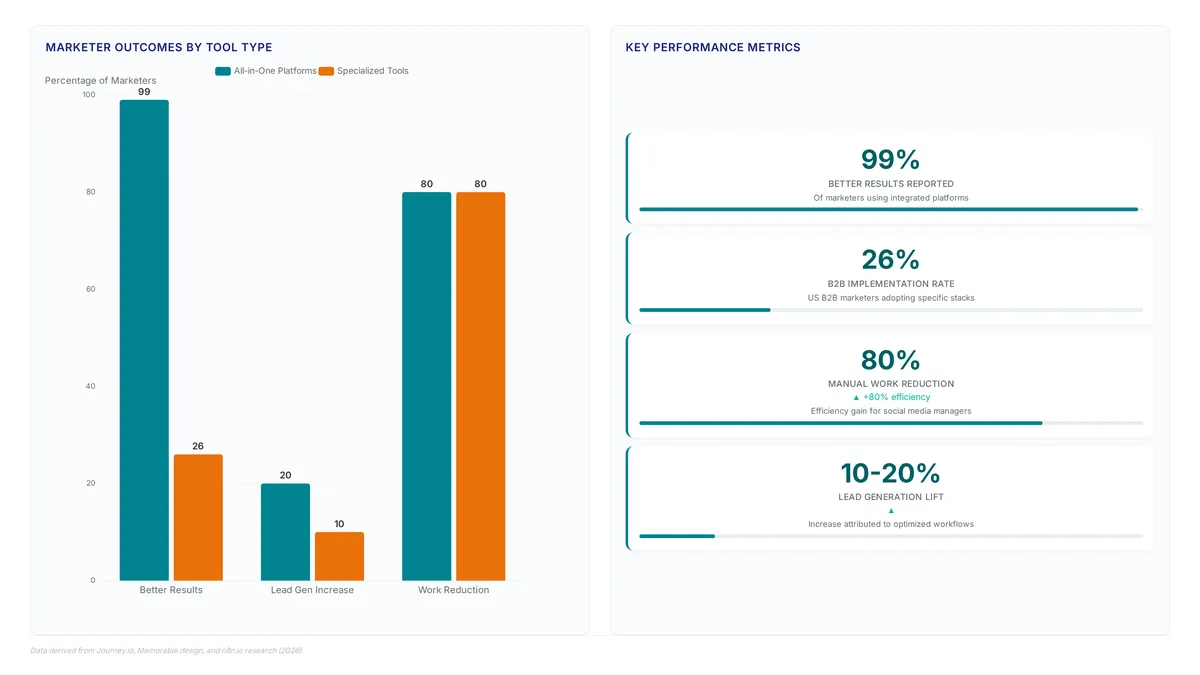
Modern content distribution platforms generally function as all-in-one solutions for brands distributing content across traditional search and AI answer engines, or as specialized generation tools designed for content teams needing high-volume, multi-format output. The primary divergence lies in architectural scope versus generation velocity. Some systems prioritize unified visibility tracking and prompt-level brand consistency, whereas others emphasize bulk output capacities for diverse media formats.
Selection depends on whether the pipeline requires distributed intelligence or raw throughput.
| Feature | Unified Platform Approach | Specialized Generator Approach |
|---|---|---|
| Primary Focus | All-in-one visibility | High-volume generation |
| Optimization Target | AI answer engines | Blogs and social ads |
| Workflow Style | Unified distribution | Multi-format batching |
Teams deploying automated workflows must decide if integrated brand tracking outweighs the flexibility of best-of-breed point solutions. However, campaigns demanding rapid iteration across disjointed media types may find the specialized generator more adaptable to fluctuating creative demands.
Content strategists should audit their current bottleneck before committing to either architectural pattern. If the bottleneck is purely output volume, the specialized tool provides the necessary scale.
When to Choose Specialized Tools for Enterprise Share-of-Voice Tracking
Unlike tools focused solely on output velocity, these solutions quantify share-of-voice by comparing visibility against competitors over time. Marketing leaders apply these competitive benchmarking capabilities to understand their specific AI search footprint relative to category rivals. Such data directly informs content investment decisions rather than relying on anecdotal evidence of brand mentions.
| Dimension | All-in-One Platforms | Specialized AI Tools |
|---|---|---|
| Primary Output | Unified workflow management | Granular visibility metrics |
| Data Structure | Aggregated channel stats | Reportable competitive sets |
| Strategic Value | Operational consistency | Investment justification |
Without granular comparison, teams cannot distinguish between general AI chatbot usage and actual brand preference. Chatbots handle tasks efficiently, but they do not inherently provide the competitive context required for enterprise strategy.
The limitation of broad platforms is their tendency to aggregate data, masking specific competitive losses in AI answer engines. Teams should choose based on whether the immediate bottleneck is production volume or strategic clarity.
Selecting the Right Stack for Content Distribution
Integrated systems address AI visibility tracking across multiple platforms while generating content via specialized agents. Specialized generators serve operators prioritizing bulk generation velocity for high-volume blog and social formats over unified workflow control.
Specialized visibility tools fill the enterprise gap by providing structured, reportable data on share-of-voice metrics rather than simple appearance confirmation. Marketing leaders use these competitive benchmarks to quantify their AI search footprint relative to category rivals over time. Without such specific data, teams cannot accurately align content investment with actual market presence shifts.
| Dimension | All-in-One Stacks | Specialized Generators | Visibility Specialists |
|---|---|---|---|
| Primary Focus | Unified workflow | Output volume | Competitive metrics |
| Data Granularity | Cross-platform | Format-specific | Share-of-voice |
| Automation Scope | End-to-end | Creation only | Monitoring only |
Evaluating the stack against the specific bottleneck, creation speed, distribution friction, or measurement blind spots, is critical. The correct choice balances immediate output needs with long-term visibility requirements.
Implementing Bulk Generation and Optimization for AI Search
Defining the AI-Driven Distribution Pipeline Architecture
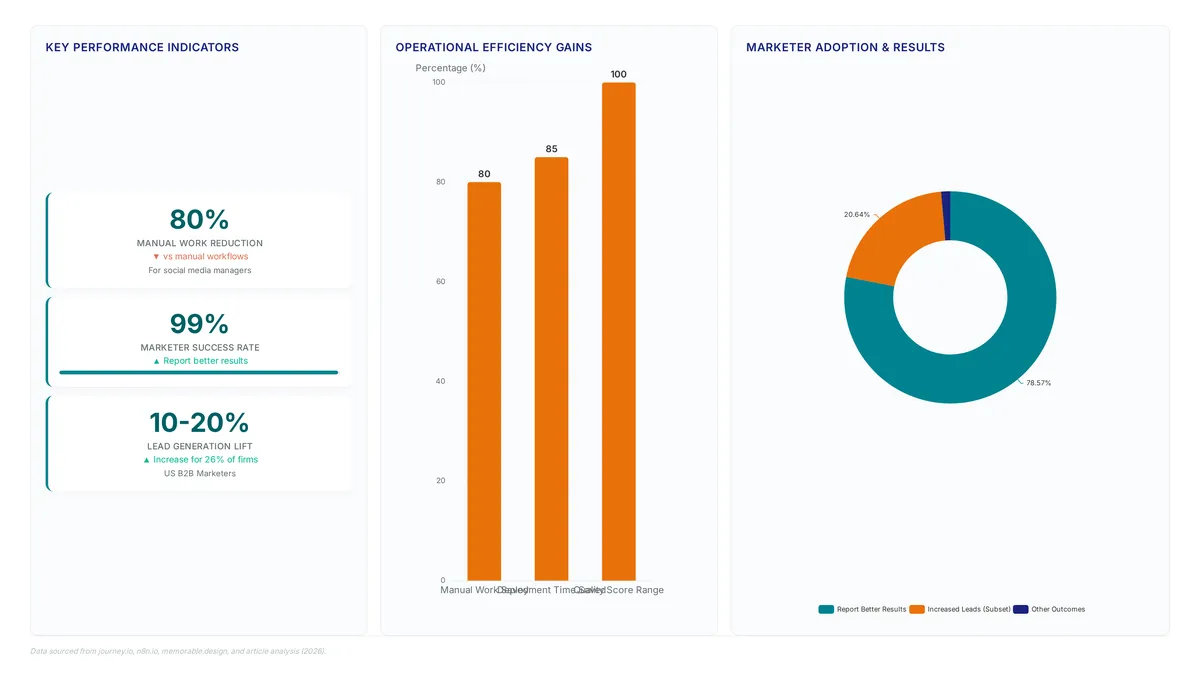
Predictive engines using emotion-aware analytics now replace manual scheduling to chain generation steps for simultaneous multi-platform delivery. Legacy manual distribution fails because it depends on consistent time, energy, and mental bandwidth, which are often limited resources. This structural shift demands a workflow where AI handles the execution layer, formatting, scheduling, and distribution, allowing teams to focus on strategy and creativity.
Implementing bulk content generation uses AI-driven batch creation to generate hundreds of content variations at once, reducing the need for manual edits. Operators can define workflows that ingest source data, generate platform-specific variations with appropriate formatting and messaging, and schedule them across connected accounts at optimal times. These systems validate content against platform-specific constraints, such as character limits and hashtag strategies, based on audience behavior patterns.
| Legacy Workflow | AI-Driven Pipeline |
|---|---|
| Manual copy-paste | Automated chaining |
| Single platform focus | Multi-channel parallel publishing |
| Static templates | Flexible template adaptation |
| Post-publish editing | Pre-flight validation |
Generation speed conflicts with brand safety. While AI simplifies processes, maintaining specific tone and consistency requires human oversight to protect strategic judgment. Unregulated generation can lead to generic outputs if prompt engineering and source data quality are not prioritized. The architecture must prioritize precision and E-E-A-T signals to maintain visibility.
Setting up automated content publishing involves configuring these validation layers within the distribution node. Teams should deploy custom workflows that document every step manually before automating mechanical tasks, ensuring the process is not broken before acceleration. This approach ensures that only verified, optimized assets reach the public index.
The definitive advantage of this architecture lies in its ability to adapt placement dynamically based on real-time relevance signals. Automated solutions provide the necessary framework to operationalize these complex, multi-step pipelines, handling everything from formatting to timing without requiring custom code for every new channel integration.
Executing Bulk Generation Workflows with Reduced Manual Effort
Automating the transition from raw draft to published asset notably reduces the manual effort previously consumed by repetitive formatting and channel-specific scheduling. This efficiency gain allows teams to shift focus from mechanical distribution to strategic definition and storytelling. The workflow begins by ingesting and generating variations tailored for distinct platform constraints before human review occurs.
Operators can configure the pipeline to analyze performance metrics to identify patterns and optimize content strategies. GEO optimization and SEO routines can be integrated to ensure technical readiness, such as validating keyword usage and meta descriptions, prior to publication.
| Workflow Stage | Manual Action | Automated Replacement |
|---|---|---|
| Drafting | Typing variations | Bulk generation |
| Optimization | Keyword insertion | Rule-based injection |
| Publishing | Copy-paste scheduling | Parallel API calls |
| Validation | Spot checks | Performance analysis |
Build SEO checks directly into the generation prompt rather than treating optimization as a separate post-process step. Configure the system to validate content against on-page SEO requirements and governance standards before the content reaches the publishing queue. This approach prevents low-quality drafts from consuming downstream review capacity.
However, relying solely on automation risks generating voluminous but shallow content that lacks the nuance required for high-value AI search visibility. Teams often overlook that increasing output volume without upgrading source data quality simply accelerates the production of irrelevant material.
By integrating these controls, organizations can scale content production efficiently while maintaining quality and consistency. The immediate next step is to audit your current draft rejection rate and establish a baseline quality score for your existing inventory.
Validation Checklist for Fixing Low Visibility in AI Search Results
Correcting low visibility in AI search results requires verifying that distribution strategies exceed basic social sharing.
| Checkpoint | Manual Approach | Automated Standard |
|---|---|---|
| Distribution Scope | Single-platform posting | Multi-channel parallel publishing |
| Optimization | Post-hoc editing | Pre-publish GEO optimization |
| Validation | Visual inspection | Automated relevance scoring |
Operators must confirm their pipeline injects brand context before generation begins. Without prompt-level tracking, AI models may default to generic training data, omitting specific brand solutions entirely. Data indicates that 99% of marketers report improved results when using chatbots as part of their content distribution strategy. This statistic shows the necessity of integrating brand signals directly into the generation workflow rather than treating distribution as an afterthought.
A limitation arises when teams scale volume without corresponding quality gates; high-velocity output of unoptimized content dilutes brand authority across AI surfaces. Solutions address this by enforcing strict quality gates that reject drafts failing semantic relevance thresholds before they reach publication queues. The cost is initial configuration complexity, but the alternative is total invisibility in answer engines. Teams should audit their current workflow to ensure bulk generation processes include these validation steps. Without automated verification, scaling content production only accelerates the spread of unbranded, generic answers.
About
Hannah Brooks, Marketing Operations Lead at Enterium, specializes in the architecture of scalable content pipelines. Her daily work involves rigorously evaluating AI tooling stacks and engineering the governance frameworks required to move from experimental generation to production-grade distribution. This operational focus makes her uniquely qualified to analyze content distribution, where the challenge lies not in creating text, but in orchestrating reliable, multi-platform publishing workflows. At Enterium, a B2B publication dedicated to documenting how teams build and scale content with LLMs, Hannah applies these same principles to ensure brand visibility and SEO optimization are measurable outcomes rather than hopeful metrics. Her analysis connects the theoretical potential of AI search visibility to the practical realities of martech stack design. By focusing on reproducible steps and concrete workflow orchestration, she provides the technical clarity needed to implement automated content workflows that withstand the demands of modern B2B marketing operations.
Conclusion
Scaling content velocity without embedded validation creates a critical operational debt where generic output actively erodes brand authority. As the industry shifts toward predictive engines using emotion-aware analytics by 2027, static distribution models will fail to meet relevance thresholds required for visibility. Organizations must transition from post-hoc editing to pre-publish optimization that injects specific brand context before generation begins. Relying on manual checks or single-platform posting is unsustainable when automated systems demand multi-channel parallel publishing and semantic precision. The cost of ignoring this shift is lower engagement but total invisibility within answer ecosystems.
Teams should immediately implement automated relevance scoring to reject drafts that lack distinct brand signals before they enter publication queues. Start by auditing your current draft rejection rate this week to establish a baseline quality score for your existing inventory. This data reveals whether your workflow produces assets ready for predictive distribution or merely adds noise to the system. Prioritize solutions that enforce these quality gates natively rather than bolted on after creation. Enterium provides the necessary infrastructure to embed these validation controls directly into your generation pipeline, ensuring every asset meets the rigorous standards of modern content distribution platforms. Secure your brand's presence by validating relevance at the source rather than attempting to fix generic output after it dilutes your market position.
Frequently Asked Questions
Most marketers use chatbots but lack targeted workflows for answer engines. Although 99% of marketers report better results, generic publishing fails to secure visibility in modern AI search environments without specific architectural changes.
Autonomous agents eliminate latency by formatting content for multiple platforms instantly. This automation allows 99% of marketers to report better results by ensuring messages fit specific channel constraints without manual intervention or scheduling delays.
Bulk generation often creates semantic noise that retrieval systems ignore completely.
Manual distribution causes semantic drift where core messages get lost across channels.
Teams must deploy systems that validate content against semantic benchmarks before publication.
References