Automated content workflow: 13 agents explained
Thirteen specialized AI agents now handle research, writing, and optimization tasks within advanced content fleets. This shift confirms that automated content workflow systems have evolved from simple schedulers into complex, multi-agent architectures capable of end-to-end production. Modern marketing no longer relies on linear human editing chains but instead deploys coordinated digital workforces to maintain speed and accuracy.
Readers will examine the specific architecture of AI-driven systems that manage these parallel processing tasks without human bottlenecks. The analysis details how enterprise content governance models adapt when machines handle the bulk of drafting and initial scoring. We will also compare how different configurations of content workflow automation serve distinct needs for sales teams versus broad marketing departments.
The industry has moved past basic templating, with sources like Bynder noting that true efficiency requires clear structure and real-time collaboration features alongside raw generation power. While some solutions focus merely on approval paths, the leading edge involves deep integration where brand voice consistency is enforced algorithmically before a human ever sees the draft. Understanding these mechanics is necessary for any organization attempting to scale output in 2026 without collapsing quality or compliance.
The Role of Automated Content Workflow Software in Modern Marketing
Defining Automated Content Workflow Software and AI Agents
Automated content workflow software orchestrates ideation, creation, optimization, publishing, and distribution with minimal manual intervention. Unlike discrete tools that address single tasks, this architecture connects disparate stages into a continuous pipeline where data flows from research to publication. The definition hinges on the reduction of friction between drafting and deployment, ensuring that content moves through governance gates efficiently.
Specialized AI agents function as the autonomous workforce executing these pipelines. Rather than relying on a single model for all tasks, modern implementations apply suites of AI-powered quality agents dedicated to research, writing, and optimization. This separation of concerns allows distinct agents to handle fact-checking, tone adjustment, and SEO scoring independently before assembly.
Brand voice enforcement operates as a persistent constraint layer across all agent activities. Instead of applying style rules post-generation, the workflow injects style guidelines into the prompt context of every agent, ensuring consistency from the first draft. This approach prevents the drift often seen when multiple humans or uncoordinated models contribute to a single project. However, rigid enforcement can stifle creativity if the guardrails are too narrow, requiring operators to balance strict adherence with allowance for topical nuance.
Industry analysis suggests mapping these agent roles explicitly before configuring automation rules. Without set boundaries for each agent, the system may produce coherent but off-brand outputs that require costly manual rework.
Applying AI Visibility Tracking and IndexNow for Real-Time Optimization
AI visibility tracking monitors brand presence across substantial generative models, including ChatGPT, Claude, Perplexity, Gemini, and Copilot. This mechanism operates by continuously querying these engines to detect when and how a brand appears in synthesized answers. The evidence for this shift is clear: a significant majority of digital leaders plan to increase investment in Answer Engine Optimization (AEO) in 2026 as discovery moves from static rankings to flexible responses. A limitation exists because model outputs are non-deterministic; a brand might appear in one query variation but vanish in another, requiring statistical sampling rather than single-point checks. For operators, this means visibility is no longer binary but probabilistic, demanding continuous measurement instead of periodic audits.
To address latency in traditional search, the workflow integrates IndexNow protocols for immediate content notification. This approach bypasses standard crawl cycles, enabling CMS auto-publishing with instant URL updates to supported search indexes. While IndexNow accelerates discovery, it does not guarantee ranking; the content must still satisfy quality thresholds to remain indexed. Teams asking if they should use AI content automation must recognize that speed without accuracy compounds errors at machine scale.
| Feature | Function | Operational Impact |
|---|---|---|
| Model Monitoring | Tracks mentions in substantial LLMs | Detects brand drift in real-time |
| IndexNow Integration | Pushes sitemap updates instantly | Reduces indexing lag from days to minutes |
| Agent Coordination | Orchestrates specialized tasks | Separates research from drafting logic |
Accelerating production via a fleet of specialized AI agents increases throughput, yet rapid deployment raises the risk of propagating unverified claims before human review. Best practices recommend implementing a mandatory human-in-the-loop gate for high-stakes messaging before any automated publishing trigger fires, ensuring the remaining 20% of the process relies on human input to refine tone and verify facts.
Autopilot Mode vs Brand Voice Training
Autopilot Mode executes hands-off creation pipelines while Brand Voice Training enforces stylistic constraints through few-shot learning. Operators choosing between autonomous agent fleets and style fine-tuning face a structural trade-off between throughput velocity and granular governance control. Some approaches prioritize speed by deploying autonomous agents that bypass manual drafting steps entirely. This approach suits teams needing rapid volume expansion where perfect stylistic adherence is secondary to coverage.
Conversely, other platforms require an upfront investment to ingest existing assets and learn specific terminology patterns. The mechanism relies on vector similarity to match new outputs against established brand guidelines before publication.
| Feature | Autonomous Approach | Training-Heavy Approach |
|---|---|---|
| Primary Mechanism | Autonomous agent fleets | Style fine-tuning |
| Human Intervention | Minimal post-generation | High initial setup |
| Best Use Case | Scale and speed | Enterprise consistency |
| Governance Model | Post-hoc filtering | Pre-flight enforcement |
The cost of strict voice training is latency; models cannot generate until the style profile is fully calibrated. However, unguided autonomy risks brand drift where high-volume outputs diverge from core messaging identity over time. Teams should select autonomous modes for experimental campaigns requiring massive iteration counts. Conversely, the training-heavy workflow is often recommended for regulated industries where deviation carries reputational risk. The decision ultimately rests on whether the organization values immediate scale or long-term stylistic fidelity.
Inside the Architecture of AI-Driven Content Automation
Real-Time SEO Scoring Mechanics via SERP Analyzer
Real-time scoring functions by building SEO checks directly into the workflow rather than treating optimization as a separate step. The mechanism automates research, outlines, and on-page SEO while maintaining E-E-A-T and governance standards. These extracted values form a competitive baseline against which the system scores draft content continuously. the provider analyzes top-ranking pages for target keywords to guide word count, keyword usage, headings, and structure.
- The analyzer audits current content production processes to identify bottlenecks.
- It aggregates structural data such as heading validators and citation tags.
- The system calculates quality based on alignment with brand voice and audience fit.
Keyword usage aligns with what search engines currently reward for that specific topic through this process. A writer sees immediate feedback on whether their content meets set acceptance tests before review.
Relying solely on these aggregate scores creates a risk of content homogenization across the web. If every operator optimizes strictly to the median of existing leaders, the resulting corpus lacks the unique angularity required to displace them. The limitation is that the tool measures presence, not semantic authority or original insight.
| Metric Type | Analyzer Action | Operator Risk |
|---|---|---|
| Word Count | Enforces density limits | Bloat without substance |
| Term Frequency | Requires citation tags | Unnatural phrasing |
| Structure | Runs heading validators | Generic information architecture |
For teams deploying automated content workflows, this mechanic serves as a quality gate rather than a definitive success predictor. The score indicates compliance with current norms, not superiority.
Treat the output as a pass/fail check for basic optimization, not a guarantee of ranking improvement.
Building Custom Pipelines with App Integrations
Technical teams construct bespoke automation by linking AI drafting agents to distribution endpoints through conditional logic gates. The platform enables multi-step automated workflows that route content based on specific metadata attributes rather than simple triggers. Zapier offers 6,000+ app integrations to connect AI writing tools with CMS, email, and distribution platforms.
- The workflow ingests a draft and evaluates it against brand voice embeddings.
- Conditional filters direct high-scoring content to production CMS instances immediately.
- Low-scoring drafts trigger a notification loop for human editorial review before publishing.
This architecture allows operators to track AI model mentions across generated text by inserting verification steps before final publication. A persistent challenge involves the latency between publishing and search engine content indexing, which can delay performance feedback loops. Unlike static batch processes, event-driven pipelines mitigate this by triggering immediate crawl requests via protocol extensions like IndexNow where supported. The constraint is increased complexity in error handling; a single failed node in a long chain can halt the entire distribution cycle if dead-letter queues are not configured.
| Feature | Simple Trigger | Conditional Pipeline |
|---|---|---|
| Logic Depth | Single event | Multi-stage filter |
| Error Handling | Manual retry | Automated reroute |
| Scalability | Low | High |
Operators must validate that conditional logic accounts for API rate limits on downstream targets to avoid throttling. The structural rigidity of these pipelines ensures consistency but requires rigorous initial testing of every branch condition.
Validation Checklist for Sight AI Autopilot and GEO Optimization
Verify GEO optimization status before enabling CMS auto-publishing to prevent indexing unverified drafts. Sight AI combines AI-powered content creation with visibility tracking to manage this risk centrally. The tool includes built-in SEO and GEO optimization for traditional search and AI-generated responses. Operators must confirm the system scores writing against top-ranking competitors before release.
- Enable real-time SEO scoring to match structural benchmarks of current leaders.
- Activate brand voice filters to enforce tone consistency across all agents.
- Test automated publishing workflows in a staging environment first.
Speed and accuracy create tension in these pipelines. Rushing automated content publishing without validation gates often triggers error in CMS auto-publishing logs, halting the entire queue. This failure mode forces manual intervention that negates the efficiency gains of the agent system.
| Feature | Traditional SEO | GEO Optimization |
|---|---|---|
| Target | Search Engines | AI Models |
| Metric | Keyword Density | Answer Relevance |
| Update | Real-time | Periodic |
Enterium recommends validating AI visibility tracking outputs weekly to ensure alignment with model updates. Neglecting this step allows drift where content remains technically correct but fails to appear in generated responses. The cost of skipping this check is invisible loss of traffic rather than a stark system error. Teams should treat GEO optimization as a distinct configuration layer separate from standard keyword logic. Only after confirming both layers function correctly should the autopilot mode engage for live traffic. This disciplined approach maintains enterprise content governance while scaling output volume safely.
Comparing Leading AI Content Tools for Enterprise and Sales Teams
Defining Enterprise AI Content Platforms and Governance Capabilities
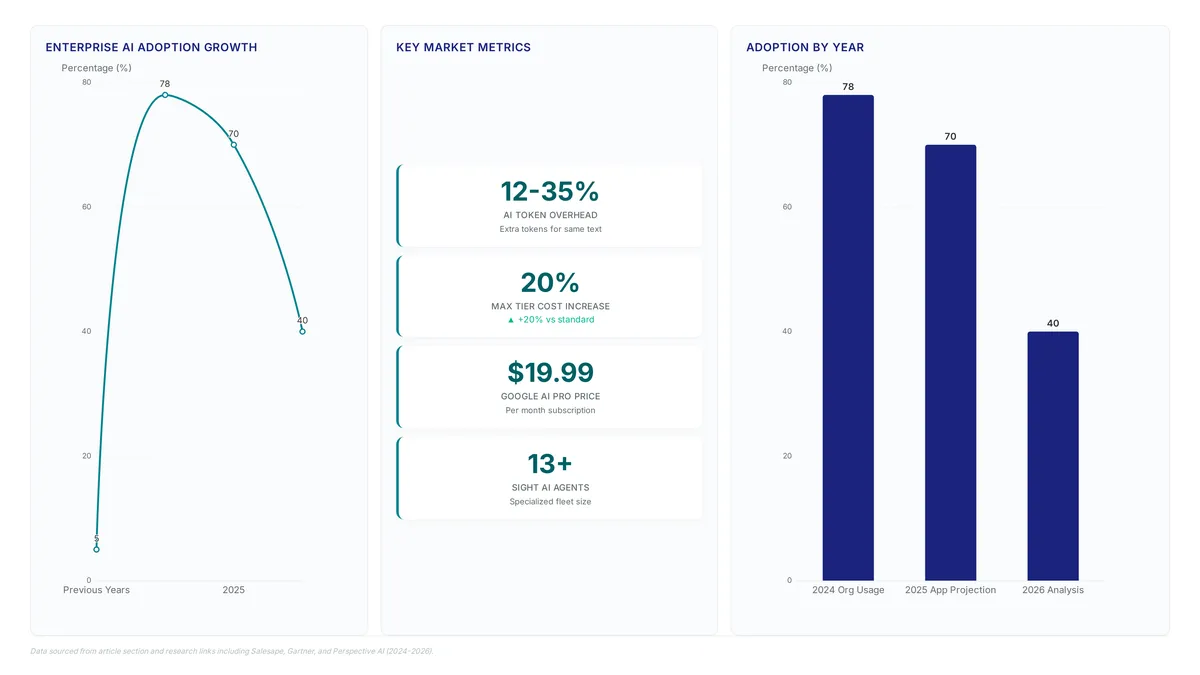
Enterprise AI content platforms separate themselves from consumer generators through governance capabilities that enforce organizational rules instead of individual prompts. These systems prioritize brand voice consistency by embedding style guides directly into the generation pipeline, guaranteeing output aligns with corporate standards before publication.
| Feature | Consumer Generators | Enterprise Platforms |
|---|---|---|
| Style Enforcement | Manual prompt engineering | Automated terminology management |
| Workflow Scope | Single prompt response | Campaign level coordination |
| Compliance | Post generation review | real-time policy flagging |
Digital leaders increasingly plan to increase investment in AEO as discovery shifts from rankings to AI-generated answers, making this structural rigidity a strategic necessity for scale. Organizations risk diluting their market position through inconsistent messaging across high-volume outputs without these controls. The limitation lies in balancing strict adherence with creative flexibility, since overly aggressive filters can stifle useful variation in sales collateral. This calibration defines the operational maturity of modern marketing stacks.
Applying Knowledge Bases for Sales Team Automation Workflows
Sales teams deploy centralized repositories to house product specifications and messaging guidelines for immediate agent access. This architecture eliminates manual repetition by feeding verified context directly into pre-built workflow templates for outbound emails and product descriptions. Specialized sales platforms target flexible sales collateral where speed and voice consistency drive conversion, unlike tools that optimize static pages for search visibility. These systems enforce brand voice consistency by restricting generation parameters to the approved knowledge base, preventing hallucinated claims in customer-facing communications.
This specialization creates a functional cost: the tool excels at internal knowledge synthesis but lacks the external SERP competitor analysis required for organic growth strategies. Operators must choose based on whether the primary bottleneck is content volume or search ranking depth.
| Feature Dimension | Specialized Sales Tools | SEO Optimization Platforms |
|---|---|---|
| Primary Objective | Sales collateral speed | Organic search ranking |
| Context Source | Internal knowledge base | External SERP data |
| Optimization Target | Brand voice adherence | Keyword density & structure |
| Best Fit Use Case | Outbound email batches | Landing page creation |
Experts recommend this configuration specifically for go-to-market teams managing high-velocity outreach where message accuracy outweighs search engine optimization requirements. The operational gain is measurable in reduced review cycles rather than improved organic traffic metrics. Teams should implement this workflow only after auditing their existing product documentation for completeness.
AI Visibility Tracking Versus the provider SERP Analysis
Specialized AI visibility tools monitor how AI platforms discuss a brand to provide visibility into this emerging traffic channel. SEO platforms function as content optimization tools that score writing against top-ranking competitors for traditional search. The distinction defines the operational target: AI visibility tracking versus SERP competitor analysis. Teams evaluating solutions must recognize that answer engines and keyword rankings require divergent data inputs.
| Dimension | AI Visibility Focus | SEO Platform Focus |
|---|---|---|
| Primary Metric | AI model citation frequency | Keyword density and structure |
| Optimization Target | LLM context windows | Search engine crawlers |
| Output Goal | Brand mention in answers | High organic ranking |
Strategic allocation of resources depends on this divergence. Many digital leaders plan to increase investment in AI visibility, yet traditional search remains a volume driver for many sectors. The content workflow automation architecture must support both without conflating their success metrics. A document optimized strictly for traditional scoring may fail to appear in an LLM's generated response.
Marketing teams cannot rely on a single optimization pass for both channels. This dual-path approach prevents the degradation of brand authority in either channel.
| Component | AI Visibility Tools | SEO Platforms |
|---|---|---|
| Data Source | AI platform outputs | Search engine results |
| Key Action | Monitor brand sentiment | Analyze competitor gaps |
Select the toolset that matches the primary growth vector rather than forcing a unified but ineffective strategy.
Implementing Scalable Workflows for Brand Consistency and SEO Growth
Establishing Brand Voice and Campaign Workflows
Effective AI content workflows automate research, outlines, and on-page SEO while maintaining governance and measurable content ROI. Teams gain capacity for strategy, storytelling, and strengthening E-E-A-T signals that build trust by handing off these core elements to automation. Successful groups begin by auditing current production processes to locate bottlenecks and repetitive tasks ripe for optimization. This assessment reveals where automation delivers the greatest impact without sacrificing quality.
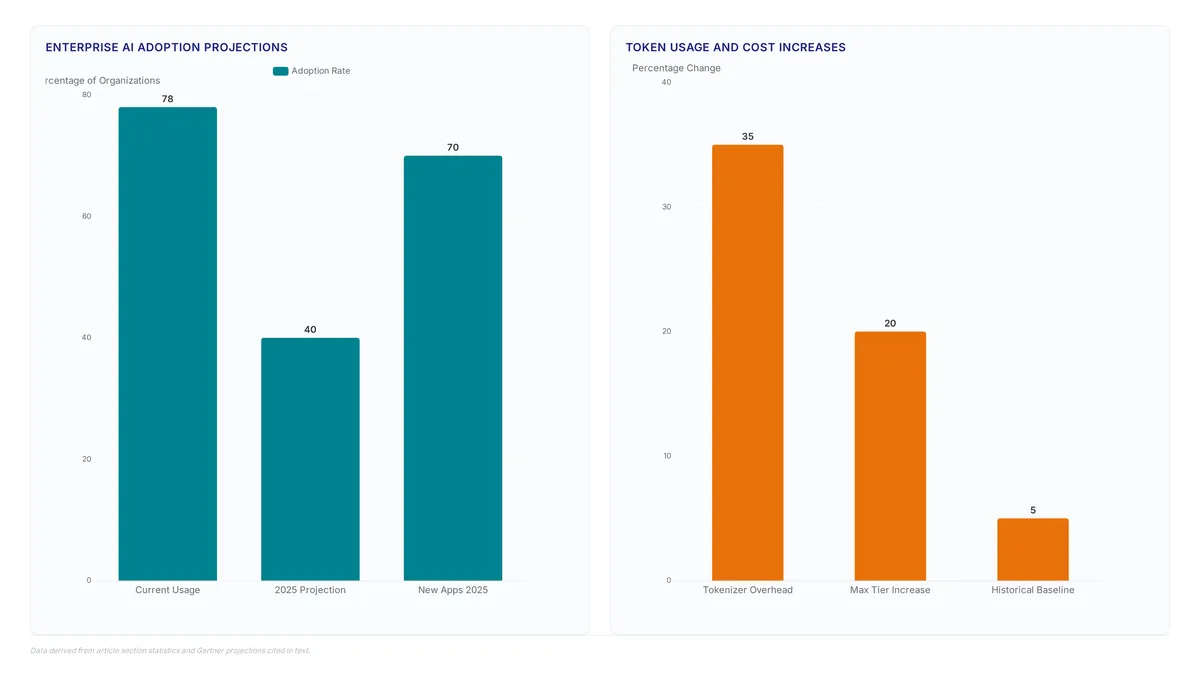
Rigid automation accelerates output yet suppresses necessary nuance when initial parameters lack variety. Operators must curate the source library with care because the system replicates patterns exactly as presented in the seed content. Relying on unverified samples risks codifying inconsistencies rather than fixing them. Governance happens before the first generation cycle, not during the editing phase. Establishing style guidelines upfront prevents the need for mass retroactive edits when scaling volume. High-velocity production then aligns with broader organizational goals instead of simply increasing noise.
Automating Publishing and Distribution Loops
Automation workflows for an AI content pipeline connect ideation, programmatic SEO, drafting, review, publishing, and distribution loops. Technical product teams build these workflows to treat content as a build pipeline with versioned artifacts and acceptance tests. Operators define the frequency and topic clusters, allowing the system to execute the full draft-to-publish loop autonomously. Distribution and scheduling tools reach the right audience at the right time by automating formats for different platforms. ContentBot features an Autopilot Mode for scheduled creation and publishing, enabling consistent output without manual intervention.
Full automation conflicts with editorial governance when hands-off publishing propagates subtle brand drift due to insufficient granularity in voice parameters. An autonomous agent acting on broad instructions may deviate from detailed style guidelines over time, unlike manual workflows where a human reviews every draft. Defining strict campaign contexts before enabling automated publishing locks the agent into a specific stylistic boundary.
| Feature | Function | Integration Target |
|---|---|---|
| Automated Workflows | Connect drafting, review, and publishing | CMS and Distribution Channels |
| Unified Calendar | Aggregates content and tasks | Marketing Planning Platforms |
| Direct Integration | Preserves formatting and structure | CMS Editors |
Organizations implementing this architecture often overlook the necessity of post-publish validation loops, assuming the initial configuration guarantees perpetual accuracy. Minor deviations in tone compound without periodic audits of live output, requiring significant remediation effort later. A review cycle where a human operator samples automated posts against the original brand profile catches drift early. This approach balances the speed of AI generation with the reliability of human oversight to maintain quality at scale. ContentBot offers WordPress Integration for direct publishing with formatting and images, ensuring visual consistency across the site.
Checklist for Deploying Infobase Repositories and GTM Templates
Initialize the repository by uploading brand guidelines to establish a baseline for tone and terminology. This central knowledge base allows the system to reference specific style rules rather than relying on generic prompt engineering for every request. Many platforms offer pre-built workflow templates that activate immediately upon configuration:
- Sales emails
- Product descriptions
- Landing page copy
- Social content
- Blog intros
Selecting a Go-To-Market (GTM) template reduces initial setup time by providing validated structures for common marketing scenarios. Operators must verify that the selected template aligns with current campaign objectives before bulk generation begins.
Rapid scaling conflicts with maintaining unique brand differentiation when using shared template architectures. Relying entirely on default structures risks producing output that mirrors competitor patterns found in the model's training data. Auditing the first ten generated assets against brand standards before approving the workflow for production use is necessary. This validation step prevents the propagation of subtle voice drift across large content batches. Successful deployment requires treating these templates as starting points for customization rather than final solutions. Teams should expect to iterate on the base structures to inject specific market insights that generic models miss.
About
Daniel Reyes, Head of Content Engineering at Enterium, architects the exact production pipelines discussed in this analysis of automated content workflow software. With over a decade in data and ML platform engineering, Daniel specializes in building end-to-end AI systems that move beyond theoretical generation to reliable, governed output. His daily work involves configuring RAG systems, establishing vector stores, and designing evaluation harnesses that enforce brand voice consistency and real-time SEO scoring before publication. This technical background allows him to critically assess the 13 agents outlined in this article, distinguishing between marketing hype and functional pipeline architecture. At Enterium, a B2B publication dedicated to documenting how teams scale content with LLMs, Daniel applies these engineering rigor principles to every workflow. He connects abstract concepts like enterprise content governance to concrete implementation steps, ensuring that the recommended tools for CMS auto-publishing and AI visibility tracking function within real-world constraints. His analysis grounds complex marketing workflow automation strategies in reproducible, vendor-neutral engineering practices.
Conclusion
Scaling content production reveals that voice drift becomes a critical failure point when human oversight drops below the necessary threshold. While AI agents may soon operate for extended periods without interruption, relying on them to run entirely unsupervised invites brand inconsistency that compounds rapidly across thousands of assets. The operational cost of remediating off-brand content far exceeds the time saved by skipping manual reviews. Organizations must treat automation as a force multiplier for human creativity, not a replacement for strategic judgment.
Deploy these systems with a strict mandate: humans must curate the initial repository and validate the first batch of outputs against core brand guidelines before any bulk generation begins. Do not accept default templates as final solutions; they require customization to reflect unique market insights that generic models cannot replicate. This validation phase ensures that the remaining workflow relies on human input where it matters most, preventing the erosion of brand identity.
Start this week by auditing your current template library to identify which structures lack specific brand constraints. Remove generic placeholders and inject your distinct terminology before connecting any generation tool to your live publishing environment.
Frequently Asked Questions
Advanced systems deploy thirteen specialized agents to handle research, writing, and optimization tasks. This multi-agent architecture replaces linear editing chains, allowing distinct tools to manage fact-checking and scoring independently before final assembly.
Effective tracking monitors brand presence across six major models including ChatGPT, Claude, and Gemini. Since model outputs are non-deterministic, operators must use statistical sampling rather than single-point checks to detect brand drift accurately.
IndexNow accelerates discovery by notifying search engines instantly but does not guarantee ranking. Content must still satisfy strict quality thresholds to remain indexed, meaning speed without accuracy compounds errors at machine scale.
Workflows inject style guidelines directly into the prompt context of every agent to ensure consistency. This prevents brand drift by enforcing parameters as structured data before a human ever sees the initial draft.
Undefined boundaries cause systems to produce coherent but off-brand outputs that require costly manual rework. Teams must map agent roles explicitly to avoid generating content that fails enterprise governance standards.
References