AI content strategy: Skip drafting, start auditing
Just 11% of content marketers draft articles using AI. The rest know better. They treat the technology as a "magical typewriter" for auditing and research, not a ghostwriter. Andy Crestodina notes the split: purists reject the tool, adopters embrace it, but the data shows most professionals limit use to ideas and editing.
This guide skips the hype. You will learn to execute a blog main page audit ensuring categories align with topics, not file types. We will optimize the email signup call to action, the single most critical element for converting blog traffic. You will also discover methods for topic research that pinpoint specific content formats and performance gaps.
Reports claim 78% of businesses use generative AI in some functional area. Here, the application is surgical. We provide access to 22 AI prompt templates designed for digital marketing tasks like conversion optimization and analytics. The typewriter is magical; the content retains credibility because human expertise drives the core argument.
Defining AI Content Strategy and Its Core Components
AI Content Methodology as a Magical Typewriter for Marketers
Marketers audit blog calls to action. Teams research topics to find market gaps. Editors check drafts against style guides. Analysts review metrics to refine selection. Enterium recommends treating every generated asset as a first draft requiring human verification. Skipping this oversight costs audience engagement and dilutes brand authority. The machine types; the human thinks.
Five Strategic Uses: Auditing Calls to Action and Topic Research
High-value AI strategy prioritizes auditing blog calls to action and refining topic research over drafting full articles. Andy Crestodina identifies five specific applications where automation adds value without replacing human insight: auditing blog CTAs, conducting topic research, performing initial edits, finding publishing partners, and analyzing performance data. Most marketers apply the technology for these ideas and editing tasks rather than full composition. Platforms like Enrich Labs enable this by offering full-stack execution that spans SEO research through performance reporting in a single system.
The goal for topic research involves identifying gaps for original research topics that lack current market coverage. High-maturity organizations prioritize original research based on first-party data because generative models cannot replicate proprietary human experience. This approach ensures content carries unique authority rather than generic synthesis. Brands thriving in 2026 will use AI to increases this creativity rather than replace the core human insight required for strong opinions.
| Strategic Use Case | Primary Objective | Tool Category Example |
|---|---|---|
| Blog CTA Audit | Maximize list growth | Vision-based analyzers |
| Topic Research | Find data gaps | Strategic agents |
| Initial Edits | Align with best practices | Text editors |
| Partner Discovery | Identify PR opportunities | Search engines |
| Performance Analysis | Optimize channel fit | Analytics platforms |
Scaling output while maintaining an authentic voice creates friction. Some teams deploy the provider for pure content generation, yet broader strategy demands tools that handle distribution logic. Enterium recommends restricting automated writing to initial edits and data sorting while keeping strong opinion pieces entirely human-authored. This governance model prevents the dilution of brand authority while still capturing efficiency gains in the research phase.
Brand Safety Blockers Preventing Core AI Integration
Only 13% of marketing leaders consider AI core to operations due to unresolved risk vectors. Usage approaches saturation, yet brand safety concerns prevent strategic reliance. Specifically, 60% of executives cite quality control as the primary barrier to deeper integration. This gap defines the difference between experimental usage and operational dependency.
The mechanism involves deploying automated agents to intercept outputs before publication. New Content Guardian implementations validate tone and factual accuracy against set guardrails. Consequently, Enterium recommends treating these tools as mandatory filters rather than final authors. The implication for network operators is clear: without a verified quality gate, scaling AI-written volume increases reputational liability. Human oversight remains the sole method to inject the original research and strong opinions that drive conversion. Skipping this verification step transforms efficiency gains into brand erosion risks. Speed conflicts with certainty; governance structures must prioritize the latter to achieve the former safely.
Mechanics of Topic Research and Content Organization
Defining Human-Only Thought Leadership Angles
Machines lack the lived experience required to form strong opinions, creating a hard ceiling for automated drafting. This technical reality separates generic text from genuine thought leadership, a format that only holds value when disagreement remains possible. High-maturity organizations prioritize original research based on first-party data precisely because standard AI operations cannot replicate proprietary human insight. Operators must distinguish three high-performing content types from generic how-to articles that offer no unique methods.
| Content Type | Human Requirement | AI Role |
|---|---|---|
| Original Research | Proprietary data collection | Identifying measurement gaps |
| Strong Opinion | Defensible point of view | Surfacing mundane triggers |
| New Angles | Strategic buyer alignment | Finding uncovered topics |
The workflow starts by asking AI to list mundane topics where a specific job title holds strong views. This probe reveals topic-to-CTA alignment gaps that generic generation misses. Relying solely on these prompts risks producing safe, agreeable content that fails to drive conversion. The cost is a portfolio of articles that any brand could have written, rendering them unmemorable and unlikely to be bookmarked. Enterium recommends treating AI as a tool to expose these hidden gaps rather than fill them with synthetic prose. Strategic tension lies in balancing efficiency with the need for distinct human perspective. If the output cannot be disagreed with, it is not thought leadership.
Executing the Watering Holes Prompt for Audience Discovery
Liza Adams, an AI Advisor at GrowthPath Partners, designed the Watering Holes prompt to map specific audience clusters rather than generic demographics. This application directs artificial intelligence to categorize real communities, publications, and influencers by their engagement potential. The workflow requires operators to input a target job title and request a structured output separating opportunity types such as newsletters, forums, or podcasts.
- Instruct the model to list concrete examples of where the audience learns.
- Request a table classifying each venue by format and access level.
- Demand three prioritized recommendations with a single-sentence strategic rationale.
| Opportunity Type | Engagement Mode | Strategic Value |
|---|---|---|
| Niche Newsletter | Direct Read | High intent, low noise |
| Industry Podcast | Passive Listen | Trust building via host |
| Technical Forum | Active Discussion | Real-time problem solving |
Marketers evolving into system directors are judged on prompt architecture rather than article volume. High-maturity organizations prioritize this type of original research because it relies on first-party data collection that standard generation cannot replicate. Verification presents a hurdle; AI may hallucinate obscure subreddits or defunct events without cross-referencing against live tools like Sparktoro. Consequently, the operator must validate every suggested venue before committing resources to outreach. Enterium advises treating the output as a hypothesis list requiring manual confirmation. Tension exists between broad discovery and focused execution; finding fifty venues matters less than engaging deeply with the top three. Human oversight ensures the selected watering holes align with brand safety standards and actual buyer behavior. Without this filter, teams risk diluting effort across irrelevant channels.
| Metric | Target |
|---|---|
| Venues Validated | 100% |
| Strategic Rationale | One sentence |
The final deliverable is not a list but a deployment plan for hyper-personalization efforts in 2026.
Topic-Based Versus Format-Based Content Organization
Organizing by topic clusters rather than format silos aligns content architecture with how search engines evaluate subject authority. General how-to articles lacking unique methods consistently underperform because they fail to provide the original research or strong opinion necessary for differentiation. High-maturity organizations now prioritize first-party data collection, recognizing that generic generation cannot replicate proprietary human experience (https://www.searchenginejournal.com/scaling-ai-content-is-the-1-enterprise-priority-how-do-you-scale-without-penalty/574518/).
| Dimension | Format-Based Organization | Topic-Based Organization |
|---|---|---|
| Primary Unit | Asset type (video, guide) | Subject matter expertise |
| Differentiation | Low (easily replicated) | High ( |
| Search Signal | Fragmented relevance | Compounded authority |
Structural risk involves misaligned buyer process mapping when categories reflect production workflows instead of user intent. Teams often default to format buckets because inventory management feels simpler than maintaining complex subject taxonomies. This approach fragments ranking signals across unrelated asset types, diluting the overall domain authority for specific technical subjects. Content strategists at Enterium observe that format-first structures force users to synthesize information across disjointed pages, increasing bounce rates on deep technical queries. Remediation requires auditing existing category slugs to ensure they reflect problems solved rather than media types produced. Shift the content gap analysis focus from missing formats to uncovered questions within core topics.
Els. Metric Target : : Venues Validated 100% Strategic Rationale One sentence. The fi.
Executing Blog Audits and Optimizing Conversion Paths
Defining the Blog Homepage Subscription Audit Prompt
Run the Blog Homepage Subscription Audit Prompt to extract three to five core topics, then check them against the primary email signup CTA. This script treats the signup box as the single most valuable asset on the page, demanding it reflect specific subject matter rather than generic invitations. Organizing by format like videos or webinars inherently weakens conversion because it fails to promise specific learning outcomes. Prompt architects must configure these checks to flag structural misalignments so the signup box aligns with best practices.
- Instruct the model to scan the homepage URL and extract the dominant thematic clusters.
- Evaluate whether the CTA copy explicitly references these extracted topics.
- Identify any reliance on format labels that obscure the actual value proposition.
Automated tools spot these disjointed signals fast, skipping the need for manual review of every page element. Broad appeal often clashes with specific relevance; generic CTAs attract noise while specific ones drive subscriptions. Prioritize topic clarity over visual polish during this evaluation phase.
Applying the Article Audit Prompt Scoring System
Run the audit prompt to generate an eight-criterion scorecard before any editor reviews a draft. This workflow forces the model to act as a strategist, assigning 1, 5 ratings across elements like CTA clarity and topic alignment rather than summarizing text. The output table must include columns for "What you observed" and "Specific fix" to ensure actionable feedback loops.
| Criterion | Score Range | Observation Focus | Fix Type |
|---|---|---|---|
| CTA Clarity | 🟥 1, 2 / 🟩 4, 5 | Specific, valuable product feel | Rewrite headline copy |
| Topic Alignment | 🟥 1, 2 / 🟩 4, 5 | CTA matches blog topics | Align promise with content |
| Proof and Trust | 🟥 1, 2 / 🟩 4, 5 | Credibility signals present | Add subscriber count |
| Organization | 🟥 1, 2 / 🟩 4, 5 | Topics vs. Formats | Rename categories |
A distinct point of view serves as the primary signal that content was not generated by generic algorithms, distinguishing high-value assets from commodity text. Relying solely on AI for this audit risks missing detailed brand voice deviations that only human editors detect. Configure the prompt to demand a "Single highest-use edit" to prioritize remediation efforts effectively. Many marketers apply AI tools for ideas and editing, yet few integrate scoring systems that validate thought leadership potential. Teams risk publishing polished but hollow content that fails to convert without this governance layer.
Checklist for Specific Descriptive Email Signup CTAs
Validate that the email signup CTA explicitly names the specific topics extracted from the page scan rather than using generic invitations. Category structures should align with subject matter expertise instead of sorting by format silos like videos or guides, since format-based organization weakens conversion potential. Confirm the presence of adjacent proof points that build immediate credibility for the content program.
- Extract the three to five dominant topics from the current page content.
- Verify the CTA headline reflects these specific subjects to avoid generic framing.
- Check that categories describe what the reader learns, not the media type used.
- Ensure trust signals appear directly next to the input field for maximum impact.
| Check | Requirement | Failure Mode |
|---|---|---|
| Topic Alignment | CTA names specific subjects | Generic "Subscribe" text |
| Organization | Categories match topics | Formats like "Webinars" |
| Credibility | Proof points visible | Missing subscriber counts |
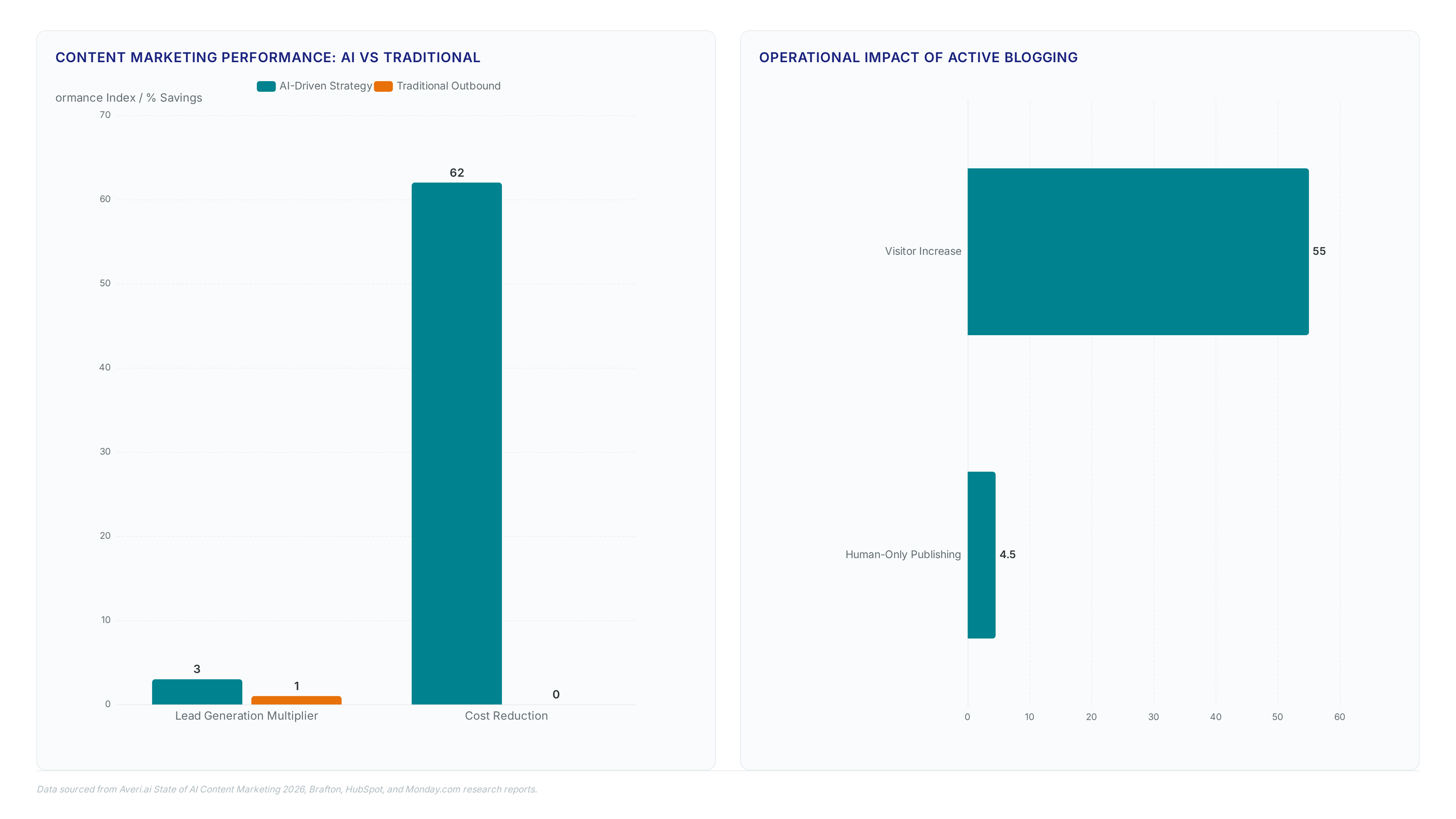
Prompt architects must configure audits to flag these structural misalignments to optimize list growth. Businesses maintaining active blogs receive significantly more website visitors than those without, making specific conversion paths necessary for capturing this traffic. Generic copy fails because it signals no relevance to first-time visitors who skim for specific value. Regular validation cycles help maintain high conversion standards by ensuring the signup box remains high on the page and aligned with email signup form best practices.
Measuring ROI Through Performance Analysis and Strategic Refinement
Defining the Search vs Social User Mindset Gap

Search visitors arrive busy, hunting specific answers to immediate technical questions, whereas social media users scroll bored, seeking entertainment or novel concepts to pause their flow. This behavioral divergence dictates that topic research must separate intent-driven queries from discovery-based engagement before deploying automation. Applying a single content marketing AI prompt across both channels often yields generic results because the underlying user jobs differ notably. Some topics naturally perform improved in specific channels, requiring operators to separate high-intent search traffic from low-intent social browsing during analysis.
| Dimension | Search User (Busy) | Social User (Bored) |
|---|---|---|
| Primary Goal | Solve immediate problem | Discover novel ideas |
| Attention Span | Seconds to find answer | Minutes to explore |
| Content Fit | Direct how-to, data | Strong opinion, visuals |
Platforms like Enrich Labs address this by offering full-stack execution that adapts content tone for SEO research versus social adaptation within a single workflow. Strategists at Contentful emphasize that the split between what to hand off to AI versus what to keep human depends entirely on recognizing these distinct mindsets. Ignoring this gap causes high-performing search articles to fail on social feeds where they appear too dry, Punchy social posts underperform in search due to a lack of semantic depth. The operational cost is measurable: misaligned content wastes budget on distribution channels where the format does not match the user state. Marketers must configure their performance analysis exports to tag session sources, ensuring AI suggests topics matched to the correct channel mindset rather than averaging metrics across incompatible behaviors.
Executing the GA4 Export and Top Channel Alignment Prompt
Navigate to the Page path + query string report in Google Analytics and select a date range spanning at least one fiscal quarter to capture meaningful seasonality. Change the primary dimension to Page title and screen class, then apply a filter where the path contains "blog" to isolate editorial content while excluding direct traffic noise. Export this dataset as a CSV, strip rows with negligible session counts, and upload the cleaned file to an LLM configured with the Top Channel Alignment prompt. This workflow shifts the operator role from writer to prompt architect, defining system parameters rather than drafting individual sentences (https://dalyadvertising.com/blog/ai-content-marketing.
The prompt analyzes historical performance to suggest ten new topics matched to specific channels, noting whether the visitor mindset is "busy" (search) or "bored" (social). Unlike generic ideation, this method uses actual traffic patterns to distinguish high-intent queries from discovery-based engagement.
| Input Data | AI Function | Output Value |
|---|---|---|
| Cleaned GA4 CSV | Pattern Recognition | 10 Channel-Specific Topics |
| Visitor Mindset | Contextual Framing | Promotion Tactics |
| Historical Metrics | Performance Scoring | Expected Engagement Type |
A limitation arises if the exported date range is too short. Insufficient data points prevent the model from identifying statistically significant channel preferences, leading to generic advice. Relying solely on volume metrics ignores conversion quality, potentially prioritizing low-value social clicks over high-intent search traffic. Marketers must manually verify that suggested topics align with business objectives before commissioning drafts. For deeper strategic context on extending content utility, refer to guidance on audio formats to maximize asset lifespan.
| Criterion | Search Intent | Social Intent |
|---|---|---|
| User State | Busy, specific need | Bored, seeking novelty |
| Content Fit | Technical depth | Visual storytelling |
| Promotion Tactic | SEO optimization | Community sharing |
Enterium recommends validating these AI-generated topics against original research capabilities before assigning production resources.
Maintaining Human Oversight on Opinion-Based Content
Publish opinion-based content only when a distinct point of view exists that invites disagreement, as AI lacks the lived experience to generate genuine thought leadership. Generative AI can support the content creator with content ideas, but the expert must provide human oversight and decide how to apply the insights. Relying solely on algorithms for perspective yields generic outputs that fail to differentiate brands in crowded markets. Contentful strategists distinguish their approach by focusing on the split between what to hand off to AI versus what to keep human, specifically regarding personalization and content performance (https://searchenginejournal.com/what-2-contentful-strategists-say-ai-should-never-write-for-you-webinar/580162).
The workflow requires humans to manage prompt architecture that shapes AI output, acting as a director who defines system parameters rather than writing individual sentences (https://dalyadvertising.com/blog/ai-content-marketing. Steps for creating strong opinion content begin with identifying triggering yet non-controversial topics the to specific job titles. Operators should then draft the core argument manually before using tools to score raw drafts from 0 to 100 in real-time, measuring word counts and heading volume against top-ranking pages to ensure optimization (https://neuronwriter.com/ai-content-marketing-2026-your-definitive-guide/).
| Phase | Human Responsibility | AI Support Role |
|---|---|---|
| Ideation | Select triggering topics | Surface mundane grievances |
| Drafting | Write core arguments | Generate structural outlines |
| Refinement | Defend quality stance | Score optimization metrics |
The risk of automating this phase is the erosion of brand voice, leaving content indistinguishable from competitors. Just 11% of content marketers draft articles using AI because the majority recognize that authentic persuasion requires human judgment. Enterium recommends treating strong opinion as a human-only format where AI serves strictly as an editorial assistant rather than an author.
About
Hannah Brooks serves as the Marketing Operations Lead at Enterium, where she architects the very content pipelines discussed in this analysis of AI strategy. Her daily work involves rigorously evaluating tooling stacks and establishing governance frameworks, making her uniquely qualified to dissect the tension between AI adoption and authentic voice. At Enterium, a brand dedicated to vendor-neutral content automation methodologies, she ensures that AI serves as a structured component within a larger system rather than a standalone solution. Her expertise bridges the gap between theoretical strategy and executable workflow, emphasizing that successful AI content approach relies less on the "magical typewriter" and more on reliable pipeline architecture and clear quality gates. This perspective grounds the debate in practical application, offering readers a reproducible path to scaling content operations responsibly.
Conclusion
Scaling AI content without strict human governance creates a credibility ceiling where volume dilutes brand distinctiveness. As the market saturates with synthetic text, the operational cost shifts from production speed to the rigorous labor of verification and voice preservation. Brands that fail to separate generative assistance from human authorship will find their messaging lost in a sea of homogenized output. The path forward requires building trust ecosystems where every asset reinforces authentic expertise rather than merely filling publication calendars.
Leaders must mandate a workflow where AI handles structural outlines and metric scoring, while human experts retain absolute control over core arguments and triggering topics. This division ensures that personalization remains grounded in lived experience rather than algorithmic probability. Do not wait for quality metrics to collapse before instituting these guardrails; the window to establish genuine authority narrows as generic content becomes the default.
Start this week by auditing your current drafting process to identify any sections where AI generates the primary argument instead of just the outline. Reassign those specific tasks to human writers immediately to restore narrative integrity and ensure your content strategy relies on defensible human insight.
Frequently Asked Questions
Only 11% of content marketers draft articles using AI because they prioritize authentic human voice. Most professionals limit automation to ideas and editing tasks to maintain credibility while still capturing efficiency gains in the research phase.
Brand safety and quality control block deeper integration for 60% of marketing leaders today. Executives fear that skipping human oversight dilutes brand authority, so they restrict automated writing to initial edits and data sorting only.
Only 13% of marketing leaders consider AI core to their operations despite widespread experimental usage. This gap defines the difference between using tools for simple tasks and relying on them for critical strategic dependency within a business.
Generative models cannot replicate proprietary human experience required for strong original research. High-maturity organizations prioritize first-party data because 78% of businesses use AI functionally, yet unique authority comes from human insight, not generic synthesis.
Teams must audit if categories align with topics instead of formats to maximize list growth. Format-based organization weakens conversion by failing to tell visitors if the content is relevant to their specific interests or needs.