AI content quality: Tiered workflows for GEO readiness
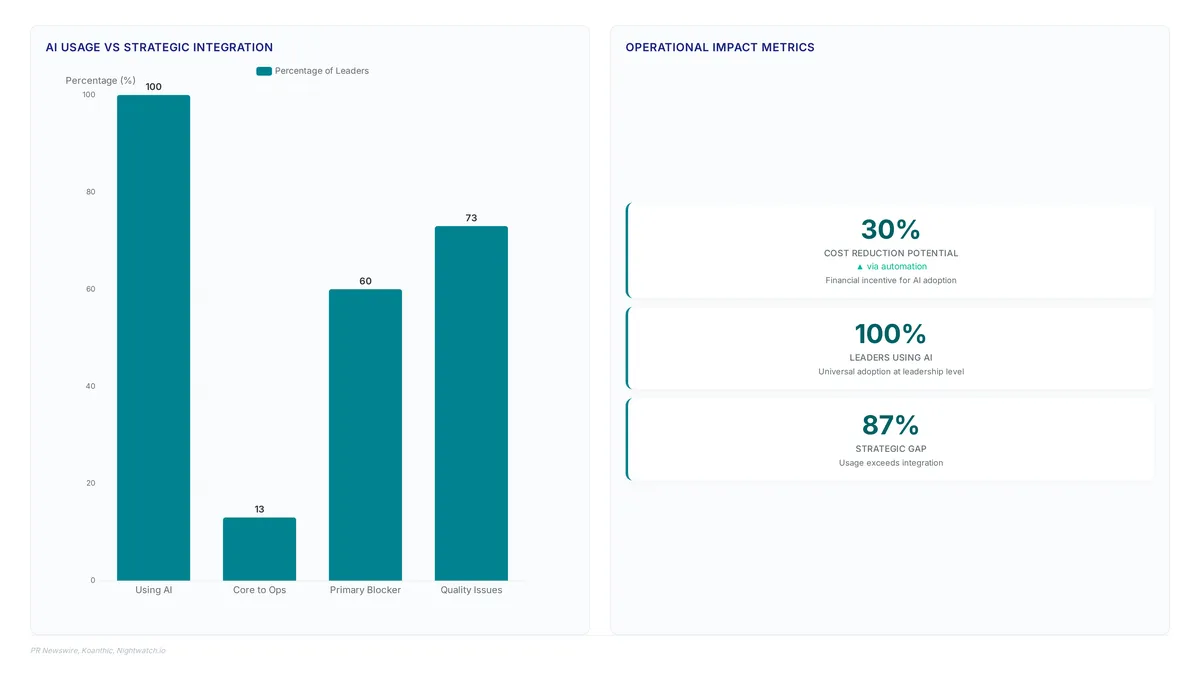
Every marketing leader now uses AI for content creation. Adoption is universal. Survival now depends on AI content quality.
The battlefield has shifted. Simple generation is table stakes. The new frontier is GEO readiness and strategic differentiation. You must apply a content tiering strategy to separate minimum viable quality outputs from premium quality content. Your AI content workflow must support SEO performance, not erode it.
Balancing content speed against rigorous content quality standards is the only way to avoid low-value saturation. By implementing tiered content review processes, organizations scale production without sacrificing the nuance high-stakes communication demands. The goal is not merely generating text. It is engineering a system where AI writing tools serve a strategic purpose rather than dictating output volume.
The Strategic Definition of AI Content Quality and GEO Readiness
Redefining AI Content Quality Beyond Grammar
Stop measuring AI content quality by grammar alone. It is a composite metric blending factual accuracy, brand voice consistency, and GEO readiness. Raw generation offers speed but often misses SEO performance baselines without structural constraints. Effective frameworks merge quantitative metrics like readability scores and keyword density with qualitative assessments such as brand voice alignment and audience relevance.
This gap exposes a reliance on tools for volume without integrating them into the operational backbone required for authority. Human review remains essential for refining tone, accuracy, and coherence. Rigorous fact-checking and source validation uphold credibility. Without them, you are just publishing noise.
Implementing GEO Readiness with Entity Definitions
GEO readiness requires encoding explicit entity definitions and direct answers into content structures for retrieval by AI search engines. Generative models constructing responses depend on clear semantic signals to attribute facts correctly. Published assets should prioritize accuracy verification, readability assessment, and brand alignment confirmation to achieve high-quality results. Systems actively pull from indexed web content.
Ambiguous phrasing reduces the probability of accurate citation or brand mention. Teams often mistake grammatical correctness for optimization. Syntax alone does not guarantee entity recognition by downstream algorithms. The drawback of this oversight is exclusion from high-value answer slots regardless of underlying content merit. A calibrated workflow embeds these structural requirements before generation begins rather than attempting repair during editing phases.
| Requirement | Function | Outcome |
|---|---|---|
| Entity Definition | Binds attributes to a specific subject | Prevents hallucinated associations |
| Direct Answer | Provides immediate factual resolution | Increases citation likelihood |
| Structured Claims | Enables machine-readable verification | Supports trust and authority signals |
Strategic implementation involves defining content quality standards that prioritize machine interpretability alongside human readability. Organizations aim to scale production. Few have updated their underlying content schemas to support this shift fully. Tension exists between maintaining natural narrative flow and satisfying the rigid structural demands of retrieval systems. Organizations that fail to encode these definitions risk losing visibility as discovery migrates from traditional links to generated summaries. Advanced solutions encode these structural constraints directly into modular prompt frameworks. Every output meets the strict definition requirements of modern retrieval systems through this method.
The Strategic Blind Spot of Ignoring GEO Signals
Ignoring GEO readiness renders high-volume content invisible to answer engines regardless of traditional search rankings. Prioritizing raw generation speed often yields generic text that algorithms filter out during retrieval augmentation. Teams chase output velocity. Pushing for speed results in generic content that search engines and AI models do not surface. This creates a critical tension where operational efficiency directly undermines discoverability in generative interfaces.
The risk extends beyond mere obscurity. It represents a fundamental failure in brand safety and quality control. Marketing leaders frequently note that speed is the primary change AI brings, yet all marketing leaders report already using AI for content creation. Despite this universal adoption, only a minority of marketing leaders state that AI is core to their operations. Most organizations recognize the danger but lack the architectural controls to mitigate it without sacrificing volume. In fact, a majority of marketing leaders cite brand safety and quality control as their primary blocker to making AI core to operations.
The consequence is a bifurcated environment where unoptimized content becomes noise, regardless of its grammatical correctness. Content tiering solves this by assigning specific quality gates based on the intended audience and channel risk. Low-risk updates may proceed with minimal oversight. High-stakes brand narratives require strict modular prompt constraints before publication. Experts recommend encoding these quality standards directly into the generation workflow rather than relying on post-hoc editing. This approach ensures that speed does not erode the semantic clarity required for AI attribution. Teams must shift from viewing GEO as an optional add-on to treating it as a mandatory pipeline stage. Without this structural change, increased production velocity only accelerates the dilution of brand authority in automated answers.
Mechanics of Modular Prompt Frameworks and Parallel Review Workflows
Modular Prompt Frameworks Encoding Brand Voice and GEO Expectations
Modular prompt frameworks function as reusable templates that encode brand voice, target audience context, SEO requirements, and GEO expectations directly into the generation step. Unlike quick prompts that treat quality as an afterthought, these structures force the model to adhere to content structure constraints before outputting a single token. Common AI workflows often involve writing a quick prompt, generating output, and spending significant time editing, which treats quality as an afterthought rather than a design parameter.
The most effective frameworks include both quantitative metrics like readability scores and keyword density alongside qualitative assessments such as brand voice alignment and audience relevance. This dual-encoding ensures that the output meets minimum viable quality thresholds without requiring extensive human revision loops.
| Prompt Type | Quality Encoding | Revision Load | GEO Readiness |
|---|---|---|---|
| Quick Prompt | None (Post-hoc) | High | Low |
| Modular Framework | Pre-computed Template | Low | High |
However, adopting modular frameworks requires upfront investment in template engineering, creating a tension between initial setup time and long-term throughput. Operators who skip this encoding phase often find their revision cycles expand rather than contract. The limitation is clear: without encoded constraints, models default to generic patterns that fail specific brand or geographic nuance. Providing AI models with language references, such as tone of voice guidelines or brand identity manuals, ensures consistent adherence to set standards. This approach shifts the operational burden from correcting errors to validating against pre-set constraints.
Parallel Review Workflow Implementation with 24 to 48 Hour Time-Boxed Windows
Sequential review chains destroy publishing velocity by stretching simple articles across multiple weeks due to handoff delays. Parallel review eliminates these bottlenecks by assigning each review dimension to a specific reviewer, reducing total creation time significantly when integrated with efficient systems. This approach replaces linear dependency loops with simultaneous validation gates for SEO, brand compliance, and factual accuracy.
Implementation requires a structured process to establish oversight:
- Define independent review criteria for factual accuracy and brand voice before generation begins.
- Assign distinct reviewers to each criterion to prevent scope overlap.
- Consolidate inputs into a single revision cycle rather than iterative back-and-forth.
- Maintain human input to refine tone, verify facts, and strip out AI writing patterns.
| Workflow Type | Duration | Bottleneck Risk |
|---|---|---|
| Sequential Chain | Multi-week | High |
| Parallel Review | Accelerated | Low |
The cost of this architecture is increased coordination overhead during the initial setup phase, as all stakeholders must align on quality standards simultaneously rather than sequentially. However, this trade-off is necessary because treating quality as an afterthought forces teams to spend significant time editing output that fails basic constraints. Teams adopting this model can scale production while staying competitive, especially as digital leaders plan to increase investment in answer engine optimization in 2026.
A critical limitation is that parallel review fails if the underlying modular prompt frameworks do not encode brand voice and GEO expectations directly into the generation step. Without these constraints, reviewers merely debate stylistic preferences rather than validating technical merit. Encoding these constraints upstream ensures the parallel review focuses on high-value verification tasks. The operational takeaway is clear: do not start the clock on human review until the prompt structure guarantees baseline adherence to brand and technical requirements.
Checklist for Auditing Content and Mapping Workflows to Eliminate Handoff Delays
Start by auditing current content production processes to identify bottlenecks and repetitive tasks that AI can optimize. This retrospective analysis reveals whether errors stem from vague prompting or missing brand voice constraints within the generation window. Teams skipping this step often repeat identical revision loops, wasting significant production capacity on avoidable edits.
Map the current workflow to calculate the baseline time elapsed between draft completion and final publication. Identifying these handoff delays exposes where sequential dependencies stall velocity rather than improving quality. Most organizations find that waiting for linear approval chains creates the bulk of their publishing lag, not the writing itself.
| Audit Focus | Measurement Target | Operational Fix |
|---|---|---|
| Error Patterns | Frequency of factual drift | Encode constraints in modular prompts |
| Time Metrics | Hours from draft to publish | Switch to parallel review gates |
| Bottlenecks | Reviewer idle time | Enforce set feedback windows |
Codifying these findings into a reusable checklist is necessary before scaling output volume. Without quantifying the baseline delay, any attempt to accelerate production relies on intuition rather than system mechanics. The cost of ignoring this data is a permanent ceiling on throughput regardless of tool speed.
Implementing an effective AI content workflow represents the most significant opportunity to scale quality production in 2026. Organizations must assess where automation provides impact while preserving human oversight for complex judgment calls.
Applying Strategic Content Tiering to Balance Minimum Viable and Premium Outputs
Defining Strategic Content Tiers for Resource Allocation
Distributing identical editorial effort across every digital asset squanders human attention on low-stakes material. Strategic tiering divides outputs by strategic value and keyword intent to optimize throughput. High-stakes tiers encompass pillar pages and product landing pages targeting high-competition keywords. These assets demand premium quality control, integrating quantitative metrics like readability scores alongside qualitative assessments for brand voice alignment. Mid-tier content serves informational queries where speed matters more than depth. Scalable tiers address long-tail volume with minimum viable.
Uniform treatment of all content creates a bottleneck where senior editors revise trivial updates. The operational cost manifests as delayed publication cycles for revenue-critical pages. A calibrated workflow applies rigorous human review only where audience relevance justifies the expense. This approach ensures high-intent conversion paths receive maximum scrutiny while maintaining output velocity elsewhere.
| Tier | Target Assets | Quality Standard |
|---|---|---|
| High-Stakes | Pillar pages, Landing pages | Premium, multi-stage review |
| Mid-Tier | Blog posts, Updates | Standard validation |
| Scalable | Long-tail, Archives | Minimum viable quality |
Modular prompt frameworks encode these distinctions directly into generation prompts to prevent over-engineering low-value drafts. The constraint is rigid upfront classification; mislabeling a high-value page as scalable risks significant organic visibility loss. Operators must define tier criteria before scaling production to avoid costly rework loops later.
Applying Human-in-the-Loop Review to High-Stakes Content
Premium outputs targeting high-intent keywords cannot rely on higher AI autonomy. High-stakes content warrants human-in-the-loop review at every stage to maintain factual integrity. Unlike scalable assets like FAQ expansions or glossary entries, these require parallel review workflows where editors validate tone and accuracy simultaneously rather than sequentially. This approach addresses unique quality control measures needed for AI outputs, specifically regarding factual inaccuracies and tone inconsistencies that automated systems miss. Human review plays a key role in ensuring the quality of AI-generated content by refining coherence before publication brand voice alignment.
Adding review gates reduces throughput speed. Yet treating every piece of content as equally necessary wastes human attention on low-stakes content. A strategic division allocates the majority of senior editorial resources to pillar pages while allowing minimum viable standards for long-tail support. This tension between volume and precision demands clear operational boundaries. If an organization fails to distinguish these tiers, revision loops increase, negating the speed benefits of automation entirely.
| Content Tier | Review Intensity | Primary Goal |
|---|---|---|
| Premium | High (Every Stage) | Conversion & Authority |
| Scalable | Low (Post-Generate) | Coverage & Volume |
Effective workflows implement this separation by encoding quality constraints directly into modular prompts, ensuring only appropriate assets reach human reviewers. The limitation lies in the initial setup cost of defining these distinct workflows. Without explicit tiering, teams default to reviewing everything, creating a bottleneck that stalls production. Strategic content tiering resolves this by matching oversight depth to asset value. Operators must define these thresholds before scaling generation to avoid costly rework later. This disconnect creates a failure mode where organizations deploy generative tools for volume while maintaining legacy anxiety around brand safety.
Ignoring strategic value forces a binary choice between speed and safety that does not exist in mature architectures. The limitation here is not tool capability but workflow design; operators who fear brand dilution often reject automation entirely, leaving revenue potential unrealized. Modular prompt frameworks encode quality standards directly into the generation prompt, allowing distinct governance policies for different content classes. This structural separation ensures high-stakes assets receive necessary human attention while scalable content moves at machine speed. Organizations failing to implement this differentiation risk obsolescence as competitors use automated workflows to dominate search visibility by 2027. Two distinct paths emerge for firms navigating this shift.
Implementing a Calibrated Workflow for Continuous Quality and Speed Optimization
IndexNow Protocol and Automated Sitemap Mechanics
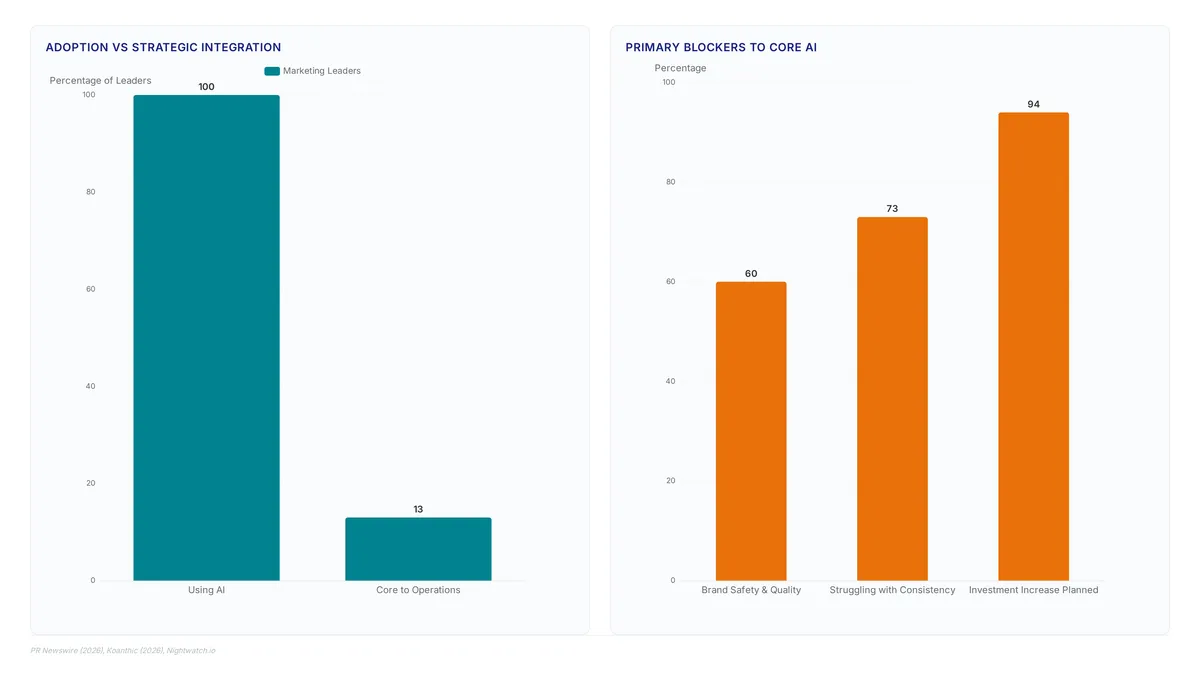
IndexNow is a real, verifiable protocol supported by Bing and Yandex that enables immediate URL submission for crawling upon publication. Traditional discovery methods rely on periodic crawler visits, creating latency between publication and indexing. By contrast, this push-based mechanism notifies search engines instantly when content changes. When combined with automated sitemap updates, the workflow makes new pages discoverable within hours rather than weeks. This reduction in discovery lag is critical for time-sensitive topics where early visibility impacts performance. 94% of digital leaders plan to increase investment in answer engine optimization in 2026, making speed to index a competitive requirement as discovery shifts toward AI-generated answers digital leaders.
Operators must configure their publication pipeline to trigger these signals automatically:
- Generate the content asset and publish to the production environment.
- Execute an API call to the IndexNow endpoint with the new URL.
- Update the
sitemap.xmlfile timestamp and content list. - Ping search engine endpoints to signal sitemap refresh.
The limitation of this approach is its dependency on perfect URL canonicalization; submitting non-canonical variants wastes API quotas without improving index coverage. Enterium solutions encode these quality gates directly into the generation workflow, ensuring only validated, canonical URLs trigger the indexing sequence.
Calibrating Workflow Balance Using AI Visibility Scores
Diagnose workflow drift by correlating AI Visibility Scores with engagement decay. When teams over-index on speed, output volume rises while dwell time collapses and citations vanish.
- Capture monthly organic traffic trends alongside visibility metrics.
- Flag cohorts where high publication frequency coincides with zero AI citations.
- Adjust review gates if bounce rates exceed acceptable thresholds for the content tier.
Sight AI's AI Visibility Score serves as a direct signal for GEO performance, distinguishing between indexed noise and authoritative answers. Teams ignoring this signal risk publishing content that search engines ingest but never surface. The operational cost manifests as revision loops that delay publishing without improving actual reach. Most operators wait for quarterly reviews, allowing low-quality patterns to entrench. The limitation is data latency; visibility metrics often lag behind publication by days. Operators must separate indexing delays from genuine quality failures before altering workflows. Corrective action requires shifting resources from volume generation to structural refinement.
Implementation Steps for Auditing Indexing and Performance Loops
Execute the audit by measuring the elapsed time between publication timestamps and first indexing confirmation logs. Teams must define core performance metrics across organic traffic trends, AI visibility scores, and engagement signals like dwell time.
- Audit current indexing latency to establish a baseline for content discovery.
- Implement push protocols to notify engines immediately upon URL publication.
- Configure automated sitemaps to reflect structural changes in real-time.
- Review monthly performance against publishing volume to adjust tier thresholds.
| Metric Focus | Speed Priority | Quality Priority |
|---|---|---|
| Indexing Lag | Minutes | Hours |
| Review Gate | Automated | Human-in-loop |
| Failure Mode | Hallucination | Latency |
Enterium recommends encoding these checks directly into the generation pipeline rather than applying them post-hoc.
A common oversight involves the tension between rapid iteration and brand authority; pushing updates quicker than review cycles can degrade trust scores before corrections propagate. Ignoring this feedback loop results in high-volume outputs that fail to convert.
About
Hannah Brooks, Marketing Operations Lead at Enterium, specializes in the architecture of reliable AI content pipelines. Her daily work involves rigorously evaluating tooling stacks and designing governance frameworks that balance content speed with brand authority. This practical experience in workflow orchestration directly informs her analysis of AI content quality, where she dissects the trade-offs between rapid generation and SEO performance. At Enterium, a B2B publication dedicated to content automation methodologies, Hannah documents how modern teams implement tiered content review processes to reduce revision loops without sacrificing minimum viable quality. She approaches AI writing tools and LLM providers with a vendor-neutral lens, focusing on reproducible steps for GEO readiness and measurable ROI rather than hype. By connecting martech stack design to content quality standards, she provides actionable strategies for scaling premium quality content through modular prompt frameworks and parallel consultation workflows, ensuring organizations can navigate AI search visibility challenges effectively.
Conclusion
Scaling AI content creation breaks when indexing latency masks genuine performance failures, forcing teams into costly revision loops that delay value without improving reach. The operational burden shifts from generating text to managing the structural integrity of how that text is discovered and validated by search engines. Organizations must stop treating visibility as a post-publication metric and instead encode validation directly into the generation pipeline. We recommend implementing immediate push protocols and automated sitemap updates to minimize the gap between publication and indexing confirmation. This approach prevents low-quality patterns from entrenching before human review occurs.
Start this week by measuring the exact elapsed time between your content timestamps and first indexing logs to establish a baseline for discovery speed. Teams relying on quarterly reviews allow inefficiencies to persist far too long. By distinguishing between simple indexing delays and actual quality deficits, operators can adjust tier thresholds dynamically rather than reacting to stale data. Enterium solutions enable this by integrating these checks directly into the workflow, ensuring that speed does not compromise brand authority. The goal is to align publishing velocity with real-time verification capabilities. Focus your immediate efforts on configuring automated notifications that trigger upon URL publication to ensure your structural changes reflect instantly in search ecosystems.
Frequently Asked Questions
Most leaders cite brand safety as the main blocker to core integration. With a portion of marketing leaders using AI, addressing these quality standards is essential for survival.
Universal usage means simple generation no longer ensures competitive advantage or authority. Since a portion of leaders report AI use, organizations must shift focus to GEO readiness and strategic differentiation immediately.
Unvetted output often requires extensive revisions that negate initial time savings entirely.
Embedding validation gates directly into prompt architecture reduces the need for heavy post-generation editing.
Encoding explicit entity definitions helps generative models attribute facts to your brand correctly.
References