Generative AI content: tracking visibility scores
Sight AI holds a 9.5/10 Consensus Score based on over 275 user reviews. That number matters because the game changed. Generative AI shifted content operations from simple volume generation to GEO optimization and brand visibility tracking across ChatGPT, Claude, and Perplexity. You need AI content platforms that track sentiment and share of voice inside generative engines, not just on Google. Raw text generation fails as a growth strategy in 2026.
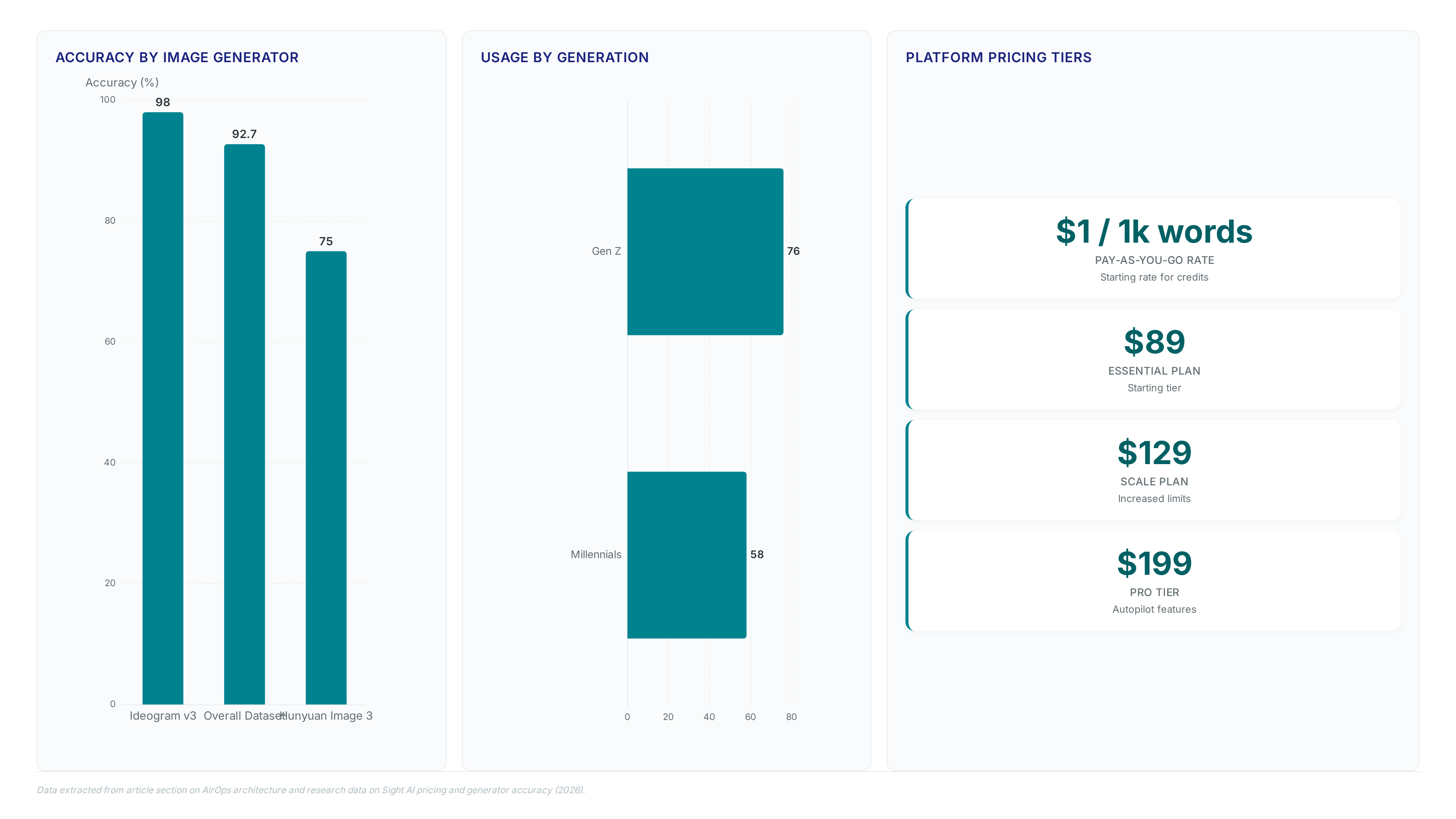
We need to talk about workflow automation and direct CMS integration. Success now means measuring the AI Visibility Score, not just organic clicks. Pay-as-you-go credit systems starting at a minimal rate per 1,000 words allow scalable testing without massive upfront commitments. But cheap tokens mean nothing if no one sees them.
The Role of Generative AI Platforms in Modern Content Operations
Defining GEO Optimization and AI Visibility Tracking Metrics
Stop optimizing for keywords. Generative Engine Optimization (GEO) structures text so large language models select it as a cited source. The goal shifts from organic clicks to AI Visibility Score inclusion within model responses. Sight AI functions as an all-in-one GEO platform combining generation with monitoring across ChatGPT, Claude, and Perplexity. Operators track brand presence using specific visibility metrics instead of relying on traditional search console data alone.
This workflow demands LLM workflow orchestration to manage prompt engineering, citation verification, and sentiment analysis simultaneously. Skip this coordination, and you risk hallucinated attributes or complete omission from synthetic answers. Alternative "Starter" plans for full tracking across five substantial models can cost up to a monthly fee, creating a budget threshold for smaller teams. Separate budgets for visibility tracking and content optimization often lead to overspending compared to unified systems.
| Metric Type | Purpose | Target Model Behavior |
|---|---|---|
| Visibility Score | Quantify mention frequency | Direct citation in answers |
| Sentiment Analysis | Assess brand tone | Neutral or positive framing |
| Citation Accuracy | Verify factual claims | Correct attribute association |
High-volume pipelines often sacrifice the semantic precision needed for reliable AI retrieval. Teams must balance generation speed with the rigorous formatting that ensures their data survives the compression of RAG (Retrieval-Augmented Generation) contexts. Volume conflicts with clarity.
Deploying Specialized AI Agents for Listicles and How-To Guides
Generic keyword matching is dead. Purpose-built AI agents generate structured listicles and procedural guides optimized for GEO optimization. These specialized models close the feedback loop between content publication and AI content creation citation rates. The Content Team Autopilot feature within the Pro tier enables daily article generation and publishing without manual intervention.
Automation addresses the latency gap where traditional workflows fail to update AI training sets before competitors dominate the conversation. But be careful. Fully automated publishing risks propagating factual errors if guardrails do not verify sources before the IndexNow protocol triggers indexing. Speed without accuracy is just noise.
Sight AI Versus Writesonic: Tracking Citations Versus Generating Volume
Selection for LLM citation requires GEO optimization rather than raw token output volume. Writesonic operates as a high-throughput generator using a pay-as-you-go credit system starting at a nominal fee per 1,000 words, prioritizing scale over post-publication verification. This architecture suits teams needing multi-language drafts quickly but lacks native mechanisms to confirm if ChatGPT or Claude actually cite the resulting content.
Sight AI functions as an all-in-one GEO platform that pairs generation with persistent visibility monitoring. Paying for volume risks producing invisible content. Paying for visibility ensures the AI Visibility Score remains measurable across six substantial engines. Without integrated tracking, teams cannot distinguish between a model ignoring the brand versus the model simply lacking the data. Enterium recommends audit-first deployment for brands where share-of-voice directly impacts revenue, reserving pure generation tools for internal documentation or non-critical blog filler.
Comparative Analysis of Leading AI Content and Visibility Tools
AirOps Custom LLM Workflows Versus Promptwatch Monitoring
AirOps functions as an orchestration engine for building custom pipelines, whereas Promptwatch serves as a specialized analytics layer for tracking drift. AirOps enables operations teams to construct repeatable, multi-step content workflows without consuming engineering cycles on infrastructure. This architecture suits growth teams requiring specific data transformations before LLM invocation.
Promptwatch provides visibility into prompt performance degradation over time, isolating versioning issues that break output consistency. One constructs the mechanism; the other audits its stability.
| Feature | AirOps | Promptwatch |
|---|---|---|
| Primary Role | Workflow Orchestration | Performance Analytics |
| Core Utility | Pipeline Construction | Drift Detection |
| Ideal User | Content Ops Engineers | Brand Safety Leads |
Teams deploying LLM workflow orchestration apply these systems to build scalable, repeatable pipelines tailored to specific operational needs. Custom logic offers flexibility yet demands careful management of input schemas to prevent downstream errors. Some enterprises pair generation tools with dedicated feedback loops to separate the tuning of the generation layer from the monitoring cadence. This modular approach proves effective for agencies managing distinct client data requirements across multiple verticals.
Deploying Peec for Competitive AI Share of Voice Benchmarking
Deploying Peec isolates mention frequency and sentiment framing against specific rivals within ChatGPT, Claude, and Perplexity responses. This approach answers whether teams should use AI tools for content at scale by prioritizing competitive intelligence over raw output volume. Unlike general writing platforms, this system distinguishes between neutral citations and positive recommendations, allowing marketers to detect subtle framing shifts that AI search visibility metrics often miss.
| Dimension | Peec Approach | General Writers | Monitoring Only |
|---|---|---|---|
| Focus | Competitive Benchmarking | Volume Generation | Alerting |
| Sentiment | Positive/Neutral/Negative | None | Binary Mention |
| Action | Strategic Pivot | Draft Creation | Awareness |
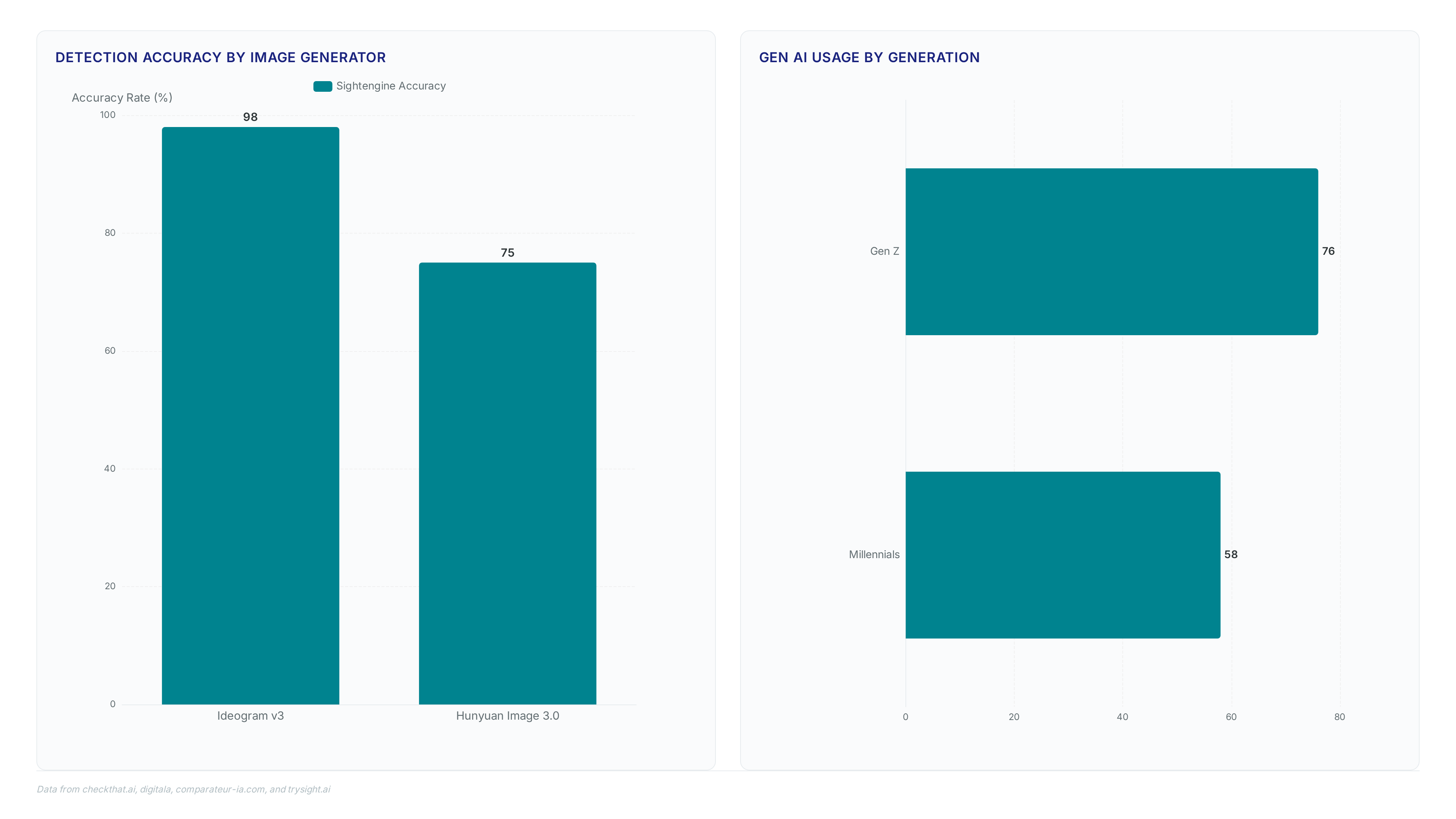
Relying solely on mention counts ignores the quality of the association. A brand cited frequently in negative contexts suffers reputational damage rather than gain. The cost of this blind spot is measurable when competitors dominate the positive framing for high-value queries while the operator tracks only volume. Practitioners must therefore pair frequency data with sentiment analysis to validate competitive intelligence efforts accurately. While some visual AI entities report high accuracy on image datasets, textbased sentiment in generative models requires distinct validation protocols to avoid false positives in brand tracking. Integrating these benchmarks into regular strategy reviews ensures data drives active decision-making rather than serving as passive dashboards.
Mitigating Prompt Drift and Content Gaps with Profound
Model updates silently alter output quality, creating prompt drift that degrades brand consistency over time. Profound addresses this operational risk by monitoring when a brand ranks on Google yet remains absent from AI-generated answers. This visibility gap represents a critical failure mode where traditional SEO success does not translate to GEO optimization within LLM contexts. Teams relying solely on volume generators often miss these strategic omissions until competitors dominate the conversation.
| Dimension | Volume Generators | Profound Approach |
|---|---|---|
| Primary Focus | Raw token output | Gap identification |
| Drift Detection | None native | Continuous monitoring |
| Strategic Value | Speed of creation | Share of voice |
Sight AI functions as an all-in-one GEO platform that pairs generation with persistent visibility monitoring to prevent such blind spots. Unlike point solutions requiring separate budgets for tracking and creation, consolidated platforms reduce overhead while maintaining audit trails. A key challenge remains the latency of detection; without automated alerts, teams may operate under false assumptions of market presence for extended periods. Operators must distinguish between generating content and verifying its citation in model responses. Deploying dedicated monitoring layers alongside generation tools helps catch these shifts early.
Architecting Scalable Content Pipelines with LLM Orchestration
AirOps Custom LLM Workflow Builder Mechanics
AirOps operates as a system construction site instead of a basic text generator, letting teams build custom, repeatable LLM-powered content pipelines without needing engineers. The Custom LLM Workflow Builder gives operators a visual canvas to design multi-step logic where data moves through distinct stages: brief ingestion, script generation, creative enrichment, compliance checking, and final publishing.
This structure enables Multi-Model Orchestration, allowing users to send specific tasks to different providers within a single chain to balance cost against quality. Linear generators cannot match this capacity for complex enrichment workflows, such as generating product descriptions at scale from structured data sources. Teams apply the Template Library to instantiate common patterns quickly while keeping version control for team collaboration. Enterprises requiring strict governance should pair this orchestration layer with dedicated analytics to audit output stability over time. For detailed configuration options, teams should review the technical documentation at airops.com.
Scaling Product Descriptions with Multi-Model Orchestration
Inconsistent AI output disappears when description generation becomes a visual pipeline rather than a single prompt execution. The Custom LLM Workflow Builder enables operators to design multi-stage logic where raw product data flows through enrichment, formatting, and compliance gates before publication. This architecture supports Multi-Model Orchestration, allowing teams to route specific sub-tasks like tone adjustment or fact-checking to different LLM providers within one workflow. Such flexibility addresses the core challenge of automating AI content publishing without sacrificing brand voice or accuracy. Content teams can implement these "Autopilot" features to generate and publish articles daily without manual intervention, showcasing a shift to fully automated content workflows.
| Component | Function | Benefit |
|---|---|---|
| Visual Builder | Designs logic without code | Removes engineering bottlenecks |
| Provider Switching | Routes tasks dynamically | Optimizes cost and quality per step |
| Version Control | Tracks workflow changes | Enables rapid rollback on errors |
Complexity is the constraint. Building a strong system requires upfront definition of success metrics that simple generators ignore. This approach transforms content automation from a gamble on token generation into a reproducible manufacturing process. Starting with a single high-volume use case like product descriptions allows teams to validate the pipeline before expanding to complex editorial workflows.
Preventing Prompt Drift in Automated Content Systems
Operators relying on static prompt libraries often observe a gradual decline in brand consistency and structural adherence as the underlying model weights shift. Technical teams mitigate this risk by deploying monitoring layers like Promptwatch that enforce quality gates on every generation cycle. These systems implement four specific controls to maintain pipeline integrity:
- Prompt Versioning tracks every iteration to correlate output changes with specific prompt edits.
- LLM Output Monitoring scores generated content against golden datasets to detect semantic divergence.
- Performance Comparison runs A/B tests between model versions before promoting them to production.
- Change Alerts notify engineers when brand visibility shifts due to model updates rather than content changes.
A pipeline might produce technically valid but strategically misaligned content for weeks before human review catches the error without these guardrails. Wasted crawl budget on low-quality pages and potential reputation damage from off-brand messaging represent the cost of such undetected drift.
| Failure Mode | Detection Mechanism | Mitigation Strategy |
|---|---|---|
| Semantic Shift | Golden Dataset Scoring | Rollback to previous prompt version |
| Tone Degradation | Sentiment Analysis | Adjust temperature parameters |
| Format Breakage | Schema Validation | Enforce strict output parsing |
Prompt engineering functions as a continuous operational requirement rather than a one-time task. Teams must treat prompts as mutable code that requires constant testing against evolving model behaviors. Integrating CMS sync ensures that only validated outputs reach publication channels for scalable operations. This proactive stance prevents minor model updates from cascading into substantial content quality incidents.
Optimizing Brand Visibility and Citation Accuracy in AI Search
Defining AI Answer Engine Monitoring and Content Gap Identification
AI Answer Engine Monitoring tracks brand presence across LLM outputs to measure visibility where traditional search metrics fail. This mechanism detects when models generate answers without citing the source, creating a silent deficit in brand visibility AI. Operators surface these omissions through Content Gap Identification, which lists queries where competitors appear but the brand does not. The process converts missing citations into a prioritized content queue for GEO optimization.
A common failure mode involves relying solely on generation volume while ignoring the citation layer entirely. Content Gap Identification surfaces topics where AI models answer questions without referencing the brand, flagging them as immediate opportunities. Tools like Sight AI monitor these shifts across ChatGPT, Claude, and Perplexity to ensure thorough coverage. Brands may rank well on search engines yet remain invisible to users querying conversational interfaces.
| Capability | Traditional SEO | AI Monitoring |
|---|---|---|
| Target | Crawler indexing | LLM citation |
| Metric | Keyword rank | Share of voice |
| Action | Backlinking | Gap filling |
This gap represents a strategic vulnerability where technical relevance does not guarantee inclusion in synthesized responses. Teams must validate that content updates actually shift model behavior rather than just satisfying crawler heuristics. Next step: audit current top-of-funnel queries against AI answer outputs to establish a baseline visibility score.
Implementing Sentiment Analysis for AI Brand Mention Tracking
Distinguishing framing in AI responses requires sentiment analysis to separate neutral citations from negative or positive brand associations. This approach benchmarks appearance frequency against tone, ensuring teams understand not if they are mentioned, but how. Effective strategies include Content Strategy Recommendations that translate raw visibility data into concrete content actions based on detected sentiment shifts. Without this layer, operators risk optimizing for volume while ignoring deteriorating brand perception in model outputs.
The mechanism relies on continuous scanning of substantial models including ChatGPT, Claude, and Perplexity to capture shifts in narrative tone. An Ongoing Monitoring Dashboard provides the persistent view necessary to spot these changes. Publishing content that AI models ignore creates a failure mode where high-quality assets yield zero discovery traffic. This gap occurs because Generative Engine Optimization requires active validation rather than passive indexing assumptions. Operators must verify citation status across distinct model families, as training data cutoffs and retrieval mechanisms vary significantly between providers.
Sight AI closes the loop between publishing and actual model citation by deploying specialized agents to audit responses. The platform generates an AI Visibility Score that quantifies brand presence, transforming abstract visibility into a trackable operational metric. Teams should implement a validation workflow that checks three distinct layers of performance:
- Presence Frequency: Confirm the brand appears in answers for top-priority industry queries.
- Sentiment Polarity: Ensure mentions carry neutral or positive framing rather than hallucinated negativity.
- Competitive Share: Benchmark appearance rates against named rivals to identify relative market position.
| Validation Layer | Primary Metric | Action Trigger |
|---|---|---|
| Citation Check | Mention Count | Create content for missing topics |
| Tone Audit | Sentiment Score | Update brand narrative guidelines |
| Share Analysis | Relative % | Target competitor gap queries |
A critical consideration involves Mention Change Alerts, which notify users of visibility shifts. If a model excludes a brand despite fresh content, operators can apply features like IndexNow integration to automate sitemap updates and trigger quicker content indexing, helping new articles get discovered by search engines and AI crawlers sooner. Continuous monitoring of these deltas allows teams to track how their brand is represented across substantial AI platforms.
About
Daniel Reyes serves as Head of Content Engineering at Enterium, where he architects production-grade AI content pipelines from ingestion to publication. His decade of experience in data and ML platform engineering, specifically the last four years dedicated to building automated content systems, positions him to rigorously evaluate generative AI tools for 2026. Unlike surface-level reviews, Reyes assesses these platforms through the lens of pipeline reliability, quality gates, and GEO (Generative Engine Optimization) performance. At Enterium, a B2B publication focused on vendor-neutral content automation methodologies, his daily work involves troubleshooting RAG architectures and orchestration logic. This hands-on engagement ensures the article's evaluation criteria reflect real-world trade-offs in latency, cost, and output fidelity rather than marketing hype. By connecting theoretical capabilities to practical deployment challenges, Reyes provides technical marketers and content engineers with a reproducible framework for selecting tools that sustain organic traffic growth and brand visibility across evolving AI search interfaces.
Conclusion
Scaling AI content validation reveals a critical break point where manual tracking becomes impossible as query volume expands. While subscription models create a hard budget ceiling for smaller teams, the operational cost of ignoring citation gaps is far higher when brand narratives drift unchecked across models. With organizational adoption nearing saturation, the competitive advantage shifts from simply generating content to rigorously verifying how distinct model families cite that content. Teams must move beyond passive hope and implement active auditing workflows that measure presence frequency and sentiment polarity simultaneously.
Start by mapping your top twenty industry queries against current model responses this week to establish a baseline visibility score. Do not wait for a revenue dip to reveal that your assets are being ignored or mischaracterized by retrieval systems. The window for casual experimentation has closed, and successful operators now treat citation accuracy as a core engineering requirement rather than a marketing afterthought. Prioritize fixing negative sentiment triggers before attempting to expand topic coverage, as correcting fundamental narrative errors yields more immediate stability than adding fresh volume. This disciplined approach ensures that high-quality assets actually drive discovery traffic instead of vanishing into unindexed obscurity.
Frequently Asked Questions
Teams can start generating content with a pay-as-you-go system beginning at an undisclosed amount per 1,000 words. This low threshold allows small operators to test scalable workflows without committing to large monthly subscriptions or massive upfront financial investments.
Alternative starter plans for full tracking across five major models can cost up to an undisclosed amount each month. This price point creates a specific budget threshold that smaller teams must evaluate against their available resources before scaling operations.
Maximizing output volume often conflicts with the structural clarity required for effective generative engine optimization. High-volume pipelines frequently sacrifice the semantic precision needed for reliable retrieval, causing data to get lost during compression contexts.
Fully automated publishing risks propagating factual errors if guardrails do not verify sources before indexing triggers. Speed gains from automated capabilities require stricter pre-flight validation rules to maintain brand integrity and prevent hallucinated attributes.
Experts recommend implementing human-in-the-loop review stages for technical explainers while allowing autopilot for lower-risk formats. This hybrid approach balances the critical need for scale with the precision required for credible industry analysis and citations.